



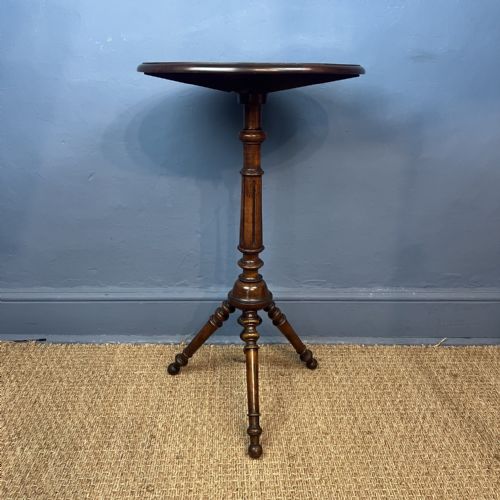
Small Mahogany Plant Stand
These small mahogany plant stand pieces combine timber and upright form to lift greenery or hold a lamp.

Small Mahogany Plant Stand
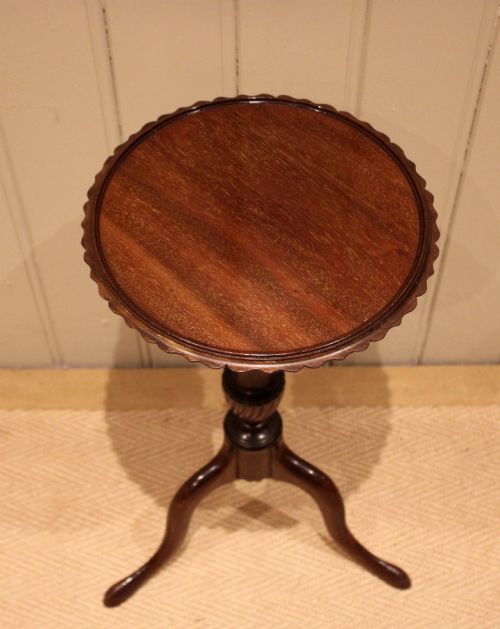
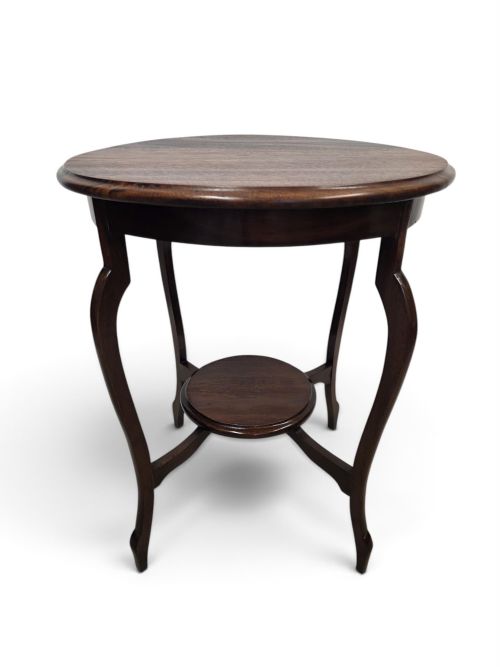
When you examine a small mahogany plant stand, you encounter compact occasional furniture designed to occupy corners or narrow spaces in a room. The pieces take the form of wine tables, urn stands, candle stands, and small occasional tables.
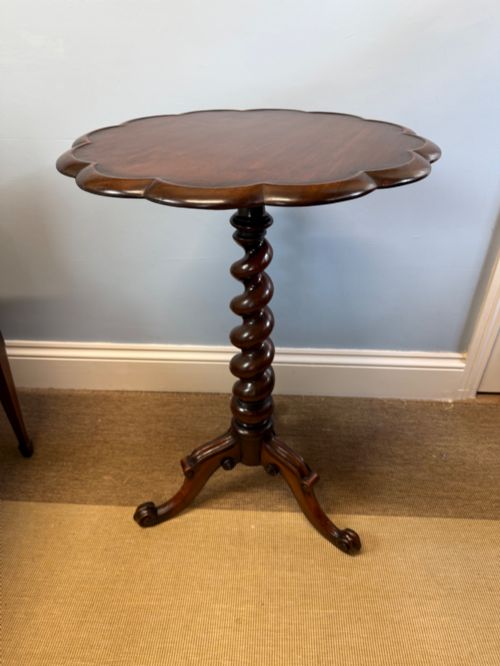
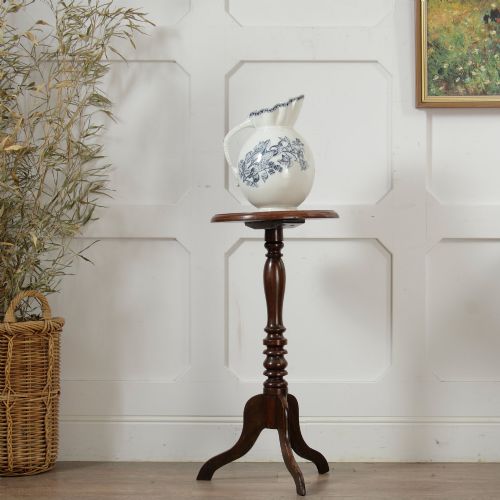
The selections available run from eighteenth-century Georgian examples up to Edwardian and early twentieth-century interpretations. You will frequently meet Edwardian and nineteenth-century pieces featuring circular, oval, or multi-sided tops supported by pillar and tripod bases.
How they were made
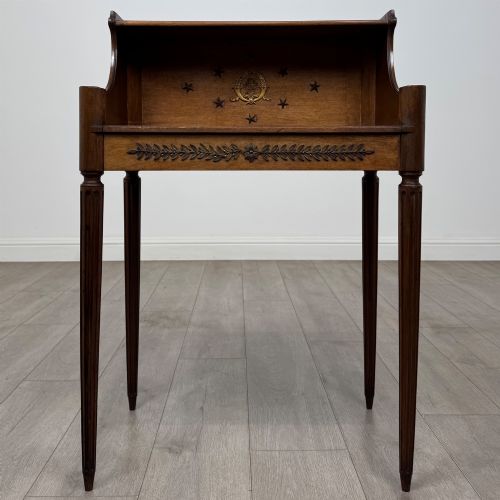
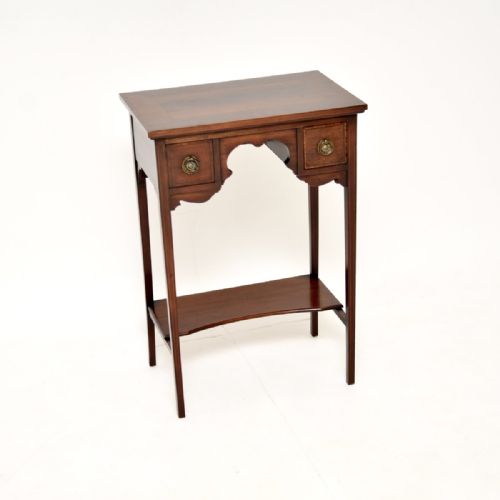
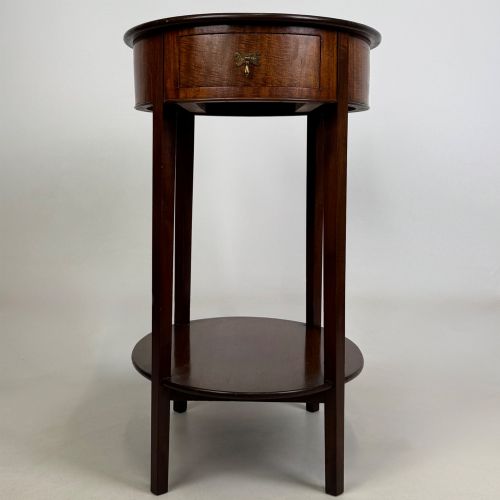
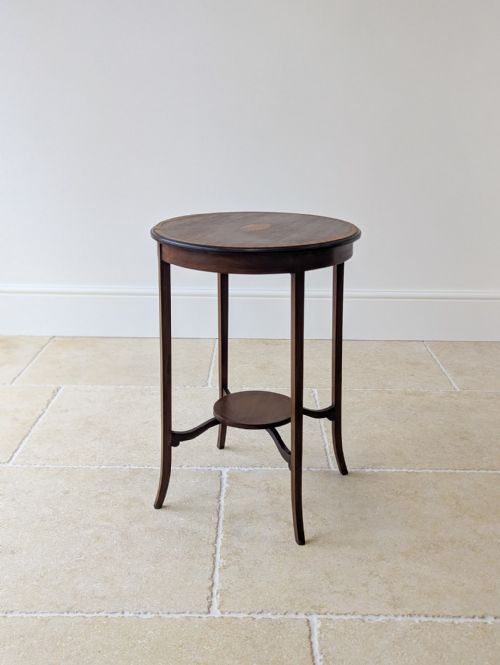
Cabinetmakers built these pieces primarily from solid mahogany and hardwood, frequently incorporating brass fittings for movement or stability. Surfaces often display satinwood and boxwood inlay alongside wood inlay to create geometric or floral motifs.
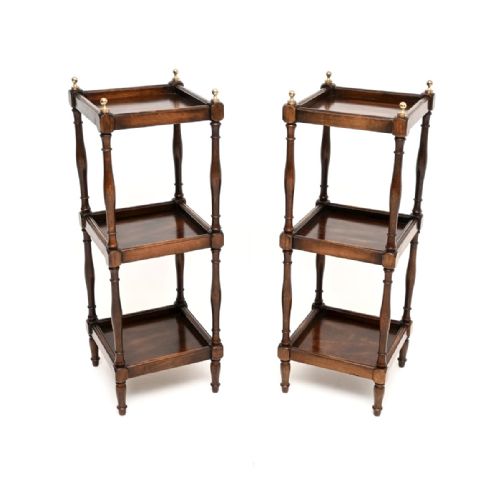
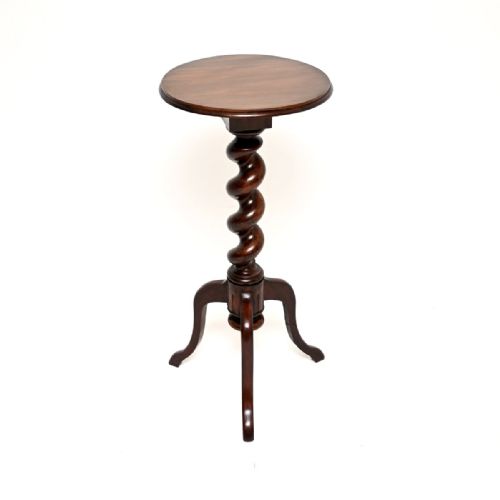
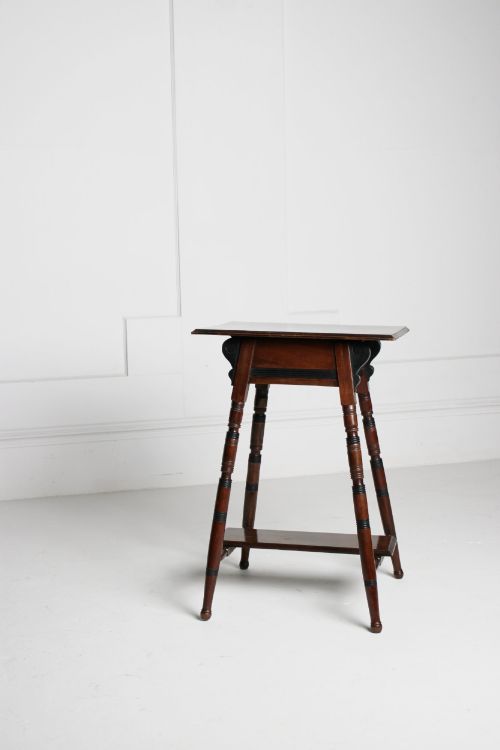
Turned legs, barley twist supports, and tripod pillar bases dominate the structural engineering of these stands. Carpenters shaped the timber to form dish tops, two-tier structures, and hinged or fixed surfaces suitable for holding smaller items.
Some tables feature heart-shaped tops, proving that even stern Victorian and Edwardian cabinetmakers occasionally surrendered to romance.
What varies in quality
The refinement of the timber grain and the crispness of the inlay define the upper tier of these stands. Finer examples show careful selection of flamed mahogany and precise hand-cut boxwood or satinwood stringing.
Structural integrity in the pillar and tripod joints dictates how well a stand holds its balance over decades of use. Superior pieces maintain tight turning on the legs and smooth joinery at the pedestal junction.
Druce & Co London·Liberty and Co
The Small Mahogany Plant Stand Glossary
- Mahogany
- A durable tropical hardwood known for its rich reddish-brown colour and stable grain. It served as the primary material for fine British cabinetmaking from the eighteenth century onward.
- Tripod table
- A small occasional table supported by a central pillar resting on three legs. This construction prevents wobbling on uneven floors.
- Urn stand
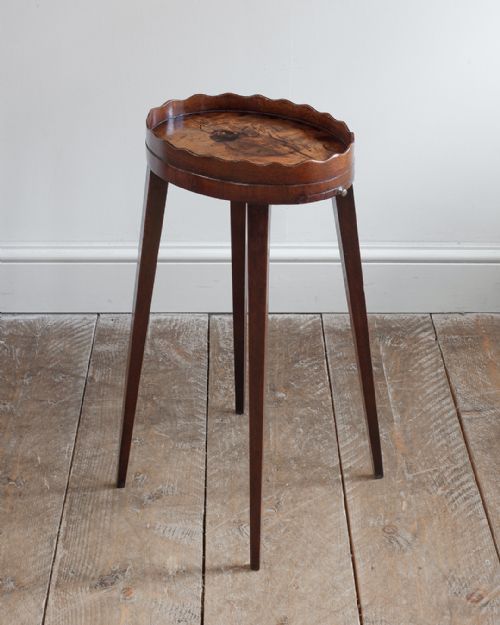
- A tall, slender table designed to hold a hot water urn or tea equipment. These pieces often feature raised edges or shaped galleries to secure the vessel.
- Inlay
- A decorative technique where contrasting woods such as satinwood or boxwood are set into recesses flush with the main mahogany surface. This method creates borders and decorative panels.
- Dumb waiter
- A tiered standalone piece of furniture with revolving or stationary circular trays. It allowed diners to access extra dishes and glassware without servant assistance.
Small Mahogany Plant Stand: Frequently Asked Questions
What rooms suit a small mahogany plant stand?
These compact tables fit easily into hallways, corners, or beside seating where floor space is limited. Their modest footprint allows them to hold lamps, small plants, or decorative items without cluttering the room.
They pair well with both traditional period interiors and more modern settings that benefit from rich timber tones and classic silhouettes.
How do I care for mahogany surfaces?
Dust the timber regularly with a soft, dry cloth to prevent dirt accumulation on the polished finish. Avoid placing the stand in direct sunlight or near heat sources to protect the wood and inlay from drying out.
Apply a quality beeswax polish occasionally to nourish the mahogany and maintain its natural lustre without building up heavy residues.
How can I tell an 18th-century stand apart from an Edwardian copy?
Eighteenth-century pieces typically exhibit hand-cut joinery, deeper patination in the timber, and construction methods characteristic of the Georgian period. The wood grain often shows softer, warmer tones developed over centuries of handling.
Edwardian interpretations tend to feature brighter machine-sawn components, crisper satinwood inlay, and lighter overall framing associated with Sheraton Revival styles.
Were these stands originally used for plants?
While modern usage often involves displaying potted plants, historical records show they served many domestic purposes. Eighteenth-century versions functioned as urn stands, candle stands, or wine tables for holding drinks near seating areas.
Their versatile heights and stable tripod bases made them adaptable for whatever surface space a room required at the time.