
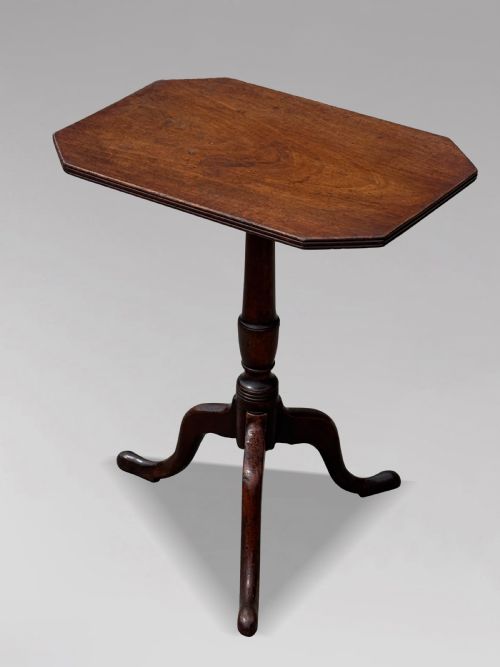
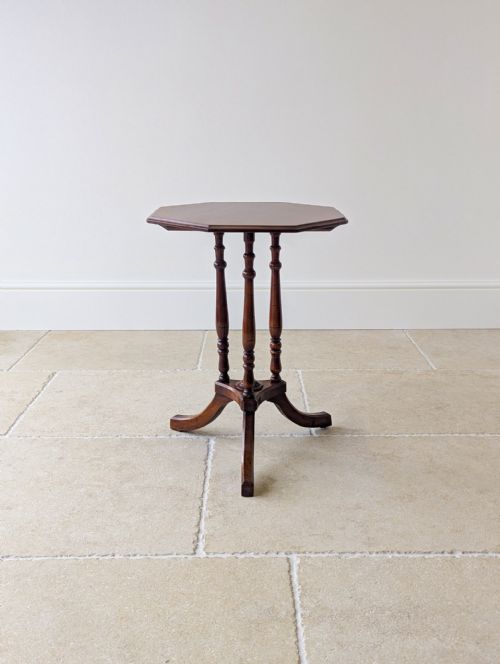
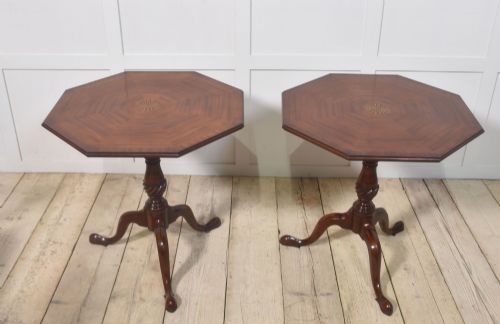
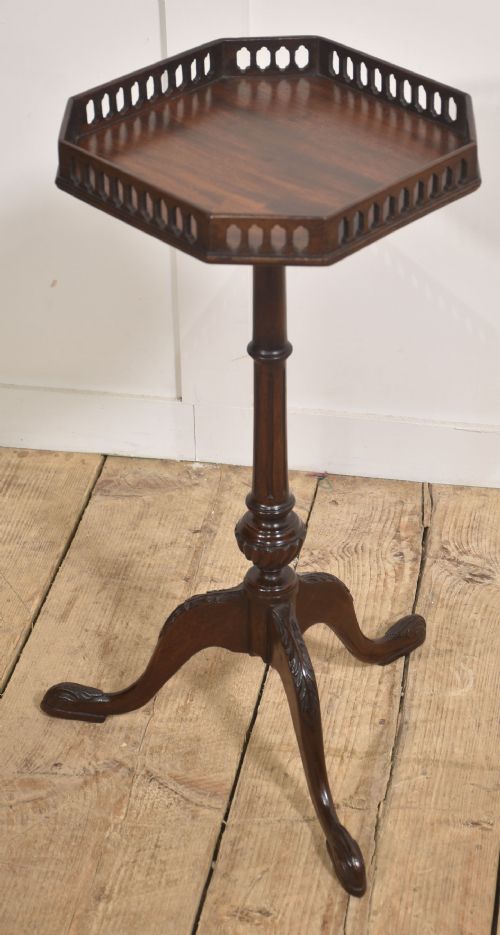
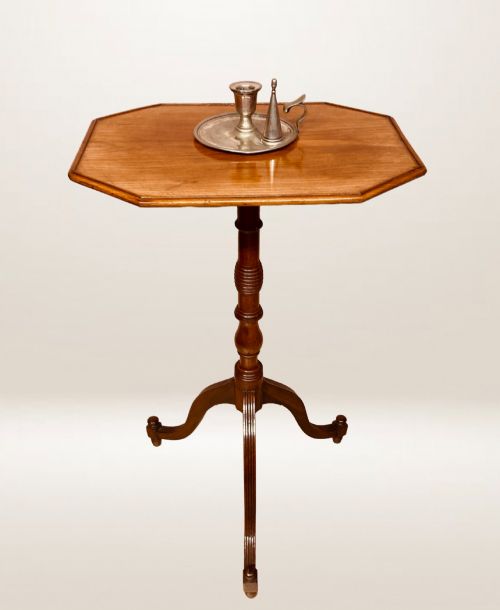
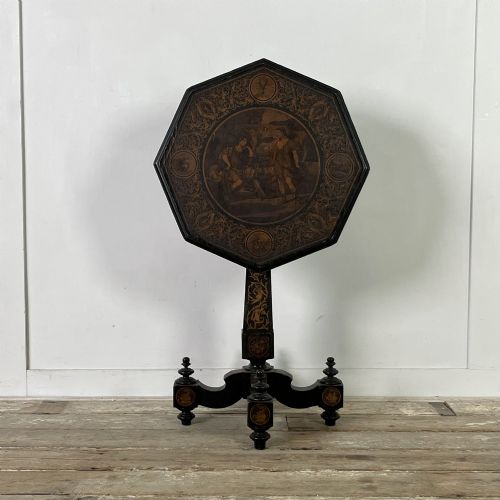
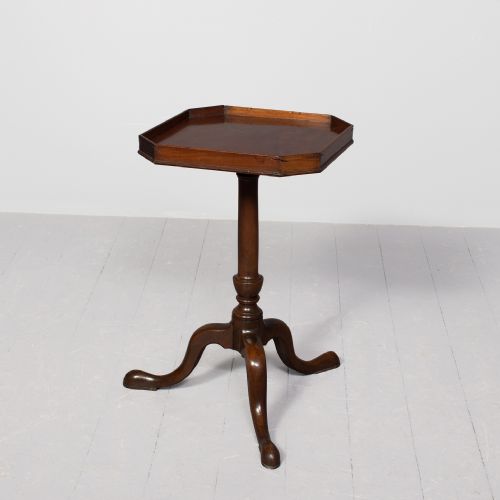

Georgian Octagonal Occasional Table
These georgian octagonal occasional table examples bring compact utility and rich timber surfaces to any room.

Georgian Octagonal Occasional Table
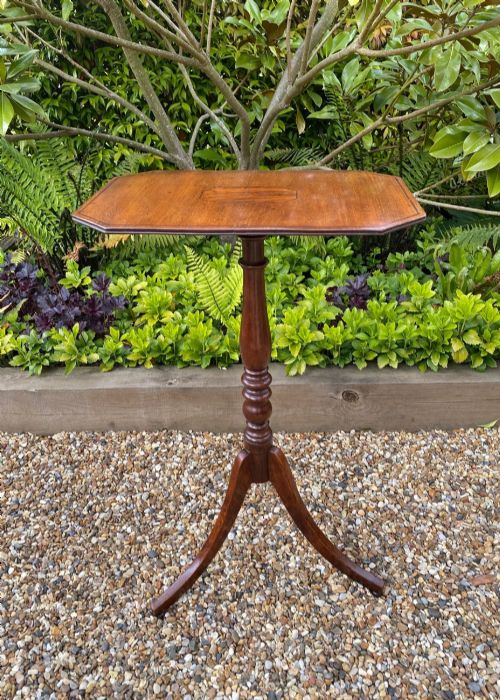
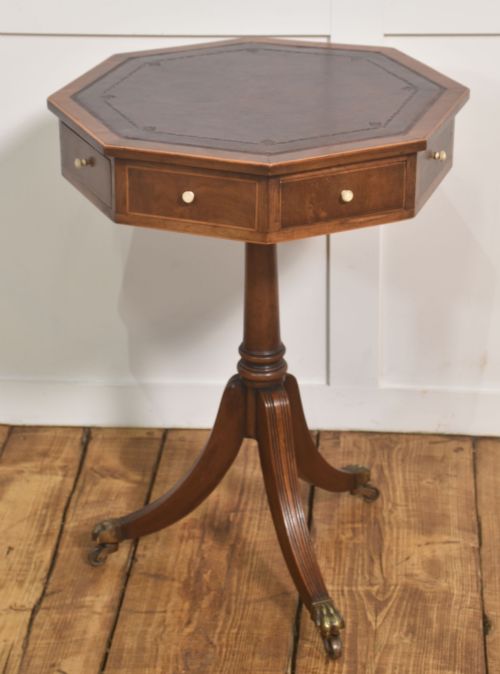
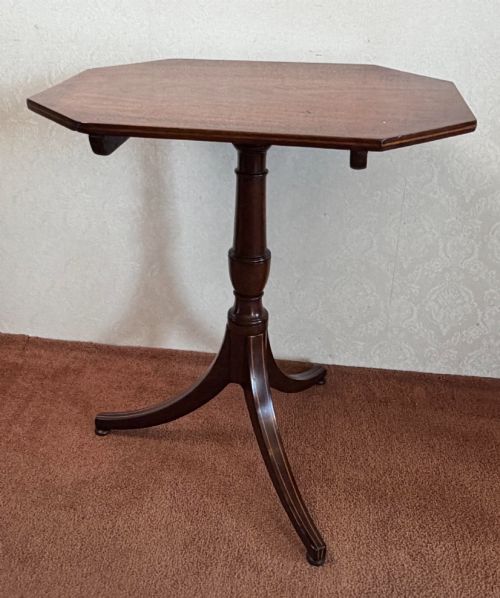
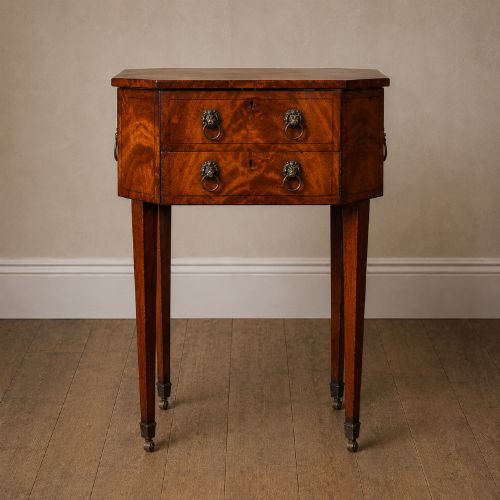
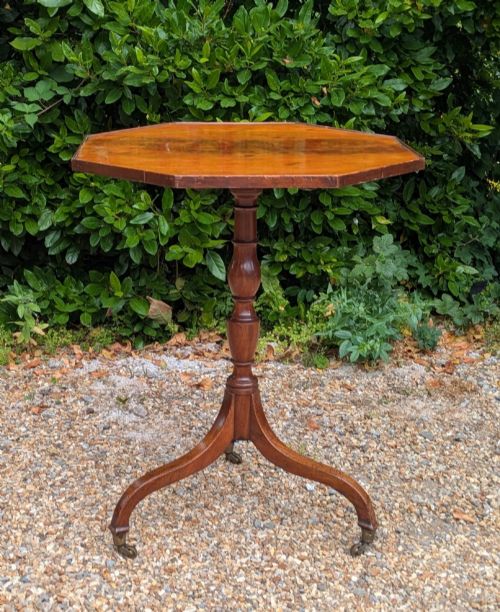
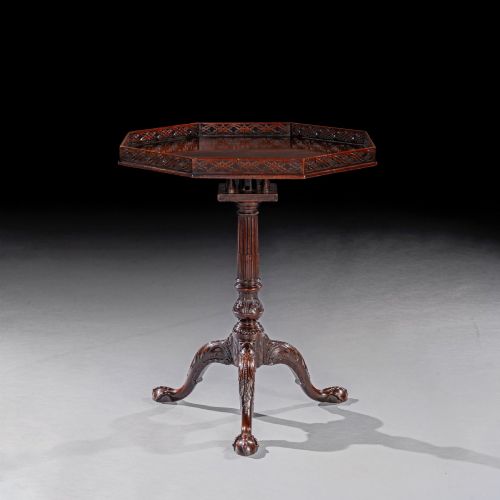
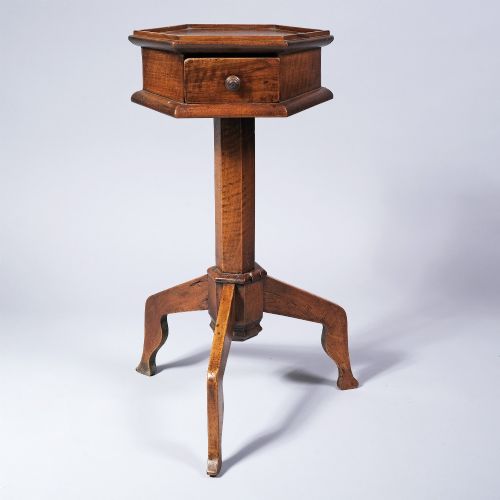
A georgian octagonal occasional table serves as a flexible surface for lamps, drinks or sewing equipment, originating primarily from the eighteenth and early nineteenth centuries. These pieces appear on this page in forms ranging from tripod wine tables to drum tables and work tables with fitted interiors.
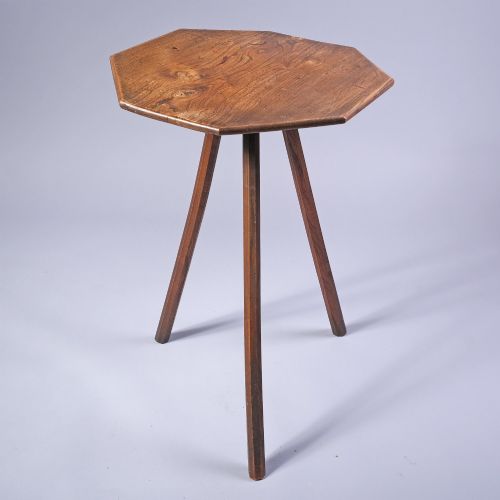
The octagonal top shape distinguishes these specific items from standard round or rectangular variants, often supported by a central pillar and three splayed legs. Walnut, mahogany and satinwood predominate among the woods found on this page.
Makers of the period utilised vernacular designs alongside more formal geometric formats, yielding both simple country pieces and highly decorated urban examples. Buyers frequently encounter pieces associated with the George III and Regency eras.
Assessing quality and craftsmanship
Quality rests upon the choice of timber figure, such as flame mahogany or figured satinwood, and the precision of the inlay work. Finer examples display crisp carving on the tripod legs and well-fitted internal compartments on work tables.
Originality of surface finish and hardware, including lion mask handles or brass fittings, separates superior examples from heavily restored ones. Proportion and stability in the central pillar mechanism also dictate the standing of a piece.
Listings on this page span the eighteenth, nineteenth and early twentieth centuries, featuring woods like mahogany, satinwood, oak and rosewood.
Gillows
The Georgian Octagonal Occasional Table Glossary
- Tripod table
- A small standalone table supported by a central pillar resting on three legs. These designs became widespread during the eighteenth century.
- Tilt-top table
- A table featuring a mechanism that allows the top to hinge into a vertical position. This saved valuable floor space in period interiors.
- Satinwood
- A lustrous, yellowish timber imported from the tropics and utilised extensively for high-status cabinet work during the Georgian and Regency periods.
- Boxwood
- A dense, pale wood frequently employed for stringing, inlay and contrasting geometric borders on tabletops.
- Work table
- A specialised occasional table equipped with compartments, drawers or bags for sewing and needlework.
Georgian Octagonal Occasional Table: Frequently Asked Questions
What is a georgian octagonal occasional table used for?
These tables functioned historically as movable stands for holding candles, serving wine, supporting lamps or containing sewing implements.
Today, they serve similar purposes beside armchairs or sofas, offering a compact surface that occupies minimal floor space.
What woods were used in these tables?
Cabinet makers relied heavily on mahogany as the primary structural and visual timber, often selecting figured varieties for the top.
Secondary woods and decorative accents included satinwood, walnut, ash, fruitwood, oak and boxwood inlay.
How do I tell a work table from a wine table?
A work table typically includes integrated drawers, compartments or a suspended fabric bag designed to hold sewing materials and accessories.
By contrast, a wine table focuses purely on a smooth tabletop surface, occasionally featuring a raised gallery or a tilt action.