
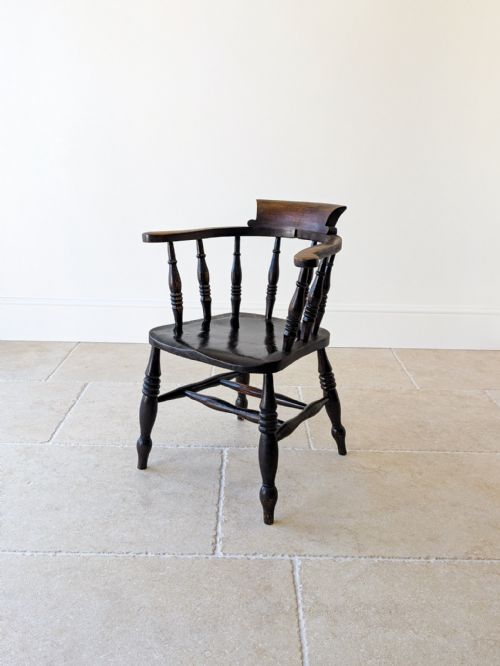
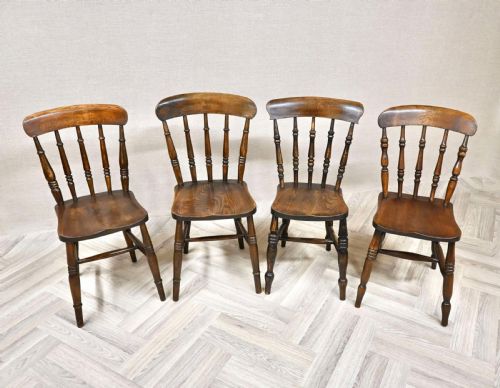

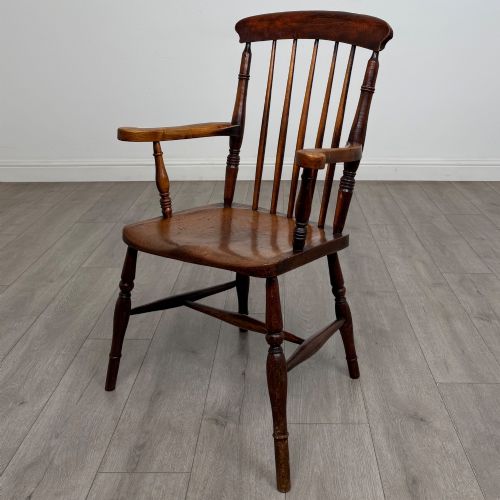
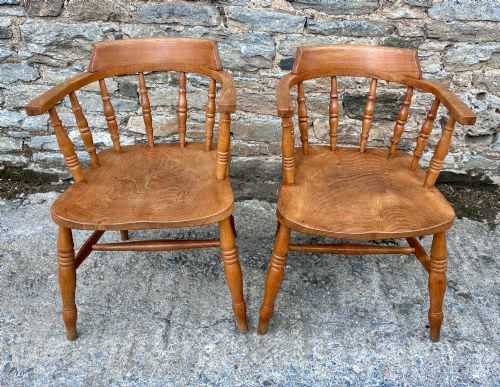
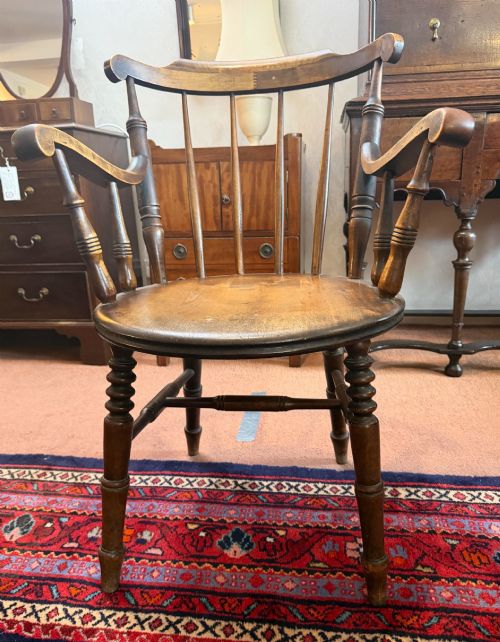
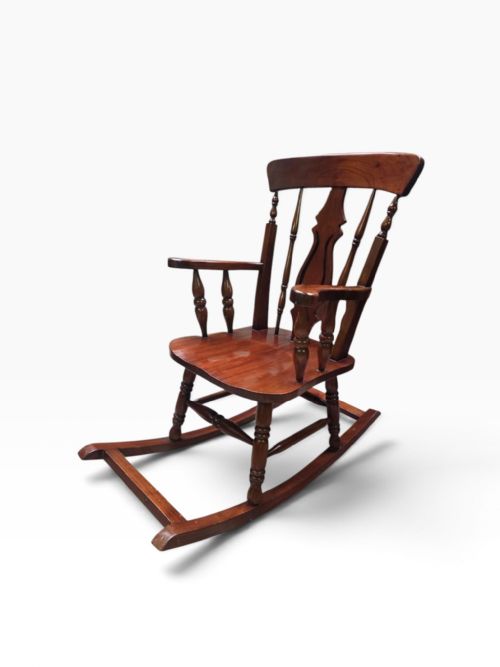
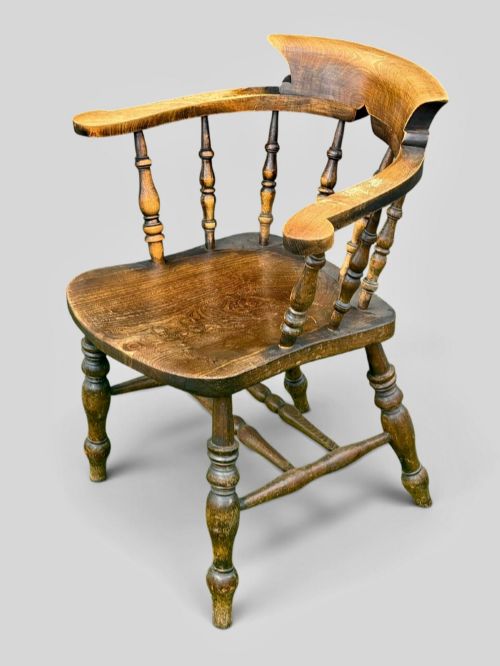
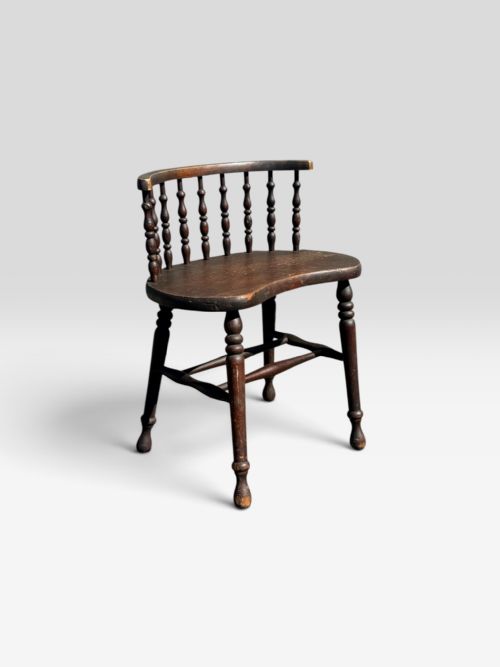
Turned Spindle Wooden Chair
A turned spindle wooden chair brings robust vernacular comfort to a room, offering sturdy seating shaped by traditional joinery and time-tested regional forms.
Turned Spindle Wooden Chair
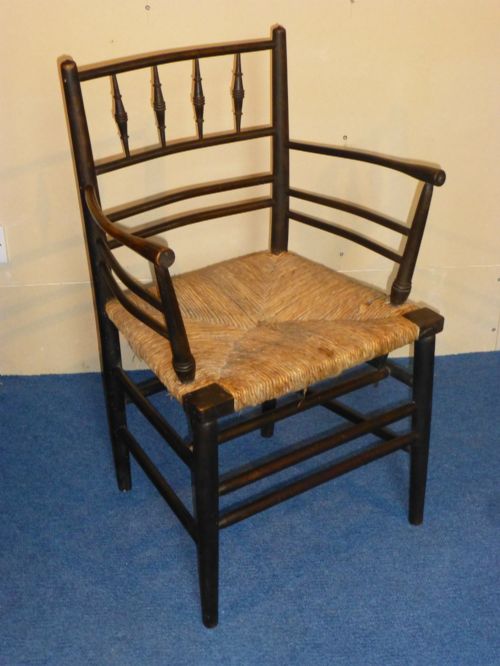
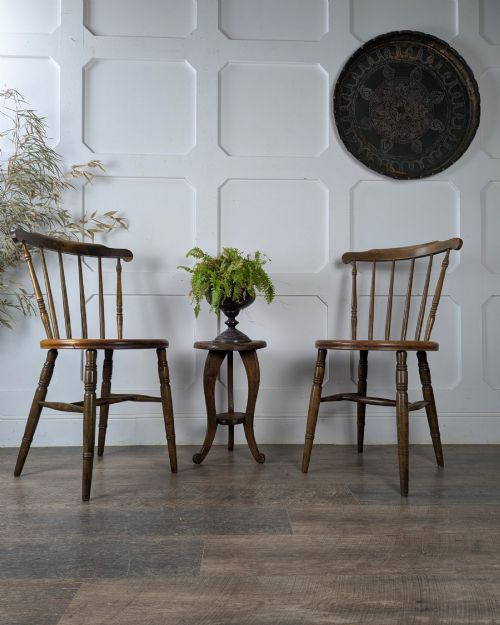
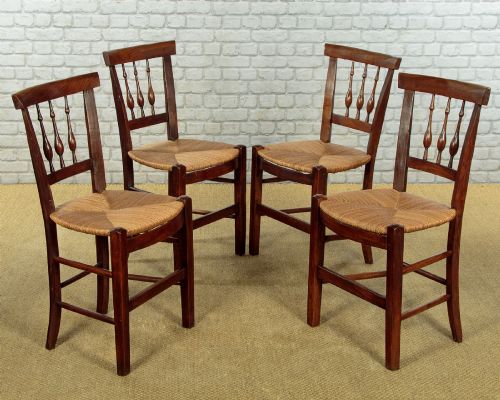
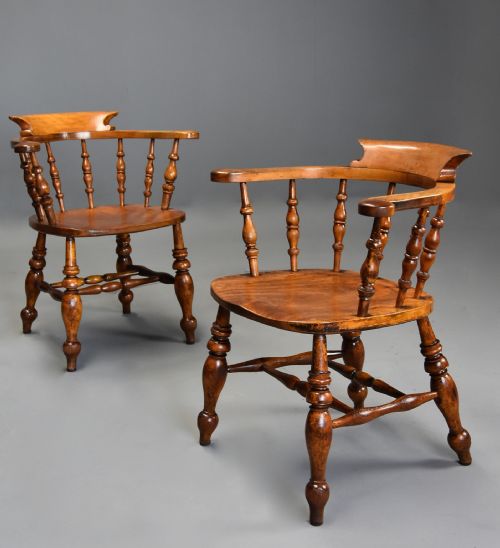
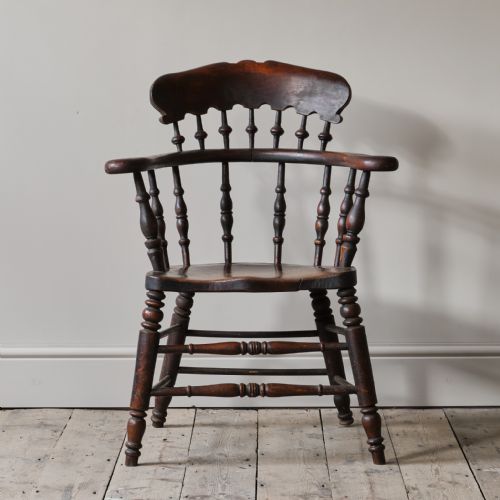
A turned spindle wooden chair encompasses practical seating forms designed across the nineteenth and early twentieth centuries, drawing heavily on English country vernacular and Victorian traditions. Buyers searching for a turned spindle wooden chair typically encounter sturdy armchairs, captain's chairs, smokers' bows, and rush-seated ladder backs intended for daily domestic utility.
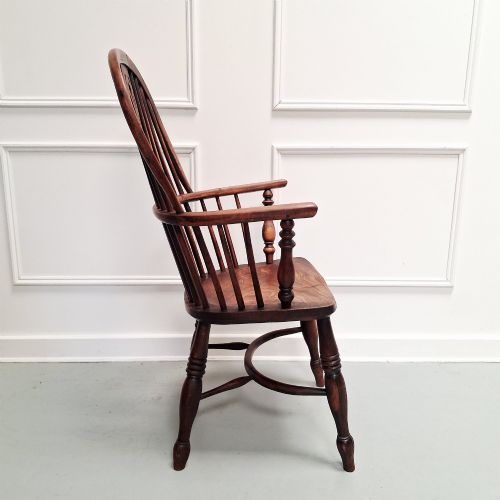
The selections span distinct regional outputs, ranging from Thames Valley stick backs and farmhouse Windsor chairs to Arts and Crafts influenced designs. Elm, ash, and beech form the structural core of these seating options, often paired with woven rush or solid timber seats shaped for heavy use.
Materials and construction methods
The construction relies on contrasting timbers selected for specific structural properties, combining flexible woods for bent components with rigid hardwoods for legs and spindles. Elm frequently provides a durable, split-resistant seat, whilst ash and beech supply resilient turned spindles, legs, and steam-bent armbows.
Makers utilised lathe-turned components such as bobbin frames, vertical spindles, and stretchers to distribute weight evenly through the frame. Joinery typically incorporates pegged mortise and tenon joints, securing the turned parts firmly without relying on modern adhesives.
Listings feature robust nineteenth-century timbers including elm, ash, and beech, alongside rush seating across Victorian and Edwardian periods.
Assessing quality and craftsmanship
Quality separates everyday utilitarian seating from finer workshops through the crispness of the lathe turning and the harmonious selection of timber grains. Superior examples display well-proportioned spindles, tight joints, and richly patinated wood surfaces developed through generations of handling.
Lesser pieces often suffer from replaced components, loose undercarriages caused by shrinkage, or mismatched timber repairs that disrupt the integrity of the original design. The best surviving chairs retain their structural rigidity while maintaining the authentic tool marks and tactile warmth of their period.
Morris Co·Codina·J Spencer
The Turned Spindle Wooden Chair Glossary
- Smoker's Bow
- A low-backed Windsor armchair featuring a continuous curved armbow supported by turned spindles above a solid timber seat. These comfortable elbow chairs gained popularity in nineteenth-century country houses and rural kitchen settings.
- Spindle Back
- A chair back constructed from a series of slender, turned wooden uprights fitted between a top rail and the seat. This method maximises structural strength while keeping the furniture light.
- Windsor Chair
- A seating form characterised by a solid wooden saddle-shaped seat into which the legs, back staves, and spindles are individually socketed. They frequently incorporate steam-bent bows and central splats.
- Rush Seat
- A woven seating surface made from dried marsh rushes twisted into cords and hand-plaited across a wooden frame. This traditional technique provides a resilient and flexible base.
- Crinoline Stretcher
- A curved or horseshoe-shaped underframe brace connecting the legs of a Windsor chair to provide lateral stability. The design prevents the legs from splaying outward under heavy loads.
Turned Spindle Wooden Chair: Frequently Asked Questions
How do I clean a wooden spindle chair?
Dust the turned spindles regularly with a soft, dry cloth to prevent dirt accumulation in the crevices. Apply occasional applications of beeswax to nourish the timber and preserve the historic surface finish.
Avoid using harsh chemical cleaning agents or excess water, as moisture can damage old timber and weaken historic joints. Gentle maintenance protects the natural patina built up over decades of use.
Are these chairs suitable for daily dining use?
Most nineteenth-century country chairs were built for demanding domestic environments and handle everyday sitting comfortably. Check that the undercarriage stretchers and leg joints remain secure before placing them around a table.
Adding thin wool or linen pads can protect antique wooden seats from scratches during prolonged daily use. Ensure the chair proportions match your table height for proper ergonomic comfort.
How can I tell the difference between Victorian and Edwardian examples?
Victorian models frequently display heavier timber scantlings, darker finishes, and robust Windsor or captain's chair configurations. They reflect industrial expansion paired with traditional rural woodworking techniques.
Edwardian interpretations tend to feature lighter frames, sometimes incorporating Arts and Crafts influences or brighter ash and beech tones. Reviewing the turning profiles and underlying construction methods helps clarify the manufacturing era.
What is a captain's chair?
A captain's chair is a low, sturdy wooden armchair featuring a rounded backrail supported by vertical turned spindles. They were designed for comfortable prolonged seating at desks or tables in libraries and studies.
The wraparound arm rail distinguishes them from standard dining chairs, offering ergonomic support for the arms while maintaining a compact footprint.