
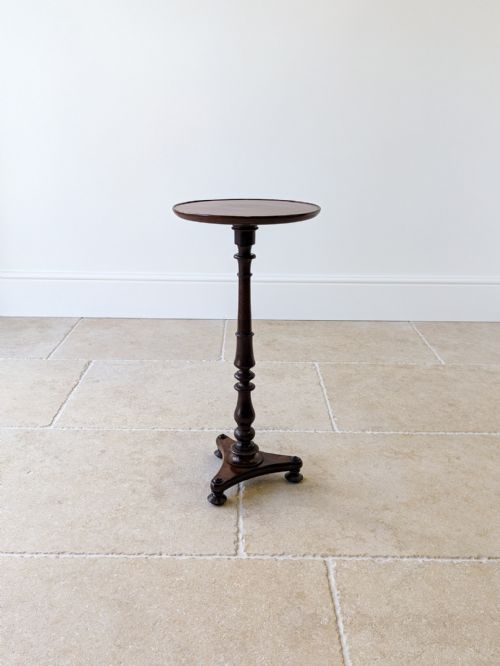
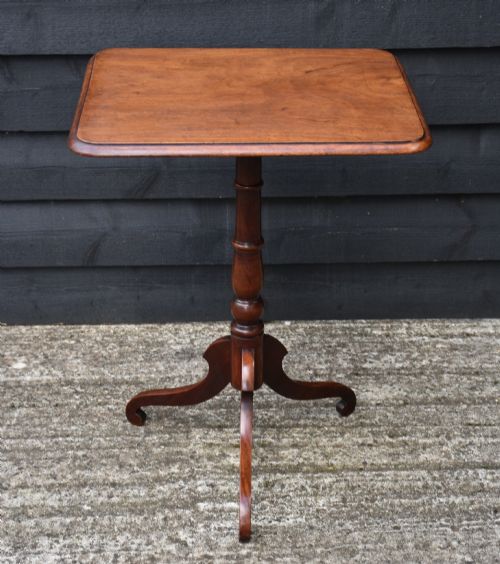
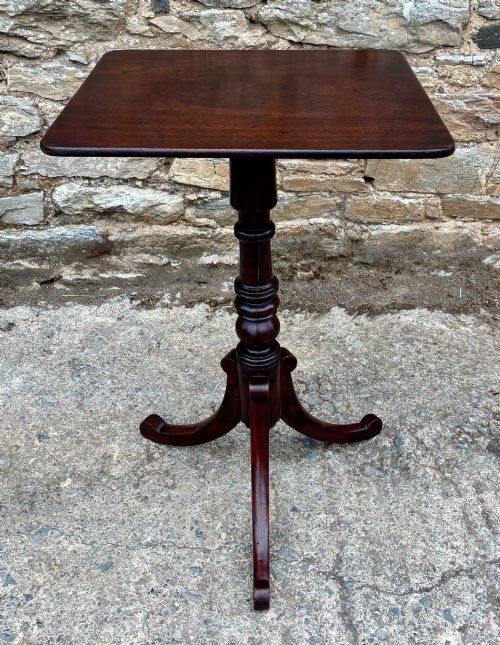
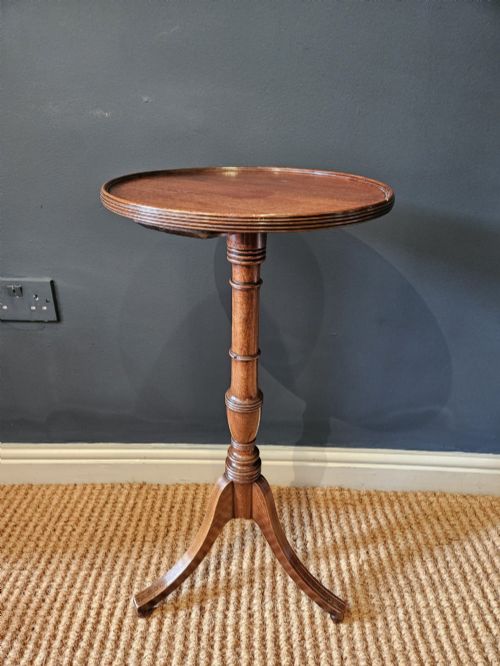

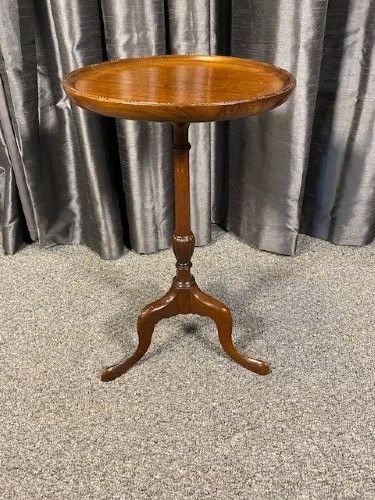
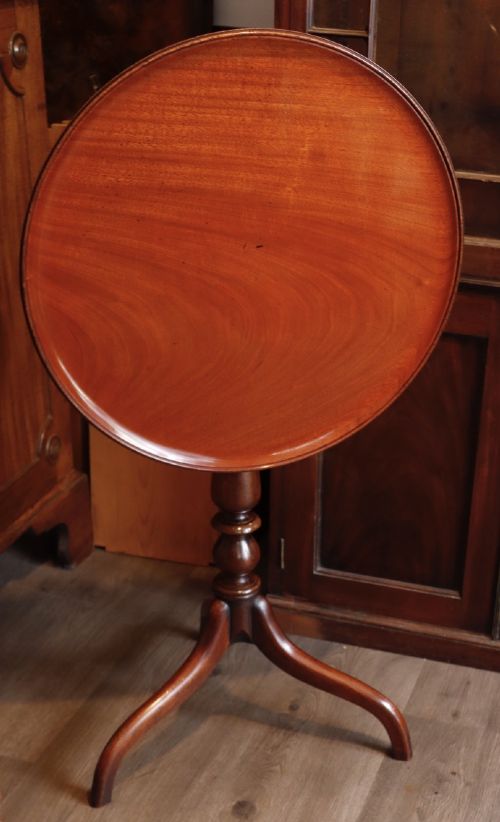
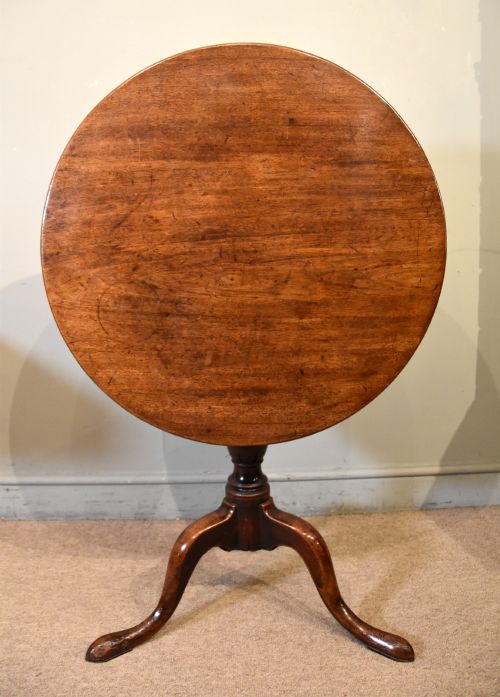
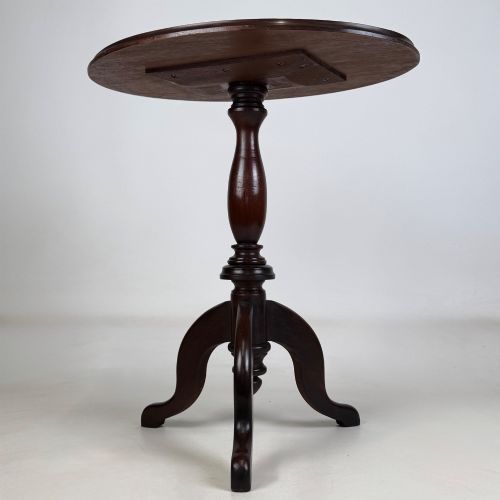
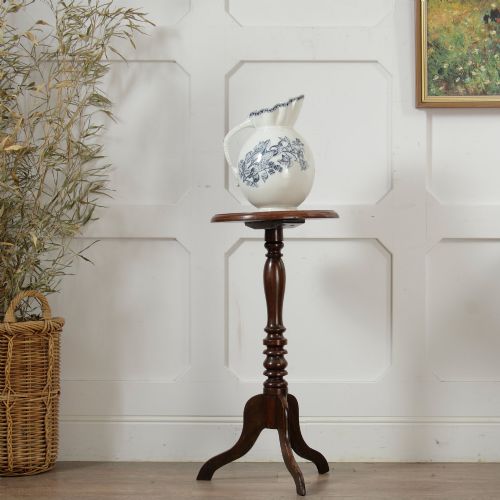
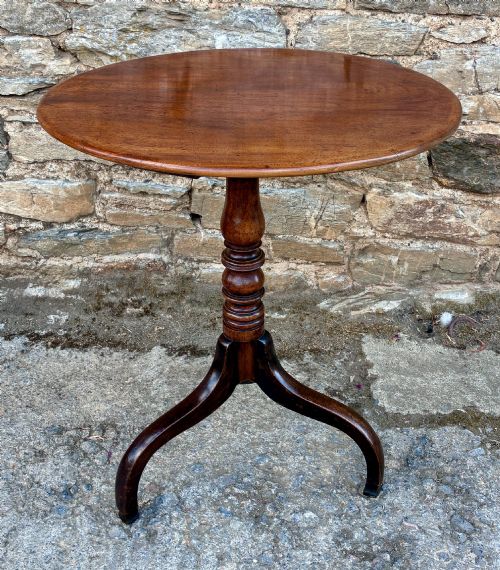
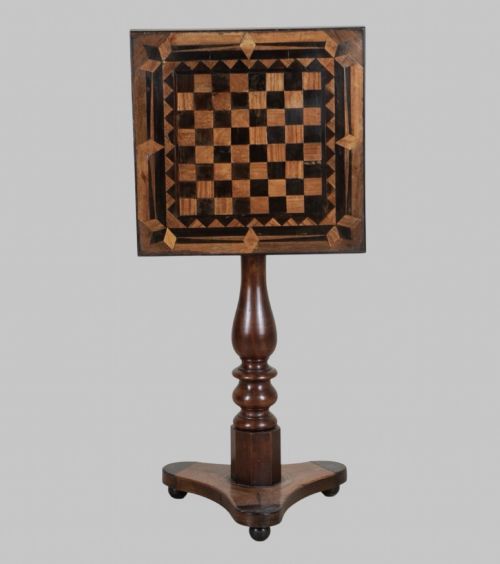
Turned Pedestal Occasional Table
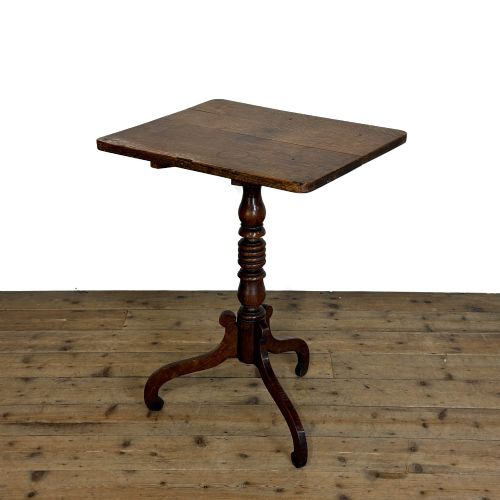
A turned pedestal occasional table offers compact surface space raised on a central pillar, valued for its mobility and classic proportions.
Turned Pedestal Occasional Table
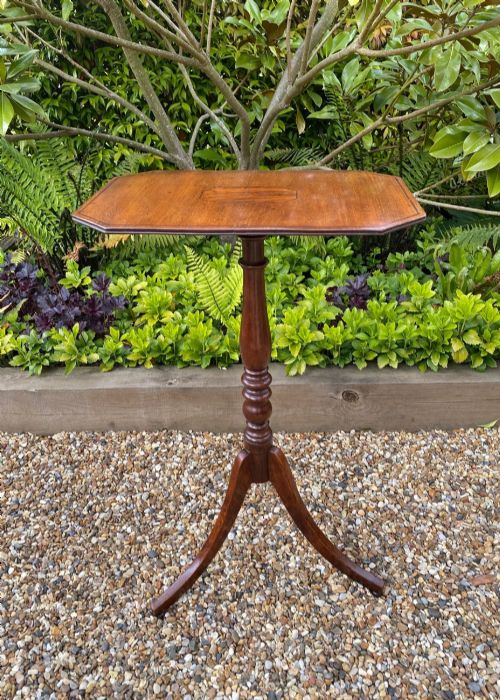
A turned pedestal occasional table serves as a mobile surface, originating in forms such as wine tables, lamp tables, and small tripod tables from the Georgian, Victorian, and Regency periods. These versatile pieces stand on a single central pillar supported by three feet or a solid base, making them easy to move beside a chair or in a corner.
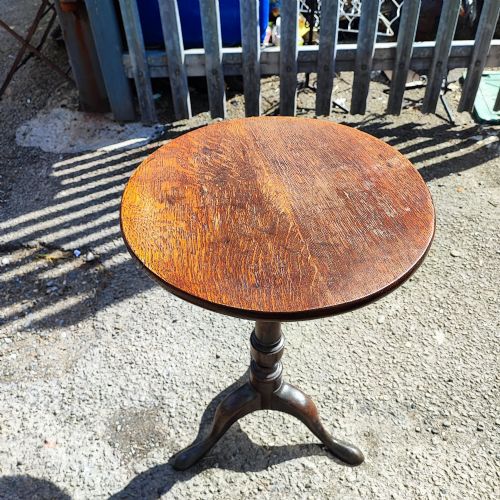
The versions most frequently met on this page date from the nineteenth century and the Georgian era, constructed primarily in mahogany and oak. Many feature circular or tilt-top mechanisms designed to save space when not in use.
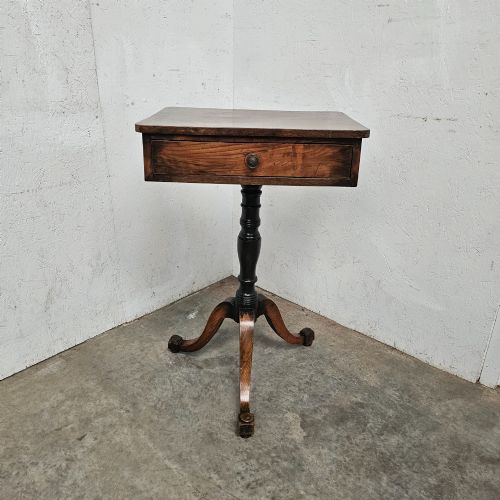
Alongside standard wine and side tables, the listings include specialised forms like games tables, sewing tables with drawers, and candle stands. These compact tables reflect the changing domestic needs of period interiors.
Materials and construction
Cabinet makers utilised dense hardwoods such as mahogany, oak, and walnut, frequently turning the central pedestal on a lathe to create balanced, rounded columns. Secondary timbers like elm and cherry appear in vernacular pieces.
Many examples incorporate a birdcage mechanism or tilting top hinge, allowing the table surface to pivot upright. Tripod legs are typically joined to the central shaft using dovetail or tenon joints for stability.
One Victorian sewing table hides internal compartments beneath its bobbin-turned pedestal, ready to catch dropped thimbles.
Judging quality
Quality rests in the crispness of the turned woodwork and the proportional balance between the top, the central pillar, and the supporting feet. Superior examples show careful selection of timber grain on the table top and tight, enduring joinery in the pedestal mechanism.
Subtle decorative touches such as boxwood stringing, fine inlay, penwork, or leather inserts elevate certain pieces above standard utilitarian models. The integrity of the original tilt-top action and the absence of heavy structural repairs also dictate the standing of a piece.
Gillows·Druce & Co London·Shoolbred·Baillie Scott
The Turned Pedestal Occasional Table Glossary
- Tilt top
- A table top hinged to the pedestal so it can pivot vertically when not in use. This clever mechanism allowed tables to be stored flat against a wall.
- Tripod table
- A small stand supported by three spreading legs attached to a central pillar. This design ensures the table remains stable on uneven floorboards.
- Birdcage
- A wooden framework beneath the table top that permits the surface to both rotate and tilt. It is typically found on finer Georgian examples.
- Gueridon
- A small ornamental stand or occasional table, often French in inspiration. These pieces frequently feature circular tops and decorative painted or inlaid surfaces.
- Vernacular
- Furniture made by local craftsmen using regional timbers rather than in fashionable urban workshops. These pieces often display charmingly straightforward construction.
Turned Pedestal Occasional Table: Frequently Asked Questions
What is a tilt top table used for?
A tilt top table provided a convenient surface for drinking wine, reading, or holding a lamp in period sitting rooms. When the meal or evening ended, the top was flipped vertically to clear floor space.
This practical feature makes them remarkably adaptable in modern homes as compact accent pieces beside armchairs.
How do I date a pedestal table?
Dating relies on examining the timber species, turning style, and leg configuration. Georgian examples often feature slender mahogany tripod legs with pad or snake feet, while Victorian versions tend to show heavier, more robust turnings.
Construction marks, such as hand-cut screws or dovetails, also offer clear clues to the decade of manufacture.
Where should I place an occasional table?
These compact tables fit easily beside sofas, between armchairs, or as stands for table lamps and plants in narrow hallways. Their small footprint allows them to occupy awkward corners that larger furniture cannot reach.
The pivoting mechanism on many models also lets you tuck them flat against a wall when floor space is tight.
What is the difference between a wine table and a side table?
Wine tables traditionally feature small, circular tops mounted on a single central pedestal with three feet, designed specifically to hold a glass and bottle. Side tables often have rectangular or oval tops and may include drawers or four legs.
Both serve as versatile occasional surfaces, but wine tables are generally lighter and easier to lift around the room.