
Turned Leg Walnut Table
A turned leg walnut table brings warmth and rich grain to a room, offering functional surface space rooted in centuries of cabinetmaking tradition.
Turned Leg Walnut Table
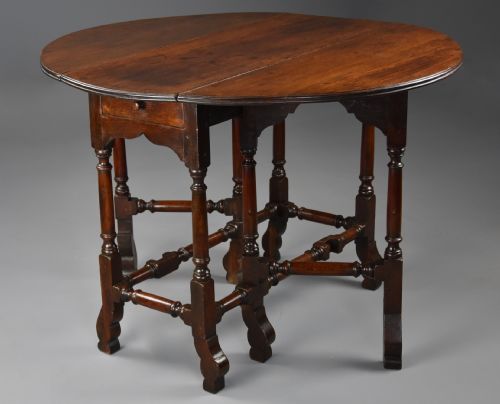
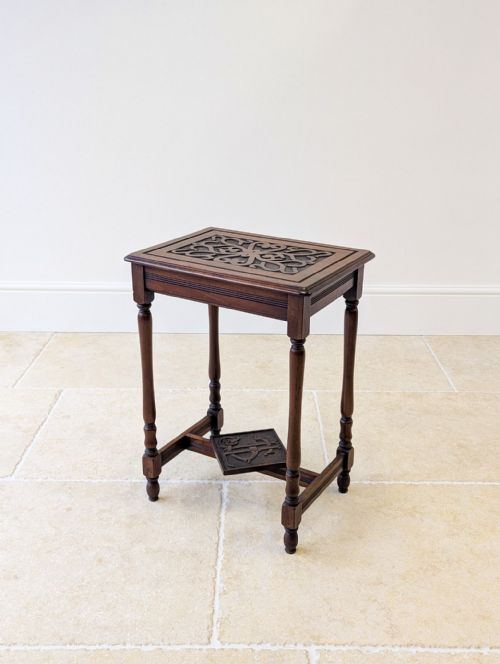
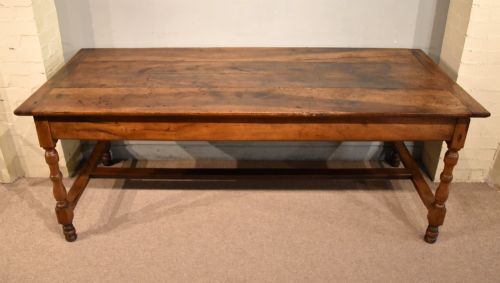
When you search for a turned leg walnut table, you encounter a variety of forms spanning several centuries, from compact occasional tables to larger dining and gateleg formats. The selections available reflect domestic life across the eighteenth, nineteenth, and early twentieth centuries, capturing shifts in interior taste from formal Georgian proportions to Victorian utility.
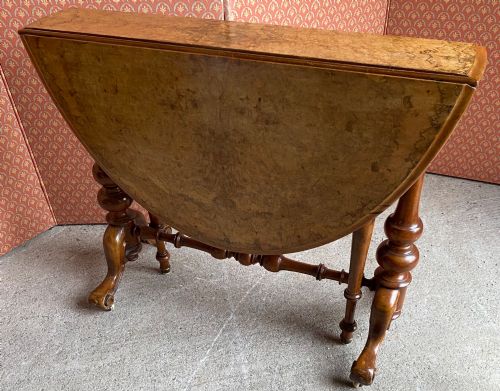
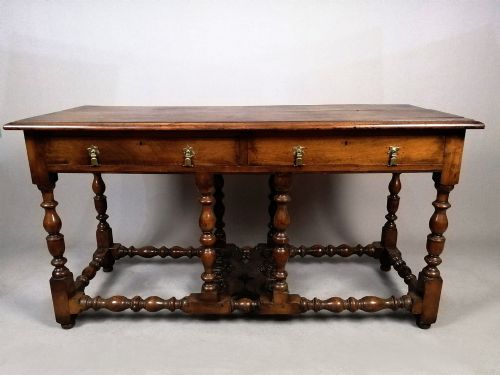
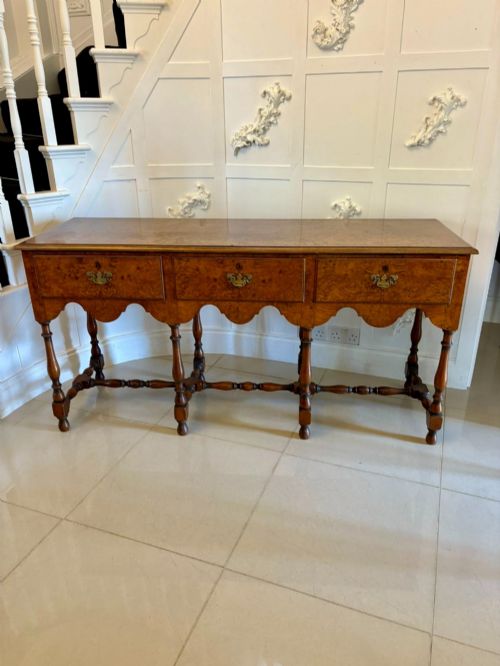
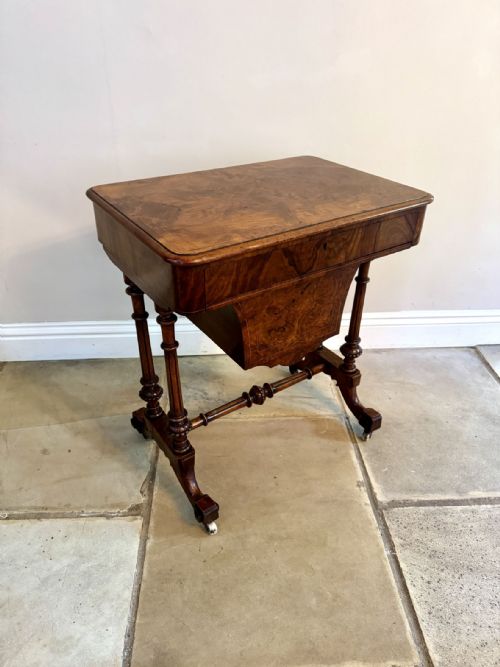
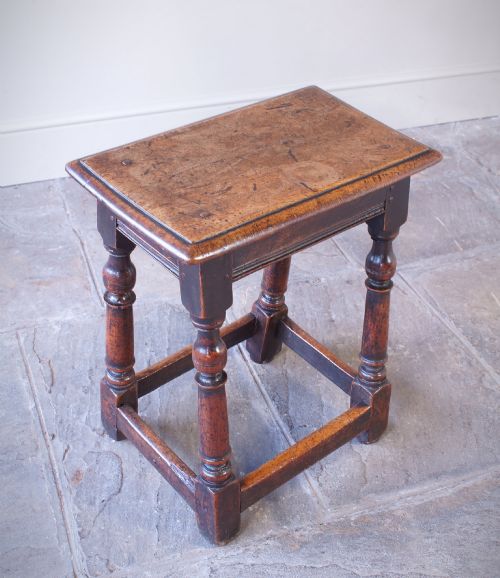
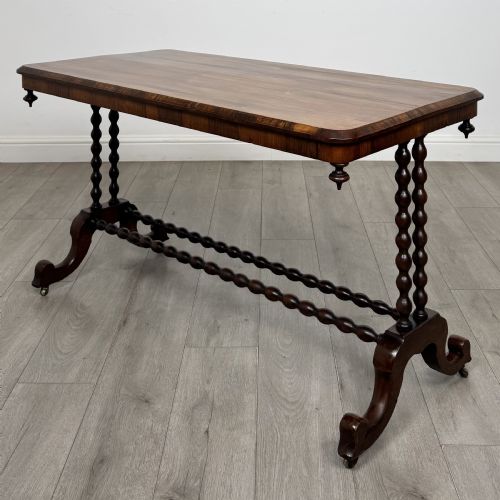
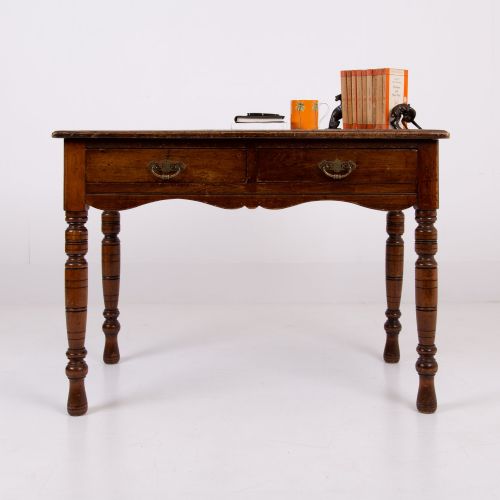
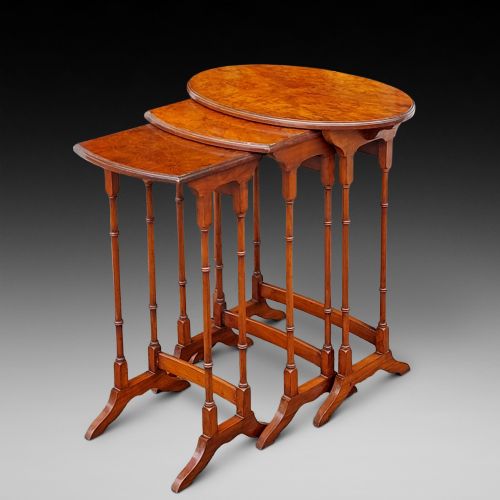
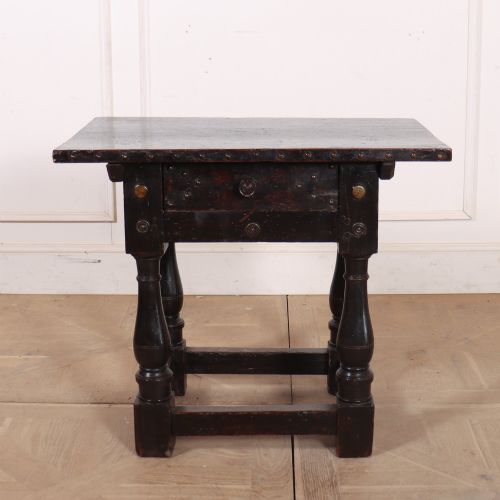
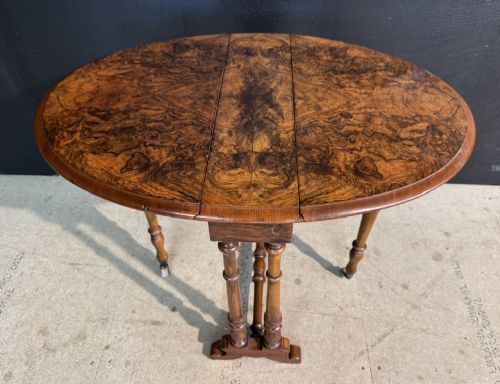
Side tables, Sutherland tables, and coffee tables dominate the forms, frequently resting on turned supports that range from simple bobbin configurations to robust vase-and-ring turnings. Walnut serves as the primary timber, sometimes presented as highly figured burr veneers or selected for its deep, warm red tones.
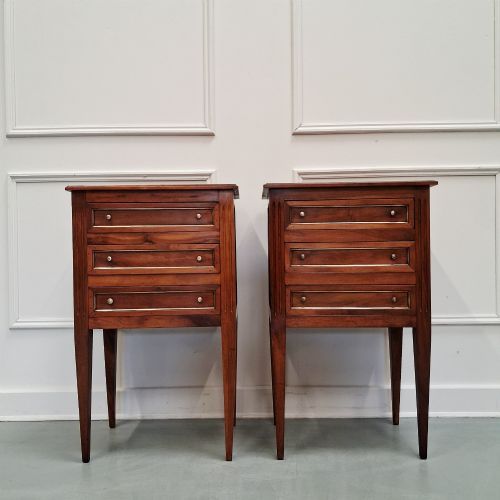
Origins stretch across British, French, and Italian workshops, introducing regional variations in edge profiles, stretcher arrangements, and leg placement. Whether built for writing, tea service, or general display, each piece demonstrates how turnery was utilised to add architectural definition to domestic furniture.
What varies in quality
Quality rests heavily on the selection of the timber and the precision of the turnery, where crisp lines in the wood indicate superior craftsmanship. Uniformity in the proportions of the turned legs and the integrity of the underlying frame structure separate standard domestic output from finer workshop productions.
The condition of the walnut surface, whether finished with a deep polish or displaying natural patina accumulated over centuries, dictates the visual impact of the piece. Subtle details like matched veneer panels, original brass fittings, and secure leg joints further distinguish exceptional examples from simpler utilitarian items.
Design influences span from French provincial and Italian baroque to English Arts and Crafts and Aesthetic Movement styles.
Liberty of London·William Birch·Shoolbred
The Turned Leg Walnut Table Glossary
- Burr walnut
- A figured veneer sliced from the knotty growths of the walnut tree, prized for its swirling grain patterns. It appears frequently on the tabletops of Victorian and Edwardian occasional pieces.
- Gateleg table
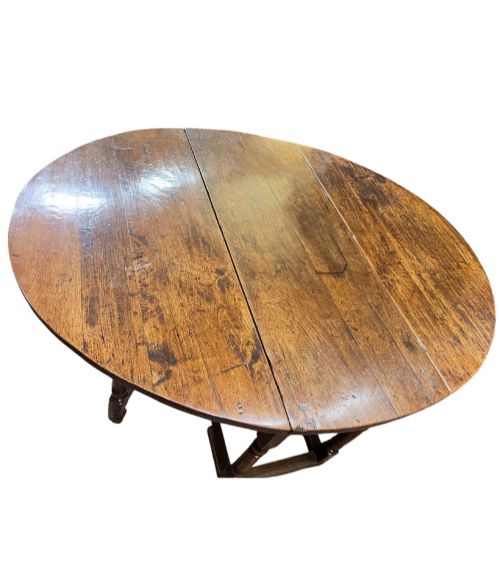
- A drop-leaf table with hinged flaps supported by swing-out legs that pivot from the frame. This form allows the surface area to expand or contract according to room requirements.
- Sutherland table
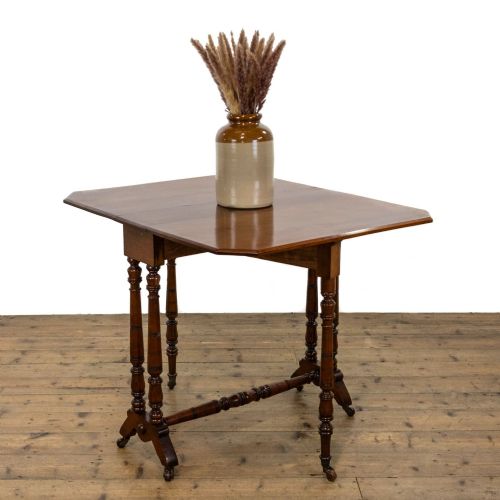
- A narrow drop-leaf table featuring exceptionally slender gatelegs that support the downward-folding leaves. It was designed in the Victorian era to occupy minimal space when folded flat.
- Bobbin turn
- A form of wood turnery characterised by a series of rounded, bead-like shapes resembling bobbins on a thread. This decorative leg style appears across various nineteenth-century side and coffee tables.
- Patina
- The surface sheen and mellow colour developed by timber over long periods through handling, light exposure, and waxing. It serves as a visual indicator of age and historical care.
Turned Leg Walnut Table: Frequently Asked Questions
What periods do these tables cover?
The pieces span from the early eighteenth century through the Victorian and Edwardian eras up to the nineteen-twenties. This broad timeline captures significant shifts in domestic furniture design and woodworking techniques.
Earlier examples from the seventeen-hundreds often feature simple gateleg forms, while later nineteenth-century pieces introduce diverse styles like the Aesthetic Movement and Carolean revivals.
How were walnut tables used historically?
These tables served multiple domestic functions depending on their form, acting as writing desks, tea tables, lamp stands, and dining surfaces. Smaller occasional and Sutherland tables allowed households to easily reconfigure room layouts.
Larger gateleg and centre tables provided stable surfaces for dining and library tasks, accommodating the daily needs of nineteenth-century domestic life.
What is burr walnut?
Burr walnut is a decorative wood veneer sourced from the deformed growths or burls on walnut trees. It yields complex, swirling grain patterns that were particularly favoured by Victorian cabinetmakers.
Because of its striking appearance, it was typically applied to the primary surfaces of tabletops to create a decorative focal point.
How do I identify turned leg styles?
Turned legs are shaped on a lathe and vary from simple bobbin and reeded profiles to complex spiral and vase-and-ring configurations. The specific turning style often points to the period and regional origin of the piece.
Examining the crispness and symmetry of the turned elements helps distinguish standard production furniture from higher-quality workshop items.