
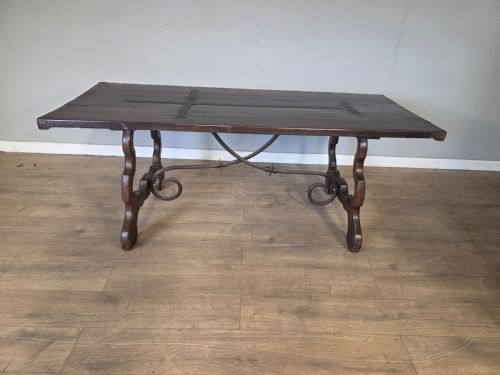

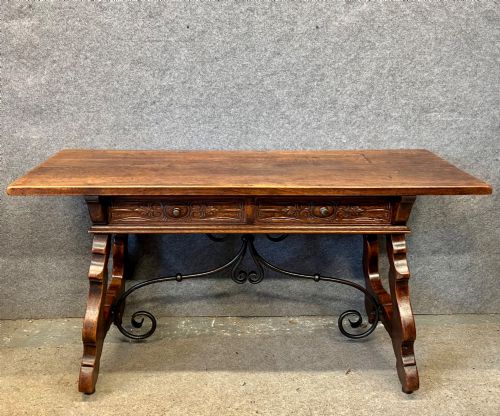


Wrought Iron Wood Table
These wrought iron wood table pieces combine iron work and timber tops to form solid functional surfaces that anchor a room.
Wrought Iron Wood Table
A wrought iron wood table brings together forged metal elements and heavy timber tops to create robust surfaces for domestic and work use. When searching for a wrought iron wood table, buyers encounter formats ranging from large refectory dining boards to low coffee tables and provincial workbenches. The examples appearing here span centuries from the seventeenth to the twentieth, reflecting various regional traditions including Spanish Baroque, Spanish Colonial, and Rustic French styles.
Most pieces on this page lean heavily toward Spanish origins, utilising walnut, oak, chestnut, and fruitwood alongside iron. Formats vary widely across the inventory, encompassing side tables, console tables, occasional pieces, and heavy trestle designs. Buyers will find that walnut surfaces paired with iron bracing dominate the selection, offering substantial weight and direct historical utility.
How they were made
The construction relies on the pairing of dense hardwoods like walnut, oak, fruitwood, and chestnut with hand-forged iron elements. Joinery is typically straightforward and robust, designed to support heavy timber tops without modern adhesives or fixings.
Makers utilised iron for structural stretchers, scroll work, and bracing beneath the wooden boards. The timber surfaces show hand-planed finishes and natural grain patterns developed through prolonged use over centuries.
The listings here feature walnut, oak, chestnut, and fruitwood paired with iron across centuries ranging from the seventeenth to the twentieth.
What varies in quality
Quality rests in the depth of the original patina and the integrity of the timber selection. Pieces exhibiting untouched walnut surfaces and authentic hand-forged iron scroll work sit at the upper end of the range.
Proportion and the harmony between the metal underframe and the wooden top dictate the visual balance of each piece. Finer examples maintain structural honesty where every iron brace and wooden plank serves its original mechanical purpose.
The Wrought Iron Wood Table Glossary
- Refectory Table
- A long dining table traditionally used in monastic refectories and large domestic halls. These surfaces provide generous proportions supported by sturdy underframes.
- Trestle Table
- A table consisting of two or more support frames connected by a horizontal beam or stretcher. This design allows for maximum legroom along the length of the board.
- Patina
- The surface sheen and colour developed by wood and metal over decades or centuries of handling. A good patina reflects genuine age and continuous use.
- Fruitwood
- Timber sourced from fruit-bearing trees such as pear, apple, or cherry. It offers a dense, fine-grained surface favoured by provincial makers.
- Stretcher
- A horizontal support connecting the legs of a table to increase rigidity and strength. In these pieces, stretchers are frequently forged from iron.
Wrought Iron Wood Table: Frequently Asked Questions
Where were these tables originally used?
These pieces served practical functions in domestic dining rooms, provincial workshops, and monastic settings across Spain, France, and wider Europe.
They provided heavy, stable surfaces for food preparation, dining, and daily administrative tasks.
How do I care for the wooden top?
Maintain the timber by applying natural waxes sparingly to preserve the dry, historic finish without creating an artificial gloss.
Avoid placing these surfaces in direct sunlight or near sudden heat sources that might dry out old walnut or chestnut.
How do I identify a seventeenth century piece?
Look for dense solid walnut construction, hand-forged iron stretchers with simple shaping, and deep original surface patination.
Construction methods will show straightforward joinery without modern machine marks or standard fasteners.
Can I use a refectory table for daily dining?
These tables are built with robust timbers and iron bracing, making them exceptionally strong for everyday family use.
The generous proportions comfortably accommodate multiple chairs and heavy daily service.