
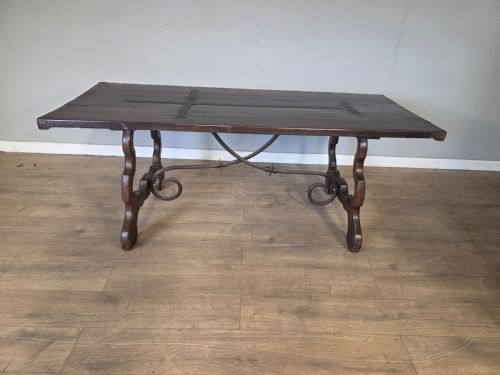


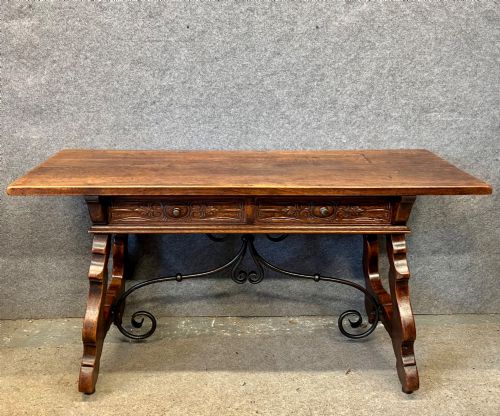

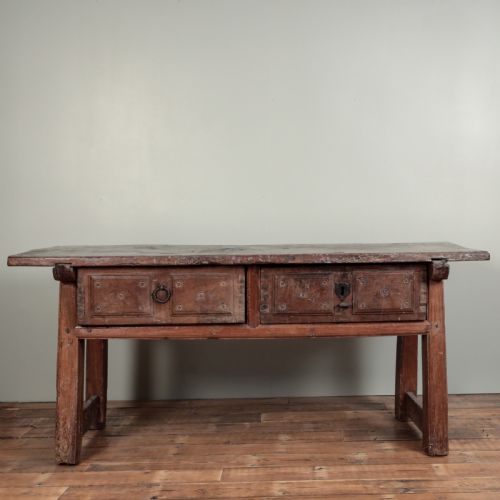


Antique Spanish Trestle Desk
These heavy walnut and oak pieces bring genuine antique Spanish trestle desk character into a room with their bold lines and ironwork.
Antique Spanish Trestle Desk
The antique Spanish trestle desk category covers robust working surfaces and writing tables rooted in seventeenth and eighteenth-century forms. Walnut and oak dominate the selection, often accompanied by wrought iron stretchers and supports.
Buyers encounter seventeenth-century walnut writing pieces alongside later revival interpretations from the early twentieth century. These forms range from simple servers and refectory tables to elaborate vargueno cabinets on stands.
Materials and construction
Construction relies heavily on solid walnut, oak, and fruitwood, selected for dense grain and structural strength. Timber framing utilises traditional joinery to support heavy tops without modern adhesives.
Bone appears in the listings alongside heavy ironwork, adding an unexpected flash of white to dark seventeenth-century walnut cabinetry.
Assessing quality
Quality rests on the depth of the original patina and the integrity of the timber surface. Early walnut surfaces show rich colour built up over centuries of use, distinguishing them from later interpretations.
Construction methods and the weight of the ironwork dictate durability. Substantial timber thickness and hand-forged iron elements indicate higher craftsmanship than lighter revival pieces.
The Antique Spanish Trestle Desk Glossary
- Vargueno
- A traditional Spanish cabinet with a drop-front writing surface concealing numerous small drawers. It typically sits upon a dedicated wooden or iron stand.
- Patina
- The surface sheen and colour acquired by wood through age and handling. Good patina indicates minimal harsh restoration and long preservation.
- Trestle
- A support structure consisting of two or more vertical frames connected by a horizontal beam. This design provides robust stability for large working surfaces.
- Refectory table
- A long dining or working table originally used in monastic dining halls. These sturdy forms often feature heavy wooden tops and substantial underframes.
Antique Spanish Trestle Desk: Frequently Asked Questions
How do I care for antique walnut?
Keep wooden surfaces away from direct heat sources and strong sunlight to prevent the timber from drying out over time. Apply a traditional wax polish occasionally to nourish the grain and maintain the surface sheen.
Avoid using modern liquid sprays or silicone cleaners on older finishes. A soft, dry cloth is sufficient for regular dusting.
Are these suitable for daily work?
Solid timber construction makes these sturdy enough for contemporary writing tasks and computer use. Ensure that chairs fit comfortably beneath the framework, as older desks often feature lower clearance heights.
Protect the historic surface by using a blotter or leather pad for writing. This prevents ink marks or scratches on the aged wood.
How can I date a table?
Examine the timber grain, tool marks, and construction joints for signs of age. Seventeenth-century examples display hand-cut joinery and heavy walnut or oak planks.
Revival pieces from the twentieth century often feature standardised machine cuts and cleaner timber surfaces. Compare the hardware and ironwork styles with known period examples.