


Turned Leg Sutherland Table
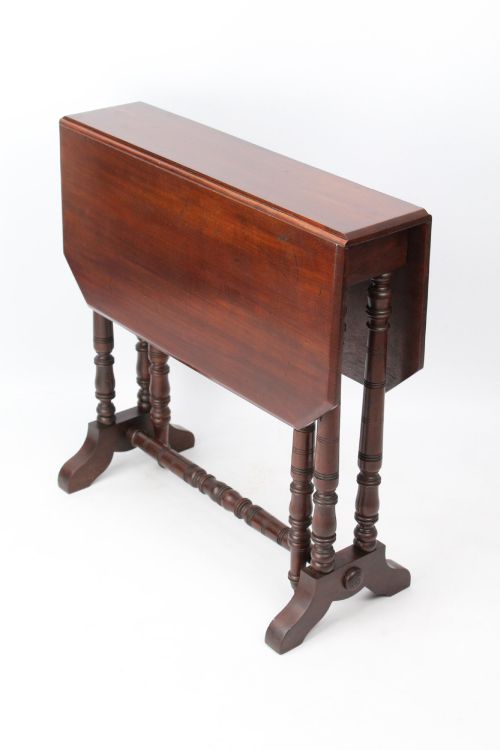
A turned leg sutherland table offers folding leaves and slender proportions, serving as a space-saving tea or occasional table.
Turned Leg Sutherland Table
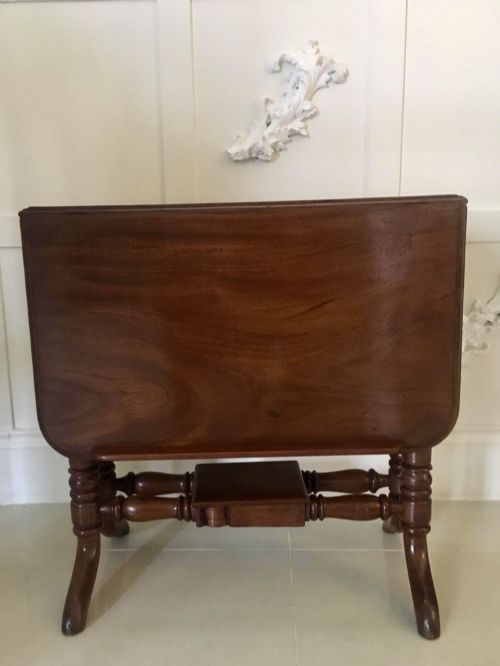
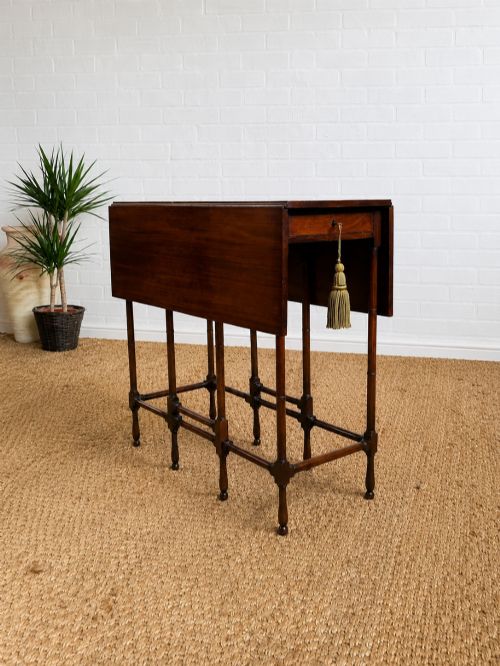
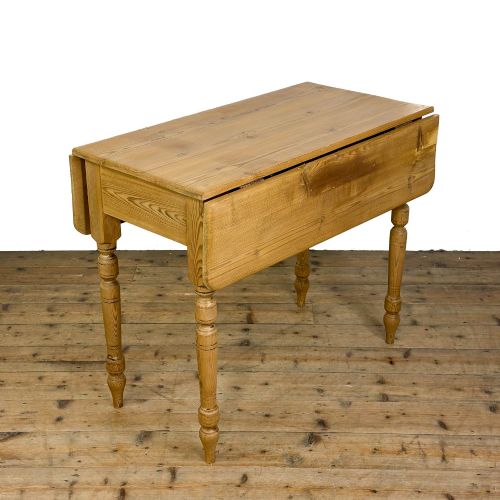
A turned leg sutherland table is a narrow drop-leaf table designed to fold flat when not in use. These pieces appear primarily across the Victorian and Edwardian periods, stretching from the mid nineteenth century into the early twentieth century.
The form functions as an occasional, tea, or dining table depending on its scale. Buyers frequently encounter mahogany and walnut examples, alongside occasional pieces in pine, oak, or satinwood.
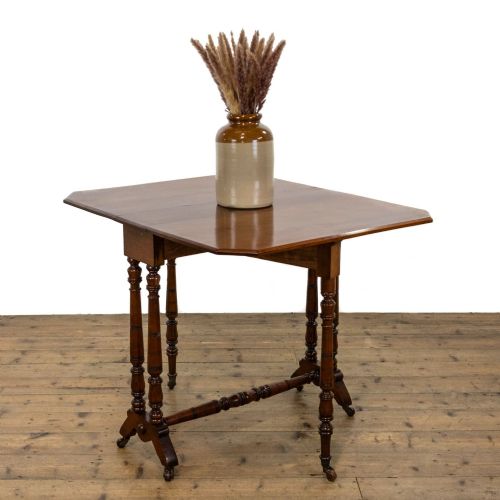
Makers utilised various turnings for the leg supports, ranging from traditional turned components to bamboo-turned details and bobbin turned legs. Dimensions range from miniature and baby sizes up to larger dining variants.
How they were made
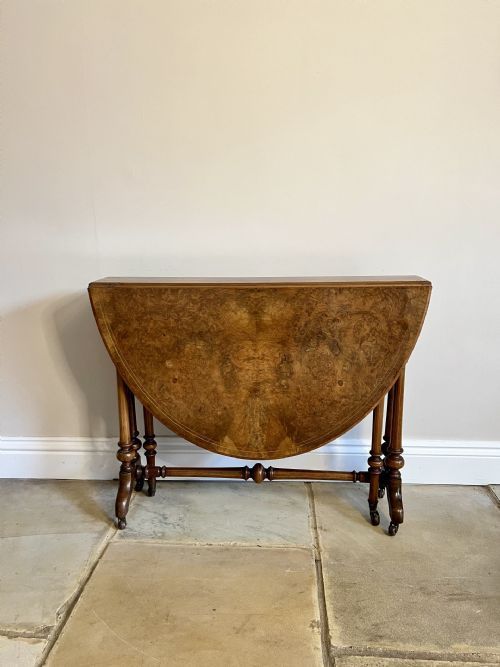
Cabinet makers constructed these tables using timbers such as mahogany, walnut, burr walnut, oak, and satinwood, frequently pairing figured veneers with solid secondary woods like pine. Drop leaves hinge from a narrow central fixed top, supported by pivoting gate legs that swing outward.
Legs and stretchers feature turned woodwork, incorporating brass or ceramic castors to aid mobility when folding the leaves. Inlaid details, such as boxwood stringing or decorative banding, adorn the top surfaces of finer Victorian and Edwardian pieces.
Turned Leg Sutherland Table Retail Price Guide 2026
Typical asking prices for turned leg sutherland table among the pieces listed under this phrase on Sellingantiques today, from the lower quarter to the upper quarter. They describe what is for sale here now, not the wider market.
Table forms range from small occasional and coffee tables to miniature pieces and drop leaf dining tables seating four.
What varies in quality
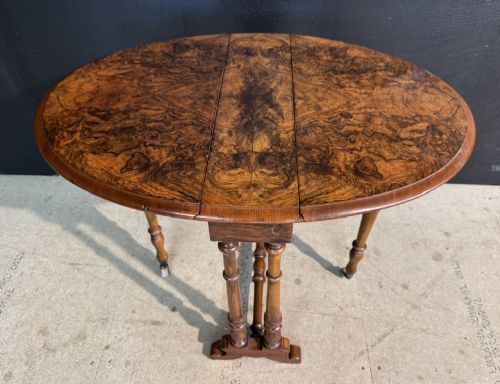
Quality rests in the choice of timber and the precision of the hinge mechanism. Burr walnut and figured satinwood command attention for their rich grain patterns, while solid mahogany and oak provide sturdy durability.
The crispness of the leg turnings and the stability of the gate leg action determine the overall execution. Subtle details like inlaid marquetry and original brass and ceramic castors elevate the standing of an individual piece.
The Turned Leg Sutherland Table Glossary
- Drop-leaf table
- A table with a fixed central section and hinged leaves that fold down at the sides. These flaps are supported by swing-out legs when raised.
- Gate leg
- A leg hinged to swing outward like a gate, providing support for a drop leaf. This construction allows the table to fold into a narrow footprint.
- Burr walnut
- Timber taken from the warted growth of a walnut tree, highly prized for its swirling, intricate grain patterns. Cabinet makers utilised veneers of this wood on tabletops.
- Bobbin turned
- Wood turned on a lathe to create a series of rounded, spool-like shapes along the length of a leg or stretcher. This decorative turning appears on nineteenth-century vernacular and formal pieces.
- Satinwood
- A dense, yellowish timber with a lustrous, reflective grain utilised for fine furniture. Makers applied it for its bright appearance and smooth finish.
Turned Leg Sutherland Table: Frequently Asked Questions
What is a sutherland table?
A sutherland table is a narrow drop-leaf table designed to fold into a compact size when not in use. The leaves are typically wide, while the fixed centre top remains narrow.
Originating in the nineteenth century, these tables function as tea tables, occasional tables, or small dining surfaces. Their hinged gate legs swing out to support the lowered leaves.
How do you date a sutherland table?
Dating relies on timber selection, construction methods, and stylistic details recorded across the Victorian and Edwardian eras. Mid-nineteenth-century pieces often feature solid mahogany or walnut with robust turnings.
Later Edwardian examples incorporate lighter satinwood, delicate inlay, or bamboo-turned legs. Castor types, from brass to ceramic, also help narrow down the period of manufacture.
Where were sutherland tables used?
These tables sat in Victorian and Edwardian sitting rooms and drawing rooms as afternoon tea or occasional tables. Their folding design allowed servants or homeowners to store them against a wall when floor space was needed.
Larger versions served as dining tables that accommodated four people. Smaller miniature or baby variants functioned primarily as decorative display pieces.
What woods were used for sutherland tables?
Mahogany and walnut form the majority of surviving examples, often highlighted by figured burr walnut veneers on the top surfaces. Oak and pine appear in country or vernacular pieces.
Finer examples utilise exotic timbers such as satinwood, sometimes enhanced with inlaid stringing. The turned legs and stretchers match the primary timber of the frame.