
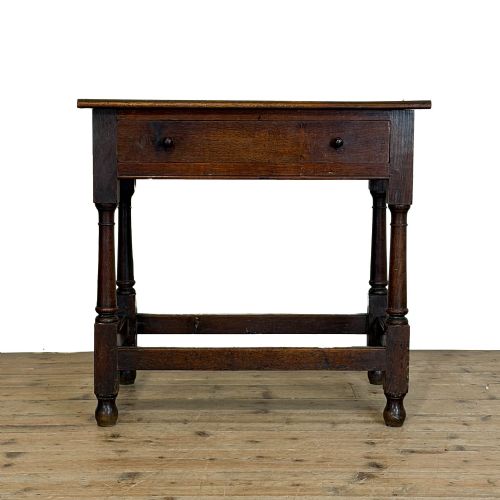
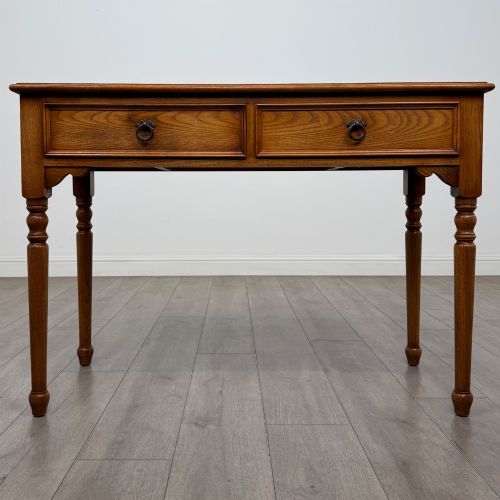
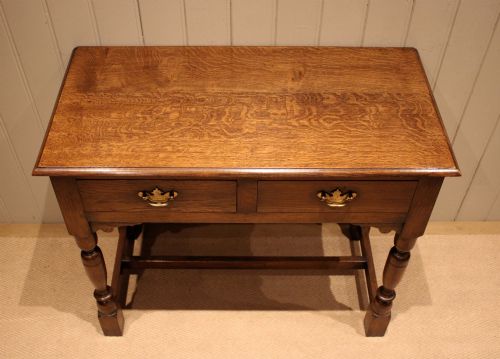

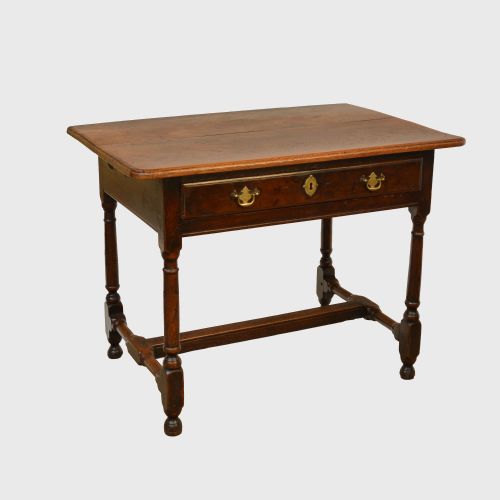
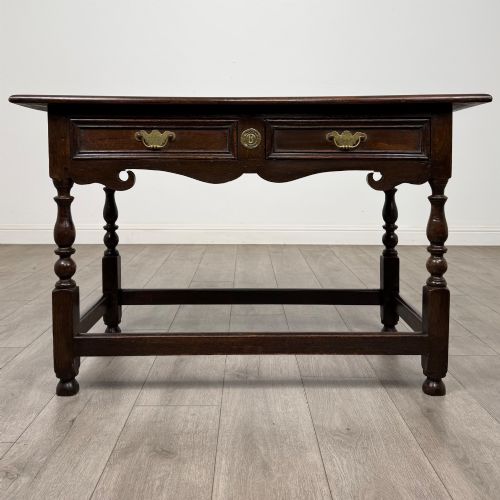
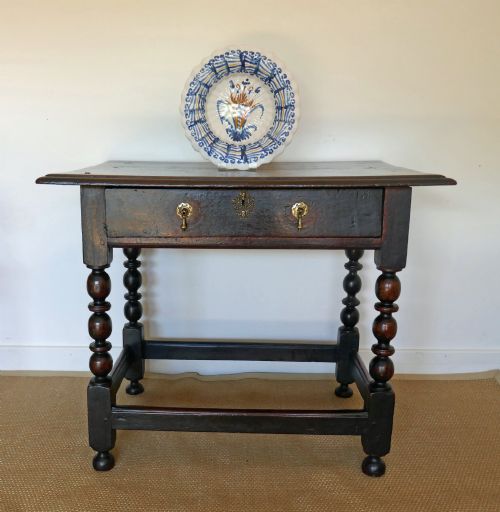
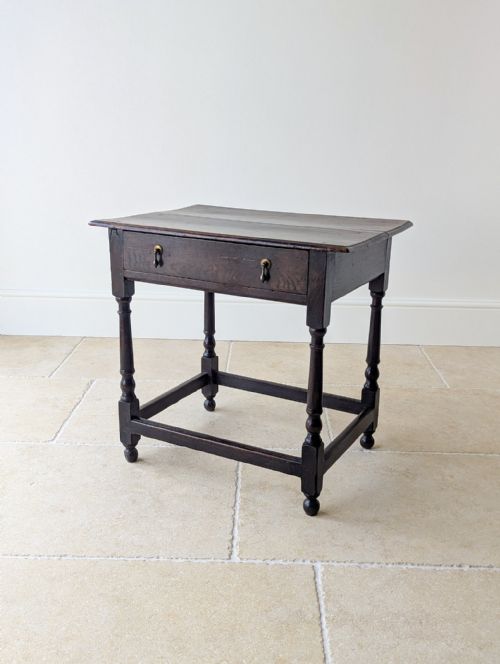
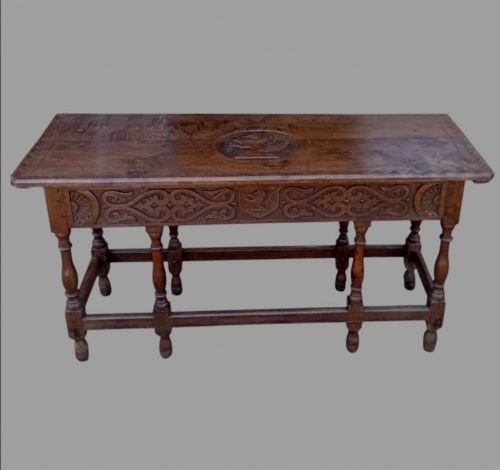
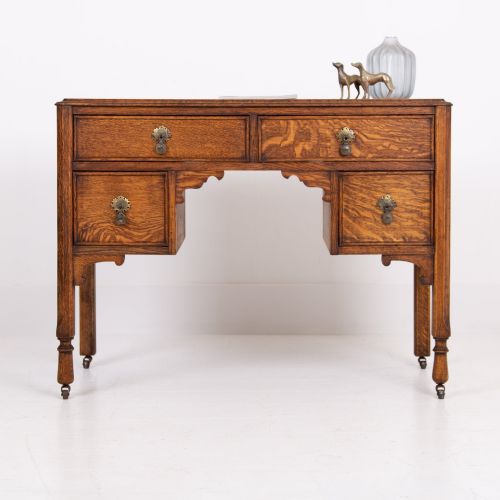
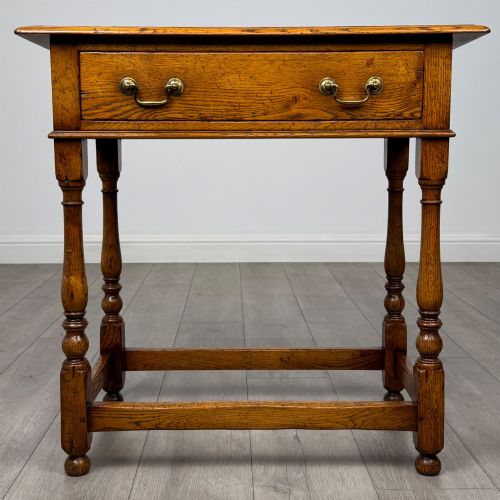
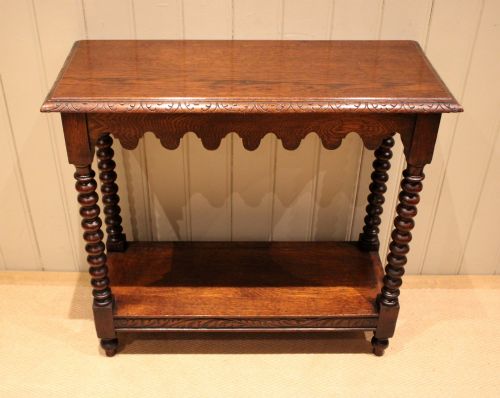
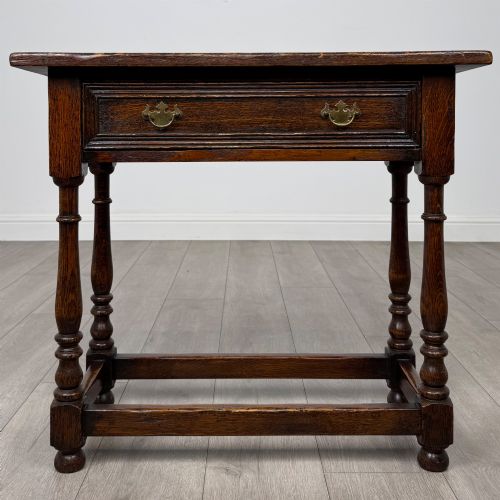
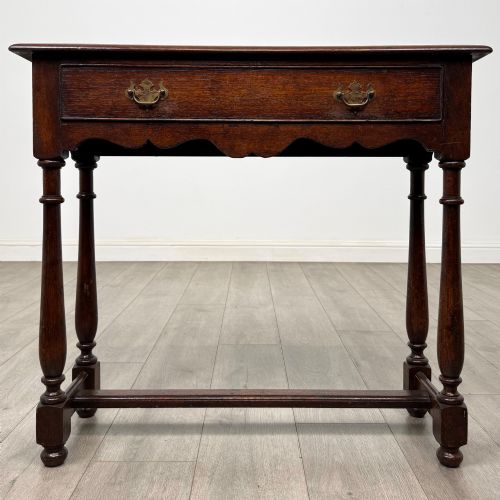
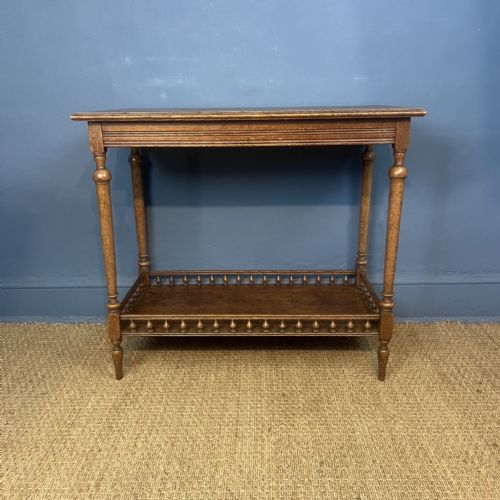
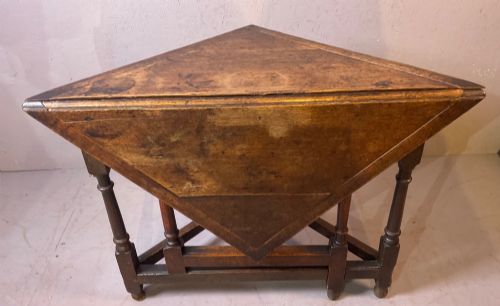
Turned Leg Oak Console
These turned leg oak console tables combine practical surfaces with robust timber construction, offering a sturdy addition to hallways and reception rooms.
Turned Leg Oak Console
A turned leg oak console typically presents as a side table, writing table, or dresser base, designed to sit flush against a wall in domestic spaces.
The selections span centuries of cabinet making, ranging from seventeenth-century provincial pieces to later revival items produced in the Edwardian era and the nineteen-twenties.
English country examples frequently appear alongside formal Georgian designs and seventeenth-century prototypes featuring bold proportions and turned supports.
Assessing Quality
The integrity of the timber and the depth of the natural patination distinguish superior specimens from plain utilitarian examples.
Crispness in the execution of the turned legs and the retention of original brass hardware indicate higher workshop standards during production.
Proportion and balance dictate the visual weight of the piece, with bolder seventeenth-century proportions contrasting against narrower twentieth-century interpretations.
Listings span from the seventeenth century through to nineteen-twenty, incorporating oak alongside brass, mahogany, leather, elm, and iron.
The Turned Leg Oak Console Glossary
- Console table
- A table designed to be fixed against a wall, frequently supported by brackets or legs at the front.
- Dresser base
- A low wooden sideboard or table featuring drawers, commonly constructed from solid oak in country workshops.
- Jacobean Revival
- A nineteenth and twentieth-century style imitating the heavy, carved forms of the early seventeenth century.
- Demi-lune
- A half-moon shape utilised for table tops and furniture fronts during the Georgian and later periods.
- Patination
- The surface sheen and colour acquired by wood through age, handling, and exposure to light over centuries.
Turned Leg Oak Console: Frequently Asked Questions
Where do I put a console table?
These tables find a natural home in entrance halls, corridors, or narrow living spaces where a shallow surface is required without blocking foot traffic.
They also serve as writing desks or display surfaces in reception rooms against a blank wall.
How do I date an oak table?
Dating relies on observing construction methods, tool marks, and timber shrinkage alongside stylistic indicators such as leg turnings and drawer dovetails.
Earlier seventeenth-century pieces show hand-riven timber and peg joinery, whereas twentieth-century revivals utilise more uniform machine-sawn boards.
What is a dresser base?
A dresser base is a long, low table fitted with rows of drawers beneath the main top board, originally utilised in kitchens or dining rooms for storage.
Unlike standard side tables, they offer substantial under-counter capacity while maintaining a narrow profile.
Are these tables solid oak?
The majority of listings feature solid oak construction, though secondary woods like elm and yew occasionally appear in internal framing or drawer linings.
Revival pieces from the twentieth century maintain this solid timber tradition alongside earlier examples.