
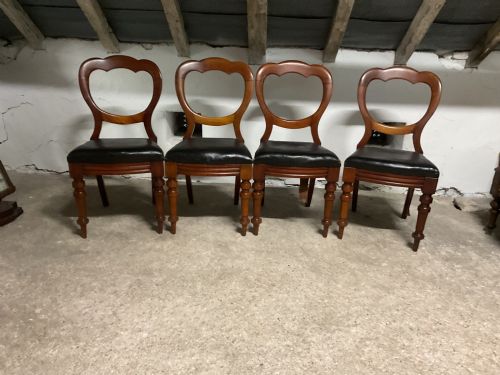
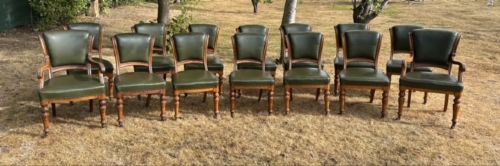
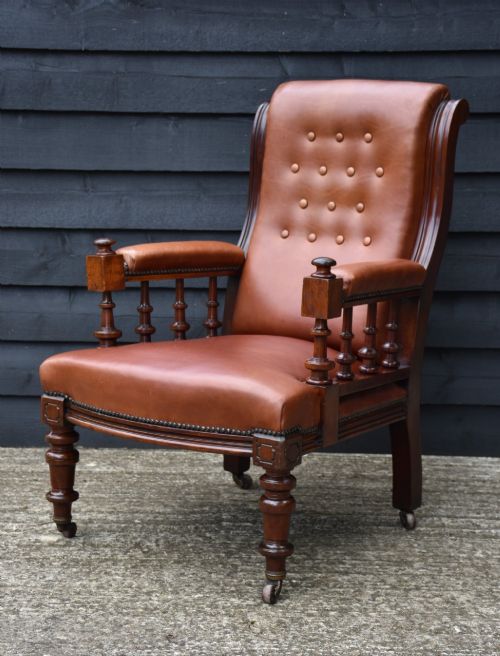
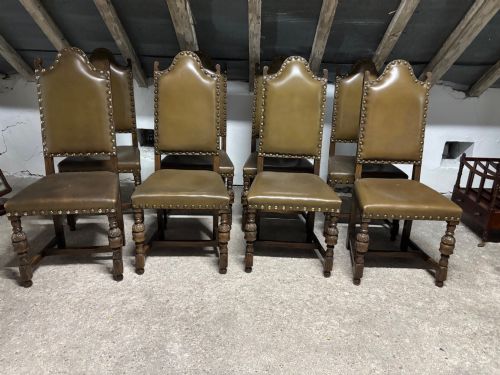



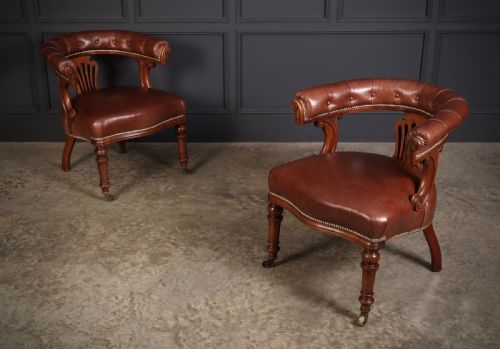
Turned Leg Leather Chair
A turned leg leather chair brings sturdy timber framing and patinated hide together for practical comfort.
Turned Leg Leather Chair
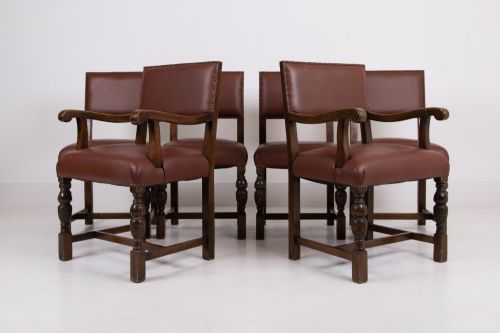
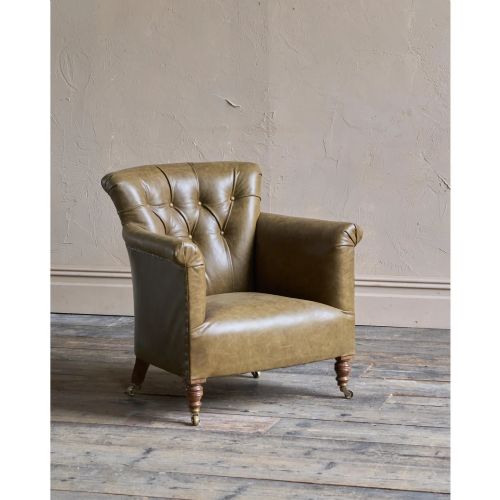
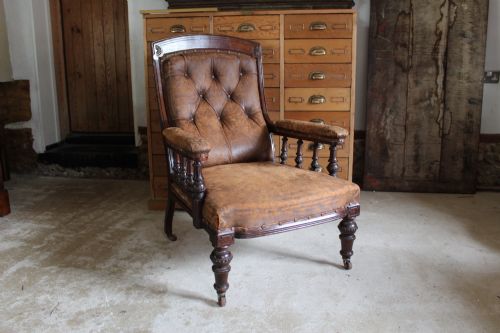
A turned leg leather chair is a seat featuring solid wood legs shaped on a lathe and upholstery in natural hide. Buyers search for these pieces to add firm support and traditional character to libraries, studies and reception rooms.
The most common examples on this page date from the nineteenth century, often appearing as library armchairs, desk chairs or carvers with oak, mahogany or walnut frames. Victorian and Edwardian iterations dominate the selection, alongside earlier Regency designs.
What varies in quality
Quality rests upon the crispness of the lathe turning on the timber legs and the weight of the underlying frame timber. Dense, well-seasoned oak, walnut or mahogany provides the structural rigidity expected in a substantial library or desk chair.
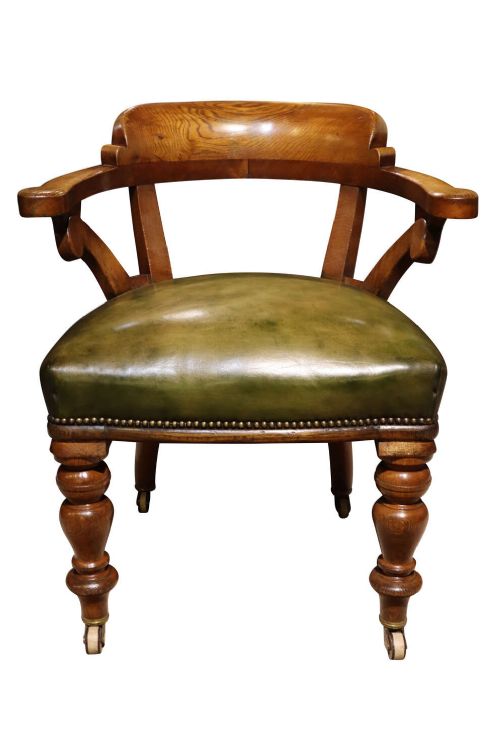
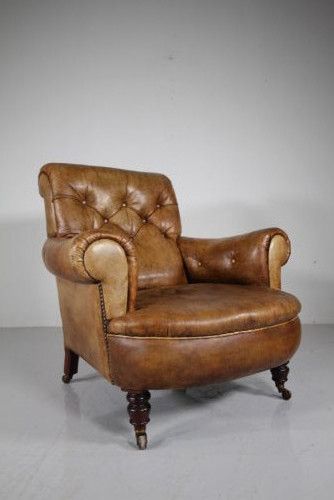
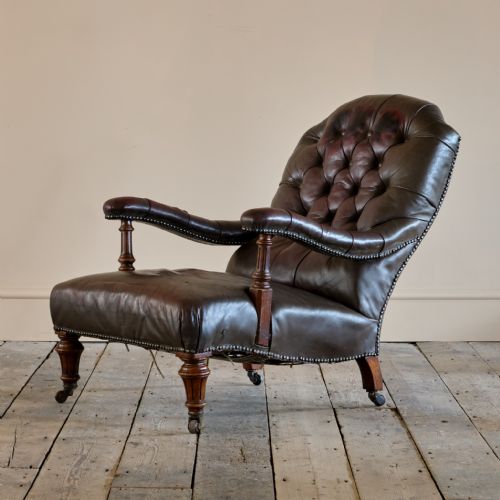
The grade of the leather upholstery and the integrity of its finish determine the tactile appeal of the seat. Superior examples retain supple hide with natural patination, whilst finer library chairs incorporate original brass cappings and working castors.
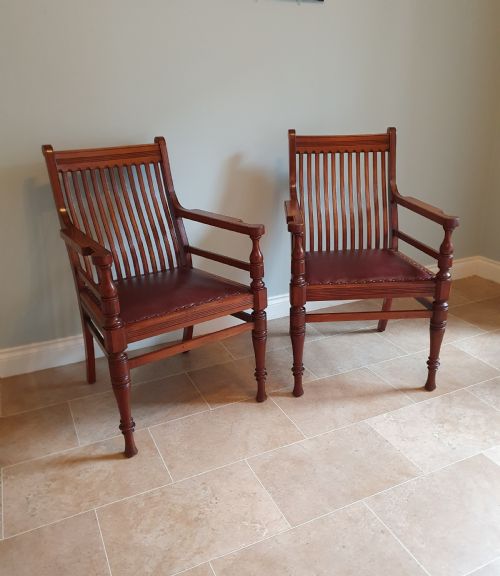
The selection includes library armchairs, desk chairs, rocking chairs and complete dining sets.
Howard and Sons·W. Williamson and Sons·John Taylor and Son·Gillows·William Birch
The Turned Leg Leather Chair Glossary
- Turned leg
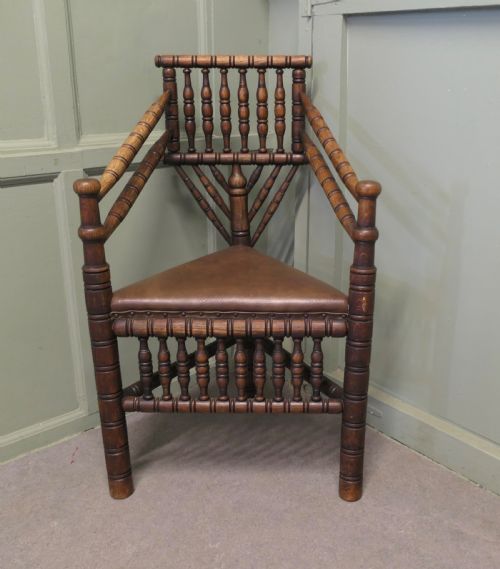
- A wooden leg shaped by rotating it on a lathe to create cylindrical, reeded or spiral profiles. This decorative technique appears across Victorian, Edwardian and earlier frames.
- Library armchair
- A large, upholstered seat designed for reading rooms, typically featuring padded arms and a supportive backrest. These chairs frequently combine mahogany or oak with leather upholstery.
- Carver chair
- An open armchair, often styled to match a set of smaller dining chairs. They provide wider seats and armrests for greater comfort.
- Brass castor
- A small swiveling wheel attached to the base of a furniture leg, often capped in brass. They allowed heavy library and desk chairs to move smoothly across floorboards.
- Morocco leather
- A fine goatskin leather traditionally tanned with sumac and given a distinctive pebbled grain texture. It was frequently used for high-end nineteenth-century upholstery.
Turned Leg Leather Chair: Frequently Asked Questions
What is a turned leg leather chair?
A turned leg leather chair is a traditional seating option featuring a wooden frame with lathe-turned legs and upholstered leather panels. These pieces combine structural timber with resilient hide to provide durable seating for studies and reception rooms.
Examples range from compact desk chairs to large library armchairs produced across the nineteenth and early twentieth centuries. They suit both traditional interiors and spaces requiring period character.
How do I date a leather chair?
Dating these chairs involves examining the timber species, the style of the leg turning, and the construction methods used in the frame. Victorian and Edwardian pieces often display heavier proportions and specific upholstery techniques.
Earlier Regency designs show lighter frames with simulated rosewood or mahogany finishes, whilst later revival styles incorporate seventeenth-century motifs. Comparing the brass fixings and castors also helps narrow down the period of manufacture.
Where were these chairs used?
These seats served primarily in formal libraries, studies, offices and dining rooms where durability and formal appearance mattered. Library armchairs and desk chairs provided comfortable seating for reading and writing.
Carver chairs and side chairs were grouped around dining tables or placed in hallways and parlours. Their sturdy construction suited daily use in busy households.
How do I care for antique leather?
Maintaining antique leather requires keeping the material nourished with appropriate balms and waxes to prevent drying and cracking. Avoid placing the chair in direct sunlight or near heat sources that can damage the hide.
Regular dusting with a soft, dry cloth preserves the surface patination. Treating the leather gently maintains its flexibility over decades of use.