



Olive Leather Armchair
An olive leather armchair brings rich colour and deep comfort to a room, offering historic character alongside enduring practicality.
Olive Leather Armchair
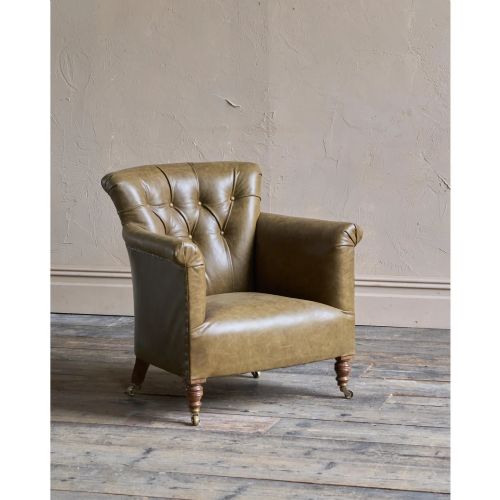
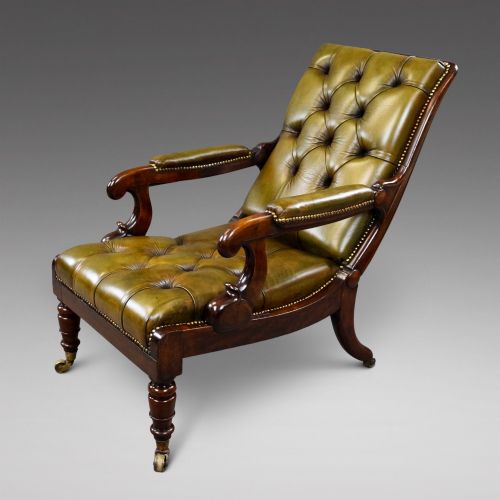
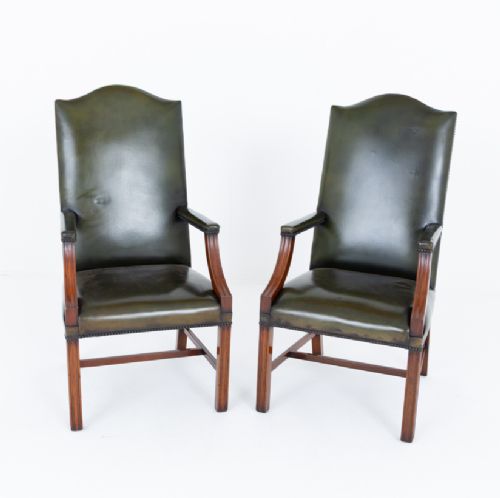
An olive leather armchair encompasses diverse seating forms from library chairs to buttoned club armchairs and reclining seats. These pieces range across the nineteenth century through the early twentieth century, taking in Regency, William IV, and Victorian styles alongside later revivals.
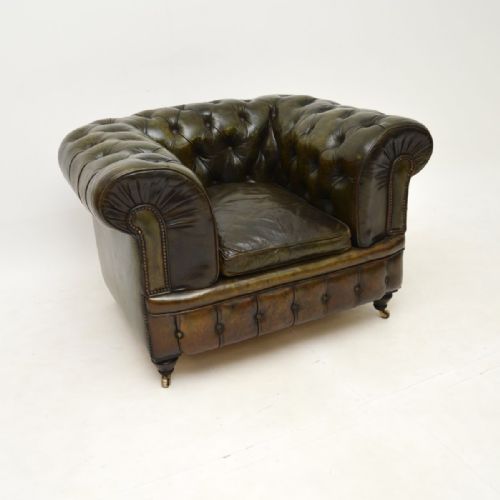
The evidence shows heavy representation of nineteenth-century pieces, including library chairs and Chesterfield armchairs finished in leather. Buyers frequently encounter buttoned upholstery, mahogany frames, and classic proportions designed for sustained study or relaxation.
How they were made
Construction relies upon robust timber frames built from hardwoods such as mahogany and general wood, providing structural integrity for heavy use. Leather upholstery is stretched over padding and secured, often featuring traditional buttoning techniques.
Brass detailing frequently appears on these chairs, used for castors, studwork, or mechanical reclining mechanisms. Support fabrics like hessian support the interior stuffing beneath the outer leather skin.
Listings feature nineteenth-century library chairs alongside twentieth-century club armchairs, constructed from mahogany, hardwood, and brass.
What varies in quality
Quality rests in the fidelity of the period styling, from the crisp carving on a Regency library chair to the generous proportions of a Victorian Chesterfield. Finer examples display harmonious integration of timber frames and quality hide that ages gracefully.
The sophistication of the internal mechanics and the depth of the buttoning separate standard seating from exceptional library and reclining pieces. Proportions and the integrity of the original wood framework determine the ultimate standing of each chair.
Howard and Sons
The Olive Leather Armchair Glossary
- Chesterfield armchair
- A deep-buttoned upholstered seat typically featuring rolled arms and a low back. This style has defined traditional British interior seating for generations.
- Library chair
- A comfortable armchair designed for reading rooms and studies, often upholstered in dark or muted leather with supportive armrests. These pieces prioritise ergonomic support for long periods.
- Gainsborough chair
- An eighteenth-century style of open-arm armchair featuring a wide seat and upholstered back, frequently revived in later periods. They stand on short legs often terminating in castors.
- Buttoned leather
- An upholstery technique where leather is pulled tight and secured with deep tufts, creating a distinctive diamond pattern. This method adds structural tension and visual texture to the hide.
Olive Leather Armchair: Frequently Asked Questions
How do I care for antique leather?
Keep leather conditioned with appropriate balms to prevent drying and cracking over time. Avoid placing the chair in direct sunlight or near heat sources.
Gentle dusting with a soft cloth maintains the surface. Professional treatment preserves the historic finish without altering the patina.
Are these chairs comfortable for daily use?
Many period armchairs, particularly library and club designs, were built for extended sitting and remain remarkably supportive. Deep upholstery and sprung seats offer genuine comfort for modern living spaces.
Check the internal padding and frame stability if you intend to use the chair heavily. Different eras provide varying degrees of firm or relaxed support.
How do I date a leather armchair?
Dating relies on stylistic markers such as leg turning, wood species like mahogany, and the specific upholstery methods used. Regency and William IV pieces show distinct classical influences compared to later Victorian iterations.
Hardware like brass castors and the cut of the frame timber also help establish the era. Comparing the piece to documented examples narrows down the decade of manufacture.
What is a club armchair?
A club armchair is a deep, heavy, comfortable seat typically upholstered in thick leather with low arms. Originating in French and British clubs, they prioritise relaxed lounging.
These chairs often feature rounded backs and generous proportions. They suit studies, libraries, and living rooms seeking a substantial focal point.