

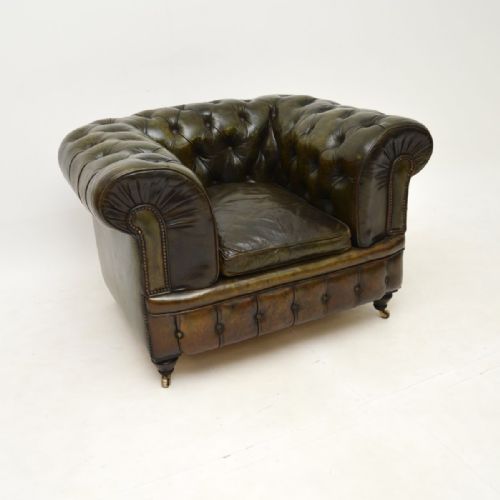


Green Chesterfield Chair
These green chesterfield chairs bring deep colour and aged hide to a room, offering the grounded presence collectors want from traditional seating.
Green Chesterfield Chair
A green chesterfield chair combines deep buttoning and rolled arms with the rich tones of green hide, creating a distinctive silhouette found in libraries and studies. The examples here span from the eighteenth century through the Victorian era into the early decades of the twentieth century, taking the form of low club armchairs, wingbacks, and desk chairs.
Victorian and Edwardian iterations dominate the selection, often presenting faded leather alongside mahogany or hardwood frames. Buyers encounter both single armchairs and matched pairs, ranging from traditional low-backed chesterfields to upright library chairs and gentleman's wingbacks.
The archive shows that olive and parliament green shades appear frequently alongside darker tones, set upon brass castors or sturdy mahogany legs. These pieces serve as both working seating and focal points in traditional rooms, maintaining the proportions established in earlier periods.
Materials and construction
Makers built the frames of these chairs from sturdy timbers like mahogany and hardwood, ensuring structural longevity beneath the upholstery. Brass hardware, including castors and individual stud work, secures the leather and provides mobility to heavier library and desk forms.
The upholstery relies on durable leather stretched over deep button-backed padding, a technique that creates the characteristic tufted surface. Artisans shaped the wooden frames into wingback silhouettes, scroll arms, and upright desk configurations suited to daily use.
Listings include leather, brass, mahogany, and hardwood across Victorian, Georgian style, and Edwardian periods.
Assessing quality and character
Quality rests in the harmony of the timber frame and the natural ageing of the leather hide, where surface wear speaks of genuine history rather than neglect. Better examples exhibit crisp buttoning and balanced proportions that maintain their structural integrity through generations of use.
The depth of the green colour and the suppleness of the original leather distinguish superior specimens from heavier restorations. Subtle details in the mahogany turnings and the patination of the brass studs elevate a piece above standard workshop production.
The Green Chesterfield Chair Glossary
- Chesterfield
- A traditional upholstered seating form characterised by rolled arms and deep button tufting across the back and sometimes the seat. The design dates back centuries and remains a staple of classic British interior style.
- Wingback
- An armchair featuring protective side panels, or wings, attached to the back and designed to shield the sitter from drafts. This form frequently appears in Georgian and Victorian seating.
- Button-back
- An upholstery method where depressions are pulled into the padding using twine secured with buttons, creating a diamond pattern. This technique provides both visual rhythm and firm support.
- Patina
- The surface sheen and soft texture acquired by leather and wood through age, handling, and light exposure over decades. It serves as a primary indicator of authenticity.
Green Chesterfield Chair: Frequently Asked Questions
How do I care for antique leather?
Feed the hide periodically with appropriate leather balms to maintain flexibility and prevent the surface from drying out over time.
Keep the chair away from direct sunlight and heat sources to preserve the deep green dye and prevent the timber frame from warping.
Are these chairs comfortable for daily use?
The deep buttoning and sturdy wooden frames provide firm, supportive seating designed for long hours in a library or study.
Most examples offer generous proportions, though older pieces may feel firmer and more upright than modern commercial armchairs.
How can I tell a Victorian piece from a Georgian one?
Victorian chairs often display heavier proportions and machine-turned elements, while genuine Georgian pieces show lighter mahogany frames and hand-carved details.
Upholstery styles also shift across periods, with Victorian chesterfields favouring lower profiles and deeper buttoning than earlier wing chairs.
What rooms suit a green leather armchair?
These chairs anchor studies, libraries, and living rooms, pairing naturally with dark wood bookcases, Persian rugs, and traditional fireplace surrounds.
The rich green tones offer a sophisticated alternative to standard brown leather, blending easily with both neutral walls and bolder colour schemes.