
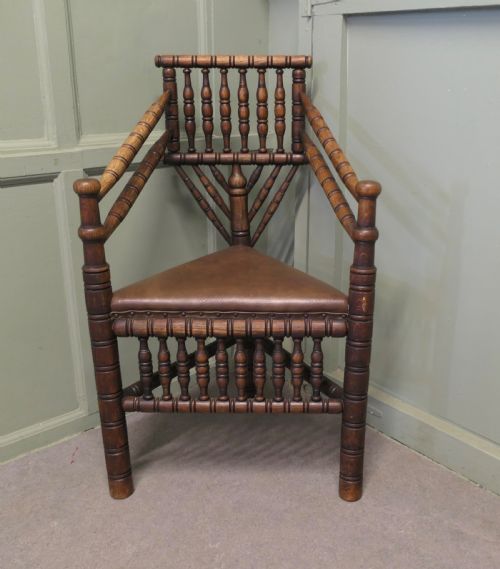
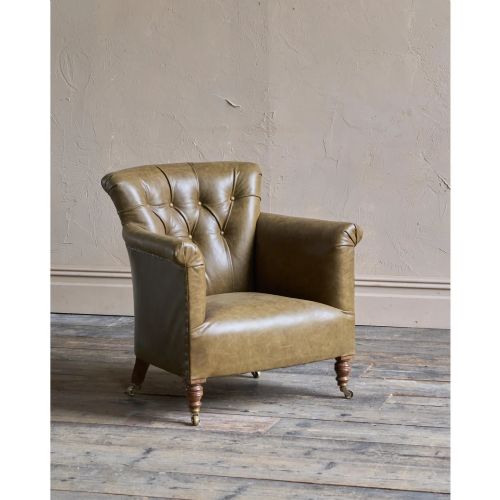

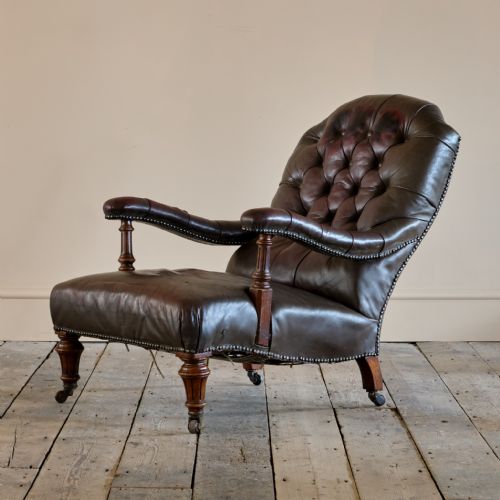

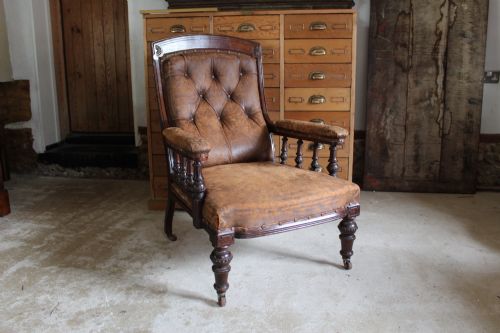

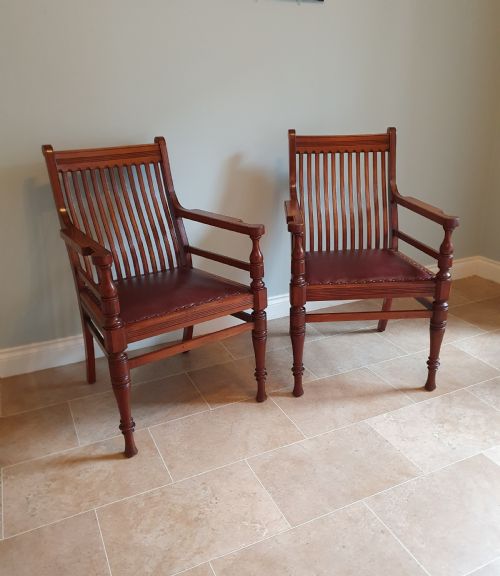
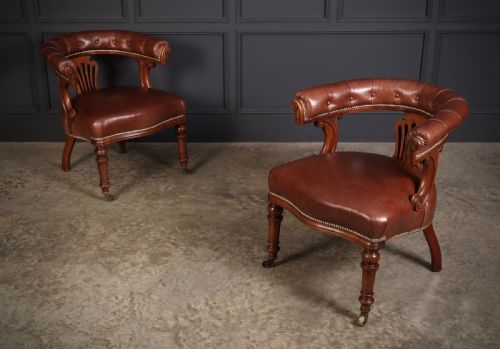


Turned Leg Leather Armchair
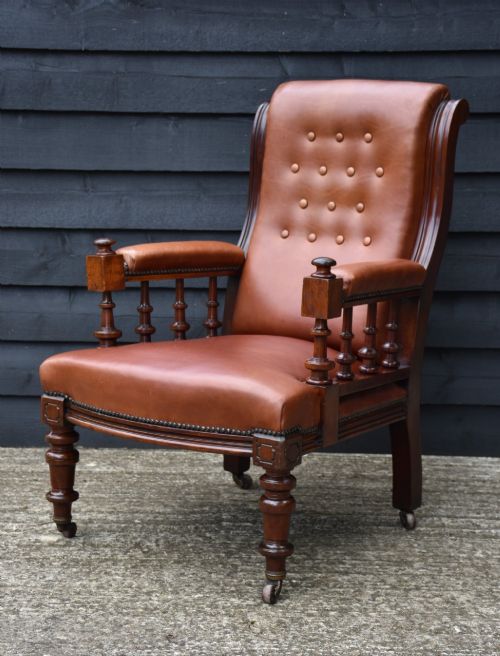
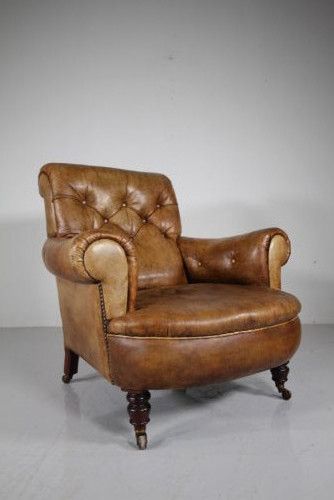
A turned leg leather armchair brings substantial character to a room, offering robust construction paired with supple upholstery.
Turned Leg Leather Armchair
A turned leg leather armchair is primarily sought for studies, libraries, and sitting rooms where comfort and traditional craftsmanship matter. These pieces emerge predominantly from Victorian and Regency periods, stretching through to Edwardian interpretations.
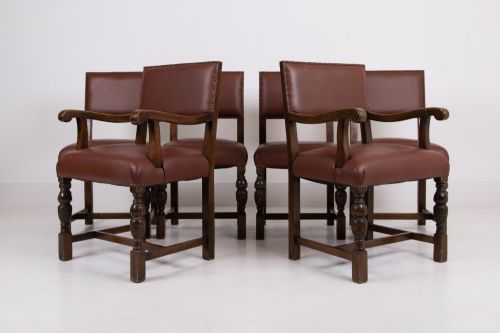
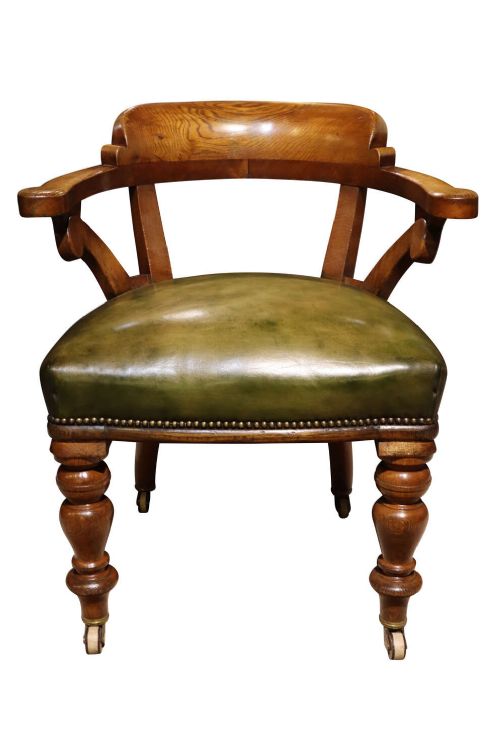
The form spans library armchairs, desk chairs, and carver chairs, alongside occasional rocking and fireside variants. Walnut, oak, and mahogany provide the primary structural frames, paired with various grades of leather hide.
Buyers most frequently encounter Victorian and nineteenth-century library or desk chairs resting on turned wooden supports. These items combine utilitarian function with decorative woodwork, serving as enduring focal points in traditional interiors.
Materials and construction methods
Frames rely on dense hardwoods such as oak, mahogany, walnut, and beech, shaped by hand or lathe to form the structural uprights and turned legs. Joinery typically employs traditional mortise and tenon techniques to ensure lasting stability under daily use.
Upholstery combines stitched leather hides with internal stuffing materials, secured using brass studs or decorative trimming along the borders. Turned wooden components provide both the structural foundation and the primary visual detail of the lower frame.
Turned Leg Leather Armchair Retail Price Guide 2026
Typical asking prices for turned leg leather armchair among the pieces listed under this phrase on Sellingantiques today, from the lower quarter to the upper quarter. They describe what is for sale here now, not the wider market.
One notable chair originates from the Royal and Ancient Golf Club of St Andrews.
Distinguishing quality factors
The refinement of the woodturning on the legs and supports dictates much of the visual merit, distinguishing standard workshop output from exceptional cabinet work. Crisp, well-proportioned turnings reflect greater skill than plain or heavily worn examples.
The quality of the leather upholstery and the integrity of the underlying frame determine longevity and comfort. Thick, supple hides that have aged gracefully retain their appeal far better than brittle or heavily replaced coverings.
Howard and Sons·W.Williamson and Sons·Gillows·William Birch
The Turned Leg Leather Armchair Glossary
- Turned leg
- A wooden leg shaped on a lathe to create cylindrical, spiral, or bulbous decorative profiles. This technique appears across various nineteenth-century seating designs.
- Library armchair
- A sturdy, upholstered seat designed for reading rooms, typically featuring padded arms and a supportive high back. These chairs prioritize ergonomic comfort during long periods of study.
- Carver chair
- An armchair, often matching a set of dining chairs, intended for the head of a table. They frequently incorporate open arms and robust turned supports.
- Bergere
- An enclosed upholstered armchair with a wooden frame where the sides are often filled with cane or upholstery. Regency and nineteenth-century examples frequently utilise this French-inspired form.
- Morocco leather
- A fine, flexible goatskin leather historically used for luxury bookbindings and high-end upholstery. It is recognised for its distinctive pebble grain texture.
Turned Leg Leather Armchair: Frequently Asked Questions
How do I identify a Victorian turned leg leather armchair?
Victorian examples generally feature dense timbers like mahogany or oak paired with robust turned legs and traditional brass castors. The upholstery often incorporates hand-tooled leather secured with individual studs.
Look closely at the joinery and timber patination to confirm age, as nineteenth-century workshops utilised specific construction methods that differ from later reproductions.
Where were these armchairs originally used?
These armchairs primarily served in gentleman's libraries, studies, and formal drawing rooms as functional seating for reading or desk work. Library and captain's chairs were built to withstand heavy daily use.
Over time, many transitioned into domestic living spaces and home offices, where their durable leather surfaces and supportive frames remain practical.
How should I care for antique leather upholstery?
Maintain antique leather by keeping it away from direct sunlight and heat sources that can dry out and crack the hide. Regular dusting with a soft cloth prevents particle buildup.
Apply specialised leather balms or conservation waxes sparingly to nourish the material and preserve its suppleness without altering the original finish.
What distinguishes Regency from Victorian models?
Regency pieces, dating from the early nineteenth century, often display neoclassical influences, finer proportions, and exotic veneers such as rosewood or mahogany. Their turned legs tend to be more slender and restrained.
Victorian chairs, produced later in the century, generally favor heavier proportions, robust oak or walnut frames, and more exuberant carvings or turnings.
Are turned leg chairs suitable for daily seating?
Most antique leather armchairs are constructed from solid hardwoods designed for enduring structural strength. Their sturdy frames make them well-suited for regular use in a study or sitting room.
Checking the internal webbing and padding ensures the seat offers adequate support for modern comfort while preserving the historic integrity of the piece.