




Turned Column Tilt Table
A turned column tilt table offers a folding top and a sturdy pillar, serving practical needs across centuries of British homes.
Turned Column Tilt Table
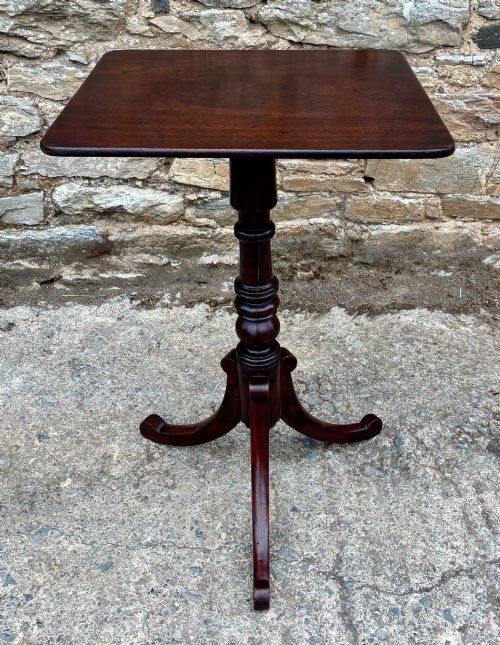
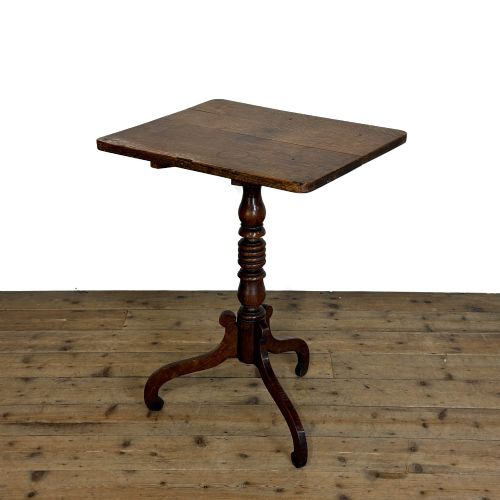
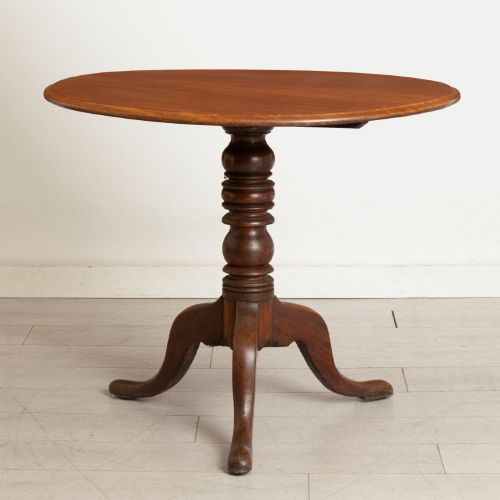
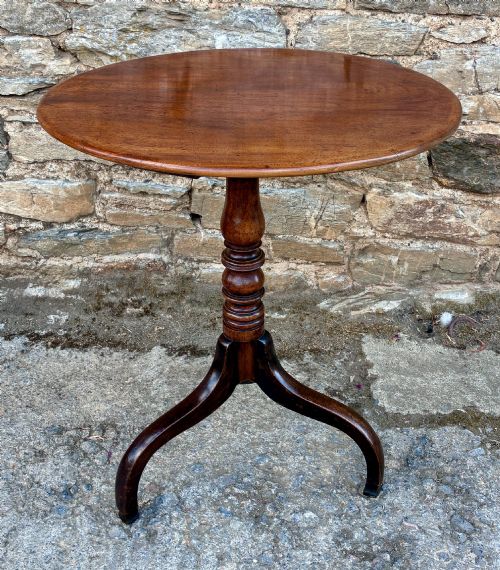
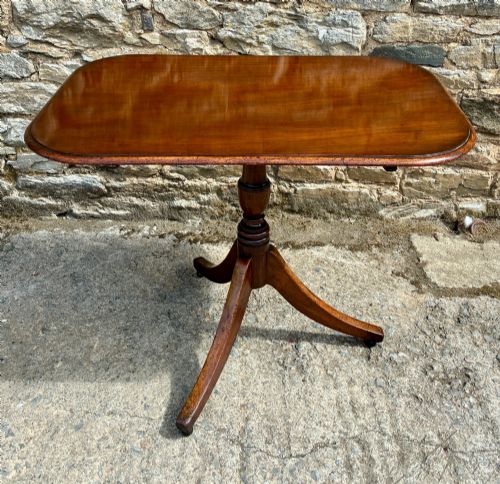
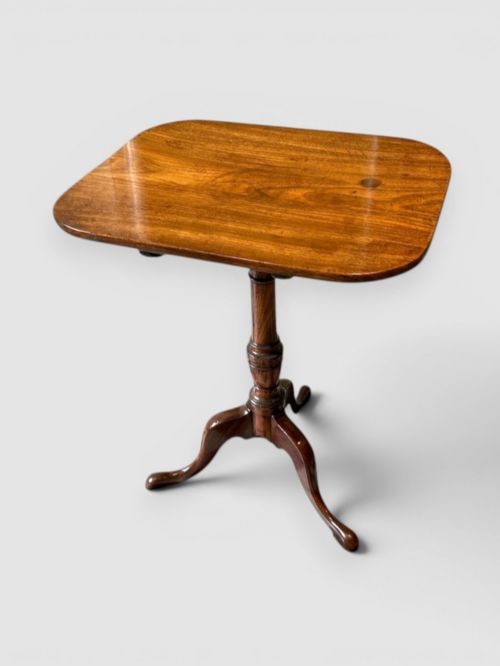
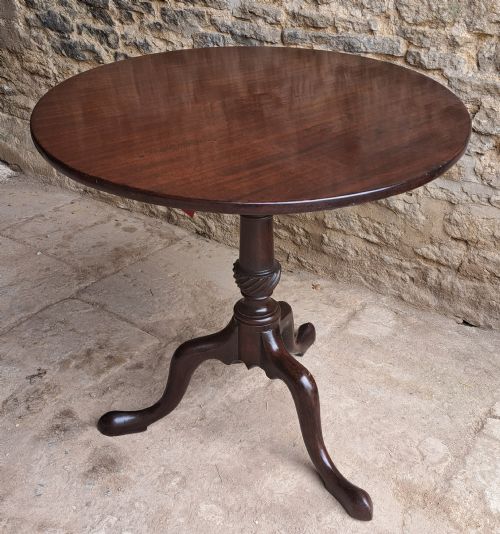
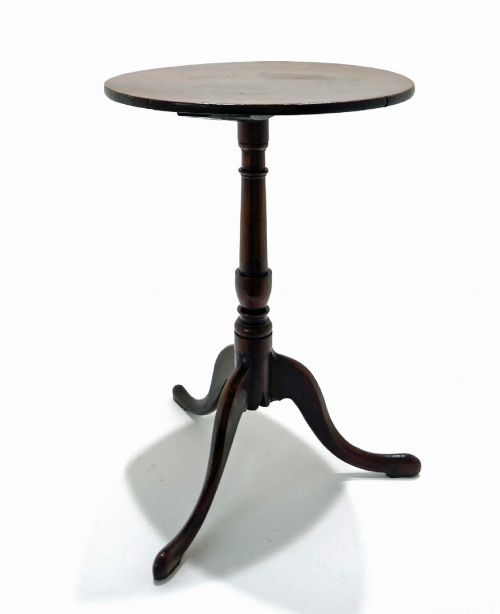
A turned column tilt table is an occasional piece designed to save space when not in use, featuring a top that pivots vertically on a central pillar. These tables appear frequently from the eighteenth and nineteenth centuries, spanning Georgian, Regency, and Victorian periods.
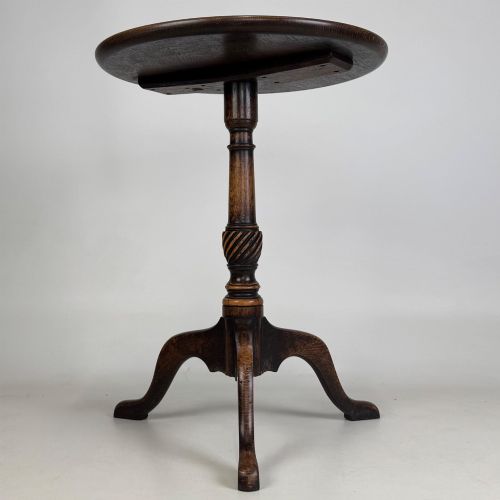
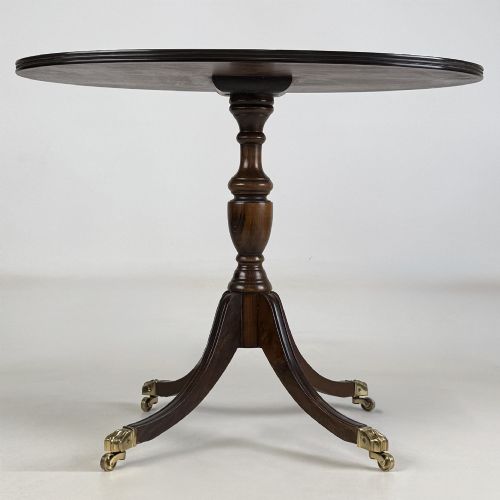
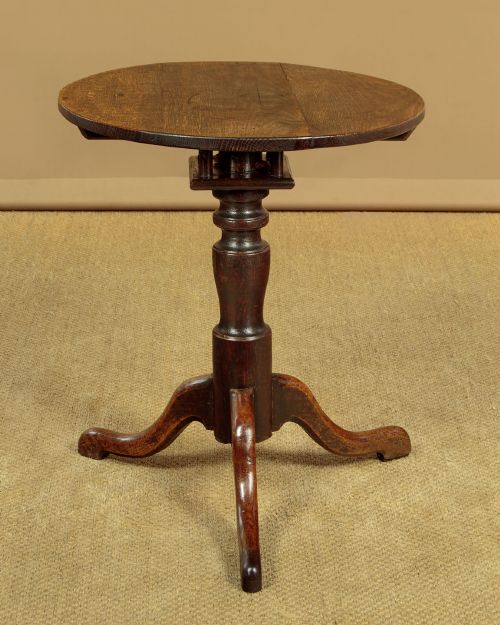
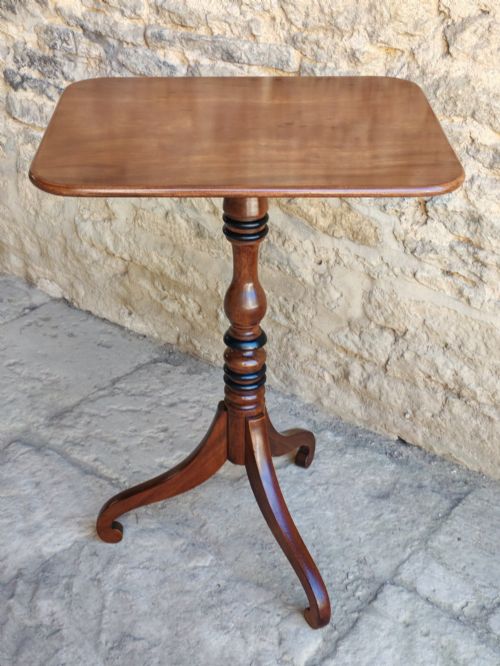
The format typically includes a circular, rectangular, or oval top supported by a turned wooden column and three splayed legs. Occasional tables, wine tables, and supper tables dominate the selection, often grouped by their tripod bases.
Mahogany and oak provide the primary structure for these pieces, supplemented by occasional examples in yew, burr oak veneer, and ebonised wood. Vernacular pieces sit alongside more formal Georgian and Regency designs, showing a wide range of regional craftsmanship.
Materials and construction
Cabinetmakers utilised solid mahogany and oak for the primary surfaces and columns, turning the central pillars on a lathe to create slender or robust profiles. Boxwood stringing and burr oak veneer appear on specific surfaces to add decorative contrast.
The tilting mechanism relies on a wooden or brass catch beneath the top, allowing the surface to fold flat against the column for storage against a wall. Tripod legs join the central turned column using traditional joints, often reinforced for stability.
These folding surfaces let eighteenth-century diners clear the floor quickly after supper without carrying heavy furniture from the room.
Distinctions in quality
Quality rests in the proportion between the turned column, the sweep of the tripod legs, and the thickness of the top. Finer examples display crisp turning on the pillar and a balanced stance that prevents wobbling.
The choice of timber dictates the character of the piece, with well-figured mahogany or quarter-sawn oak setting apart superior examples from simpler vernacular pieces. The subtlety of the tilt mechanism and the fit of the catch further separate standard workshop production from finer cabinet work.
The Turned Column Tilt Table Glossary
- Tilt top
- A table top mounted on a hinge mechanism that pivots from horizontal to vertical. This allows the piece to stand flat against a wall when not in use.
- Tripod table
- A small table supported by three legs radiating from a central pillar. This construction remains stable on uneven floors.
- Wine table
- A compact occasional table designed to hold a single bottle and glasses. These pieces usually feature circular tops and slender turned columns.
- Stringing
- Thin inlaid lines of contrasting timber used to outline table edges or panels. Boxwood is frequently utilised for this decorative detail.
Turned Column Tilt Table: Frequently Asked Questions
What is a turned column tilt table used for?
These tables function as versatile occasional surfaces for holding drinks, books, or lamps beside seating. Their tilting mechanism allowed them to be stored flat against a wall when floor space was needed.
Historically, larger versions served as supper tables in Georgian dining rooms before being moved out of the way. Today, they fit easily into corners or beside armchairs in modern living spaces.
How do I identify a Georgian tilt table?
Georgian examples often feature rich mahogany with straightforward tripod legs and hand-turned central columns. Look for construction traits such as pegged joints and timber shrinkage appropriate to the eighteenth century.
Proportions tend to be balanced, with slender pillars and refined column turnings that predate heavier Victorian interpretations.
Are these tables stable?
A three-legged tripod base naturally adjusts to uneven floor surfaces without rocking. The weight of the timber column and the spread of the legs provide reliable balance for daily use.
While the tilting mechanism introduces movement, a well-fitted catch secures the top firmly in the horizontal position during use.
What woods were used for these tables?
Mahogany and oak form the vast majority of surviving examples across the Georgian and Victorian eras. Cabinetmakers also turned to yew, burr oak veneer, and ebonised wood for specific regional or decorative commissions.
Inlays in contrasting woods like boxwood occasionally accent the edges of Regency and late eighteenth-century tops.