




Turkmen Door Rug
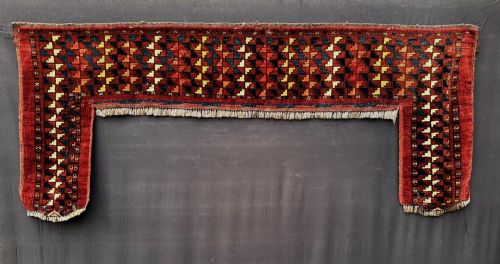
A turkmen door rug is a tribal weaving made to hang at the entrance of a yurt, prized for its deep red wool and structured design.
Turkmen Door Rug
When you search for a turkmen door rug, you are looking at Central Asian tribal weaving created for use inside nomadic dwellings. These pieces function primarily as tent door hangings or portieres, marking the threshold of the yurt.
The version you are most likely to meet on this page is the ensi or kapunuk, originating from specific tribal groups such as the Tekke, Ersary, Yomut, Saryk, and Karadashli. They date from the mid-nineteenth century through to the early twentieth century.
These textiles follow a distinct format, often featuring a quartered field design reminiscent of a garden or gate, framed by detailed borders and bottom elem panels. They reflect the rich heritage of Central Asian tribal craftsmanship.
How they were made
The primary material used is wool, frequently hand-spun to give the pile a dense and resilient texture suitable for heavy domestic use at the yurt entrance. Cotton also appears in certain examples, particularly for white highlights or foundation elements.
Weavers utilised natural dyes to achieve the characteristic deep red and madder tones seen across these Central Asian tribal textiles. Glass beads occasionally supplement the wool decoration on specific pieces, adding texture and detail to the hanging.
Turkmen Door Rug Retail Price Guide 2026
Typical asking prices for turkmen door rug among the pieces listed under this phrase on Sellingantiques today, from the lower quarter to the upper quarter. They describe what is for sale here now, not the wider market.
Nomadic weavers occasionally threaded glass beads directly into their doorway textiles to ward off the evil eye.
What varies in quality
The finesse of the drawing in the elem panels and the precision of the quartered field layout separate standard examples from superior ones. Well-drawn motifs indicate a more skilled weaver working within the tribal tradition.
Depth and clarity of colour contribute significantly to the visual impact, with certain pieces exhibiting particularly vibrant madder reds and crisp contrasting whites. The integrity of the hand-spun wool pile also dictates how well the weaving has survived.
The Turkmen Door Rug Glossary
- Kapunuk
- A specialised nomadic tent door hanging often associated with Ersary or Yomut tribes. These pieces frame the upper and sides of the yurt entrance.
- Elem
- The decorated lower panel at the base of an ensi or main carpet. This section often contains distinctive tribal motifs and tree patterns.
- Gapylyk
- An alternative tribal term for a door hanging or cover used in nomadic tent architecture. It shares the same functional purpose as a kapunuk.
- Madder
- A natural plant-derived dye yielding the characteristic deep reds and rust tones found in nineteenth-century Central Asian weavings.
Turkmen Door Rug: Frequently Asked Questions
How do I identify a Tekke ensi?
Tekke ensis typically display a very orderly quartered field design filled with small candelabra or asmalyk motifs. The drawing is usually fine and precise, reflecting the established traditions of the Tekke tribe.
They often feature soft madder red grounds and carefully balanced borders. Comparing the border arrangement and central cruciform helps separate them from Yomut or Ersary equivalents.
What tribes made these door rugs?
The pieces available originate from several distinct Central Asian groups, including the Tekke, Ersary, Yomut, Saryk, and Karadashli tribes. Each group brought subtle variations in colour palette and motif organisation to their weaving.
For instance, Ersary examples often display broader proportions and varied elem designs, while Yomut pieces might incorporate double tree motifs. Knowing the tribe helps place the weaving within its historical region.
Are cotton highlights common in these rugs?
While wool is the dominant fibre for both pile and foundation, cotton is occasionally used for white details. Saryk and Tekke weavers sometimes utilised cotton to ensure the white elements remained bright against the dark red wool.
Finding cotton in the details can be a helpful indicator when examining the construction of nineteenth-century pieces. It reflects the specific materials available to the weaver at the time.