
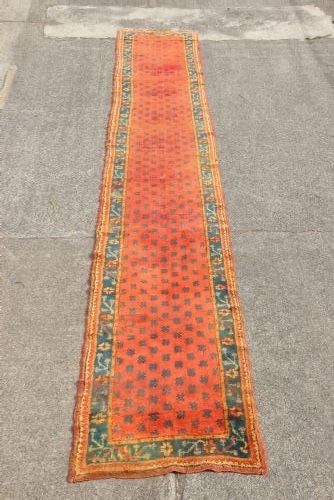
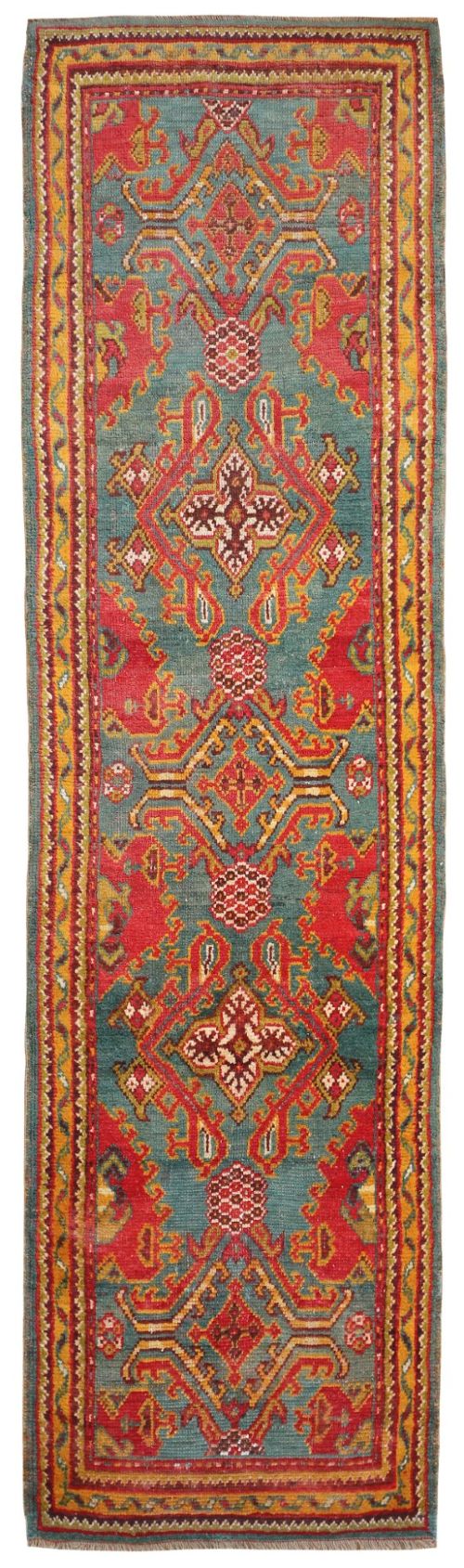



Turkish Oushak Runner
These turkish oushak runner pieces are traditional floor coverings valued for their scale and history, bringing genuine warmth to a hallway.
Turkish Oushak Runner
When you search for a turkish oushak runner, you are looking at long, narrow floor coverings originating from Turkey during the late nineteenth and early twentieth centuries. The pieces seen here encompass various formats including specific rug runners and long narrow formats, often bearing traditional designs.
You are most likely to meet examples dating from the Victorian era up to the nineteen-twenties, incorporating styles such as Ottoman, Anatolian, and Kula. These runners span several decades of production, reflecting traditional Anatolian aesthetics and star ushak patterns.
Materials and construction methods
These floor coverings are hand knotted using natural fibres, predominantly wool and cotton foundations, with certain examples utilising angora wool. The combination of these soft materials yields the characteristic pile and pliable handle expected from traditional weaving workshops.
The construction relies on time-honoured techniques passed down through generations in Turkey. Artisans knotted the pile by hand onto sturdy foundations, ensuring the longevity seen in these surviving nineteenth and early twentieth century examples.
Some runners measure over five metres in length, designed for exceptionally grand corridors.
Assessing quality in these runners
The distinction between tiers rests upon the fineness of the hand knotted pile and the integrity of the foundation materials. Angora wool examples and finer knot densities elevate certain pieces above standard commercial output.
Design clarity and the preservation of traditional Ottoman or star ushak motifs also determine the standing of an individual piece. Retaining structural wholeness across a long, narrow format marks the better class of runner.
The Turkish Oushak Runner Glossary
- Angora wool
- A soft material spun from the hair of Angora goats, noted for its lustrous finish. It appears in selected nineteenth century pieces.
- Hand knotted
- A traditional method where individual yarn lengths are tied by hand to the foundation warp threads. This technique ensures durability in floor coverings.
- Kilim
- A flat woven carpet produced without a pile, representing an alternative construction method seen within these weaving traditions.
- Ottoman
- A historical style and period designation reflecting the design influences of the Ottoman Empire. Many traditional patterns draw directly from this heritage.
- Runner
- A long, narrow format of floor covering specifically suited for hallways and corridors. The evidence includes multiple examples of these elongated dimensions.
Turkish Oushak Runner: Frequently Asked Questions
What is a turkish oushak runner?
A turkish oushak runner is an elongated hand knotted floor covering originating from Turkey, typically dating from the late nineteenth or early twentieth century.
These pieces display traditional Anatolian and Ottoman designs in long, narrow formats well suited for hallways and corridors.
How old are these runners typically?
The pieces seen here generally date from the Victorian period through to the nineteen-twenties, spanning several decades of traditional production.
Specific dates recorded in the evidence cluster around eighteen-eighty to nineteen-twenty, encompassing both the late Ottoman era and the early twentieth century.
What materials were used?
They are constructed primarily from wool and cotton, with some examples incorporating angora wool for added softness and sheen.
These natural fibres were hand knotted onto sturdy foundations to create durable floor coverings designed for heavy use.
How do I style a hallway runner?
Placing a long narrow runner in a hallway introduces warmth and historic character to a functional circulation space.
Their elongated proportions make them ideal for bridging rooms while protecting wooden flooring underneath.