
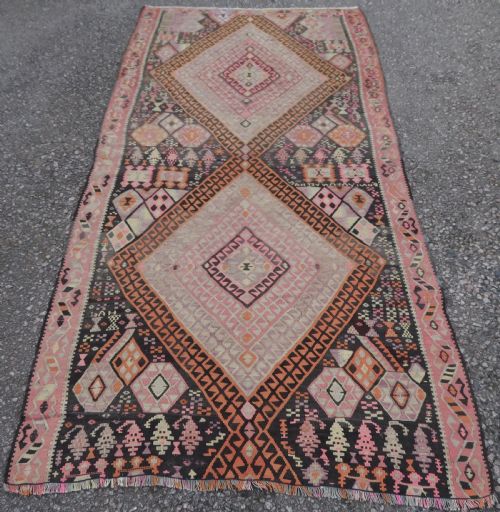

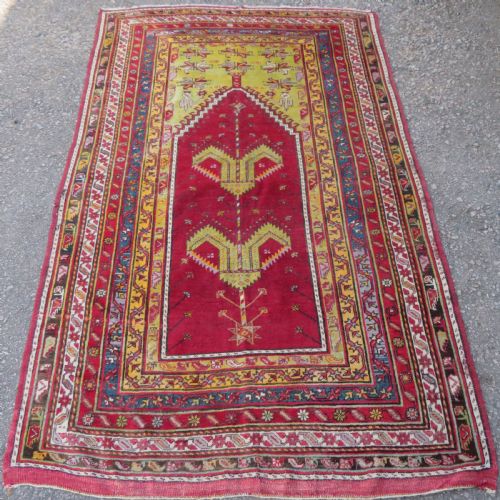
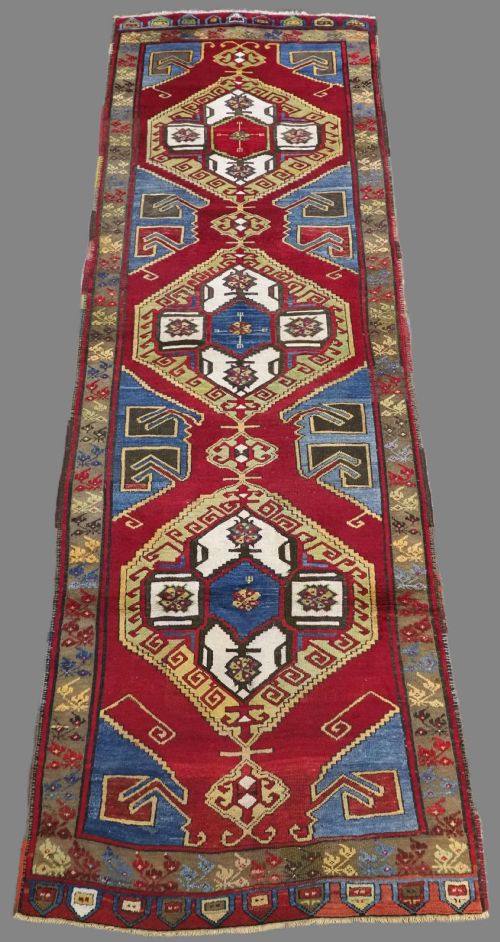


Geometric Turkish Runner
A geometric turkish runner brings centuries of Anatolian village weaving and distinct tribal patterns directly into a hallway or narrow space.

Geometric Turkish Runner
A geometric turkish runner represents traditional floor coverings produced across Anatolia, frequently taking the form of narrow, elongated formats suited for corridors. These textiles originate from diverse regional traditions, spanning village workshops and nomadic camps.
The pieces encountered on this page date primarily from the nineteenth and early twentieth centuries, encompassing eras from the eighteen-fifties through the nineteen-thirties. Buyers meet both piled carpets and flat-woven kelims carrying linear and angular motifs.
Makers include regional groups and weaving centres across Anatolia such as Ushak, Konya, Malatya, and Milas. Each location imparts distinct structural traits and characteristic palette choices to the finished runner.
Materials and Construction
Weavers constructed these runners predominantly using wool and cotton foundations, incorporating hand-spun wool for the pile and decorative surface elements. This natural fibre combination yields resilient textiles capable of enduring decades of heavy foot traffic.
Production techniques encompass traditional hand-knotting alongside flat-weaving methods used in kelims and two-part joined carpets. Artisans relied on local natural dyes to achieve the deep colour grounds visible across these historical floor coverings.
Several runners were woven in two separate sections and cleverly joined down the middle to achieve an unusually grand length.
Assessing Quality and Character
Quality in a geometric turkish runner depends upon the precision of the wool spinning and the tightness of the knotting or weave. Tightly packed structures hold their form securely and preserve the sharpness of linear motifs over generations.
Visual appeal relies on the harmony of the palette and the crispness of the tribal design layout. Examples featuring well-balanced regional patterns and intact original edges command stronger interest from collectors.
Kirsehir·Konya Karapinar·Ushak·Yagcibedir·Kayseri
The Geometric Turkish Runner Glossary
- Kelim
- A flat-woven carpet or rug produced without a pile. These textiles rely on interlocking weft threads to form sharp geometric patterns.
- Runner
- A long, narrow carpet format designed specifically for corridors, hallways, and stairs. They balance utility with historical decorative design.
- Hand-spun wool
- Yarn spun manually using traditional spindle methods. This material displays subtle variations in thickness and dye absorption.
- Prayer rug
- A small textile featuring a mihrab or niche design historically oriented toward Mecca during daily worship. These pieces often showcase intricate regional borders.
- Anatolian
- Pertaining to the geographic region of Asia Minor encompassing modern-day Turkey. This area supports centuries of distinct village and nomadic weaving traditions.
Geometric Turkish Runner: Frequently Asked Questions
Where should I place a runner?
These narrow floor coverings fit naturally into hallways, corridors, and narrow entryways where linear dimensions matter.
Their elongated format also suits bedside placement or narrow kitchen spaces needing historic textile warmth.
How do I clean an old wool rug?
Gentle surface vacuuming without the rotating brush bar removes embedded dust safely from historical pile and flat-woven wool.
Professional specialist cleaning remains necessary for deeper washing to protect delicate natural dye compounds.
Are flat-weave kelims durable?
Flat-weave structures lack pile yet offer high tensile strength derived from tightly beaten warp and weft threads.
Placing an appropriate underlay beneath the textile prevents slipping and reduces friction against hard flooring.
How do I identify regional patterns?
Specific Anatolian weaving districts utilise distinct medallion arrangements, border motifs, and colour combinations passed down through generations.
Comparing structural details such as end finishes and wool quality helps narrow down the probable village origin.