
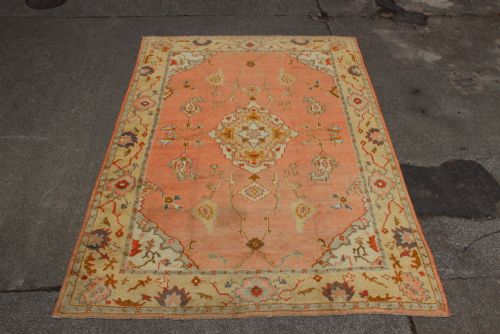
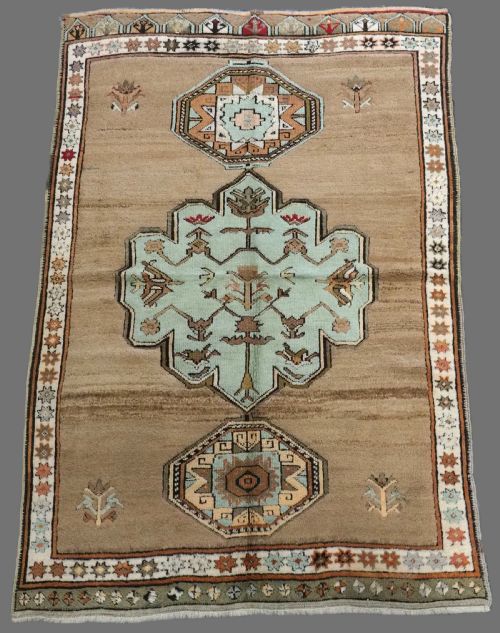
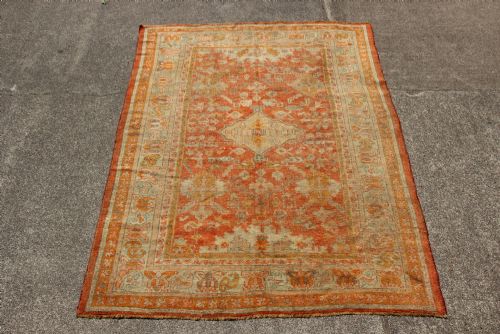
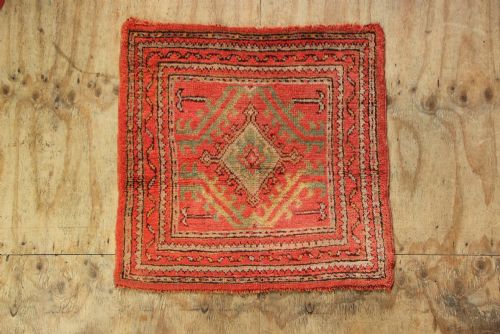

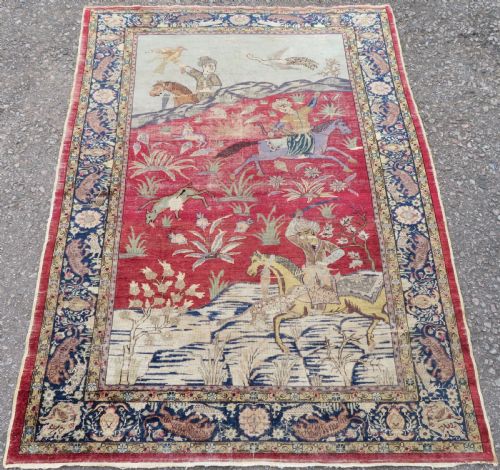


Turkish Oriental Area Rug
These textiles bring together centuries of Anatolian weaving traditions, offering warmth, colour and history to a room.
Turkish Oriental Area Rug
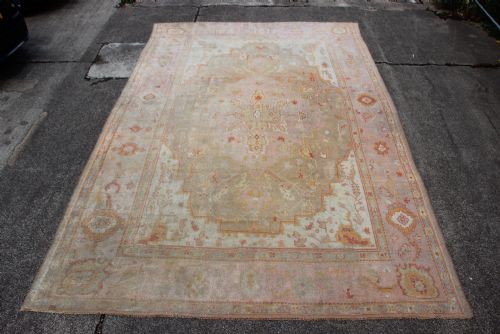
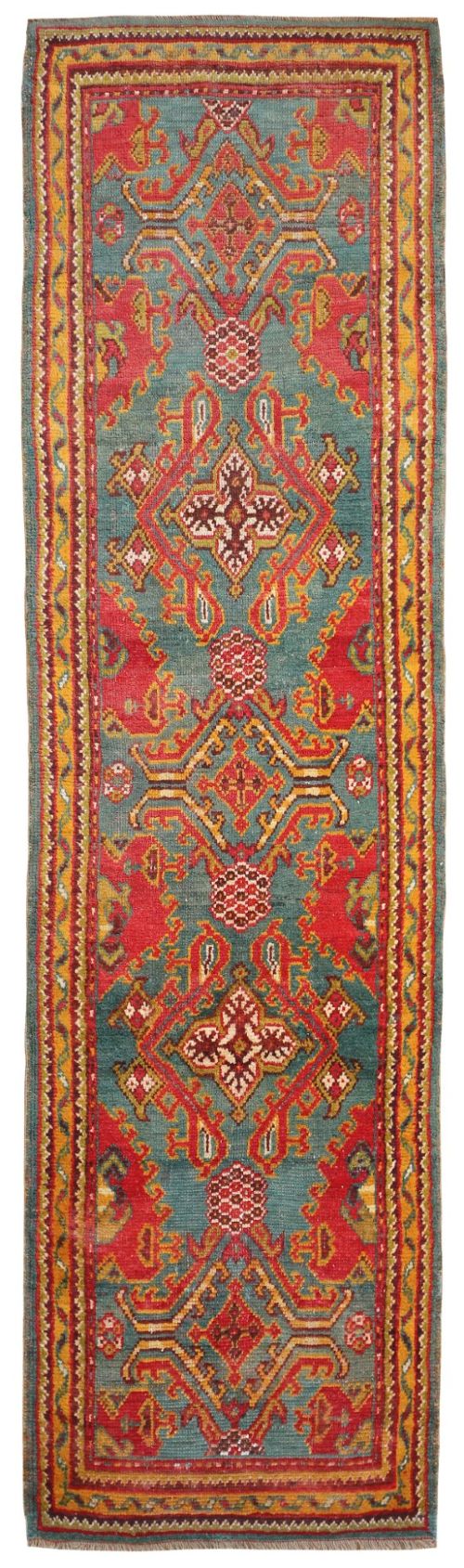
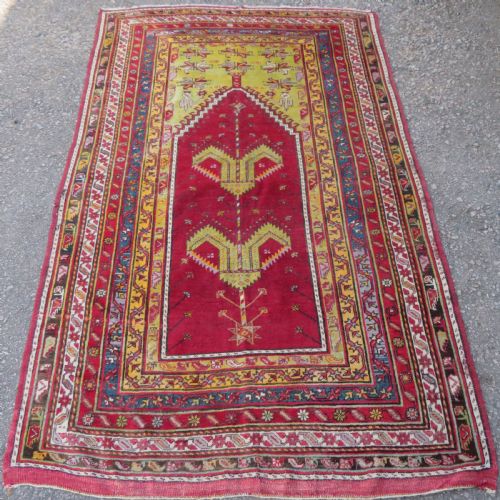
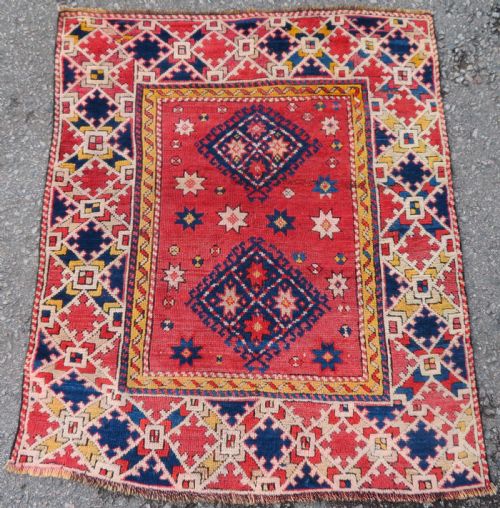
A turkish oriental area rug spans formats from small accent pieces and squares to substantial carpets and long runners, often categorized by specific regional weaving centres like Ushak, Kirsehir, Ghiordes, and Milas. Buyers encountering these pieces will find formats ranging from compact village prayer rugs to large room-sized carpets dating from the nineteenth and early twentieth centuries.
The aesthetic vocabulary encompasses traditional Anatolian tribal motifs, Ottoman court designs, and pictorial scenes, alongside flat-woven kilims and half-kilim runners. Regional designations reflect distinct design traditions, such as the prayer mihrabs found in Kirsehir and Ladik pieces or the expansive fields typical of large Oushak carpets.
Dating across the listings reaches from the mid-nineteenth century through the 1930s, capturing late Ottoman production and early twentieth-century village weaving. These textiles served functional roles in domestic interiors and civic spaces before entering the antique market as decorative works.
How they were made
Weavers utilised natural fibres including wool, cotton, silk, camel wool, angora wool, and hand-spun wool for foundations and pile construction. Foundation warps and wefts commonly rely on cotton or wool, supporting dense knotted pile or flat-woven kilim structures.
Pile techniques involve hand-tying individual knots across vertical looms, while flat-weaves employ interlocking weft techniques to create pattern without a raised pile. Natural dye sources yielded the soft colour palettes, pale blues, pink grounds, and green fields recorded in nineteenth and early twentieth-century examples.
Regional attributions across the inventory include Ushak, Ghiordes, Kirsehir, Milas, Bergama, Konya, Ladik, and Kula.
What varies in quality
Material selection dictates much of the baseline quality, distinguishing standard sheep wool from fine silk, camel wool, or angora wool blends. The preparation of fibres, particularly the use of hand-spun wool, contributes to the tactile depth and structural resilience of the weave.
Design execution and knot density separate standard village productions from master-woven workshop carpets. The crispness of geometric and floral motifs, alongside the harmonious balance of natural dye variations across a pale or saturated field, marks the upper tier of these textiles.
The Turkish Oriental Area Rug Glossary
- Prayer rug
- A small-format textile featuring a central mihrab niche design, traditionally used for daily Islamic prayers. These pieces often originate from centres like Kirsehir, Ghiordes, and Ladik.
- Kilim
- A flat-woven carpet or runner produced without a pile by tightly interweaving warp and weft threads. They are lighter in weight than knotted pile carpets.
- Mihrab
- The architectural arch motif depicted on prayer rugs, symbolising a doorway or directional focal point towards Mecca. Its shape varies distinctly between regional weaving traditions.
- Warp
- The stationary vertical threads stretched across a loom that form the structural foundation of the textile. Weft threads are woven horizontally across these warp strands.
- Oushak
- A major carpet-producing town in western Anatolia known for large-scale decorative carpets with soft colour palettes and oversized floral or medallion motifs.
Turkish Oriental Area Rug: Frequently Asked Questions
How do I clean an antique rug?
Gentle surface brushing and professional specialist washing are recommended for antique pile textiles to preserve natural dyes and fragile wool or silk fibres. Avoid harsh chemical treatments and excessive water immersion.
Regular rotation prevents uneven wear patterns in high-traffic interior spaces, while proper padding underneath protects the foundational cotton and wool structure from friction.
Can I place these rugs in hallways?
Runner formats and durable wool village pieces function well in corridors and transition spaces, provided foot traffic is moderate. Placing a breathable non-slip underlay beneath the textile prevents sliding and reduces fibre compaction.
Delicate silk or very fine nineteenth-century examples are better suited to low-traffic rooms or display areas where physical wear is minimal.
How do I identify a prayer rug?
Prayer rugs are distinguished by a pronounced arch or niche design at one or both ends of the field, known as a mihrab. This architectural motif directs the orientation of the textile during use.
Regional variations in the shape of the arch and surrounding floral borders help attribute pieces to specific Anatolian centres such as Milas, Ghiordes, or Kirsehir.
What is the difference between a kilim and a carpet?
Kilims are flat-woven textiles constructed without a raised pile, resulting in a lighter, thinner fabric with pattern visible on both sides. They rely on interlocking weft techniques.
Carpets feature a dense knotted pile clipped to a uniform height over a foundational cotton or wool grid, offering greater thickness and physical cushion underfoot.