


Terracotta Turkish Area Rug
A terracotta turkish area rug brings the warmth of Anatolian and Ottoman weaving traditions into a room.
Terracotta Turkish Area Rug
A terracotta turkish area rug encompasses hand-knotted and flatwoven floor coverings originating from Anatolia and the broader regions of Turkey. These pieces take various forms, including room-sized carpets, smaller prayer rugs, squares, and kilims.
The selections available here span from the eighteenth century through the early twentieth century, incorporating traditional village and regional weaving styles. Buyers frequently encounter Oushak, Milas, Kula, and Ladik types within this group.
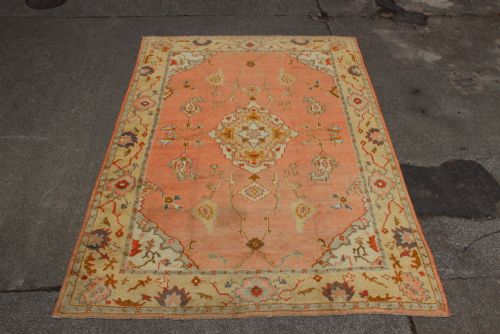
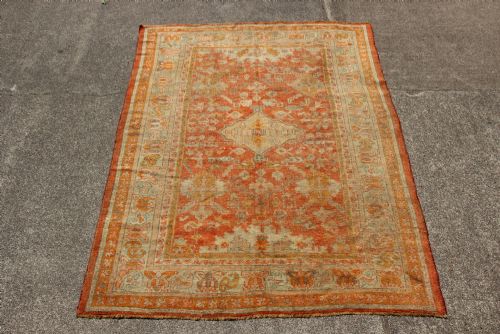
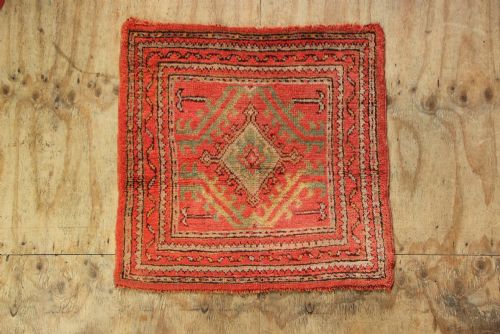
The visual character relies on motifs derived from Ottoman design traditions, featuring medallions, repeating floral patterns, and prayer mihrabs rendered in earthy terracotta, red, beige, and blue tones.
Materials and Construction
Weavers constructed these textiles predominantly using wool, hand-spun wool, and cotton foundations, occasionally utilising silk, art silk, angora wool, and mercerised cotton for specific pile or accent details.
The fabrication method relies on traditional hand-knotting techniques or flatweaving methods like kilim construction, executed on vertical looms using natural and synthetic dyes that yield faded, terracotta, and subdued colour palettes.
Materials recorded across the selection include standard wool, hand-spun wool, silk, art silk, angora wool, and mercerised cotton.
Determining Quality
The standard of a weaving depends upon the density of the knotting, the fineness of the wool or silk materials selected, and the precision demonstrated in executing traditional Anatolian and Ottoman motifs.
Preservation of the pile, the integrity of the original borders, and the depth achieved through natural ageing and wear separate the more desirable examples from standard workshop pieces.
The Terracotta Turkish Area Rug Glossary
- Oushak
- A style of carpet originating from the town of Usak in western Turkey, known for large-scale floral motifs and soft wools. These pieces often feature muted terracotta and pastel colourways.
- Kilim
- A flatwoven carpet or rug produced without a pile by tightly interweaving warp and weft strands. This technique creates a lightweight textile with identical patterns visible on both sides.
- Mihrab
- A niche design element found primarily on prayer rugs that indicates the direction of prayer. Weavers often place this architectural motif at one end of the field.
- Medallion
- A central ornamental design motif placed in the middle of the rug field. It forms the focal point of many traditional Anatolian and Ottoman compositions.
- Warp
- The vertical threads stretched tightly on the loom that form the structural foundation of the rug. Weavers tie the pile knots around these parallel threads.
Terracotta Turkish Area Rug: Frequently Asked Questions
How do I clean an old rug?
Professional dusting and specialist low-moisture washing remain the safest methods for maintaining antique wool and cotton textiles. Regular gentle vacuuming without a beater bar prevents dust accumulation in the pile.
Avoid household detergents and excessive water immersion, as these treatments damage natural dyes and weaken hand-spun foundations over time.
Are these rugs suitable for high-traffic areas?
Hand-knotted wool carpets designed in nineteenth and early twentieth century workshops withstand everyday walking when paired with a quality underlay. The resilience of natural wool fibres protects the foundation from premature breakdown.
Finer silk or heavily worn examples deserve placement in low-traffic settings to preserve their remaining pile and structural integrity.
How do I distinguish regional styles?
Distinguishing regional provenance involves examining border patterns, palette choices, and knotting structures unique to towns like Oushak, Milas, or Kula. Village pieces often display geometric tribal motifs, whereas urban workshops favoured curvilinear floral layouts.
Reference literature and direct comparison of structural details help clarify whether a piece originates from Western Anatolia or the Central plateau.
What is an art silk rug?
Art silk refers to artificial silk materials, typically mercerised cotton or rayon, utilised in place of natural mulberry silk. Weavers employed these substitutes to achieve a similar lustrous sheen and smooth texture at a different cost point.
Listings from the early twentieth century occasionally incorporate these glossy threads to highlight specific floral details within the pile.