
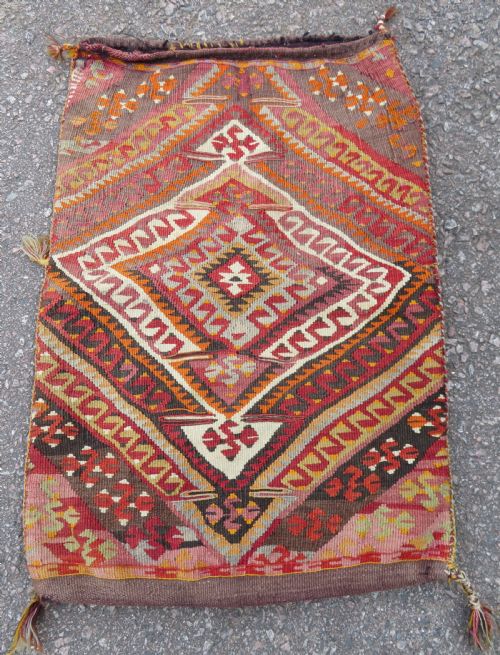


Turkish Nomadic Weaving
Turkish nomadic weaving brings genuine tribal character into a room through hand-knotted and flat-woven floor coverings and textiles.
Turkish Nomadic Weaving
Turkish nomadic weaving encompasses antique carpets, runner rugs, flatweave kilims, and cushions made across Anatolian regions. Buyers encounter diverse functional objects including complete saddle bags, wall-hanging embroidered panels, and individual tribal bag faces.
The material forms on this page span from the late nineteenth century through to the early twentieth century, showing distinct regional traditions like Bergama, Konya, Malatya, and Dosemealti. These textiles reflect the utilitarian needs of tribal groups through enduring geometric patterns and flat weaves.
Most examples rely on traditional formats such as runner rugs and square cushions, created for practical nomadic life and later repurposed for modern interiors. The range of objects demonstrates how domestic textiles evolved from daily utilitarian use into collectible decorative pieces.
Materials and Construction
These pieces are constructed primarily from wool and cotton, utilising hand-woven techniques that define traditional Anatolian production. Artisans also incorporated leather details in specific utilitarian items like saddlebags.
Techniques range from flat-weave kilims and embroidered panels to pile rugs and cicim work. Individual items such as Karakecili kilims were woven in two parts before being joined for domestic use.
Listings feature nineteenth and early twentieth-century dates, predominantly utilising wool and cotton across regional styles from Anatolia.
Assessing Quality and Character
Quality in these textiles rests upon the tightness of the weave, the clarity of the regional design, and the retention of original structure. Complete sets and intact pairs demonstrate higher preservation than single fragments.
The depth of wool quality and the integrity of early natural or balanced dyes separate standard examples from finer tribal works. Structural completeness in items like saddle bags and runners dictates the overall standing of a piece.
Karakecili·Konya·Malatya·Bergama·Dosemealti
The Turkish Nomadic Weaving Glossary
- Kilim
- A flat-woven carpet or rug produced without a pile. These textiles rely on interlocking weft threads to create sharp geometric patterns.
- Cicim
- An embroidered flat-weave technique where supplementary threads are worked across the warp and weft foundations. This adds textured surface decoration to textiles and panels.
- Juval
- A large tribal storage bag produced by nomadic groups for household possessions. They feature dense woven faces and are frequently encountered as individual collector pieces.
- Heybe
- The Turkish term for a traditional saddlebag woven in pairs for transport on animals. Complete sets preserve both pouches used by nomadic weavers.
- Runner
- A long, narrow carpet format designed for corridors or specific spatial layouts. These pieces maintain traditional tribal motifs across an extended length.
Turkish Nomadic Weaving: Frequently Asked Questions
How were antique saddle bags used?
Nomadic groups utilised these textile bags for transporting belongings on animals during seasonal migrations. They served as durable storage containers within tribal tents.
Today, these bags survive either as complete paired sets or as single decorative cushion faces.
What is a flatweave kilim?
A kilim is constructed without pile by tightly interweaving the coloured weft threads through the warp foundation. This method produces a lightweight, reversible textile with distinct geometric patterns.
These versatile flatweaves function well as decorative floor coverings or wall hangings in contemporary spaces.
How do I care for antique wool rugs?
Gentle vacuuming without a rotating brush roll helps remove dust from the wool fibres without damaging the weave. Keeping the textile out of direct sunlight preserves the original tones of the dyes.
Professional cleaning tailored for antique pile and flatweave rugs ensures the materials remain stable over time.
How do I identify a regional style?
Regional attribution relies on specific structural traits, colour palettes, and repeating geometric motifs characteristic of areas like Bergama or Konya. Comparing the weave structure helps differentiate between East Anatolian and central tribal workshops.
Each weaving tradition carries distinct design markers passed down through generations of makers.