
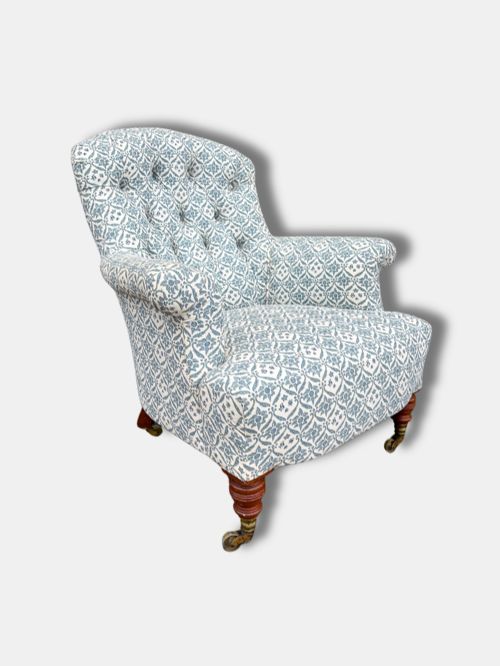
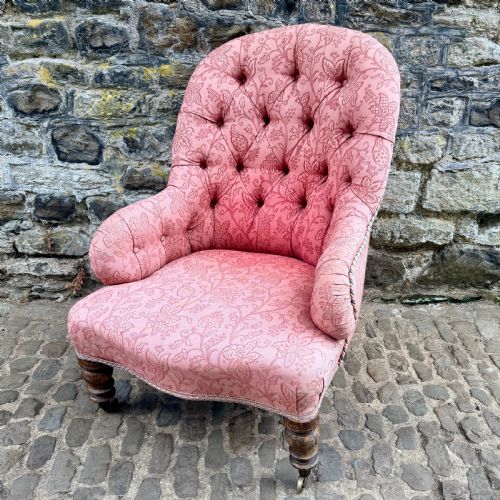
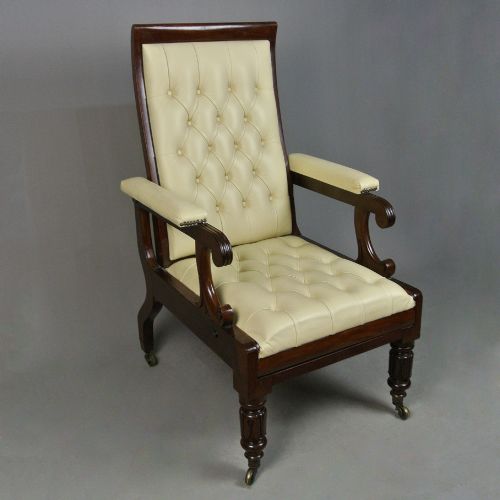
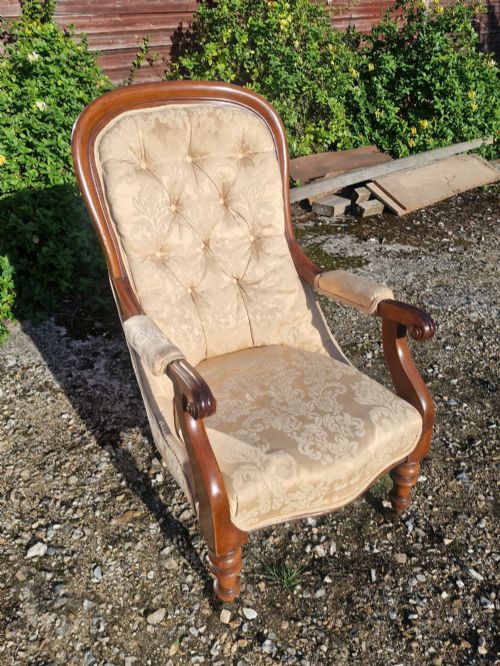

Tufted Upholstered Chairs
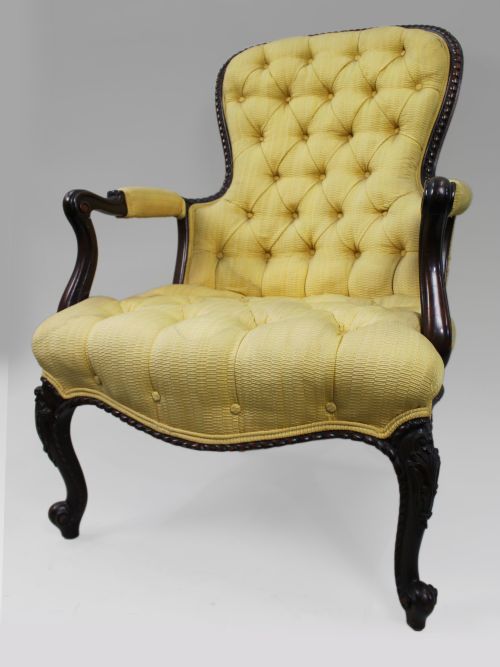
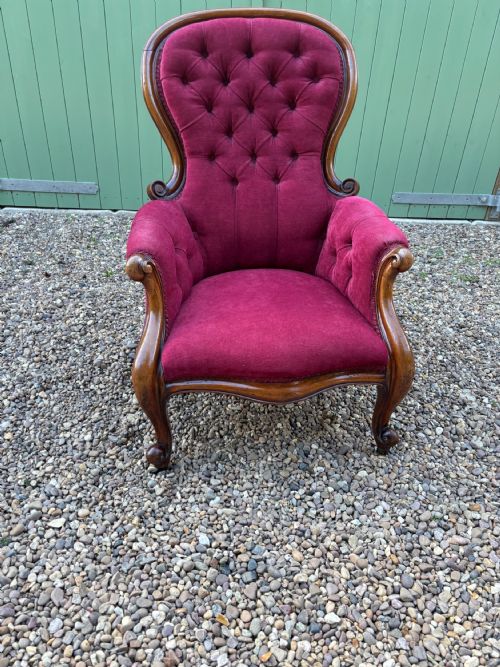
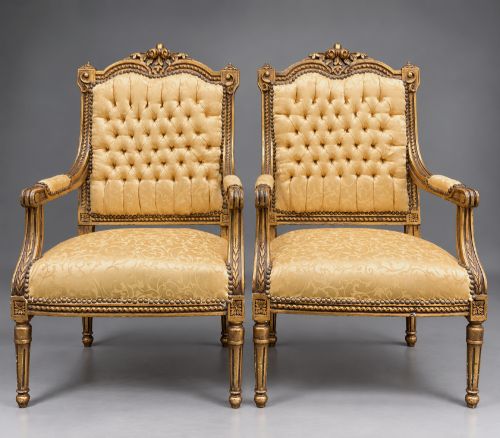
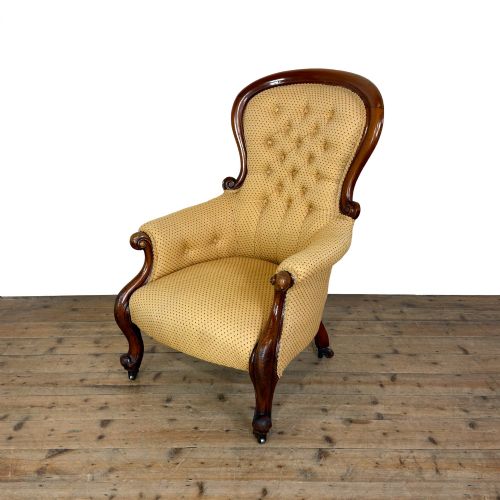
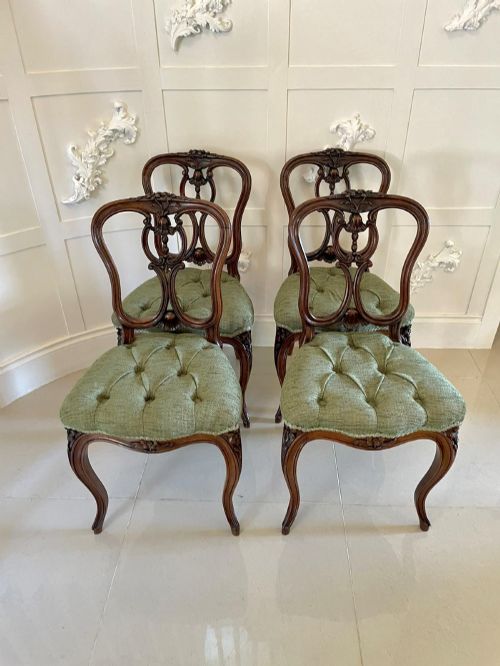
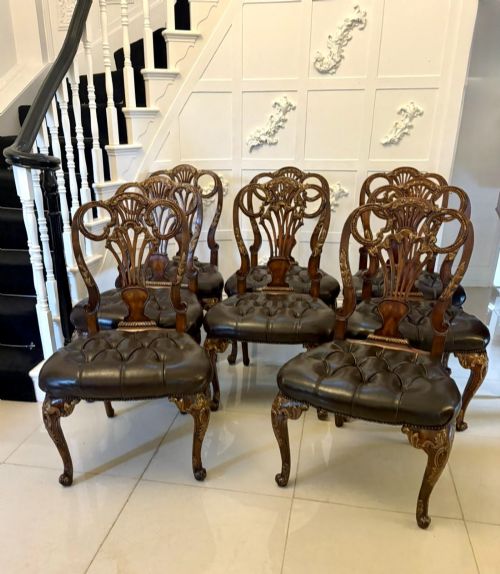
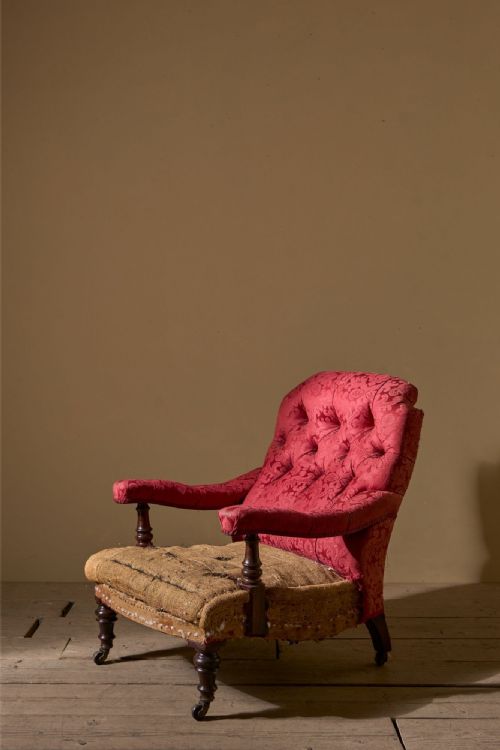
Tufted upholstered chairs are period seating pieces defined by deep buttoning and padded frames, prized for comfort and presence in a room.
Tufted Upholstered Chairs
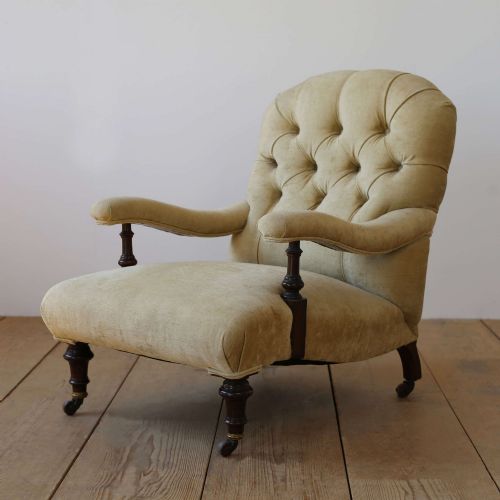
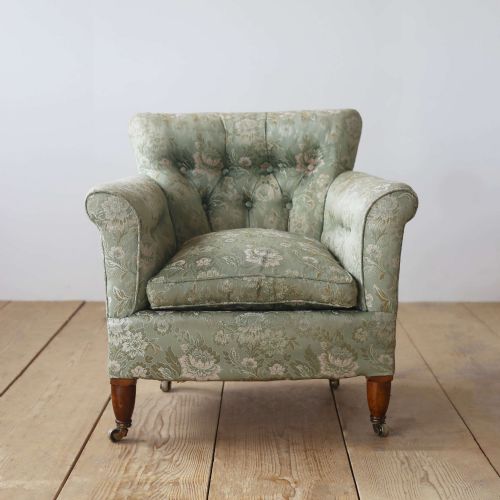
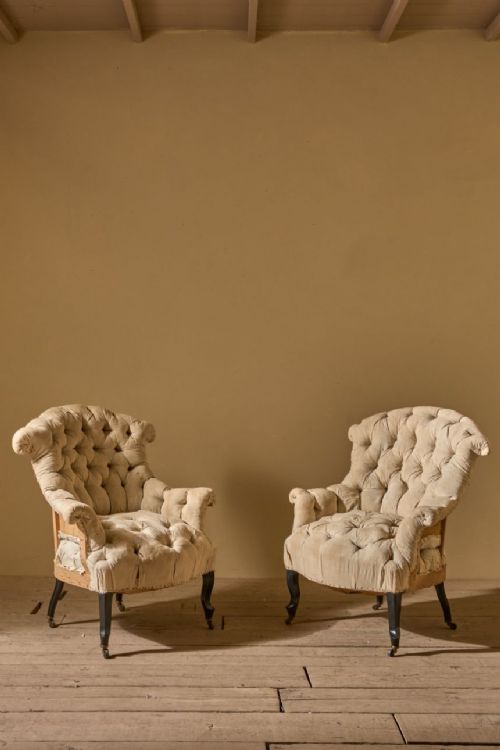
Tufted upholstered chairs encompass a range of nineteenth century seating forms designed for comfort and reception rooms. Buyers searching for tufted upholstered chairs frequently encounter Victorian examples featuring button back treatments and generous proportions.
The selection includes armchairs, library chairs, and button back lounge pieces originating from English country houses and continental workshops. These forms demonstrate the heavy padding and deep buttoning characteristic of nineteenth century seating design.
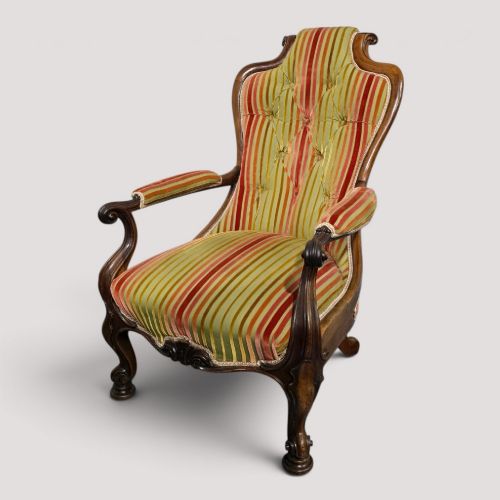
Makers such as Howard and Sons and Holland and Sons appear alongside French Napoleon III and aesthetic movement examples. Walnut, mahogany, and rosewood frames support various configurations from side chairs to large open armchairs.
How they were made
Frames rely on hardwoods like walnut, mahogany, oak, and rosewood, carved with Rococo Revival details, fluted elements, or column legs. These timbers provide the structural foundation for heavy padding and sprung upholstery.
Upholstery techniques involve securing fabric, leather, silk, or calico over deep stuffing, held in place by intense buttoning arrangements. Brass details and gilt highlights frequently finish the framework of the finest pieces.
One nineteenth century library chair includes a built-in reading stand, ensuring your book stays aloft even if you nod off.
What varies in quality
Quality rests in the integrity of the timber frame and the precision of the carved details, whether French walnut or English oak. Maker attribution, particularly to firms like Howard and Sons or Holland and Sons, elevates a piece significantly.
The execution of the buttoning and the choice of covering material, from pure silk to heavy leather, dictate the refinement of the finished chair. Proportion and original structural harmony separate standard seating from exceptional examples.
Howard and Sons·Holland and Sons·Hindley and Sons
The Tufted Upholstered Chairs Glossary
- Button back
- Upholstery style where buttons are pulled deep into the padding in a diamond pattern to secure the filling and create texture. This technique defines many nineteenth century armchairs.
- Spoon back
- An upholstered chair back shaped like the bowl of a spoon, curved to fit the human spine. It is commonly found on Victorian walnut parlor chairs.
- Aesthetic movement
- Late nineteenth century design style emphasising simplicity and artistic detail rather than heavy historic revival. Pieces from this movement often feature distinct leg designs.
- Chaise longue
- An elongated chair for reclining, combining a chair with an extended footstool structure. These pieces were popular in Victorian drawing rooms.
- Wingback
- An armchair with side panels or wings attached to the back, designed to shield the sitter from draughts. They appear frequently in nineteenth century library settings.
Tufted Upholstered Chairs: Frequently Asked Questions
How do I identify a Howard and Sons chair?
Look for specific construction traits, stamped markings on the castors or legs, and firm, deep upholstery styling typical of nineteenth century workshops.
Attribution often relies on the precise proportions, leg form, and the characteristic comfort of the button back padding.
What is the difference between an armchair and a library chair?
Library chairs generally feature sturdier wooden frames, often in mahogany or oak, designed for prolonged reading and study use.
Standard armchairs from the Victorian period frequently prioritise decorative carving and reception room aesthetics over heavy study functions.
How do I care for antique leather upholstery?
Maintain antique leather by keeping it away from direct heat sources and applying appropriate conservation balms to prevent drying.
Avoid modern chemical cleaners that might strip the original finish from nineteenth century hides.
Where should I place a chaise longue in my home?
A chaise longue suits a spacious bedroom, dressing room, or drawing room where its length can be appreciated without blocking walkways.
Pair it with low lighting and adjacent side tables to recreate a nineteenth century parlor arrangement.