


Tufted Leather Stool
These tufted leather stool pieces are sturdy low seats upholstered in buttoned hide, designed to bring traditional comfort and rich texture to a room.
Tufted Leather Stool
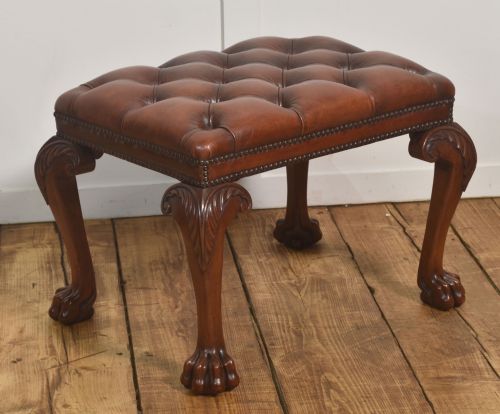
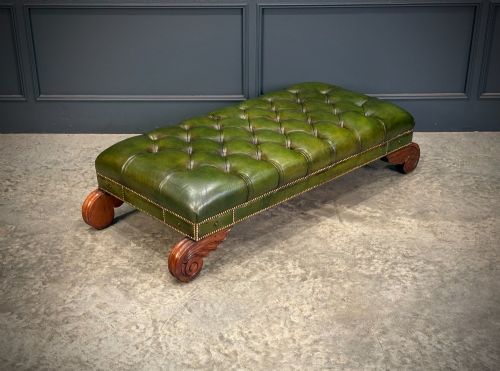
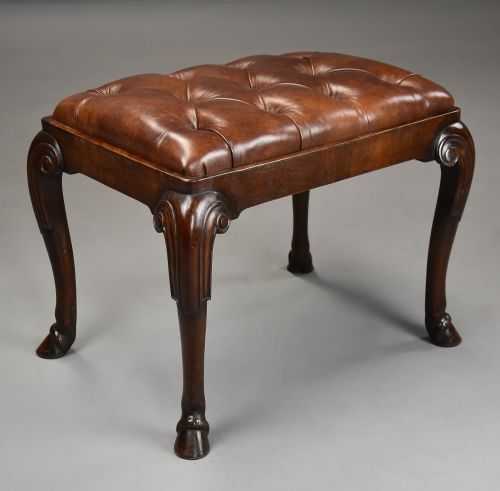
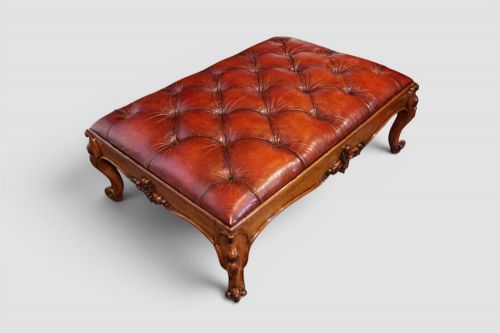
When you search for a tufted leather stool, you encounter a variety of low seating forms, ranging from compact footstools and dressing stools to long benches and library window seats. The version you are most likely to meet on this page is a Victorian walnut or mahogany example featuring buttoned upholstery and cabriole legs.
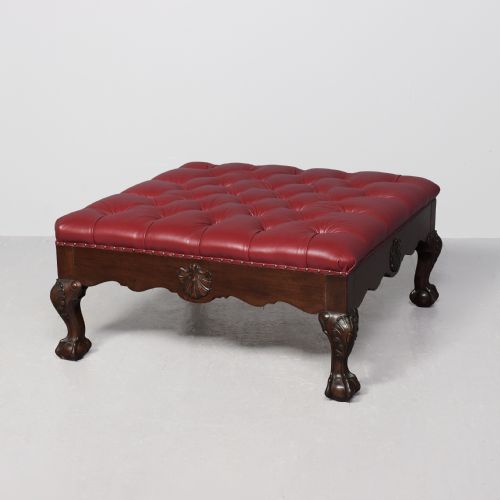
The selection draws on periods spanning the Regency era, the George III period, and the wider nineteenth century, alongside later revivals. Formats vary from small square footstools to large centre stools and ottomans that double as coffee tables.
Makers and craftsmen utilised traditional English country house styles, incorporating Chippendale and Queen Anne revivals. These pieces functioned historically in libraries, drawing rooms, and bedrooms, offering a solid platform for resting feet or sitting.
How they were made
The frames rely on dense timbers such as mahogany, walnut, oak, rosewood, and painted wood, which provide the structural integrity required for heavy use. Woodworkers shaped these materials into cabriole legs, fluted supports, and X-frame bases.
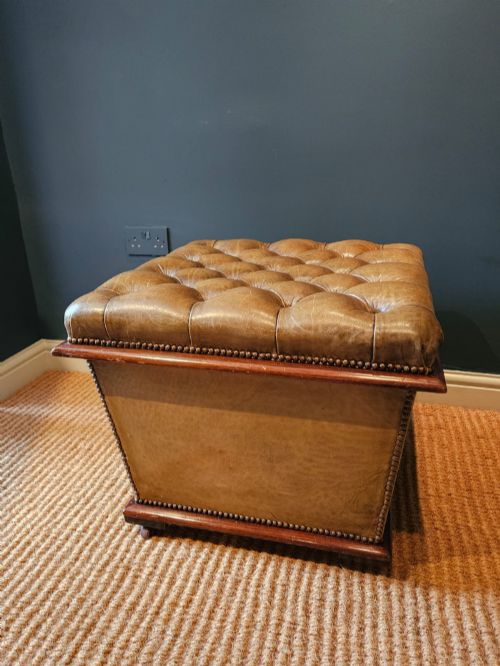
Upholstery involves hand-dyed leather, burgundy hide, and oxblood leather secured with traditional brass studs. Deep buttoning creates the signature tufted surface pattern, pulling the leather tight over internal padding.
Several stools arrive ready for the piano room, complete with adjustable mechanisms for pianists who took their seating height very seriously.
What varies in quality
Quality rests in the selection and depth of the timber used for the frame, where finely figured walnut or solid mahogany indicates a more ambitious workshop origin. The execution of the carving on cabriole legs or the precision of fluted supports demonstrates the maker's hand.
The leather itself marks the grade of the piece, with hand-dyed hides and traditional brass-studded detailing setting finer examples apart from simpler utilitarian seating. The tightness of the buttoning and the resilience of the internal stuffing determine the enduring shape of the top.
James Shoolbred
The Tufted Leather Stool Glossary
- Buttoned
- Upholstery pulled into depressions by tufting buttons arranged in a grid. This technique secures the internal padding and creates a textured surface.
- Cabriole leg
- A furniture leg that curves out and then in, resembling an animal's curving leg. It typically terminates in a pad or claw foot.
- Centre stool
- A large, freestanding low seat designed to sit in the middle of a room rather than against a wall. These often function as coffee tables in modern settings.
- X-frame
- A furniture base formed by two intersecting diagonal members shaped like the letter X. This construction offers robust structural support for stools and benches.
Tufted Leather Stool: Frequently Asked Questions
How do I use a tufted leather stool today?
These pieces fit naturally at the foot of a bed, beside a fireplace, or beneath a library window for extra seating. Larger versions serve well as coffee tables when topped with a sturdy tray.
Their robust timber frames and durable leather surfaces withstand daily use in active living spaces.
Are these stools comfortable for sitting?
Most examples provide firm support rather than deep cushioning, designed for short periods of sitting or resting feet. The tight buttoning keeps the padding evenly distributed across the top.
Height varies depending on whether the piece was made as a piano stool, a dressing seat, or a low footrest.
How do I distinguish a Victorian stool from a Regency one?
Regency pieces often feature rosewood or mahogany with classical details like fluted legs and disciplined geometric proportions. Victorian examples frequently employ walnut with bolder cabriole legs and rich buttoned red or burgundy leather.
Revival pieces from later decades often borrow these earlier stylistic traits while retaining nineteenth-century construction methods.
How should I care for antique leather upholstery?
Keep leather away from direct sunlight and heat sources to prevent the hide from drying out and cracking over time. Regular dusting and occasional application of appropriate leather conditioners will maintain the suppleness of the surface.
Avoid using harsh chemical cleaners that can strip the original hand-dyed finish from the leather.