
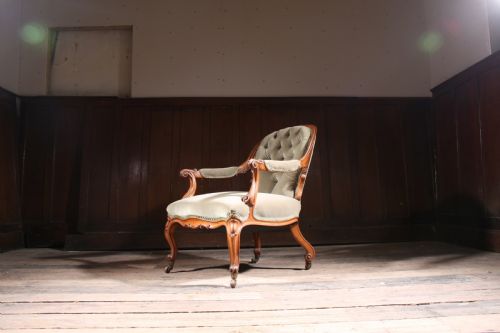
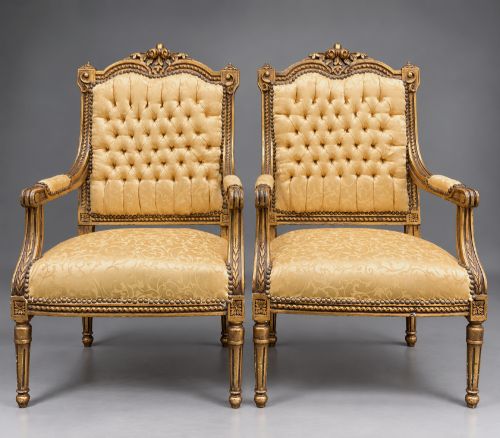
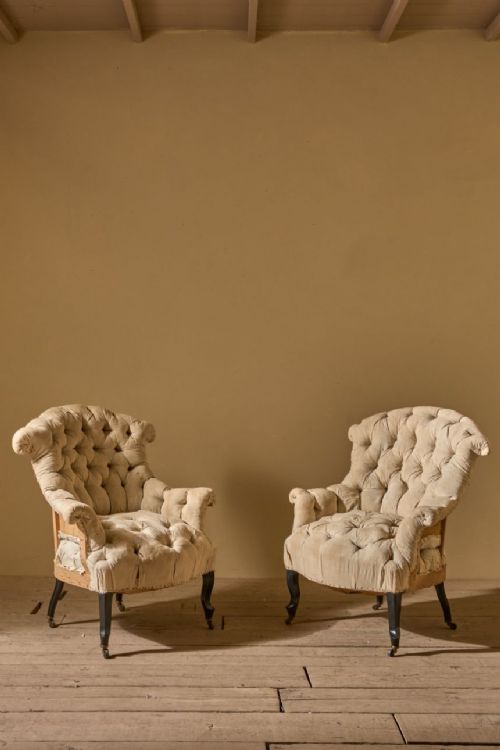
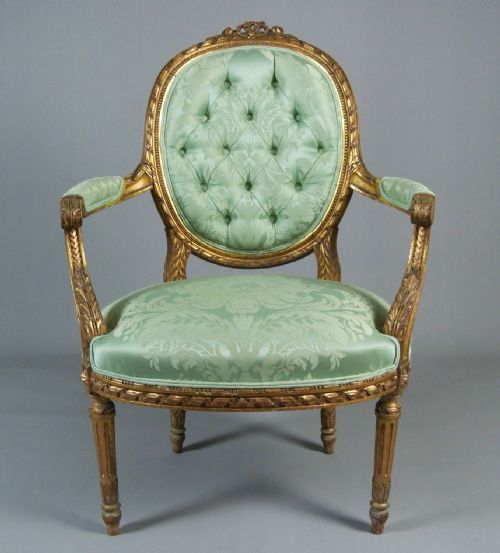
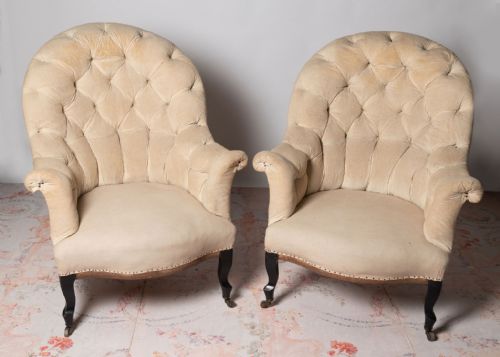
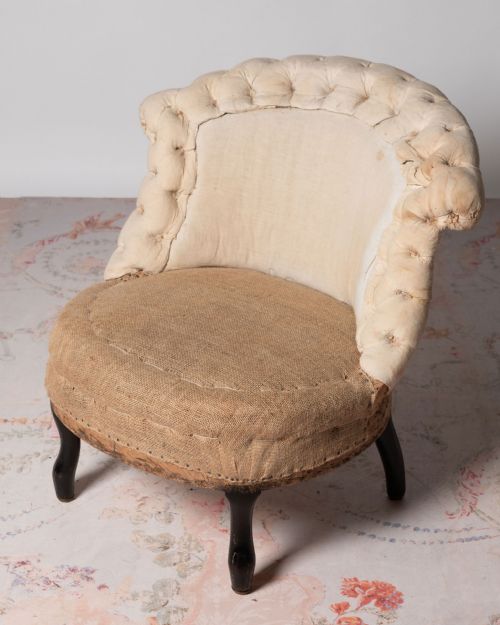


Tufted French Armchairs
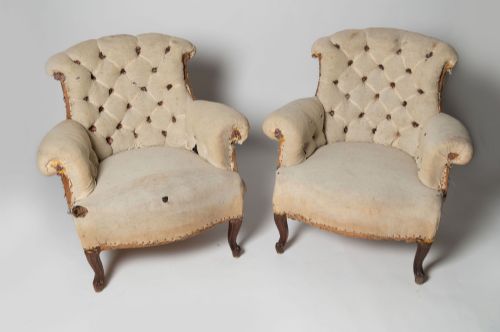
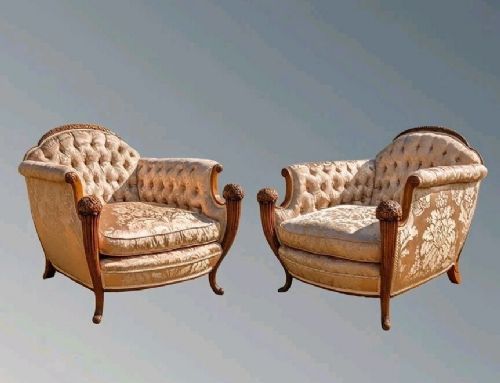
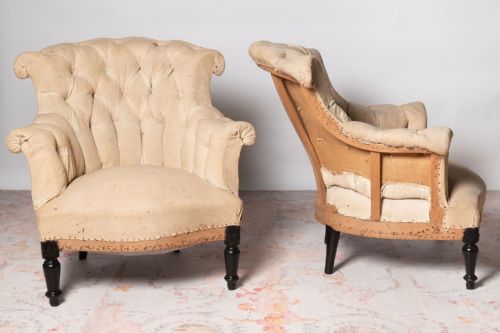
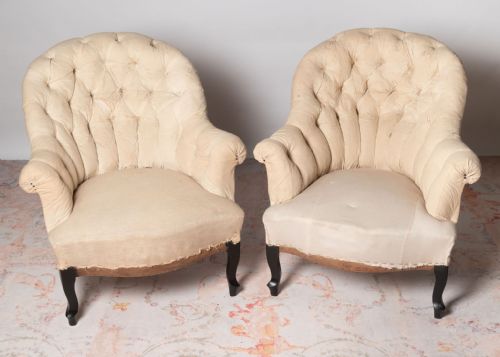
These tufted french armchairs bring ornate buttoning and period seating into a room, offering deep comfort alongside classical design.
Tufted French Armchairs
Tufted french armchairs encompass nineteenth-century buttoned seating, Napoleon III buttoned back models, and revival pieces originating from French chateau traditions. Buyers seeking tufted french armchairs frequently encounter nineteenth-century walnut and beech frames paired with buttoned upholstery.
The selections on this page lean heavily towards Napoleon III buttoned designs and nineteenth-century armchairs alongside salon suites and occasional matching footstools. These pieces range from open armchairs to high curved back variations dressed in calico, velvet, silk damask, and cotton.
How they were made
Construction relies upon solid timber foundations, predominantly walnut and beech, with occasional giltwood and mahogany frameworks providing structural integrity. Artisans shaped these woods into curved silhouettes characteristic of Louis XV and Louis XVI revivals.
Upholstery techniques involve deep buttoning applied through fabric layers like silk, velvet, calico, and cotton, secured with internal padding. Brass details sometimes accent the woodwork or upholstery trim of these armchairs.
Periods represented span from eighteenth-century George III work to nineteen-thirties library seating.
What varies in quality
The refinement of the carved wooden frame dictates much of the distinction between examples, with crisp detailing on walnut or giltwood outperforming simpler execution. The sophistication of the silhouette, from restrained open arms to high curved back profiles, marks the ambition of the maker.
Material selection creates further distinction, where pure silk damask and rich velvet upholstery elevate an armchair above standard calico or cotton coverings. The integration of matching elements, such as footstools or complete salon suites, alters the cohesion of the seating group.
Thomas Chippendale
The Tufted French Armchairs Glossary
- Buttoning
- A method of upholstery where stitches are pulled deep into the padding and secured with buttons to create a tufted pattern. This technique provides both structural tension and decorative depth.
- Fauteuil
- An open-arm armchair with upholstered back and seat, typically with exposed wooden framework. This form originates from French stylistic periods.
- Giltwood
- Timber coated with a thin layer of gold leaf or gilt powder. It appears frequently on decorative revival seating.
- Salon suite
- A matching set of seating furniture designed for a formal drawing room. These groupings often include armchairs and matching footstools.
- Napoleon III
- A nineteenth-century French design period associated with eclectic revivals and ornate buttoned upholstery. Pieces from this era often utilise walnut and beech.
Tufted French Armchairs: Frequently Asked Questions
What periods do these armchairs come from?
The listings span the eighteenth, nineteenth, and early twentieth centuries, with a strong concentration on nineteenth-century examples and Napoleon III pieces. Revival styles referencing Louis Quinze and Louis XVI traditions also appear frequently.
Buyers will find dates stretching from seventeen-seventy through the nineteen-thirties, incorporating Victorian influences alongside continental French designs.
What fabrics are used on these chairs?
Upholstery materials include velvet, silk damask, pure silk, calico, cotton, and leather. These textiles cover buttoned backs, seats, and matching footstools.
Selection depends on the specific era and style, ranging from casual cotton prints to rich silks suited for formal salon suites.
Are matching footstools common with these seats?
Some armchairs arrive accompanied by matching footstools or form part of larger three-piece salon suites. These paired items share the same upholstery and wood finishes.
Such combinations offer coordinated seating arrangements designed for nineteenth-century interiors.
How do I identify a Napoleon III armchair?
Napoleon III armchairs typically feature deep buttoning across curved or fishtail backs, often paired with walnut or beech frames. Their design leans heavily into ornate nineteenth-century comfort.
They frequently present open arms or high tufted profiles that reflect the decorative tastes of the second French empire.