
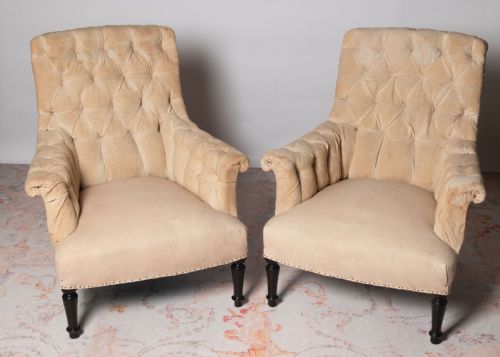
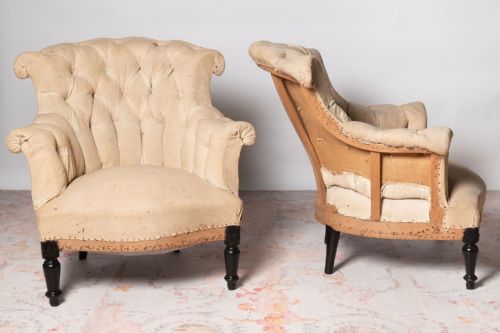
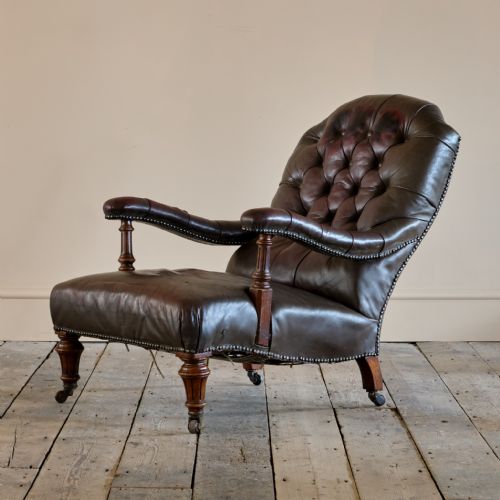
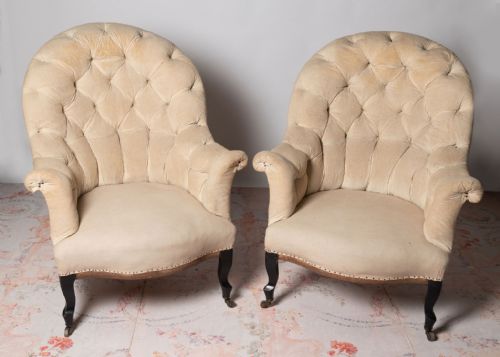
Tufted Easy Chair
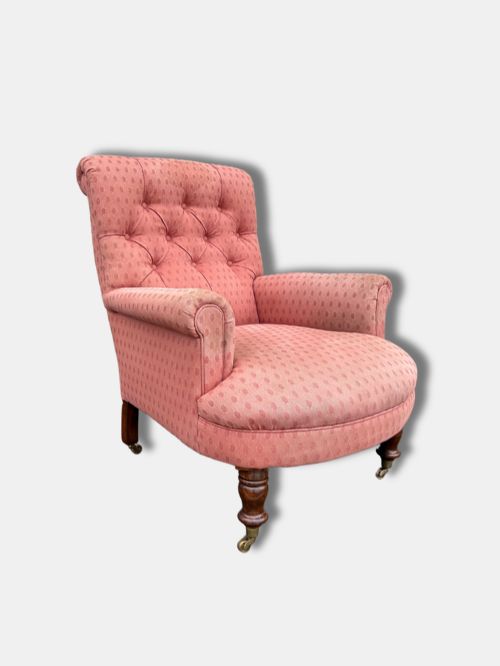
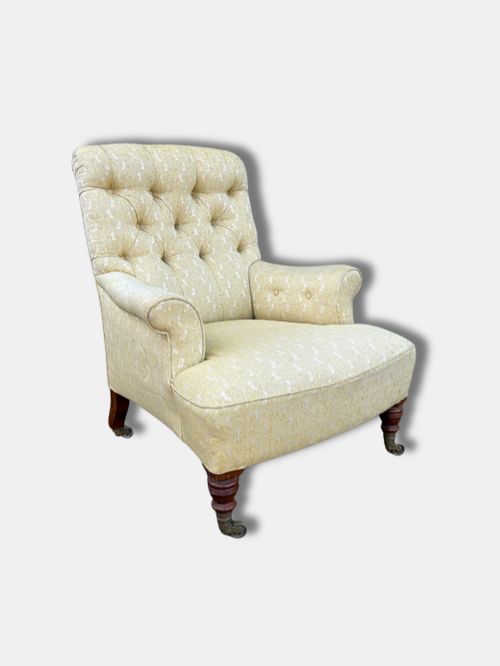
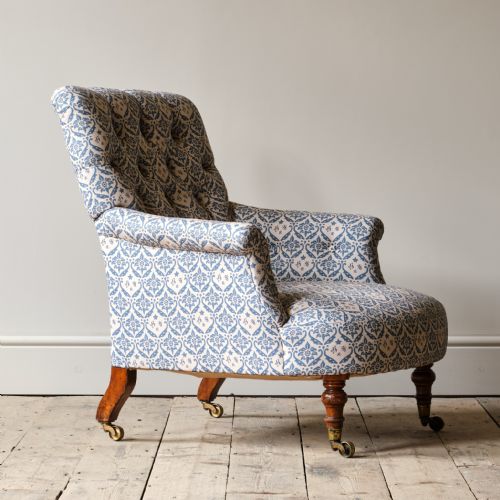
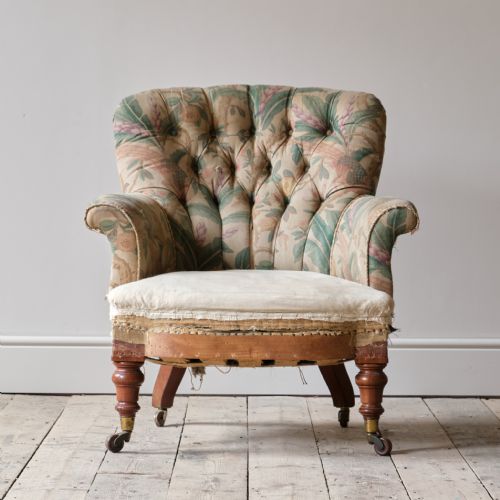
A tufted easy chair offers deep upholstery and buttoned detailing, bringing nineteenth-century comfort and country house character to a traditional interior.
Tufted Easy Chair
A tufted easy chair encompasses nineteenth-century seating designed for deep relaxation, spanning Victorian, Georgian, and French Napoleon III periods. These items appear primarily as armchairs, slipper chairs, and wing chairs built for drawing rooms and libraries.
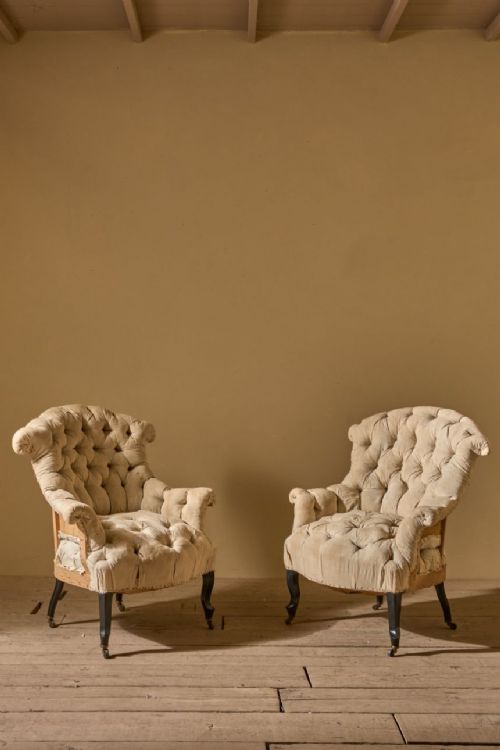
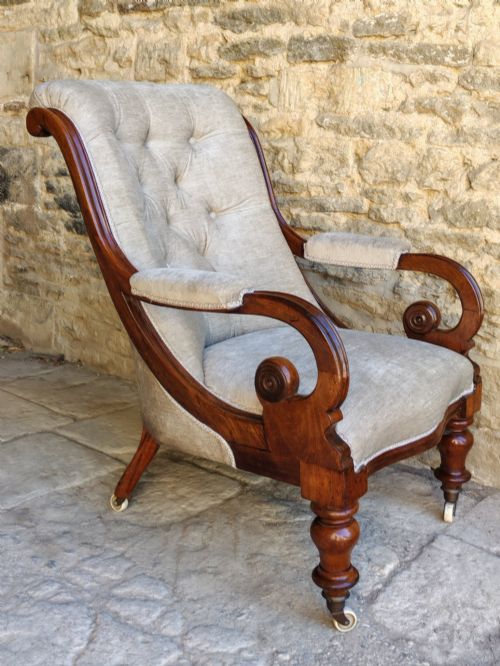
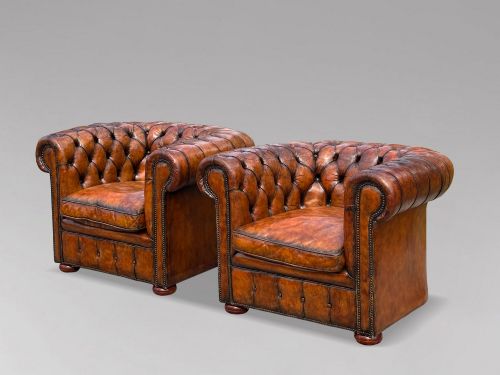
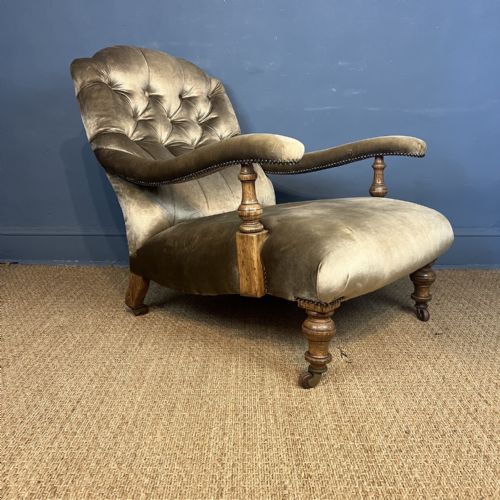
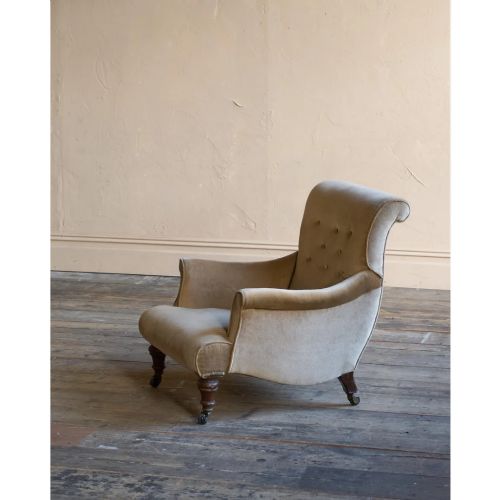
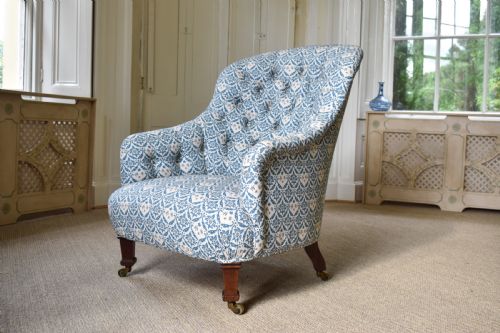
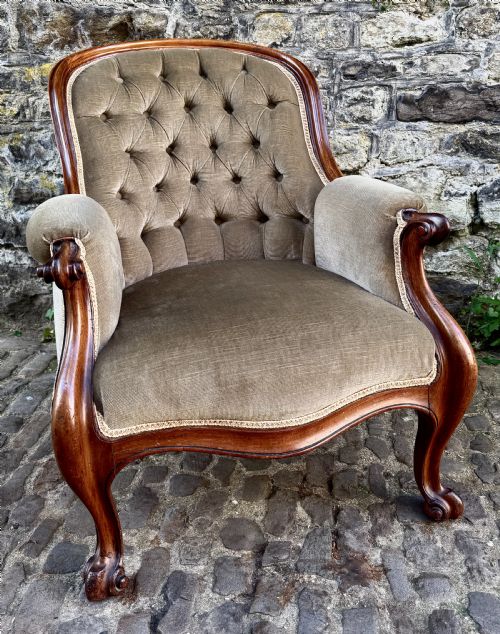
Buyers encounter walnut, mahogany, and oak frames paired with extensive upholstery, often featuring the characteristic buttoned back associated with the Howard style and Chesterfield club chairs. Pieces range from compact linen-covered open armchairs to large leather club chairs with matching stools.
How they were made
Makers constructed the foundational frames using hardwoods such as mahogany, walnut, oak, and rosewood, frequently incorporating iron framing in later Victorian examples. Timber carvers shaped open arms and cabriole or turned supports while joiners ensured rigid structural integrity for heavy use.
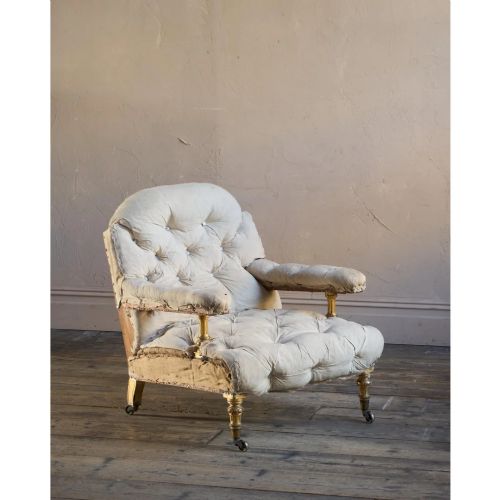
Upholsterers built up the sprung seats and deep backs using traditional stuffing materials before applying surface fabrics like velvet, leather, linen, and silk. Brass castors and decorative fringes finished the lower sections, while careful buttoning secured the internal padding.
Victorian sitters relied on slipper chairs not just for footwear, but to accommodate the immense volume of mid-century crinoline skirts.
What varies in quality
The sophistication of the timber frame and the precision of the upholstery work determine the standing of an individual piece. Finer examples display crisp hand-carving on exposed walnut or mahogany frames, whereas simpler variants rely on concealed timber structures.
Original components dictate the desirability of a chair, particularly surviving maker stamps, stamped castors, and period leather or velvet upholstery. Expert execution in the button tufting ensures the padding maintains its tension and form evenly across the backrest and seat.
Howard and Sons·Gillows·Shoolbred
The Tufted Easy Chair Glossary
- Button back
- A method of upholstery where recessed buttons are pulled tight into the padding to create a distinctive diamond-shaped quilted pattern. This technique provides both structural support and decorative texture.
- Howard style
- A nineteenth-century English upholstery design characterised by deeply comfortable proportions, low rolled arms, and understated legs often set on brass castors. These chairs became synonymous with country house interiors.
- Slipper chair
- A low-set bedroom or drawing room chair traditionally utilised for sitting while changing shoes. They typically feature short legs and an upholstered body without arms.
- Wing chair
- An armchair featuring protective side panels attached to the backrest to shield the occupant from drafts. Georgian and Victorian makers favoured mahogany and walnut for these substantial pieces.
Tufted Easy Chair: Frequently Asked Questions
How do I identify a Howard style chair?
Look for low rolled arms, deep sprung seats, and low wooden legs fitted with brass castors. Many genuine pieces also bear manufacturer stamps on the timber frame or castors.
Proportions remain generous and comfortable, reflecting nineteenth-century country house standards.
What is the difference between a club chair and an easy chair?
Club chairs typically feature heavy leather upholstery and robust proportions designed for smoking rooms and libraries. Easy chairs encompass a broader category of upholstered seating including slipper chairs and open armchairs.
Both styles focus on deep comfort but utilise different surface materials and frame shapes.
Where should I place a slipper chair?
Slipper chairs suit bedrooms, dressing rooms, and smaller drawing room corners due to their compact height and lack of arms. Their low profile prevents them from dominating smaller spaces.
Pair them with a low table or vanity for a traditional arrangement.
How do I care for antique leather upholstery?
Maintain antique leather by keeping it away from direct sunlight and heat sources that cause drying and cracking. Apply specialist leather balms sparingly to nourish the hide.
Avoid harsh modern cleaning chemicals which strip the original finish.