
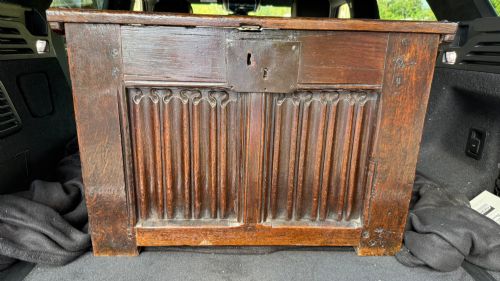
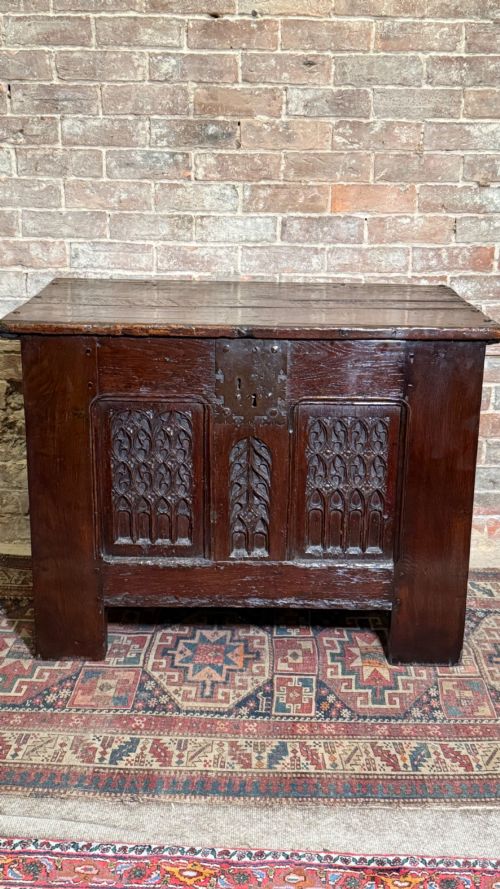
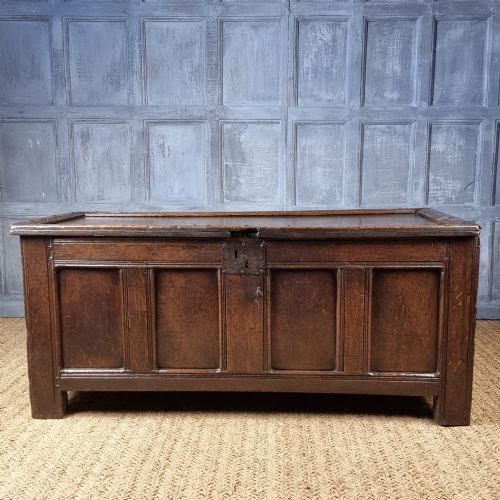
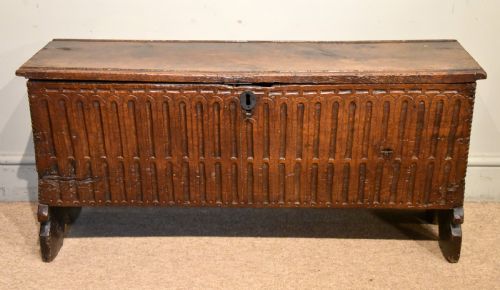

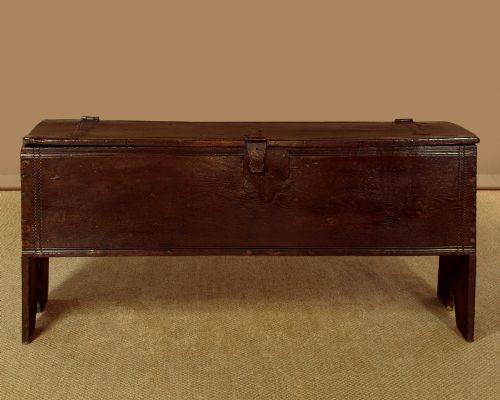
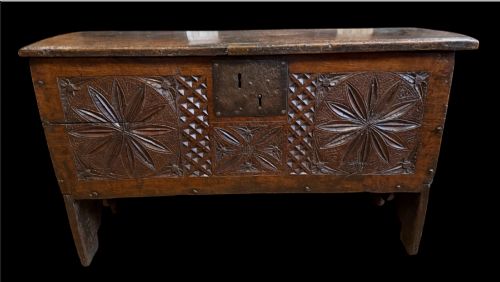


Tudor Oak Trunk
These pieces known as a tudor oak trunk span centuries of heavy timber work, offering robust storage built to last.
Tudor Oak Trunk
When searching for a tudor oak trunk, you encounter robust coffers and storage chests originating from the 16th century and the 17th century. These pieces serve primarily as heavy utility storage, encompassing boarded coffers, plank chests, and meal arks.
The versions most commonly met on this page are sturdy oak coffers and six-plank chests reflecting styles such as Tudor, Elizabethan, Gothic, and Jacobean. Makers of the period utilised heavy timbers, often incorporating iron bindings or carved fluting into the construction.
Regional variations appear amongst the Welsh examples, whilst other pieces display Renaissance or Tudor / Renaissance design influences. Long sword chests and inlaid wood variations also populate the selection.
How they were made
Carpenters constructed these pieces using solid oak, occasionally supplemented by walnut or inlaid wood details. Boards were joined simply or carved directly, relying on the natural density of the timber for structural integrity.
Wrought iron and standard iron fastenings provided crucial reinforcement for hinges, straps, and locking mechanisms on iron bound coffers. Surface decoration ranged from linenfold panels to carved fluting and heavy relief work.
Materials across these listings span solid oak, walnut, iron, wrought iron, and inlaid wood.
What varies in quality
The depth and execution of the carving separate standard utilitarian boxes from high-status furniture. Crisp lines in linenfold panels or elaborate architectural motifs indicate superior joinery and workshop skill.
The survival of original ironwork, hinges, and board integrity strongly influences the standing of a piece. Trunks retaining untouched timber surfaces and early structural fastenings sit at the higher end of the range.
The Tudor Oak Trunk Glossary
- Coffer
- A heavy wooden chest traditionally used for storing valuables or documents. These pieces often feature boarded construction and iron straps.
- Linenfold
- A style of carved wooden panelling that resembles folded linen fabric. This decoration is typical of pieces from the Tudor period.
- Meal Ark
- A specialised wooden chest designed for storing oatmeal or flour. These storage chests kept dry goods secure from pests in domestic settings.
- Boarded Chest
- A simple box constructed from thick planks joined directly at the edges. This method represents an early form of trunk making.
- Fluting
- Shallow, parallel concave grooves carved into a wooden surface for decoration. It frequently appears on 16th century panels and friezes.
Tudor Oak Trunk: Frequently Asked Questions
What is a tudor oak trunk used for?
These pieces served as secure household storage for textiles, valuables, and dry goods during the 16th and 17th centuries.
Today, they function practically as heavy coffee tables or deep storage chests in traditional or modern interiors.
How do I identify a 16th century trunk?
Look for boarded construction methods, heavy oak planks, and period decorative motifs like linenfold carving or gothic tracery.
Original wrought iron bindings and early assembly techniques also point toward sixteenth-century origins.
Are walnut and oak used together?
Walnut appears alongside oak primarily in inlaid wood details or specific regional pieces from the period.
Oak remains the dominant structural timber across the vast majority of these chests and coffers.
How do I care for antique oak furniture?
Keep timber pieces away from direct heat sources and sudden humidity changes to prevent the heavy oak planks from splitting.
Apply traditional wax sparingly to nourish the dry wood surface without building up excessive residue.