
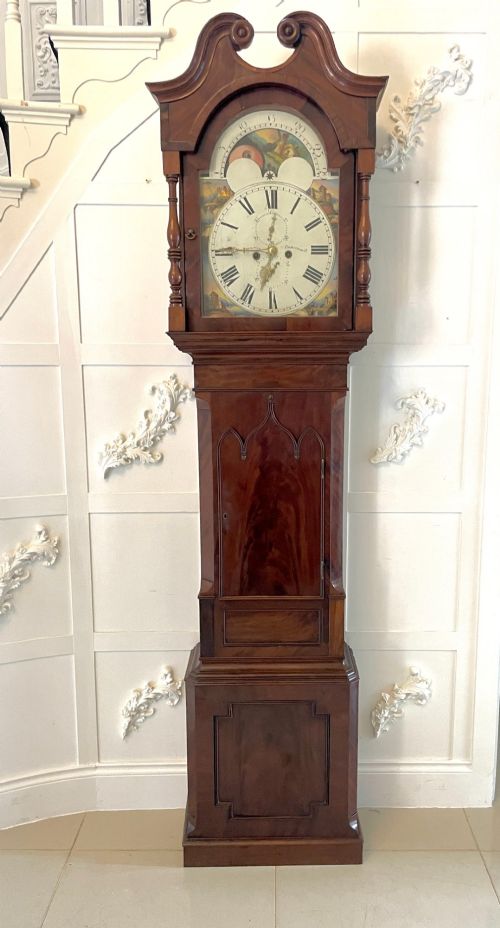
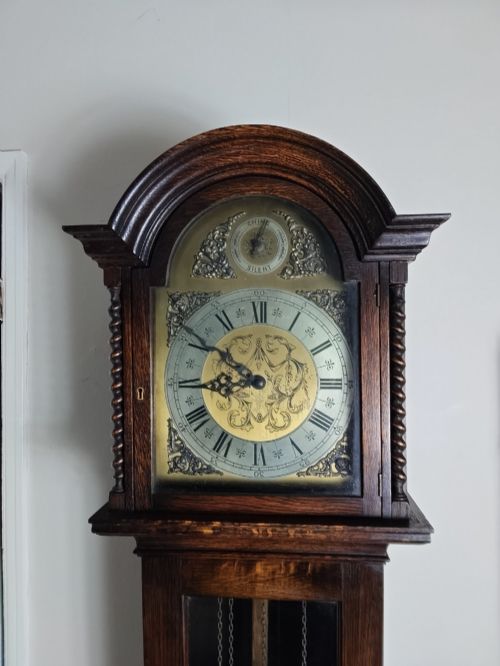
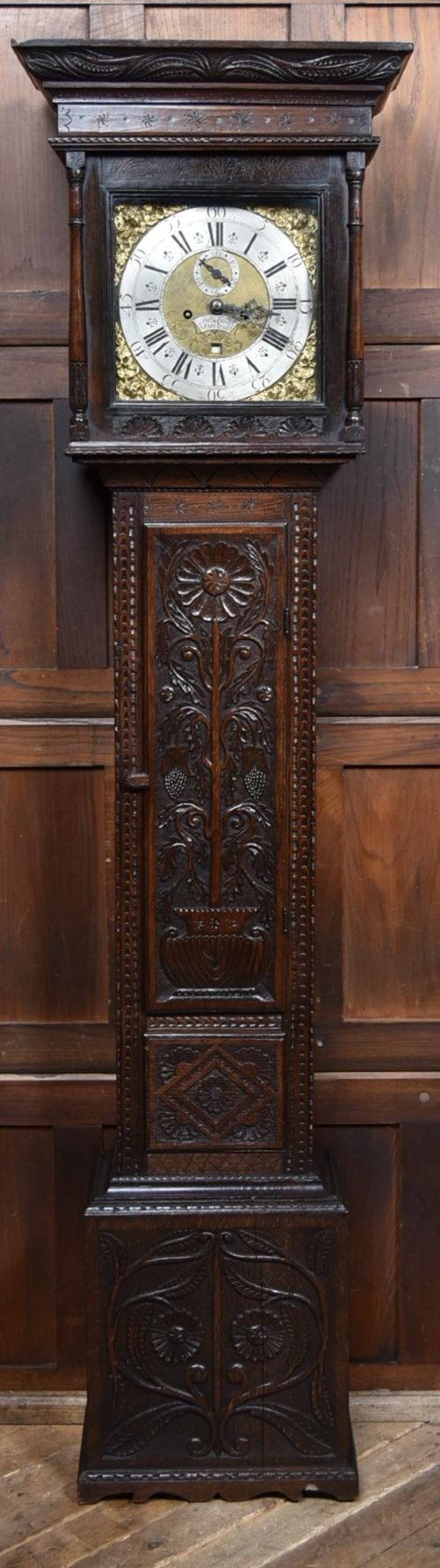
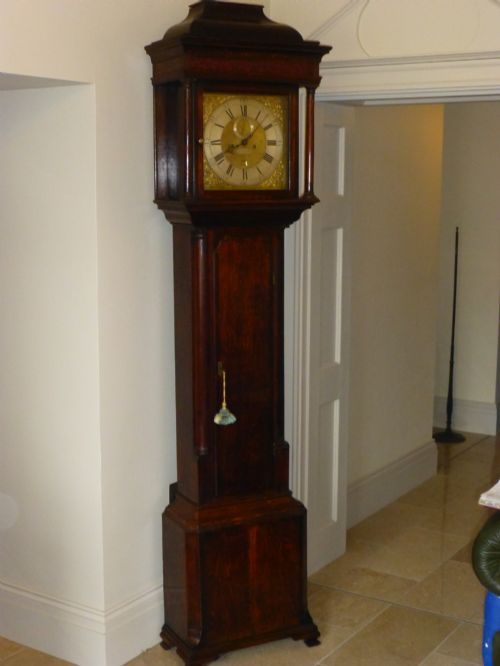
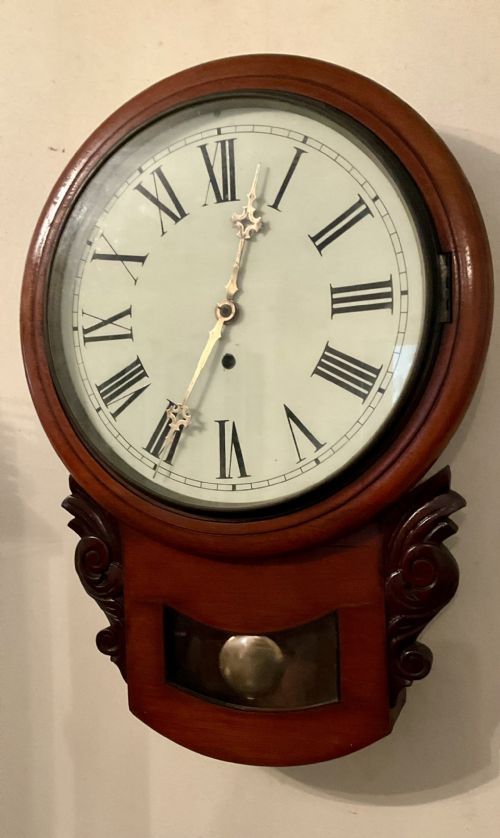
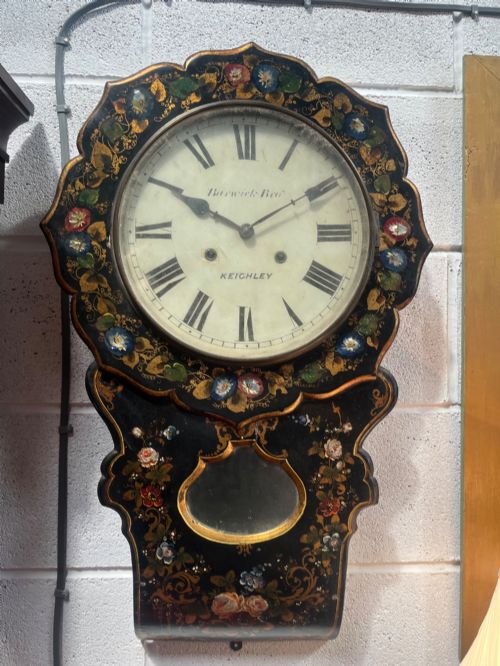
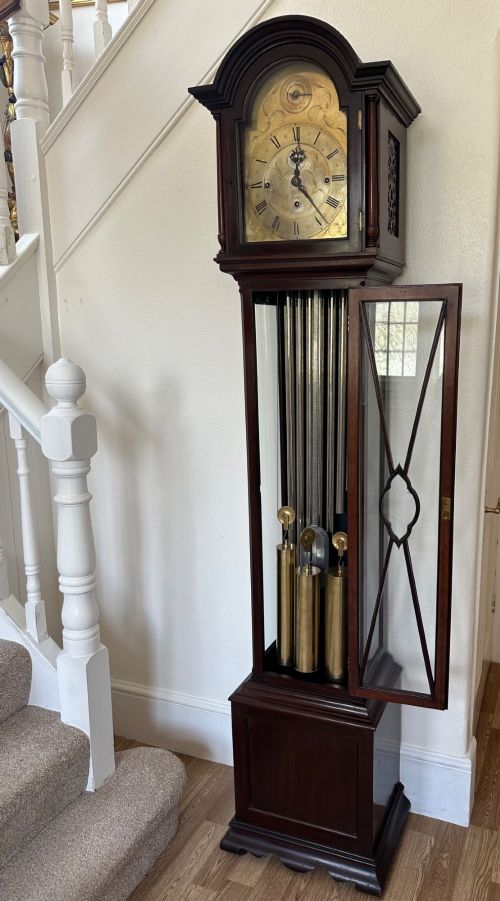
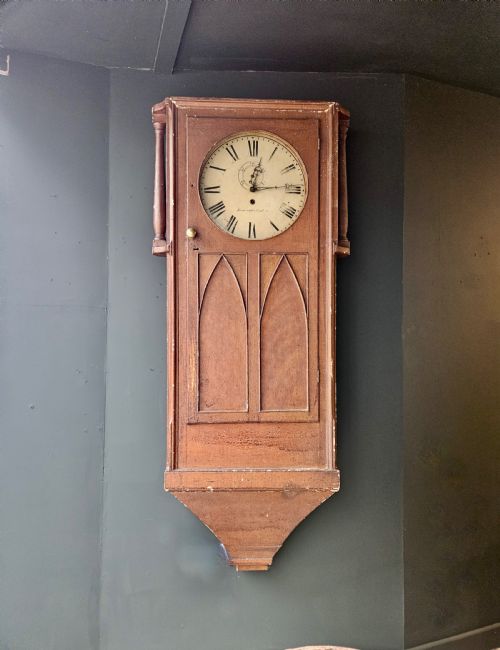
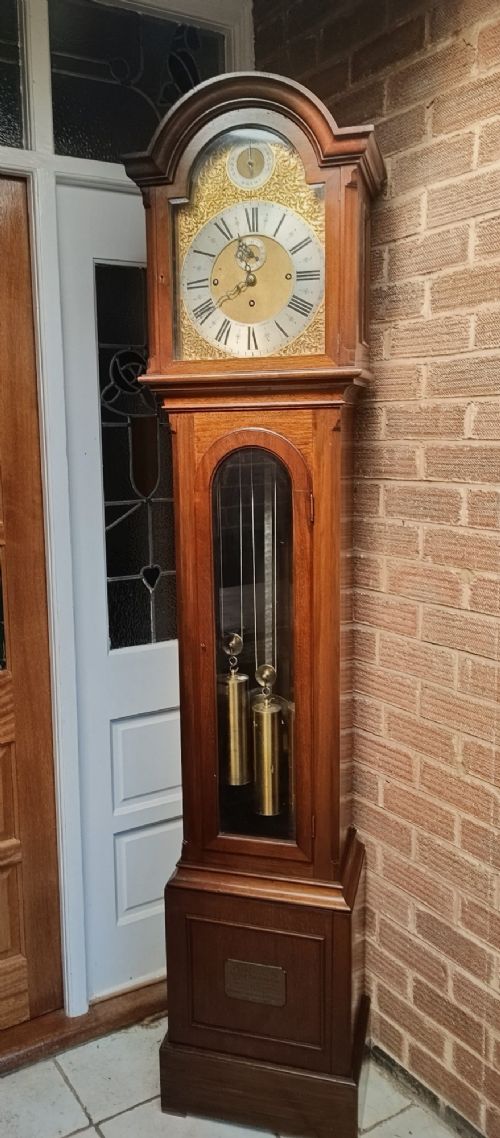


Trunk Dial Clock
A trunk dial clock is a wall timepiece with an extended lower case designed for the pendulum, combining accuracy with architectural presence.
Trunk Dial Clock
A trunk dial clock typically presents a circular face at the top attached to a lower wooden housing, frequently encountered in 19th-century variants on this page. These wall-mounted timepieces originated to serve public spaces, railway stations, and large domestic halls where dependable timekeeping and readability mattered most.
Makers housed precision movements behind glass-fronted bezels, using brass and painted wooden dials to display the hours. The lower trunk protected the swinging pendulum and often featured access doors for winding and regulation.
The materials reflect the cabinetmaking standards of the Georgian, Regency, and Victorian periods, with mahogany, rosewood, and oak predominating. Walnut and pine also appear, sometimes finished with inlay or original paint.
Materials and Construction
Cabinetmakers constructed the cases using dense hardwoods like mahogany and rosewood, frequently applying veneers over secondary timbers or utilising solid oak and pine. Brass featured heavily in the bezels, dial surrounds, and precision gear trains within the movements.
Movements relied on fusee mechanisms or spring-driven systems to maintain consistent power delivery as the mainspring wound down. Dials were formed from brass, painted iron, or carved wood, protected by heavy glass lenses set into hinged brass rims.
Listings feature trunk dial clocks spanning the Georgian, Regency, and Victorian periods, housed in mahogany, rosewood, oak, and walnut.
Assessing Quality
Quality rests in the crispness of the cabinet joinery, the proportion between the dial head and the lower trunk, and the integrity of the movement. Examples by recorded makers utilising fusee movements and solid mahogany or rosewood exhibit superior clockmaking standards compared to utility pieces.
The retention of original painted dials, matching hands, and untouched timber patination distinguishes better specimens. Secondary elements like inlaid brass details and finely carved bezels indicate higher workshop proficiency.
Richard Corless of Stockport·Halliday & Rich Bridgwater·Joseph Mansfield·John Walker·Thomas Utting of Yarmouth·James Wood·Edward East·R Roberts of London·John Thwaites·James Hargraves of Bawtry
The Trunk Dial Clock Glossary
- Fusee
- A conical pulley connected to the mainspring by a chain or cord that equalises the driving force as the spring unwinds. This mechanism ensures consistent torque and improves timekeeping accuracy throughout the winding cycle.
- Dial
- The visible face of the clock where numerals indicate the hours and minutes. These were commonly made of brass, painted iron, or wood.
- Bezel
- The metal ring that holds the glass cover over the dial, usually hinged to allow access for hand setting and winding.
- Pendulum
- A suspended weight that swings back and forth to regulate the speed of the clock mechanism. Its length determines the timing beat of the movement.
Trunk Dial Clock: Frequently Asked Questions
What is a trunk dial clock?
A trunk dial clock is a wall-hanging timekeeper featuring a circular dial compartment mounted above an extended wooden trunk that houses the pendulum. These instruments became popular in public buildings, offices, and large homes during the 18th and 19th centuries.
Unlike standard wall clocks, the elongated lower case gives them a distinct silhouette that bridges the gap between traditional wall clocks and longcase clocks.
How do fusee movements work?
A fusee movement uses a conical pulley paired with a chain or cord to regulate the power transmitted from the mainspring to the gear train. As the spring loses tension, the chain rides higher on the cone's wider radius to maintain steady torque.
This clever mechanical compensation prevents the clock from running fast when fully wound and slow as it runs down, ensuring reliable timekeeping.
Where were these clocks hung?
These clocks were primarily installed in prominent locations where many people needed to read the time simultaneously, such as hallways, railway offices, taverns, and assembly rooms. Their robust construction and clear dial faces made them practical for busy environments.
In domestic settings, they served both functional and decorative purposes in entrance halls and principal reception rooms.
How do I care for a trunk dial clock?
Keep the clock away from direct sunlight, heating vents, and damp walls to protect the wood case and dial finish. Ensure the clock is hung securely on a solid wall and leveled properly so the pendulum swings evenly.
Professional servicing every few years is recommended to clean the movement and renew lubricants without altering original components.