





Tripod Torchere Table
A tripod torchere table offers an elegant vertical display for lamps, plants, and candles, bringing height and proportion to tight corners.
Tripod Torchere Table
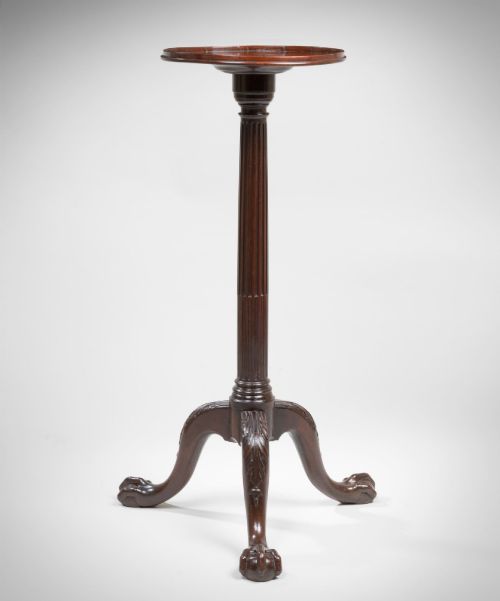
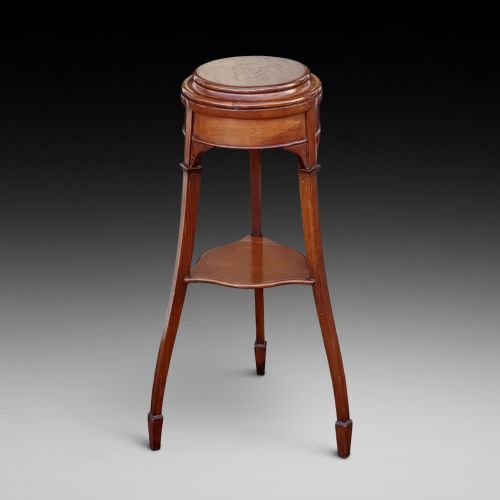
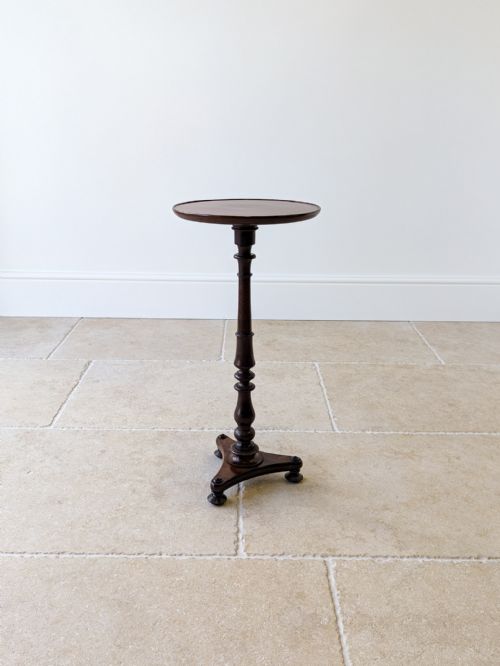
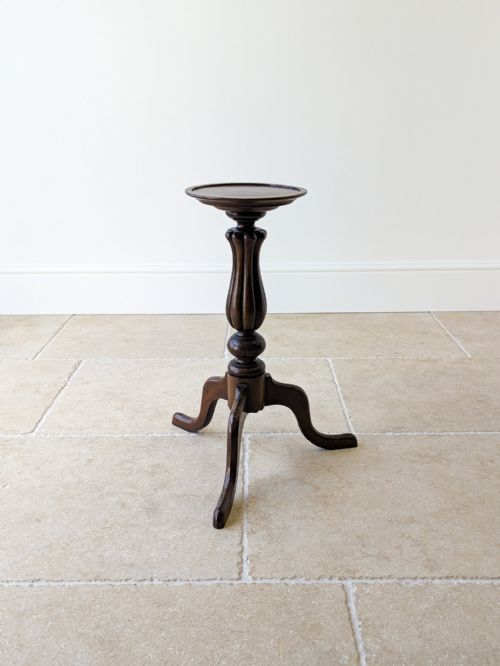
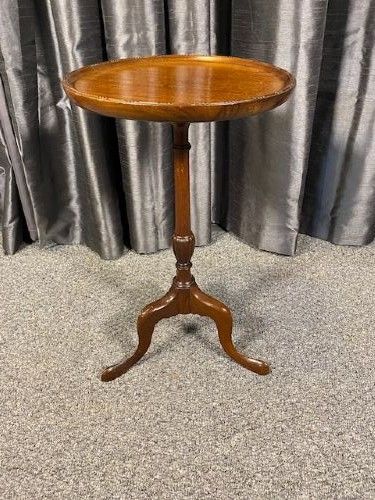
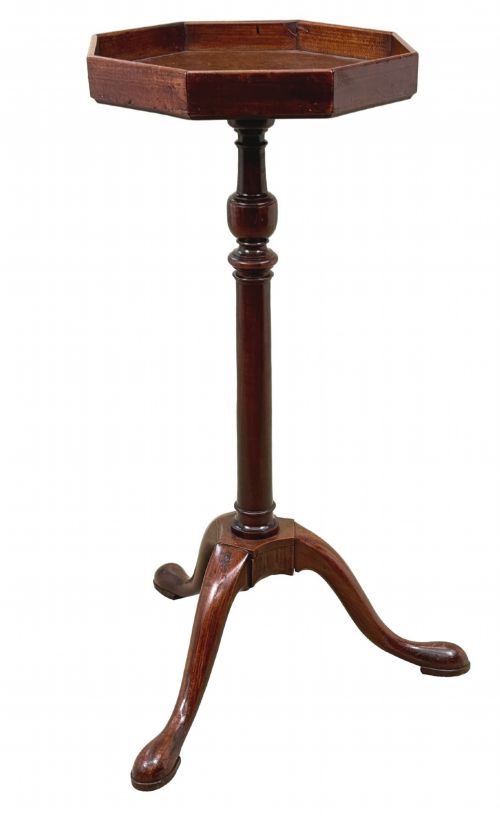
A tripod torchere table stands as a tall, slender support designed originally for candles and now frequently utilised for plants, vases, and occasional display. The form rises on three slender legs to a compact top, keeping floor footprints small while adding architectural height to a room.
You will encounter pieces spanning the Georgian, Victorian, and Edwardian periods, alongside specific revivals like Jacobean and Chippendale styles. Common formats include candle stands, wine tables, jardiniere stands, and plant pedestals executed in varied heights.
How they were made
Cabinet makers built these stands primarily in timbers such as mahogany, walnut, and oak, often selecting dense hardwoods capable of supporting cantilevered weight on three slender legs. Fruitwood marquetry and burr oak appear on finer examples, adding decorative grain patterns and contrasting inlay to the top surfaces.
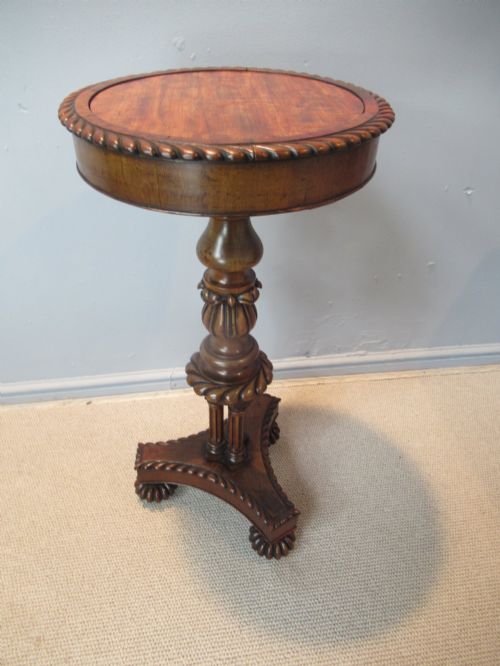
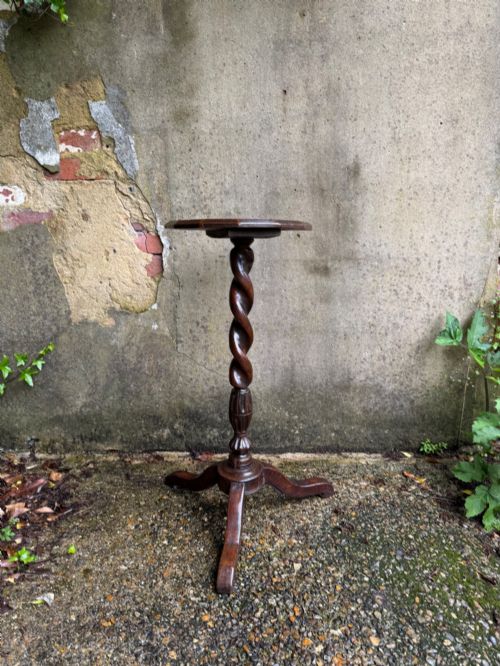
Construction techniques relied on sturdy turned columns, carved tripod bases, and stable bridle or birdcage joints beneath the top. Surface finishing involved polishing to reveal the natural grain of the wood or applying lacquer decoration on specific revival pieces.
Tripod Torchere Table Retail Price Guide 2026
Typical asking prices for tripod torchere table among the pieces listed under this phrase on Sellingantiques today, from the lower quarter to the upper quarter. They describe what is for sale here now, not the wider market.
Among the towering plant stands and candle supports, a singular French walnut stand carries the unexpected moniker of Rolls Royce.
What varies in quality
Quality separates ordinary utilitarian stands from exceptional collector pieces through the crispness of the carving on the tripod base and column. Crisp acanthus leaves, rope twist turnings, and well-proportioned cabriole legs indicate skilled workmanship.
The choice of timber and complexity of top design also distinguish the range, from plain solid oak boards to figured walnut floral marquetry and burr oak veneers. Stability, original joinery, and balanced proportions determine the overall integrity of the stand.
The Tripod Torchere Table Glossary
- Torchere
- A tall stand designed to hold a light, candle, or plant. The term derives from the French word for torch.
- Tripod base
- A three-legged support system providing balance on uneven floors. These legs often terminate in pad, claw and ball, or spade feet.
- Marquetry
- The art of applying pieces of veneer to a structure to form decorative patterns. Floral motifs appear frequently on eighteenth and nineteenth-century examples.
- Jardiniere stand
- A tall piece specifically intended to support a plant container or flower bowl. These often feature raised lips or metal liners to contain moisture.
Tripod Torchere Table: Frequently Asked Questions
What is a tripod torchere table used for today?
These tall stands serve effectively for displaying potted plants, small sculptures, table lamps, or decorative bowls in corners and hallways.
Their compact footprint allows them to occupy minimal floor space while drawing the eye upward to create vertical interest.
How do I tell an 18th-century torchere from a Victorian one?
Eighteenth-century examples often display restrained carving, elegant proportions, and timbers like dense mahogany or oak with patinated surfaces.
Victorian and later pieces frequently show heavier turned columns, bolder revival styling, and sometimes elaborate marquetry or lacquer work.
Are these tables stable enough for daily use?
The three-legged design provides natural balance on solid floors, though tall stands require sensible placement away from active walkways.
Placing heavier items near the centre ensures the stand remains secure and less prone to tipping.
Can I use a candle stand as a lamp table?
Many candle stands and wine tables easily accommodate small table lamps, provided the top surface diameter matches the base of the lamp.
Checking the weight distribution ensures the combination remains balanced on the slender tripod support.