
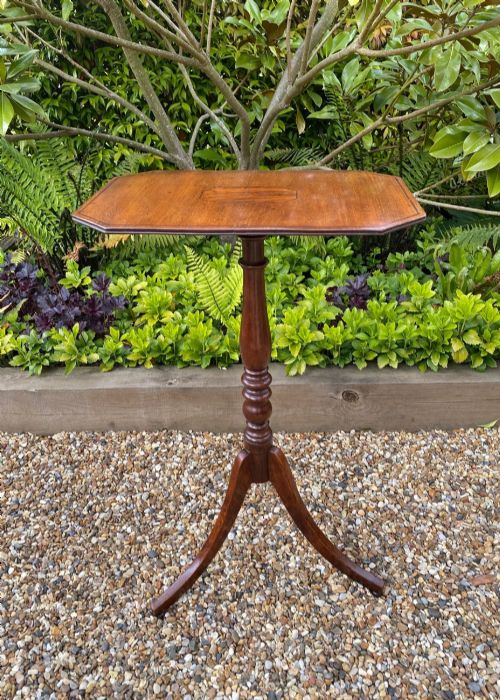
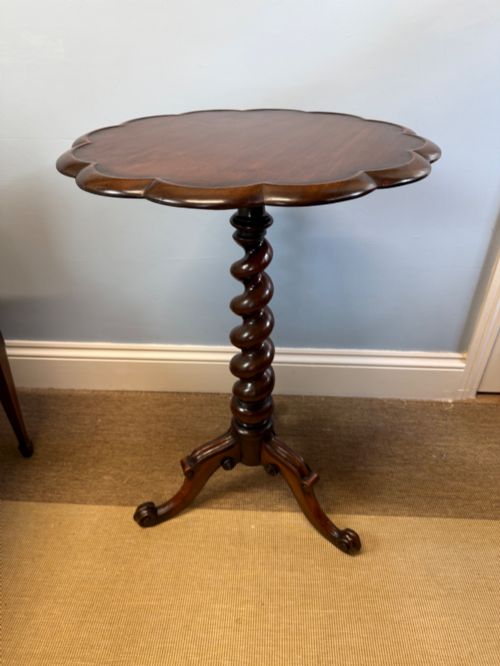
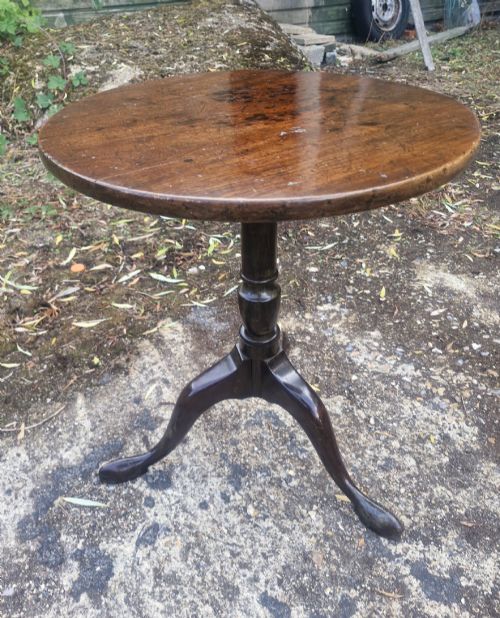
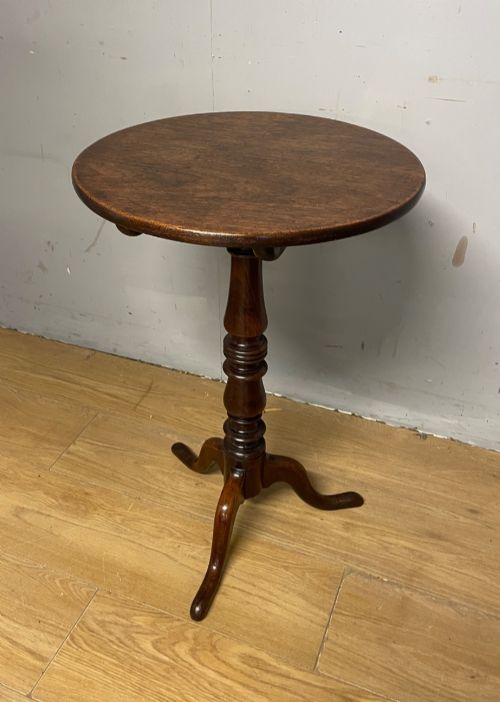
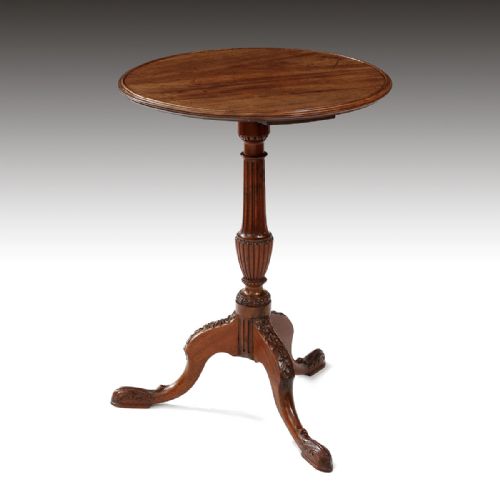
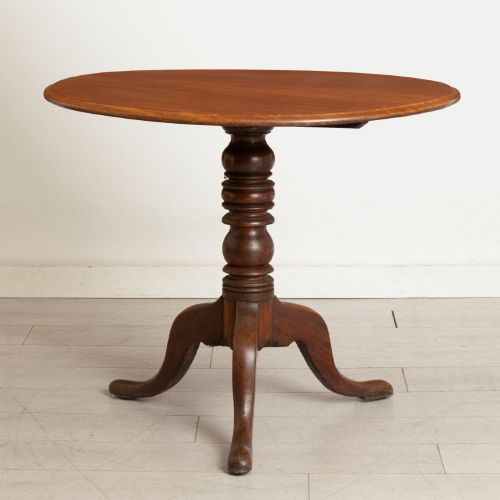
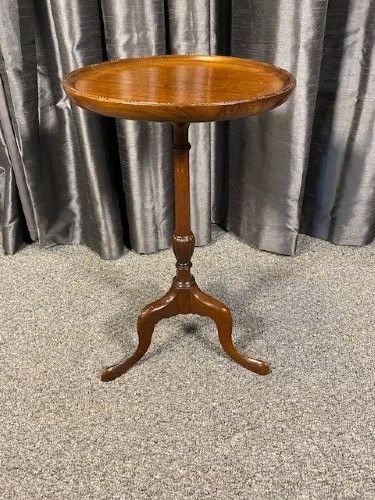
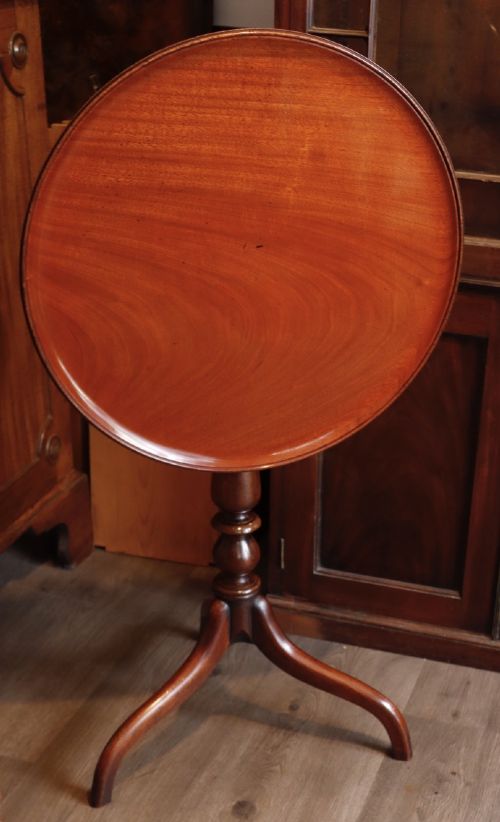
Georgian Mahogany Tripod Stand
A georgian mahogany tripod stand brings the architectural balance and warm timber grain of the eighteenth and nineteenth centuries directly into a modern room.
Georgian Mahogany Tripod Stand
A georgian mahogany tripod stand is a versatile piece of furniture designed with a central pillar supported by three legs, commonly utilised for holding wine, books, or candles. You will frequently encounter wine tables, occasional tables, and candle stands spanning the Georgian, Regency, and nineteenth-century periods.
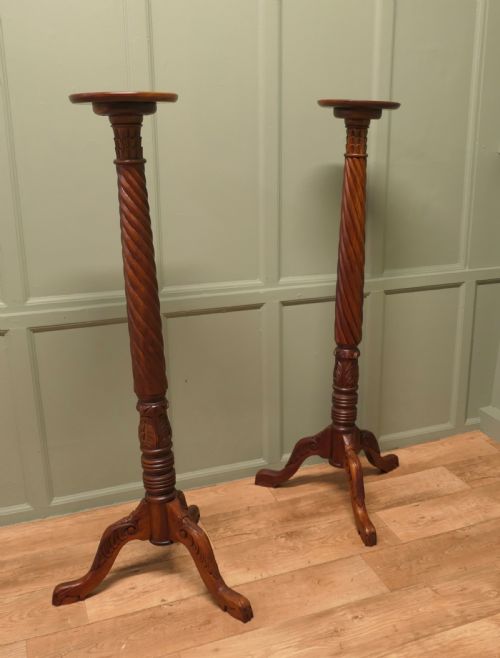
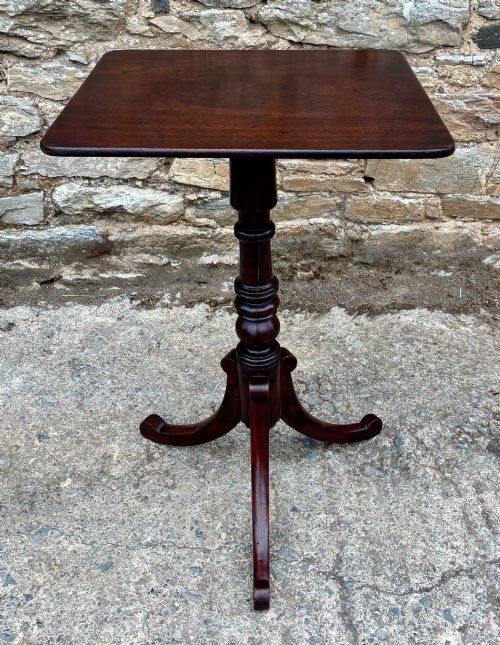
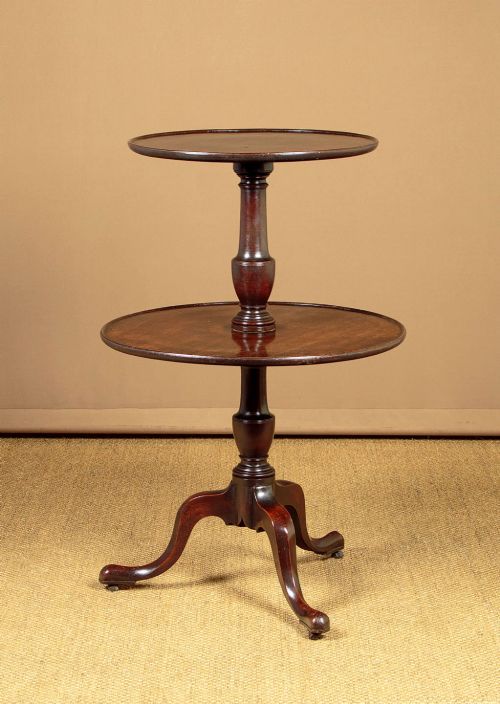
The assortment on this page ranges from simple tilt-top designs and dumb waiters to intricately carved torcheres, pole screens, and tray top tables. These versatile stands served specific domestic purposes in Georgian and Regency interiors, functioning as movable surfaces for tea, illumination, or reading materials.
While many examples date from the eighteenth and nineteenth centuries, later Edwardian and twentieth-century interpretations also appear alongside pieces in the Chippendale style. The core form remains consistent, featuring a slender pillar and three splayed legs that provide stable placement across various living spaces.
Materials and Construction
The primary material across these pieces is mahogany, often selected for its rich grain, structural stability, and deep natural colour. Workshops frequently combined this timber with secondary woods, brass hardware for adjustable mechanisms, and occasionally boxwood inlay or parcel gilt highlights.
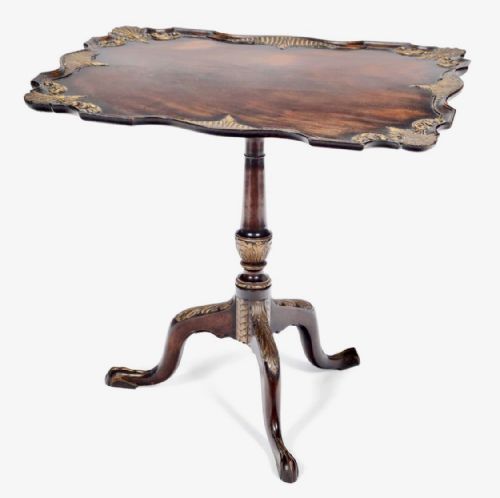
Joinery techniques included precise turning for the central pedestals and sturdy tenon joints where the three legs met the central shaft. Many examples incorporate a snap-top or tilt-top mechanism, allowing the table top to pivot vertically when not in use.
The listings on this page span the Georgian, Regency, Victorian, and Edwardian periods, constructed primarily in mahogany with occasional brass and walnut details.
Defining Quality and Craftsmanship
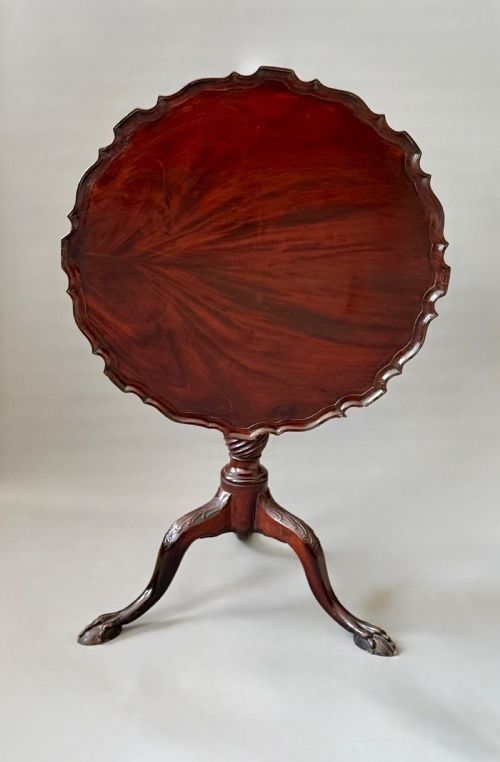
Quality reveals itself in the crispness of the timber carving, the proportion of the central pillar to the splayed legs, and the cleverness of the tilt-top or adjustable mechanism. Superior examples display thoughtful grain selection in the mahogany top and finely shaped edges such as pie crust or raised mouldings.
The integrity of the structural joints where the tripod legs meet the pedestal determines the long-term stability of the stand. Pieces finished with subtle wood inlay or original brass fittings show a higher level of workshop attention than plain utility items.
Gillow
The Georgian Mahogany Tripod Stand Glossary
- Tilt top
- A table top hinged to the pedestal so it can be folded flat and stored against a wall when not in use. This mechanism saved valuable floor space in period rooms.
- Tripod
- A base comprising three supporting legs radiating from a central pillar. This three-point stance ensures stability even on uneven floors.
- Torchere
- A tall decorative stand designed to support a lamp, candle, or plant. These elevated stands placed light sources safely above floor level.
- Pie crust
- A carved, undulating raised rim decorating the edge of a circular table top. The shape resembles the pastry edge of a traditional pie.
- Pole screen
- An adjustable vertical screen mounted on a tripod stand, designed to shield a person's face from the direct heat of an open fireplace.
Georgian Mahogany Tripod Stand: Frequently Asked Questions
How were wine tables used?
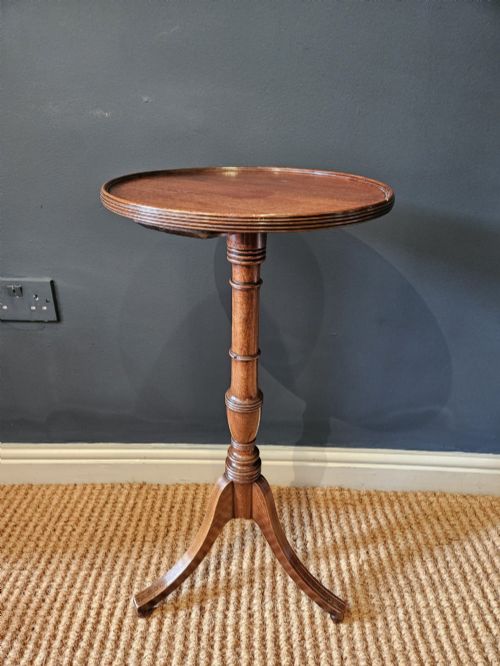
Wine tables served as portable surfaces placed beside seating to hold glasses, decanters, or candles during social gatherings. Their compact footprints made them easy to move around a drawing room as guests shifted position.
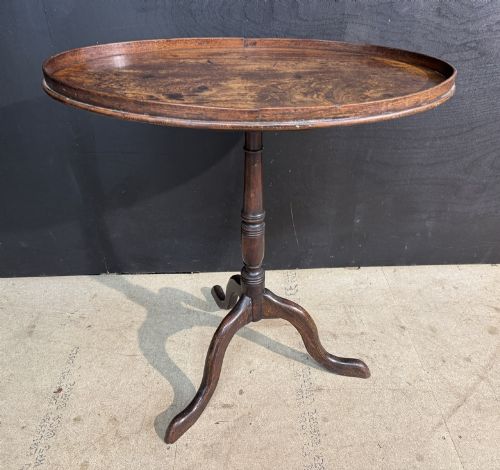
Many of these tables feature raised edges or dished tops to prevent bottles and glassware from sliding off when the surface was crowded.
Are these stands stable on carpets?
The three-legged design of a tripod base naturally adjusts to minor unevenness in flooring, making them remarkably stable on flat surfaces. However, thick modern carpets can cause the slender feet to sink unevenly.
Placing the stand on a hard floor or a tight weave rug ensures the three splayed legs maintain balanced contact without wobbling.
How do I date a mahogany stand?
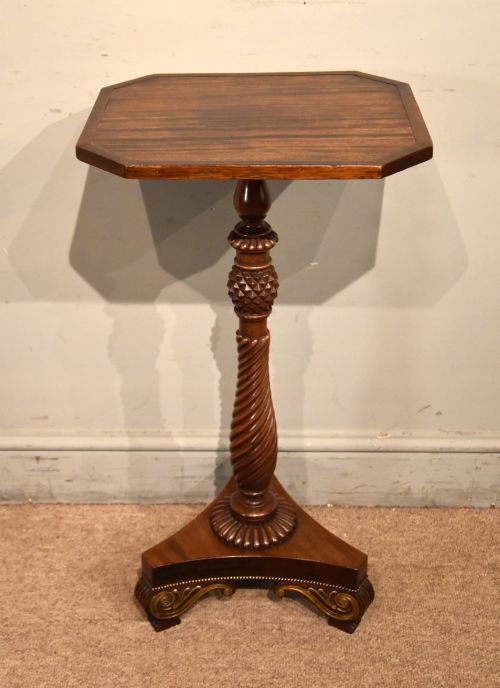
Dating relies on observing the turning of the pillar, the profile of the legs, and the construction methods visible beneath the top. Earlier eighteenth-century pieces often display restrained lines and substantial timber weight, while Regency examples lean towards bold pedestals and brass paw feet.
Later nineteenth and twentieth-century revivals frequently combine stylistic traits or employ machine-cut elements that distinguish them from period originals.