
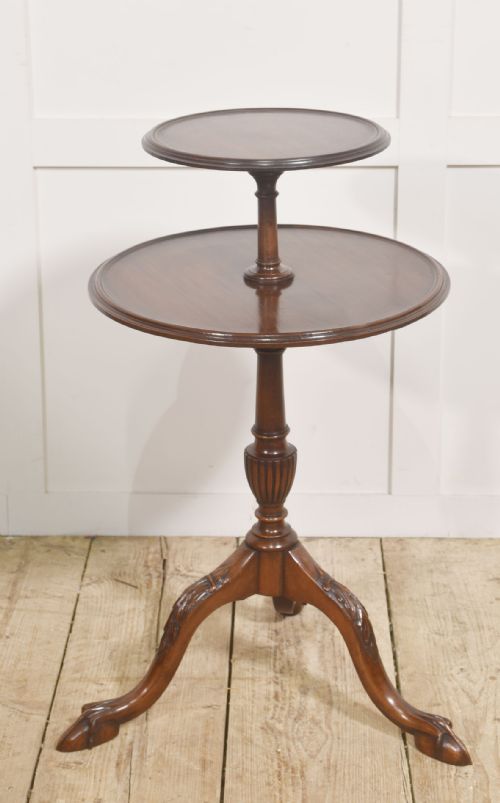


Tripod Tiered Table
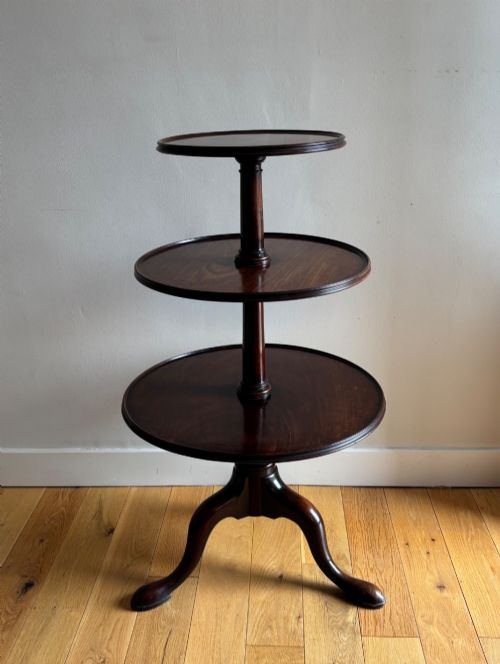
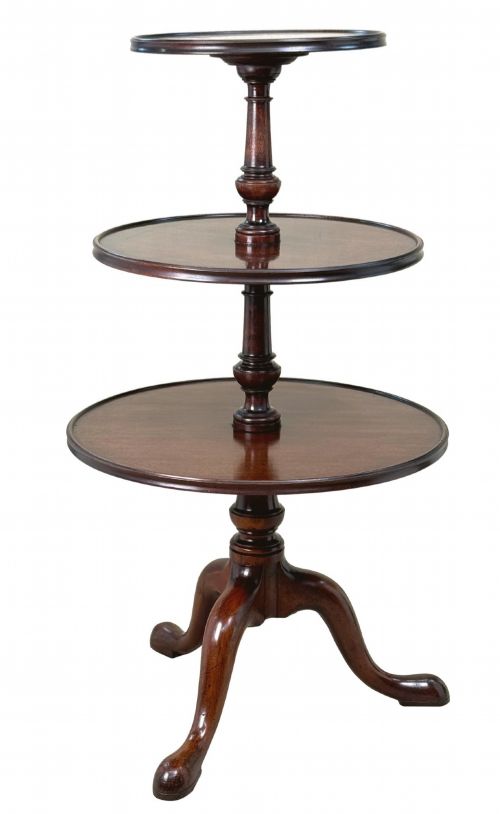
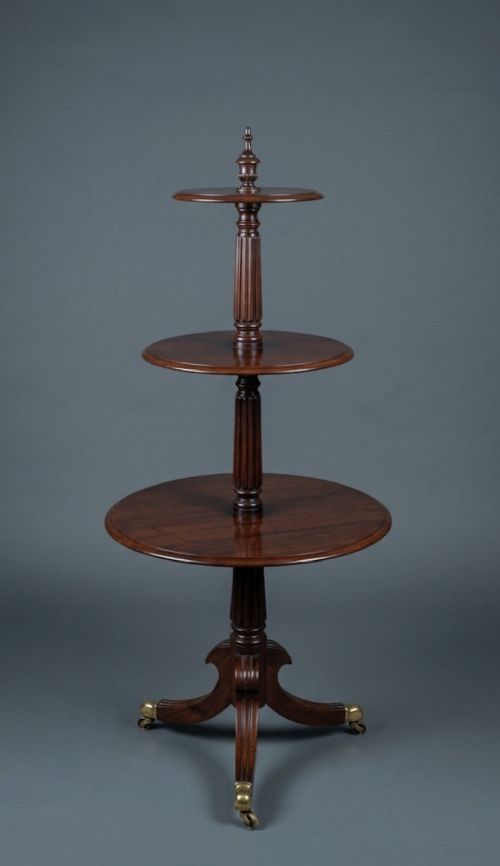
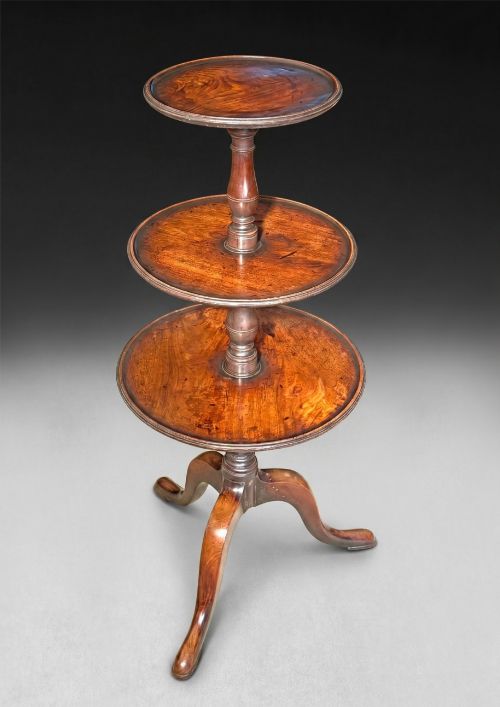
A tripod tiered table provides useful surfaces on a compact pedestal base, appearing frequently as a mahogany dumb waiter.
Tripod Tiered Table
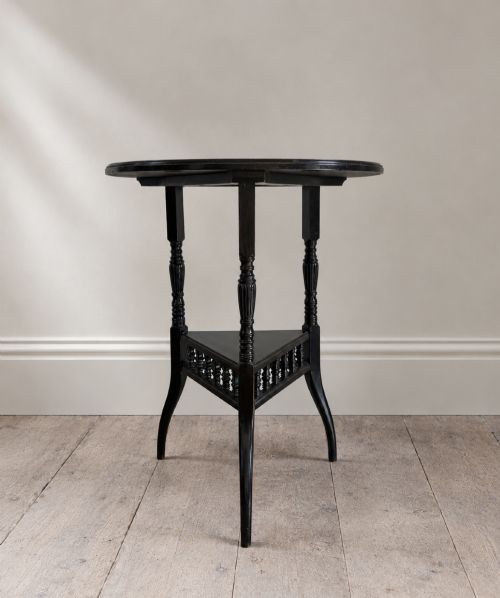
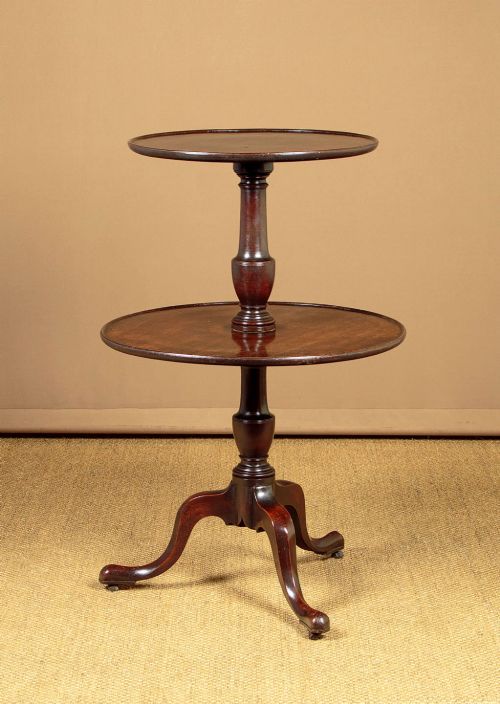
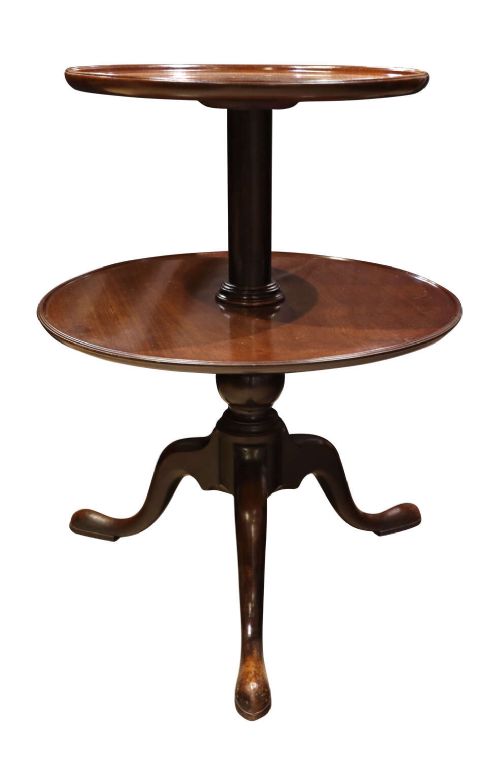
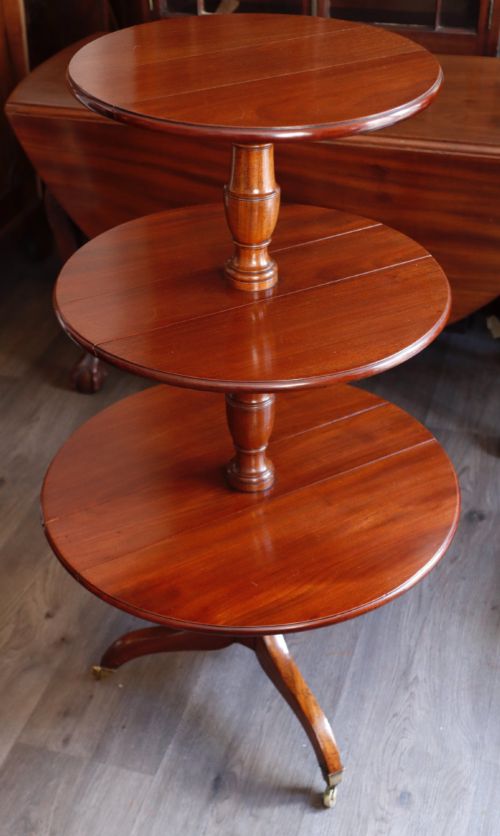
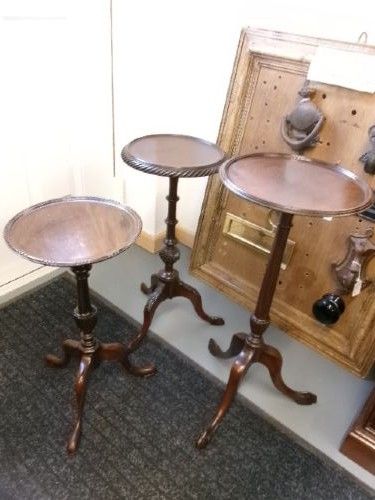
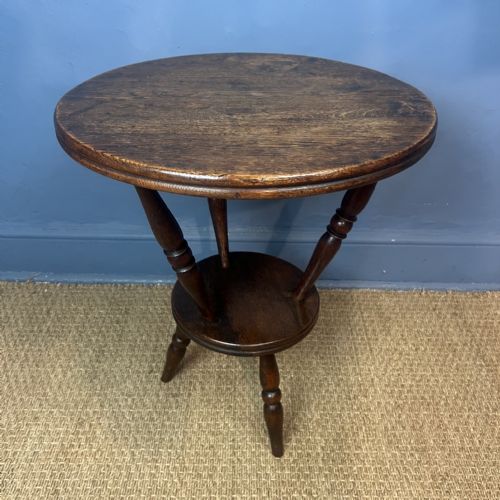
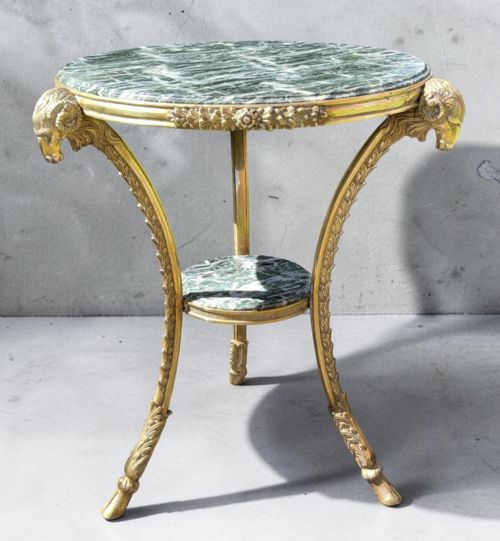
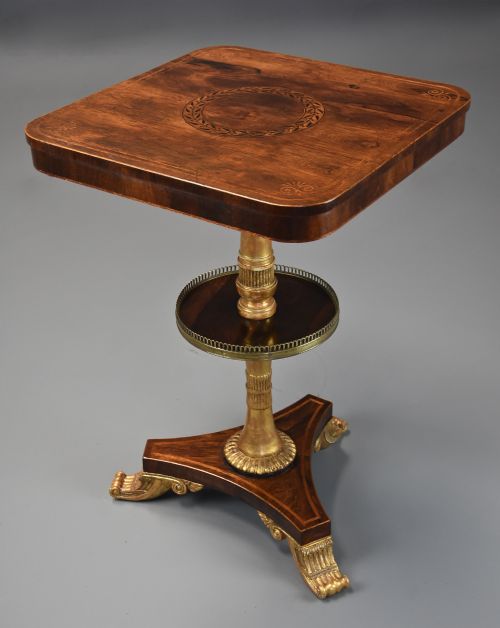
A tripod tiered table is an item of furniture resting on a three-legged base with multiple levels stacked vertically. These pieces serve various domestic functions such as occasional tables, wine tables, etageres and dumb waiters. The selection here leans heavily towards Georgian and Regency examples, alongside later Victorian and Edwardian interpretations.
Most items meeting the search for a tripod tiered table take the form of circular graduated trays connected by a central column. Mahogany forms the backbone of these offerings, though walnut, rosewood, oak and ebonised hardwood also appear. Buyers encounter two-tier and three-tier variations designed for serving, display and needlework.
How they were made
Makers constructed these tiered forms predominantly from solid and veneered timbers like mahogany, rosewood and burr walnut, joined to turned central pedestals. Cabriole or splayed legs form the tripod support, frequently terminating in pad feet, brass castors or brass claw shoes. Timber selection dictated stability, particularly on tall three-tier variations holding weight on upper levels.
Joinery techniques included pegged tenons, birdcage mechanisms allowing table tops to tilt and revolve, and graduated turning for central columns. Secondary woods provided structural support beneath veneers, whilst brass fixtures enabled rotation on revolving dumb waiters.
Listings feature periods spanning from the eighteenth century through the Georgian, Regency, and Victorian eras into the early twentieth century.
What varies in quality
Quality in a tripod tiered table rests on the selection of timber figure, such as fiddleback mahogany or burr walnut, and the crispness of turned details on the central column. Superior examples display thoughtful grain matching across multiple tiers and robust joints connecting the legs to the shaft.
The sophistication of the revolving mechanism and the presence of original brass castors separate standard utility pieces from finer items made during the Georgian and Regency periods. Proportions between the diameter of the tiers and the spread of the tripod base determine visual balance.
The Tripod Tiered Table Glossary
- Dumb waiter
- A multi-tiered serving table on a central pedestal, used historically in dining rooms to hold dishes without servants present. These pieces often feature two or three graduating circular trays.
- Tripod base
- A three-legged support structure common on occasional tables, providing stability on uneven floors. The splayed legs balance the weight of stacked tiers above.
- Birdcage
- A timber framework beneath a table top allowing it to tilt vertically and rotate horizontally. This mechanism appears on various pedestal tables from the Georgian period onward.
- Etagere
- A set of open shelves or tiers for displaying small objects or serving afternoon tea. They appear in mahogany, rosewood and walnut across the nineteenth century.
- Fiddleback mahogany
- A figured timber grain showing ripples resembling the back of a violin. Cabinet makers prized this wood for high-status Regency furniture.
Tripod Tiered Table: Frequently Asked Questions
What is a tripod tiered table used for?
These pieces function primarily as serving stands, lamp tables and display surfaces for small decorative objects. Historically, multi-tiered versions held food and glassware during dining.
Today, homeowners place them beside armchairs or in corners to maximise surface area without occupying much floor space.
How do I tell an 18th century piece from a Victorian one?
Georgian examples rely on understated mahogany construction with elegant proportions, fine turning and subtle timber figure. They often feature fixed or revolving graduated tiers on slender tripod legs.
Victorian variations introduce heavier turned columns, alternate woods like burr walnut and rosewood, and sometimes later decorative paint or elaborate carving.
Do the tiers rotate on all these tables?
Revolving functionality depends on the specific form, particularly with dumb waiters and wine tables. Many period examples incorporate a central pivot or birdcage mechanism allowing the trays to spin.
Other variations feature fixed tiers securely attached to the central pedestal for absolute stability.
Where should I place a tiered table at home?
A compact footprint makes these tables suitable for tight spaces, hallways and empty corners. They fit comfortably beside seating where multiple levels allow storage for books or drinks.
Avoid placing them directly next to heat sources that could dry out historic timber and cause warping.