






Carved Mahogany Dumbwaiter
These carved mahogany dumbwaiter pieces are tiered serving stands designed for dining rooms, offering multiple tiers of timber surface for formal meals.
Carved Mahogany Dumbwaiter
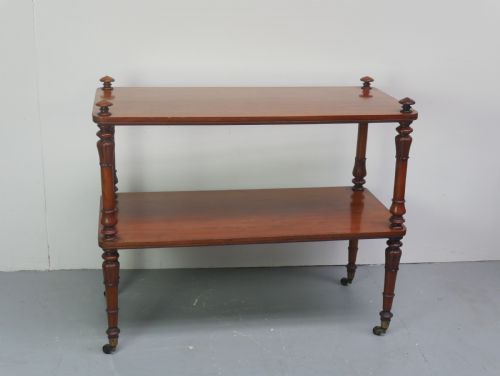
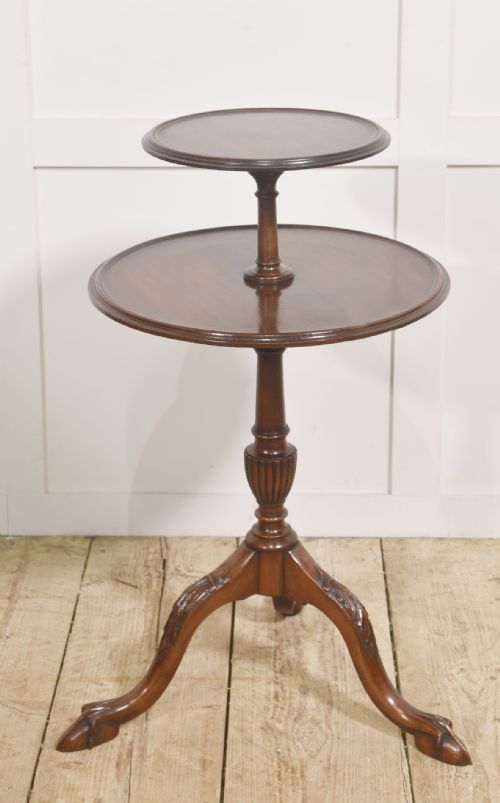
A carved mahogany dumbwaiter is a multi-tiered piece of dining room furniture designed to hold dishes, serving items, and tableware. These pieces range from compact two-tier tables to taller standing structures with three or four rotating or fixed tiers.
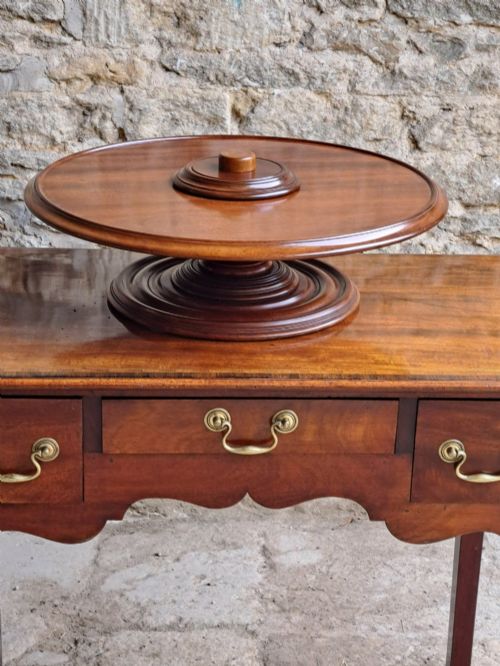
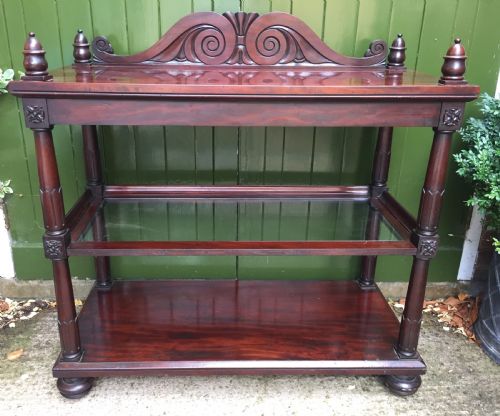
The versions most commonly met on this page span the Georgian, Regency, and Victorian periods, often taking the form of buffets, serving tables, or revolving lazy susans. They combine functional shelving with decorative timber turning and carved details suitable for period dining spaces.
Makers and designers produced these items in various regional styles, including Irish variations and George III interpretations, utilising timber to create practical multi-level surfaces. Buyers encounter them as versatile serving stands that integrate traditional dining furniture into modern interiors.
Materials and construction
Construction relies primarily on solid and veneered mahogany, selected for its rich grain, durability, and deep colour. Workshops paired this timber with secondary materials like brass for castors and mechanisms, alongside occasional leather, ceramic, felt, or glass details.
Joinery techniques combined turned central columns with graduated tiers fixed securely or engineered to revolve. Carving, reeving, and moulding were executed by hand to define the edges of the tiers and the profiles of the supporting pillars.
Carved Mahogany Dumbwaiter Retail Price Guide 2026
Typical asking prices for carved mahogany dumbwaiter among the pieces listed under this phrase on Sellingantiques today, from the lower quarter to the upper quarter. They describe what is for sale here now, not the wider market.
Listings feature mahogany structures complemented by brass, leather, ceramic, felt, and glass across Georgian, Regency, and Victorian periods.
Quality and craftsmanship
Quality rests in the selection of the timber figure, such as fiddleback mahogany, and the crispness of the hand-carved details along the pillars and tier edges. Finer pieces demonstrate careful proportion between the graduated tiers and stable joinery in the central columns.
The sophistication of the mechanical elements, whether in a revolving lazy susan, a telescopic mechanism, or a metamorphic buffet, separates standard production from superior examples. Better workshops ensured smooth movement and tight joints that withstand regular use.
Maple & Co
The Carved Mahogany Dumbwaiter Glossary
- Dumbwaiter
- A multi-tiered piece of furniture used for holding food and tableware during meals without requiring a servant present. These stands typically feature two, three, or four shelves arranged vertically.
- Lazy Susan
- A revolving tray or tiered stand allowing dishes to be turned and shared easily around a table. These revolving stands appear frequently in nineteenth-century dining rooms.
- Buffet
- A serving table or sideboard used for displaying food and drink during formal entertaining. Examples in this category often incorporate multiple tiers similar to dumbwaiters.
- Fiddleback mahogany
- A figure of mahogany wood showing wavy grain patterns resembling the back of a violin. Cabinetmakers utilised this timber for decorative effect on prominent surfaces.
- Metamorphic
- Furniture designed to change form or function through folding, extending, or adjusting mechanisms. These pieces offer flexible use within dining and serving spaces.
Carved Mahogany Dumbwaiter: Frequently Asked Questions
What is a dumbwaiter used for?
These tiered stands served as convenient side surfaces during meals, holding extra plates, dishes, and bottles close to the dining table.
In period dining rooms, they allowed diners to help themselves without relying constantly on servants.
How do I tell a Regency dumbwaiter apart from a Victorian one?
Regency examples often display cleaner classical lines, brass inlay, and crisper scroll or pillar turnings influenced by antique forms. Victorian pieces tend to be heavier in scale, featuring bolder carved mouldings and darker finishes.
Examining the turning style and the timber grain helps identify the manufacturing period.
Can I use a dumbwaiter as a side table?
These multi-tiered stands function effectively as side tables or display furniture in living rooms and hallways today. Their stacked shelves provide practical vertical surface space for books, lamps, and decorative objects.
Placing them in corners or beside seating makes full use of their original tiered design.