




Tripod Music Stand
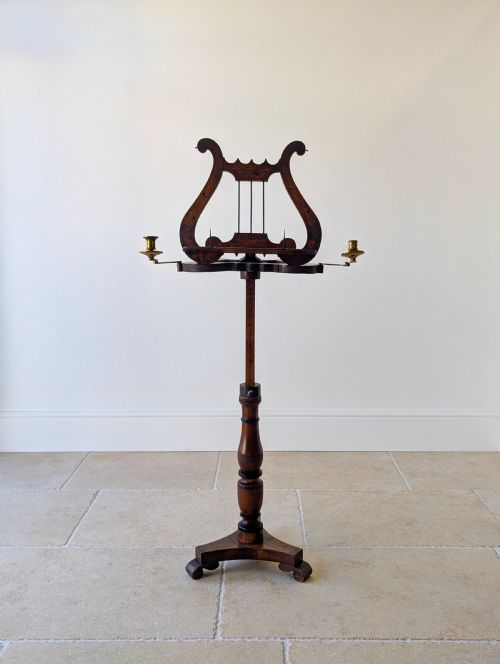
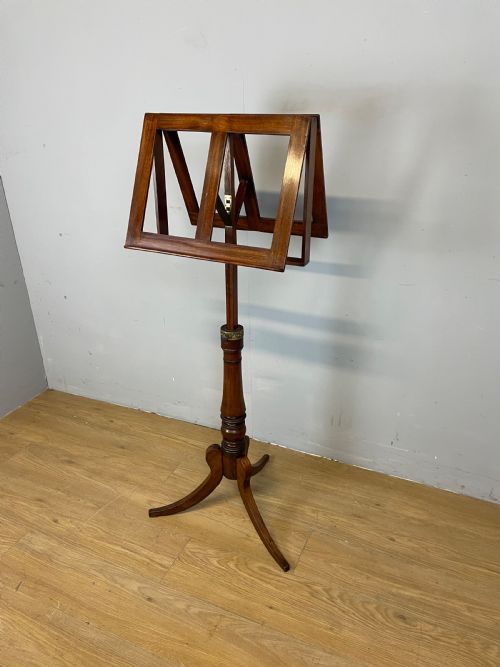
A tripod music stand is a pivoting or adjustable piece designed to hold scores securely, marrying practical stage utility with fine cabinet-making.
Tripod Music Stand
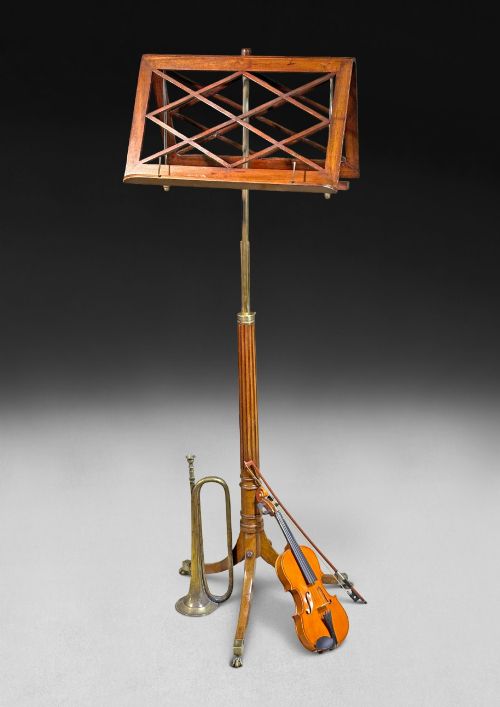
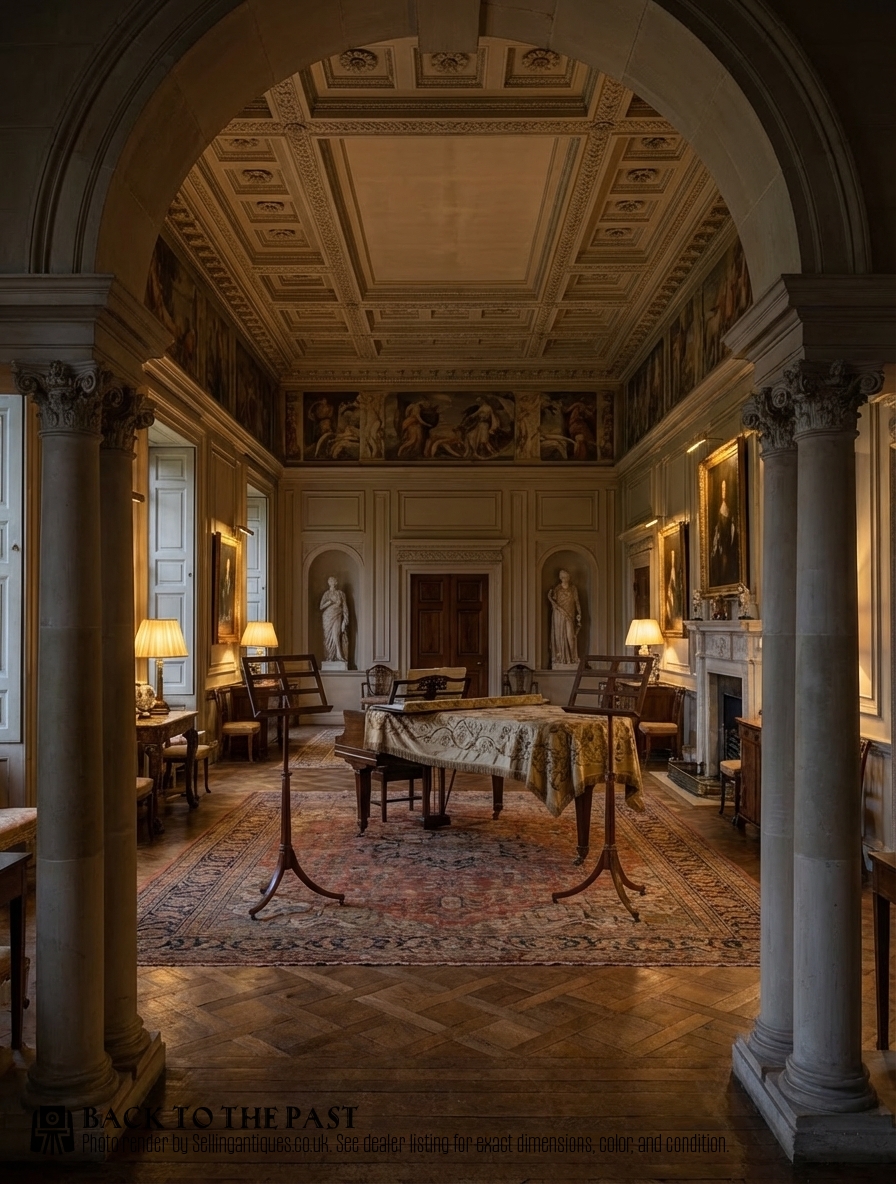
A tripod music stand serves musicians and readers by elevating scores on an adjustable pillar supported by three feet. When searching for a tripod music stand, buyers encounter pieces spanning the Georgian, Regency, William IV, and Victorian periods.
The standard format takes the form of a single-sheet ledge or a wider duet stand, often doubling as an occasional reading table. Mahogany and rosewood dominate the early examples, while walnut and burr walnut appear frequently in mid-Victorian iterations.
Makers utilised various mechanics, producing fully adjustable stems and pivoting lecterns that shift from vertical presentation to horizontal reading tables. Oak and ebonised timbers also emerge across the nineteenth and early twentieth centuries.
Materials and Construction
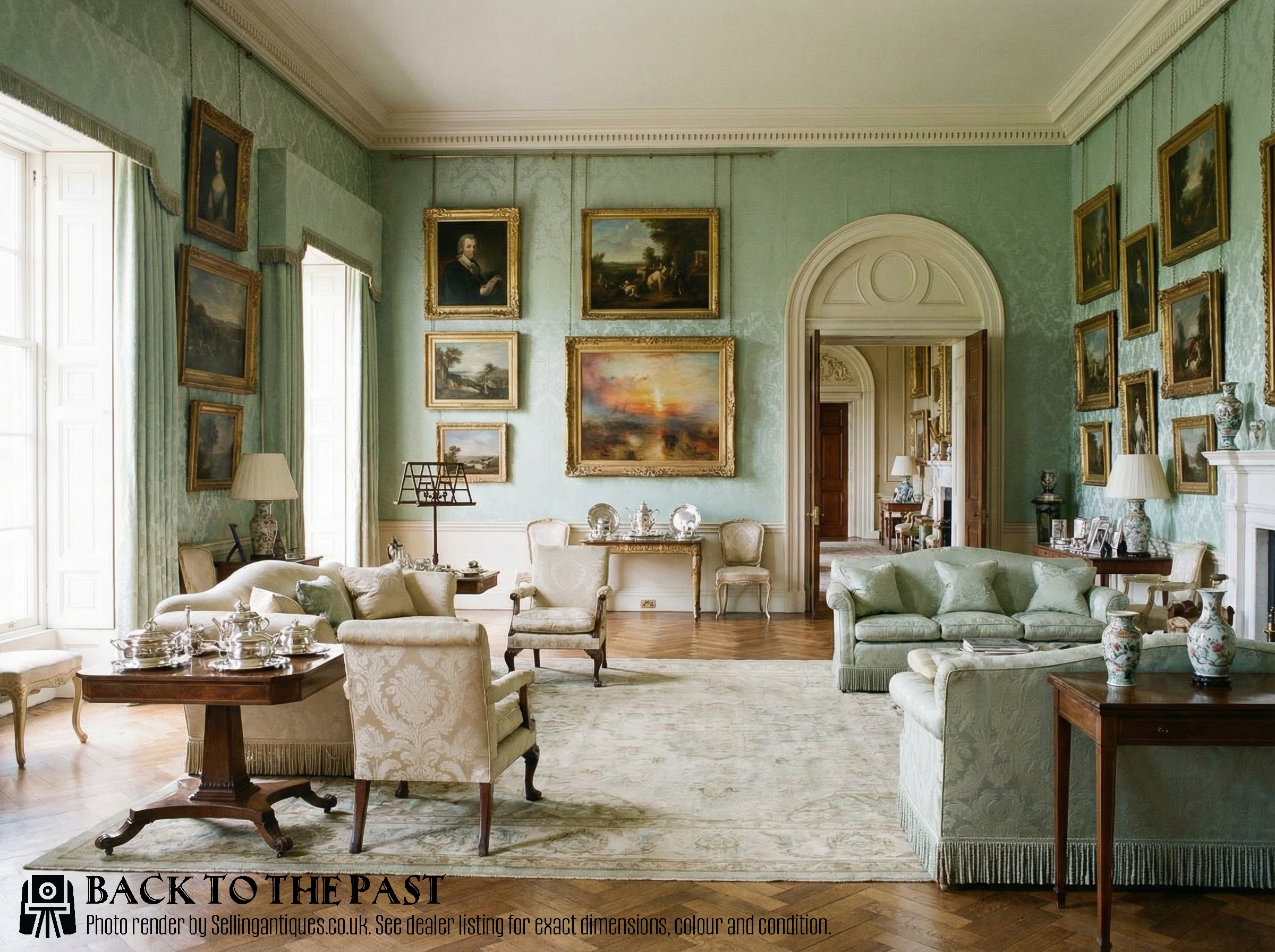
Cabinet-makers shaped these stands from dense hardwoods such as mahogany, rosewood, and walnut, frequently selecting figured veneers and satinwood inlay for decorative effect. Solid brass components provide the sliding mechanisms and screw adjustments essential for altering height and tilt.
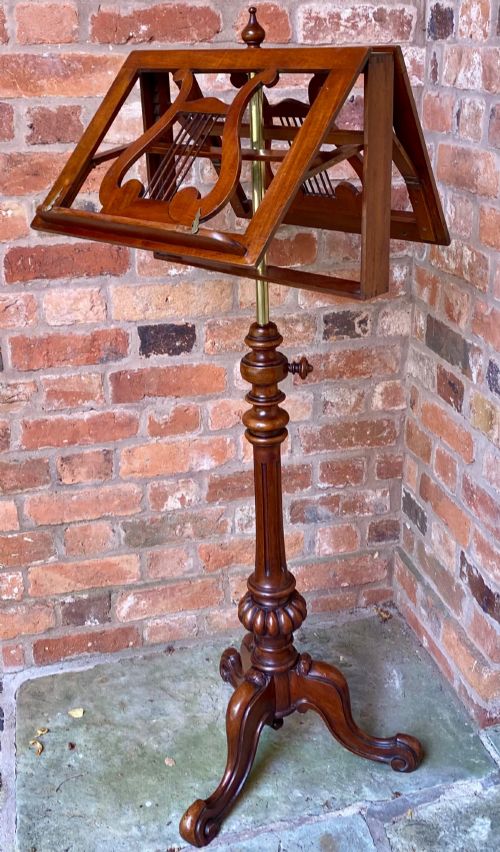
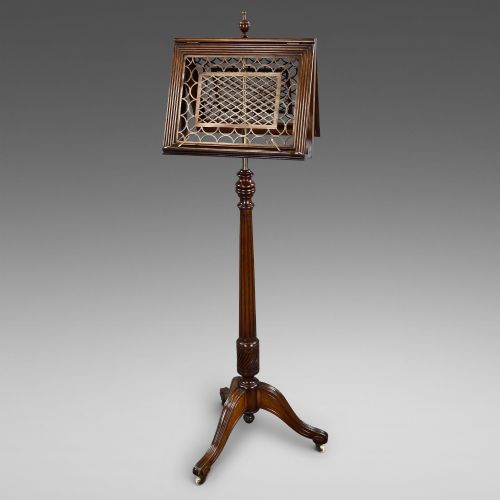
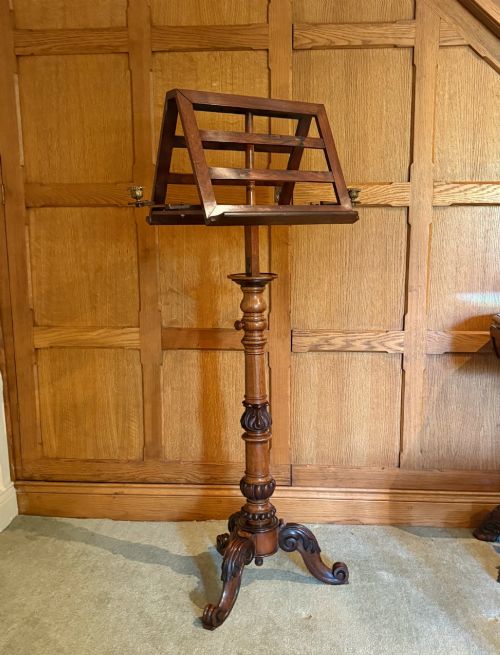
Carved tripod bases often feature cabriole legs, reeded pillars, or lyre-form supports that balance the weight of heavy folio volumes. Joinery relies on precise turning and housing to ensure stability when the stem is fully extended.
Tripod Music Stand Retail Price Guide 2026
Typical asking prices for tripod music stand among the pieces listed under this phrase on Sellingantiques today, from the lower quarter to the upper quarter. They describe what is for sale here now, not the wider market.
Listings demonstrate tripod music stands fashioned from mahogany, rosewood, walnut, burr walnut, oak, and ebonised timber.
Evaluating Quality and Craftsmanship
Quality rests in the precision of the adjustable mechanism and the stability of the tripod base under weight. Superior examples integrate smooth-operating brass screws and retain their original rising stems without wobble.
The refinement of the timber selection and carving separates standard items from exceptional ones. Figured mahogany, rich burr walnut, and crisp fretwork or lyre motifs indicate a higher grade of workshop production.
GILLOWS·Swann & Millican
The Tripod Music Stand Glossary
- Duet stand
- A wider music stand designed to accommodate two musicians reading from the same shared book or two separate scores side by side.
- Lectern
- A raised reading desk with a slanted top, often used interchangeably with music stands in period descriptions.
- Lyre-form
- A decorative motif shaped like an ancient stringed instrument, frequently incorporated into the central column or support of nineteenth-century stands.
- Reading table
- A versatile piece featuring a tilting or adjustable top that functions both as a book rest and an occasional side table.
- Gonçalo Alves
- A dense, highly figured tropical hardwood occasionally utilised in nineteenth-century cabinet-making for distinctive decorative grain.
Tripod Music Stand: Frequently Asked Questions
How do I adjust the height?
Most period stands utilise a brass thumbscrew or collar located on the central pillar. Loosening this allows the inner stem to rise or fall before securing it at the desired level.
Heavier reading folio volumes require the screw to be firmly tightened to prevent the lectern from slipping during use.
Can these be used as side tables?
Many surviving examples feature reading table tops that adjust to a flat horizontal position. This dual functionality made them popular in nineteenth-century drawing rooms and libraries.
When tilted flat, they serve adequately for a cup of tea or a small book, though the central adjustment mechanism remains visible underneath.
What is the difference between single and duet stands?
Single stands provide a compact ledge sized for one score or book. Duet stands offer a much broader surface, often featuring folding or hinged auxiliary rests.
Duet versions are typically mounted on more robust tripod bases to support the additional width and weight.
How do I date a Victorian piece?
Victorian stands often feature darker walnut timbers, heavier carved tripod bases, and more ornate fretwork or inlay. Early Victorian pieces from the 1830s retain transitional Regency elegance, while 1860s examples display bolder carved decoration.
Examining the turning style and brass components helps confirm the specific decade of production.