
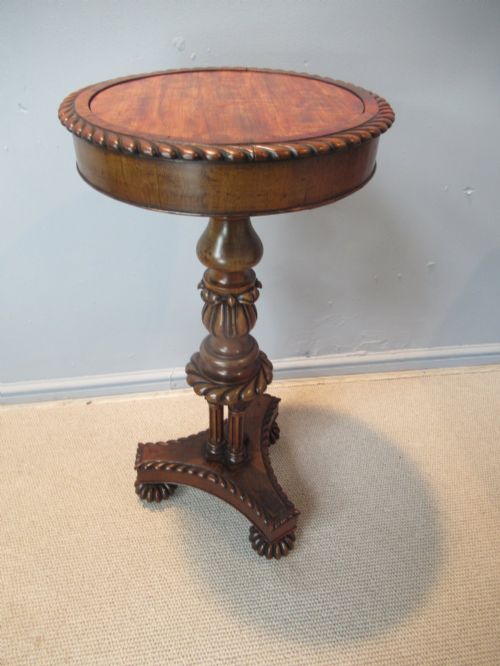
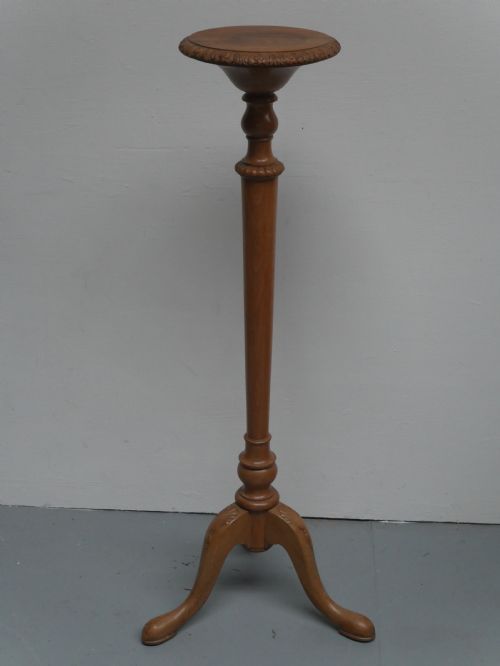

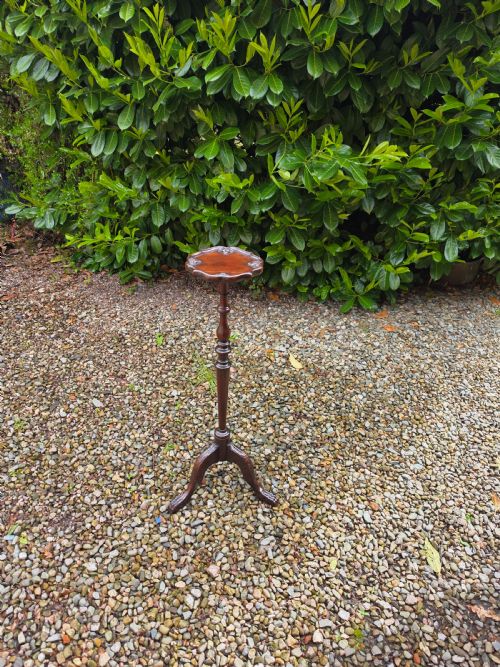


Tripod Jardiniere Stand
These tripod jardiniere stand pieces elevate indoor plants upon three-legged supports, offering classic forms that collectors prize for period interiors.
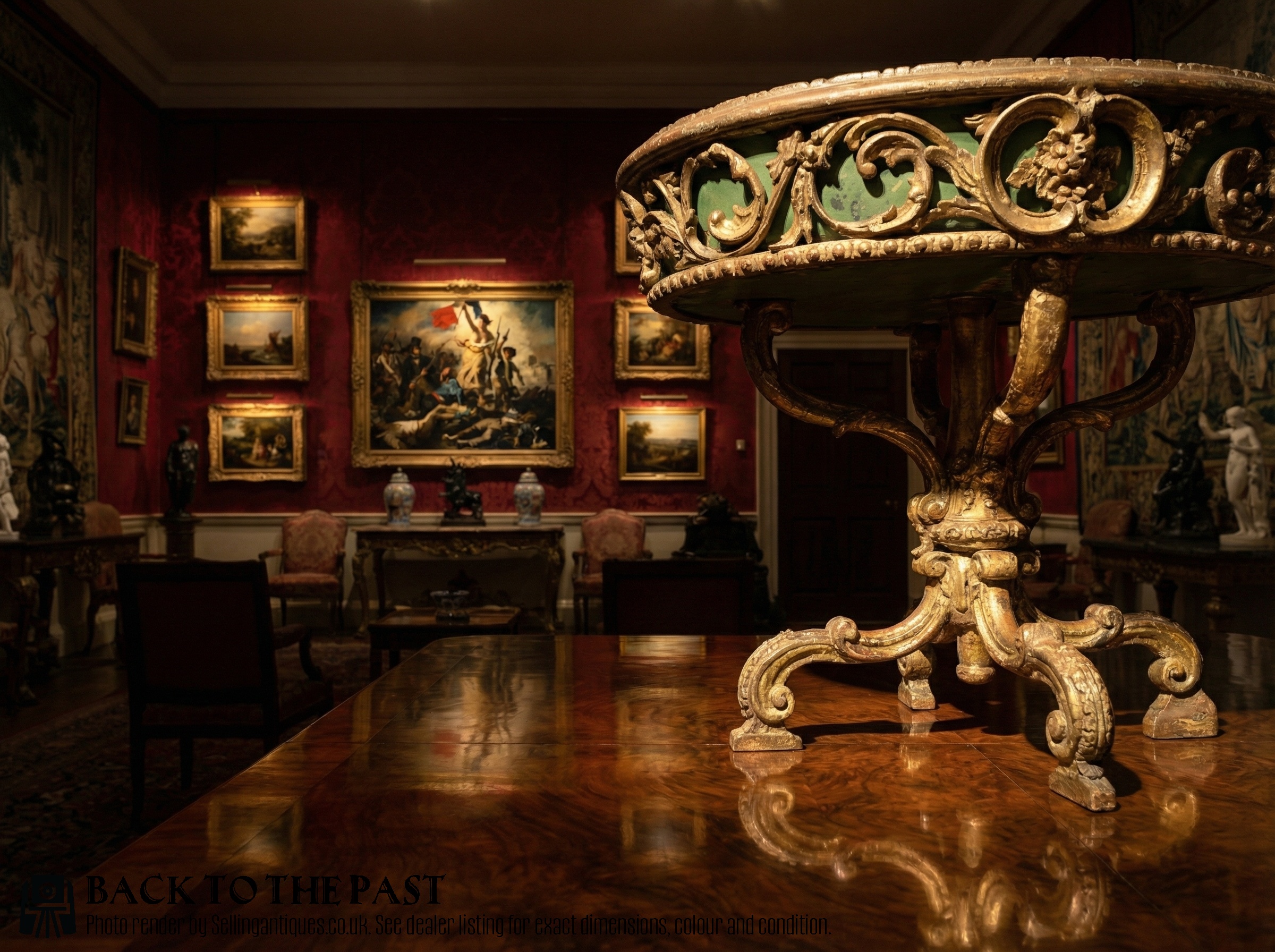
Tripod Jardiniere Stand
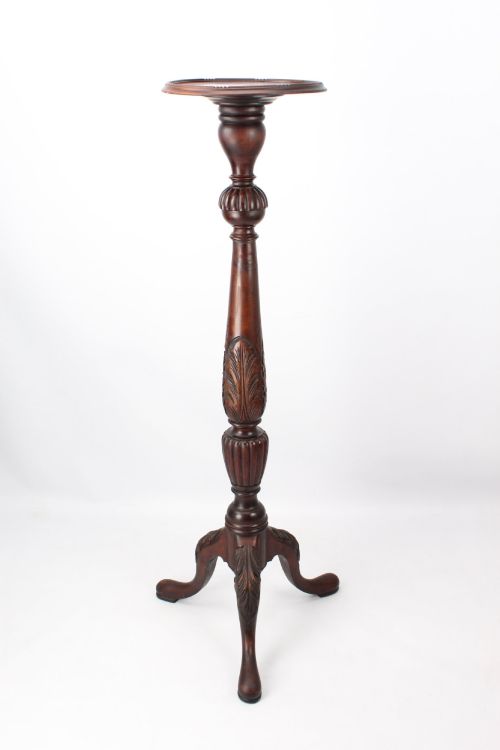
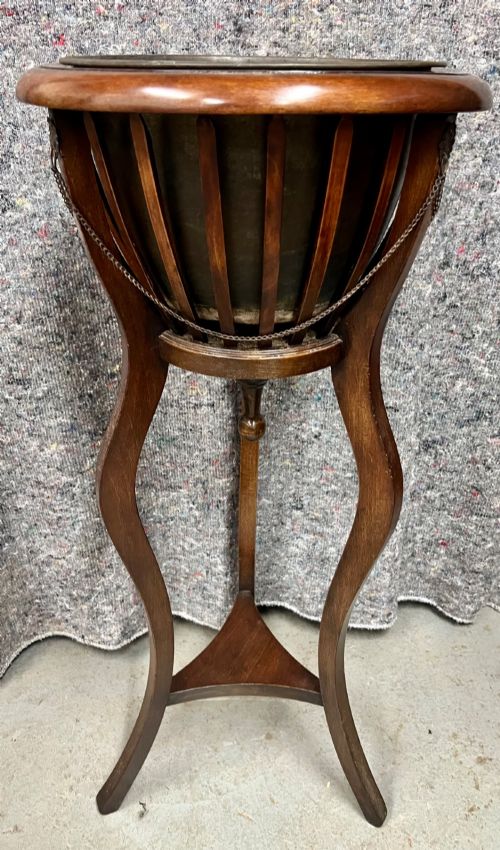
A tripod jardiniere stand combines a raised platform or planter container with a three-legged base designed to hold indoor greenery or display objects. The form appears across the nineteenth century and into the Edwardian era, taking shape as tall plant stands, side tables, and pedestals.
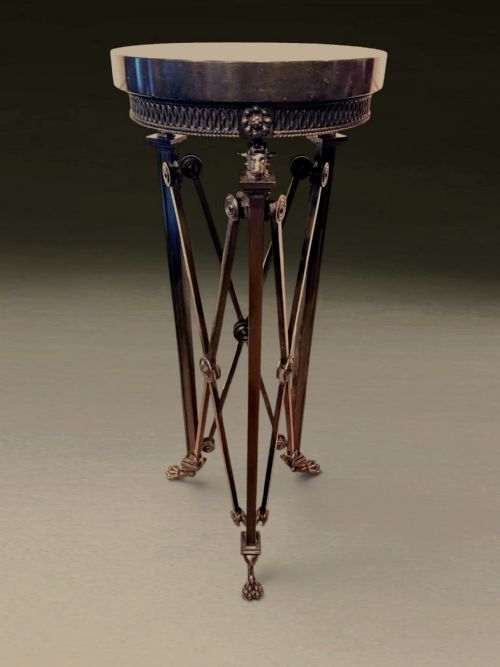
Makers produced these pieces in forms ranging from simple turned wooden pillars to ornate bronze supports and carved hardwood frames. Edwardian and nineteenth-century examples dominate the selections, alongside occasional Regency and Georgian Revival interpretations.
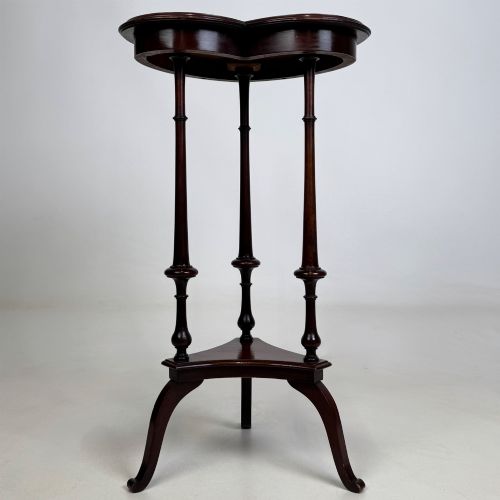
Buyers encounter variations that include circular tops, heart-shaped surfaces, and tiered arrangements intended for domestic display. These stands function primarily to elevate plants, figures, or decorative vessels within period rooms.
How they were made
Cabinetmakers utilised dense timbers such as mahogany, walnut, satinwood, and ebony to construct the main pillars and tripod bases of these stands. Boxwood inlay frequently provides decorative contrast on the wooden surfaces of Edwardian and nineteenth-century examples.
Metalwork played a structural and decorative role, with bronze and brass appearing in mounts, frames, and distinct classical revival pieces. Carving and giltwood treatments added ornamental detail to specific tall stands and planter frames.
Some nineteenth-century makers doubled their output by designing stands that could hold either a potted fern or a sculptural bust.
What varies in quality
The refinement of the carving and the choice of timbers set finer pieces apart from standard workshop production. Selected examples display crisp boxwood inlay and balanced proportions across the three-legged base.
Materials dictate the character of the stand, with heavy bronze castings and figured mahogany or satinwood marking the upper end of the range. Simpler turned supports in walnut or hardwood represent more utilitarian domestic furnishings.
The Tripod Jardiniere Stand Glossary
- Jardiniere
- An ornamental pot or stand for holding plants or flowers. This term describes the central function of the piece.
- Tripod base
- A three-legged support structure providing stability for tall pedestals and plant stands. This configuration is typical for nineteenth-century examples.
- Torchere
- A tall ornamental stand originally designed to carry a light source but later used for displaying plants or sculptures. These slender supports share similarities with plant pedestals.
- Athenienne
- A neoclassical tripod stand supporting a basin or bowl, inspired by ancient Greek and Roman furniture. Bronze versions reflect this specific decorative style.
- Inlay
- A technique where contrasting materials like boxwood are embedded into the wood surface to create patterns. This ornamentation is common on Edwardian pieces.
Tripod Jardiniere Stand: Frequently Asked Questions
What is a tripod jardiniere stand used for?
These stands serve to elevate potted plants, flowers, or decorative objects above floor level. They bring greenery into living spaces while displaying plants on stable three-legged bases.
Historically, households utilised these pieces in drawing rooms and reception areas to display prized flora. Today, they function in the same capacity within period and contemporary interiors.
How do I date a tripod jardiniere stand?
Dating relies on identifying the prevailing style, timber choices, and construction methods associated with specific decades. Edwardian pieces often feature boxwood inlay and lighter mahogany, while nineteenth-century versions show heavier carving and denser woods.
Examining the turning of the tripod legs and any metal mounts provides further clues to the period. Regency and Victorian examples each display distinct decorative vocabularies.
Where should I place a tripod stand?
These stands suit corners, empty hallway spaces, or windows where plants receive adequate light. The three-legged footprint requires sufficient floor clearance to sit level.
Pairing the stand with a suitable plant or ceramic container enhances the display. Care should be taken to protect wooden surfaces from moisture originating from plant pots.
What woods were used for these stands?
Cabinetmakers primarily selected mahogany, walnut, and satinwood for their grain and durability. Hardwoods and ebony also appear in specific regional or period interpretations.
Boxwood was frequently employed for contrasting inlay work on Edwardian surfaces. Giltwood and bronze provided alternative finishes for decorative revival pieces.