



Tripod Dumbwaiter Table
A tripod dumbwaiter table is a tiered serving stand designed to hold dishes near the dining table without servants present.
Tripod Dumbwaiter Table
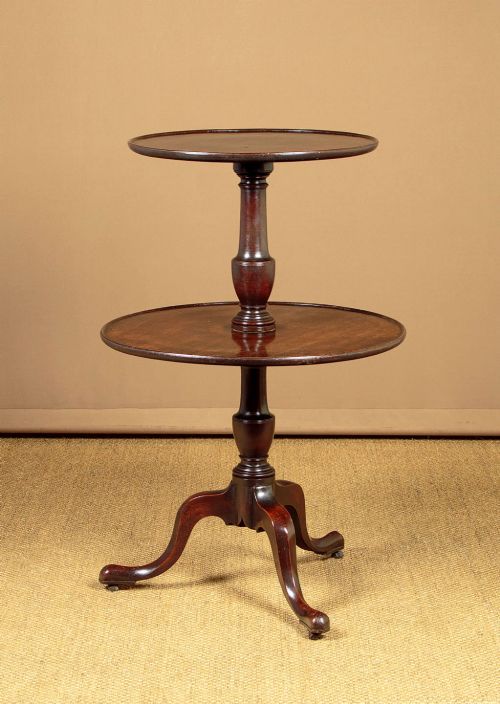
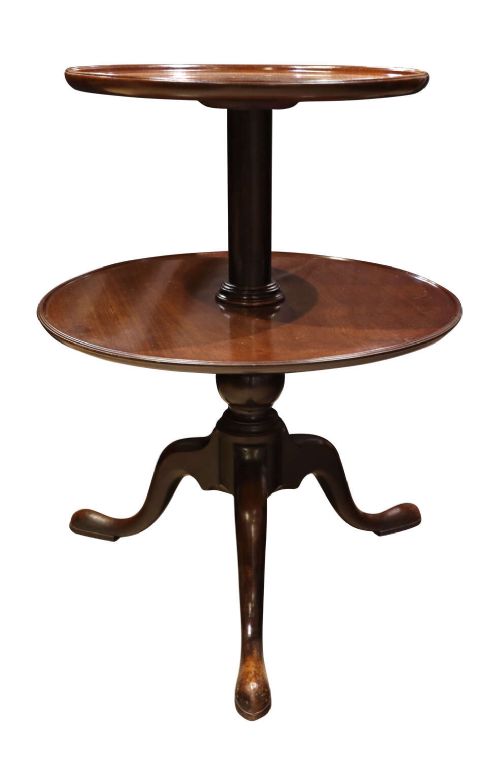
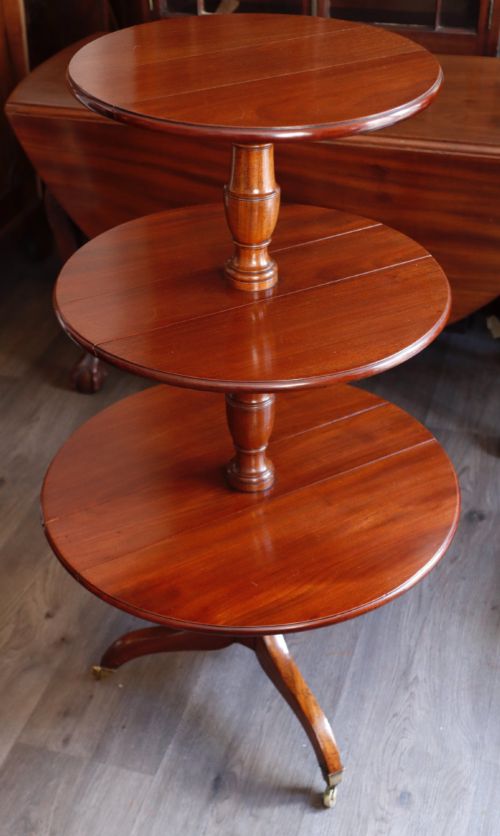
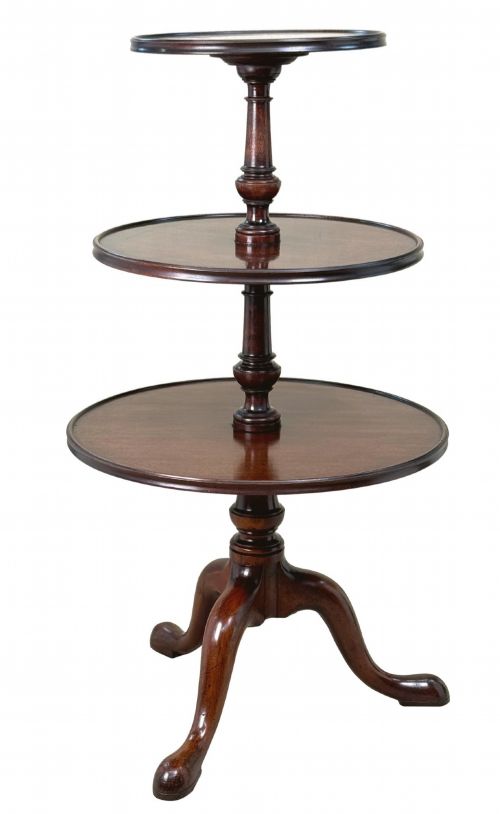
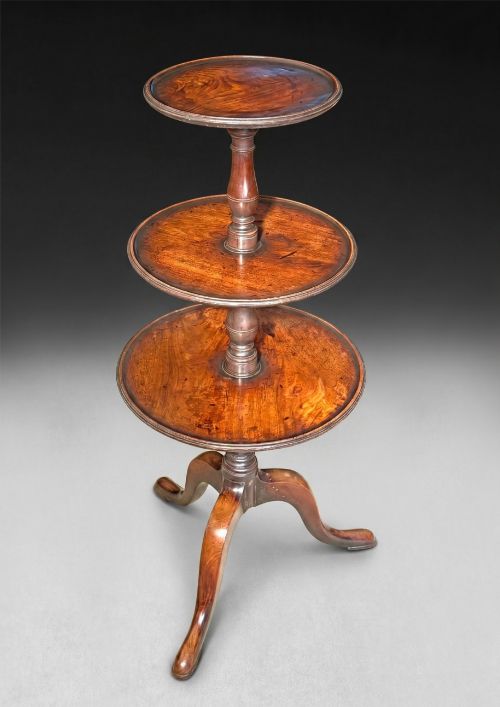
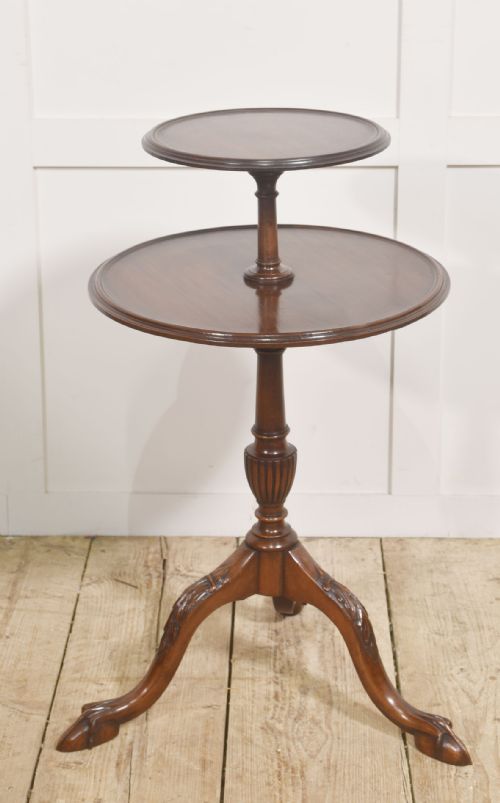
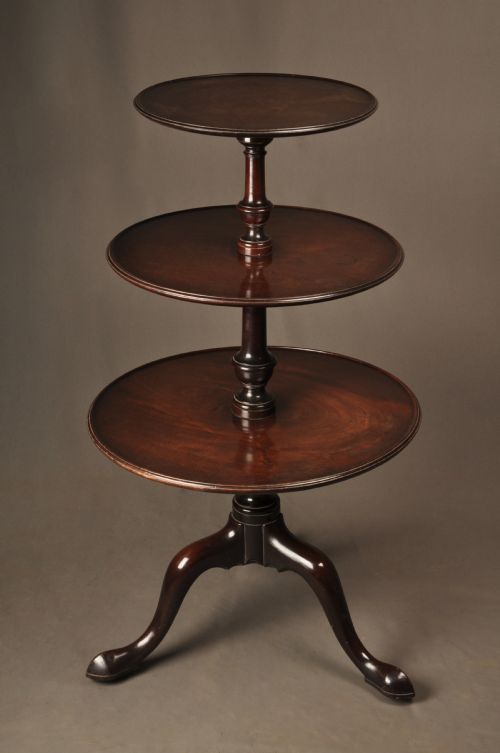
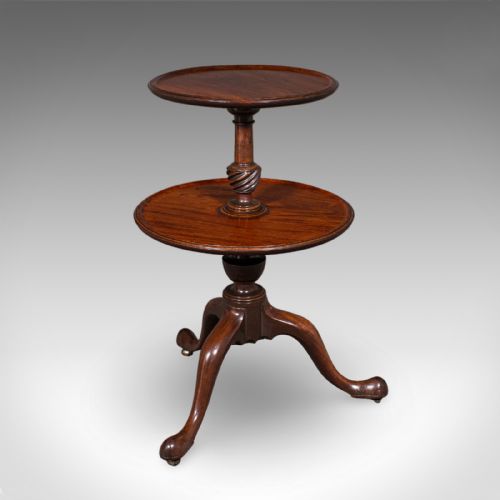
A tripod dumbwaiter table stands on three legs supporting one or more circular or hexagonal tiers stacked vertically upon a central pillar. These serving pieces appear most frequently in Georgian and Regency periods, spanning the eighteenth and nineteenth centuries.
The layout typically involves two or three graduated tiers, sometimes with folding leaves or revolving mechanisms to allow diners to reach dishes easily during a meal. Examples range from simple country house servers to elaborate pieces with galleried edges.
Makers constructed these tables primarily as functional dining room accessories for side service, though later interpretations from the twentieth century also survive in the record.
What varies in quality
The distinction between standard utility items and the finest examples lies in the selection of timber grain, such as figured mahogany, and the crispness of turned mouldings on the central pillar. Superior pieces demonstrate precise balance across their revolving tiers and stable tripod feet without excessive wobble.
Engineering of the moving parts, including folding drop-leaves and rotating mechanisms, separates straightforward service stands from more sophisticated designs intended for formal dining spaces.
Listings span multiple eras from the eighteenth century through the early twentieth century, with mahogany remaining the dominant material.
Gillow
The Tripod Dumbwaiter Table Glossary
- Tripod base
- A three-legged support structure radiating from a central column to provide stability. This configuration helps prevent tipping when heavier items sit on the revolving tiers.
- Tiered table
- A piece featuring multiple stacked surfaces rising one above the other on a single axis. These levels allowed diners to separate dishes, wine bottles, and serving utensils.
- Revolving wine table
- A rotating circular top designed for passing bottles around a dining assembly without lifting them. This mechanism relies on a central spindle integrated into the pillar.
- Drop-leaf
- A hinged side section that folds down when not in use to save floor space. Tables with this feature often adjust quickly between compact storage and full service modes.
- Galleried edge
- A raised wooden border running around the perimeter of a shelf to stop items from sliding off. Such details appear frequently on finer serving stands.
Tripod Dumbwaiter Table: Frequently Asked Questions
What is a tripod dumbwaiter table used for?
These tables served as auxiliary storage for food, plates, and wine during long meals in dining rooms where hosts preferred to dispense with permanent attendants. Diners simply turned the tiers to reach what they needed.
They functioned as practical dining room furniture rather than purely decorative centrepieces, though their tiered silhouette added architectural interest to domestic interiors.
How many tiers do these tables have?
Most examples feature either two or three graduated shelves stacked vertically on a central turned column. The lower tiers are typically broader than the upper ones.
Certain variations include folding drop-leaves or revolving mechanisms that allow the shelves to turn independently for easier access.
How do I date a tripod dumbwaiter table?
Dating relies on stylistic markers such as the leg profile, timber selection, and edge detailing. Georgian and Regency examples often showcase solid mahogany and clean turning, while later Victorian and twentieth-century versions may exhibit decorative alterations or different hardware.
Construction methods inside the pedestal and the presence of original brass castors also offer clues regarding the exact period of manufacture.
Where should I place a dumbwaiter in a room?
While originally designed for the dining room beside a main table, these stands fit comfortably in corners or alongside seating areas as accent tables or side servers. Their compact tripod footprint makes them easy to position without obstructing walkways.
Ensure the surface remains clear of excessive weight to maintain balance on the three-legged base.