




Antique Dessert Buffet
An antique dessert buffet, more commonly found as a tiered dumb waiter, offers tiered shelving designed to serve food with ease.
Antique Dessert Buffet
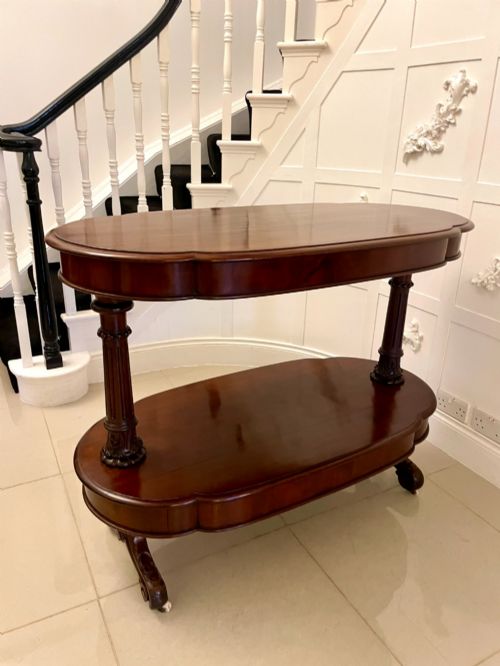
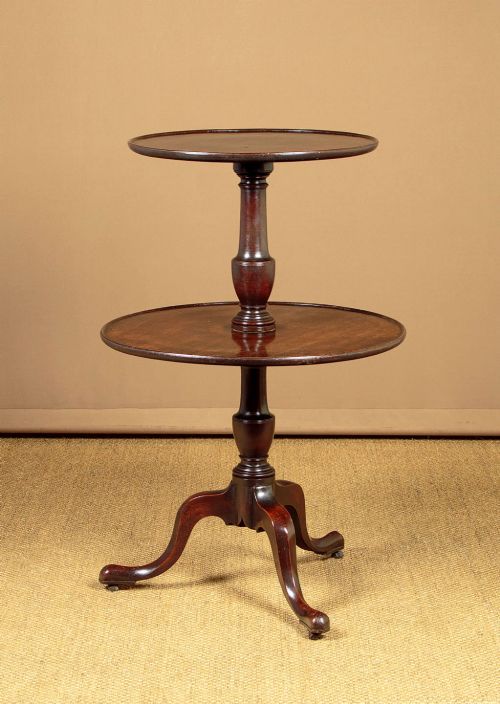
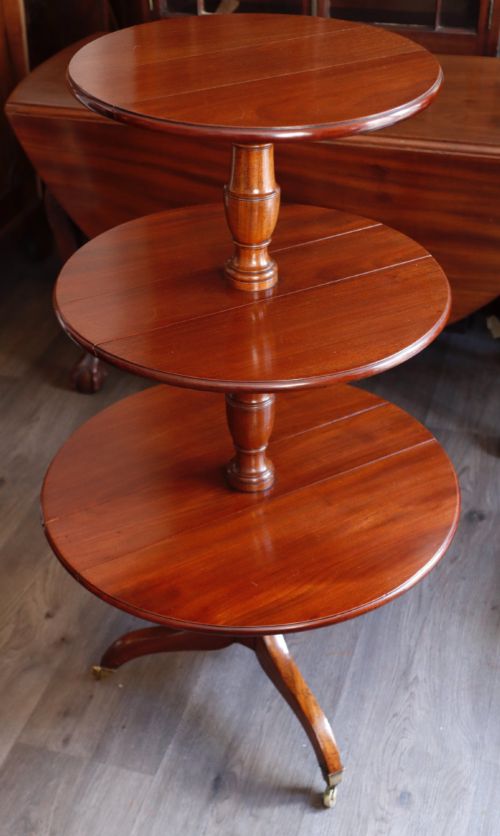
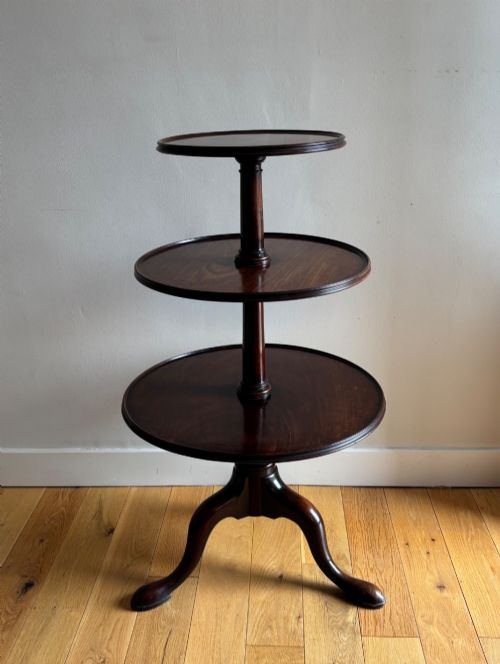
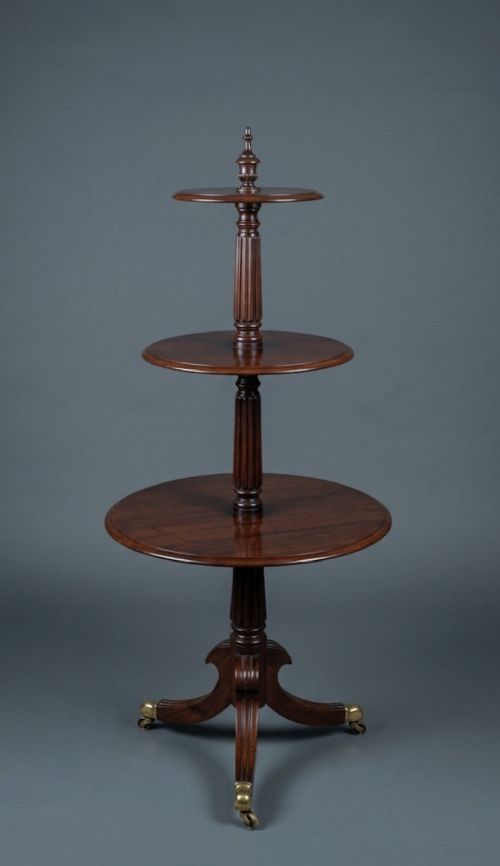
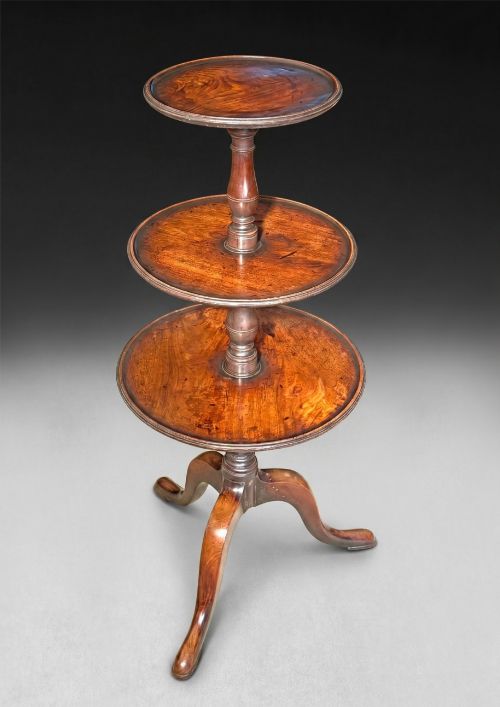
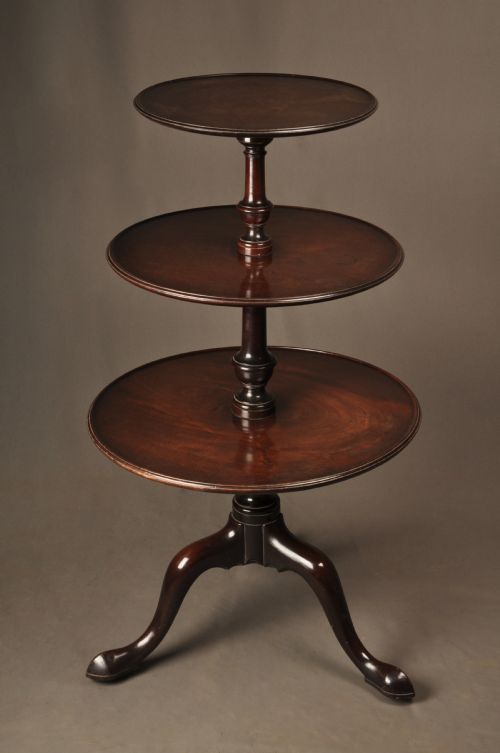
When searching for an antique dessert buffet, you are looking at tiered serving furniture primarily represented here by dumb waiters from the eighteenth and nineteenth centuries. These pieces were designed to hold dishes, glassware, and desserts during meals, often featuring circular graduating tiers supported on a central column and tripod base. You will most frequently meet mahogany examples dating from the Georgian and Regency periods, alongside later Victorian interpretations.
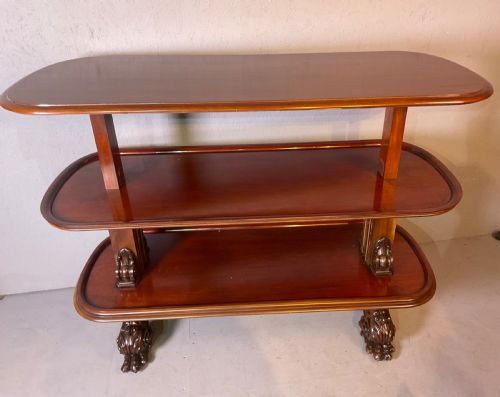
The form spans two, three, and occasionally more tiers, sometimes equipped with folding mechanisms or revolving tops for practical access at the dining table. Alongside traditional dumb waiters, you will encounter related side tables, serving tables, and buffets designed for similar hosting duties. The selection draws heavily upon British craftsmanship from the 18th century through to the late Victorian era, reflecting changing dining habits over successive reigns.
How they were made
The makers relied primarily on solid mahogany and mahogany veneers, often turning to walnut, amboyna veneer, and ebonised wood for specific decorative effects. These timbers were shaped into graduating circular trays, robust central columns, and splayed legs, frequently fitted with brass castors to ease movement across the floor. Parcel gilt details and intricate inlay were occasionally applied to elevate the surface appearance of more formal pieces.
Construction techniques balanced stability with utility, ensuring that stacked tiers could bear the weight of heavy ceramics and glass without tipping. Revolving mechanisms required precise joinery so the trays turned smoothly on their central spindles. Folding designs incorporated clever brass hinges and pivots allowing the tiers to drop flat when not in use.
Early designers ensured diners could spin their dessert choices in circles without ever asking a servant to pass the biscuits.
What varies in quality
The refinement of the timber selection and the crispness of the turning on the central column set the finest examples apart from standard utility pieces. Rich grain figures in the mahogany, alongside subtle brass mounts and well-formed cabriole or reined legs terminating in original castors, indicate superior workshop production. Later or simpler iterations often display plainer secondary timbers and heavier, less graceful proportions.
Mechanics dictate another tier of distinction, particularly in metamorphic or folding pieces where ingenious engineering must remain concealed yet robust. A smoothly operating revolving mechanism or a tightly locking folding frame demonstrates the higher tier of cabinet-making skill invested in the construction.
The Antique Dessert Buffet Glossary
- Dumb waiter
- A freestanding tiered stand used to hold food and utensils near the dining table without requiring servant attendance. These pieces typically feature circular revolving trays mounted on a central pillar.
- Metamorphic
- Describing furniture designed to transform or fold into different configurations for storage or alternative use. This engineering allows multi-tiered stands to collapse flat.
- Amboyna veneer
- A highly figured, warm-toned wood veneer prized for its mottled grain pattern. Cabinet makers applied it to decorative surfaces on later Victorian pieces.
- Parcel gilt
- Partially gilded with gold leaf to highlight carved details or decorative accents against a dark wood background. It adds a subtle touch of contrast to mouldings and pedestals.
- Tripod base
- A three-legged support structure commonly found beneath the central column of circular tables and dumb waiters. This design ensures stability on uneven dining room floors.
Antique Dessert Buffet: Frequently Asked Questions
What is an antique dessert buffet?
An antique dessert buffet refers to tiered serving furniture, predominantly historical dumb waiters, designed to hold dishes and desserts during dining. They provide multiple circular trays stacked on a central column for accessible serving.
These pieces served a practical function in grand dining rooms where hosts preferred self-service or minimal servant presence during dessert courses.
How were dumb waiters used?
Dumb waiters held extra plates, glassware, and sweet courses close to the dining table so guests could help themselves. The revolving tiers allowed diners to spin the trays and reach items without stretching.
In period homes, they stood beside the dining table as silent assistants during lengthy multi-course meals.
How do I date an antique dumb waiter?
Dating relies on observing timber choices, leg profiles, and the turning style of the central column across different historical periods. Georgian and Regency examples favour solid mahogany with delicate tripod bases, while Victorian versions introduce walnut, amboyna veneer, and castors.
Construction marks and brass hardware also offer clues to whether a piece originates from the eighteenth century or the later nineteenth century.
Are all dumb waiters revolving?
Not all dumb waiters revolve; many feature fixed tiers secured permanently to the central column. Some variations include folding mechanisms that allow the trays to drop down for compact storage.
Revolving tops require specific spindle engineering hidden beneath each tier to allow smooth rotation.
How do I live with a tiered stand?
A tiered stand works well in modern interiors as a display surface for plants, books, or collections in a living space or hallway. Their compact footprint makes them practical for corners where traditional side tables might feel bulky.
Care involves treating the timber surfaces gently and avoiding placement near direct heat sources to protect veneer and polish.