
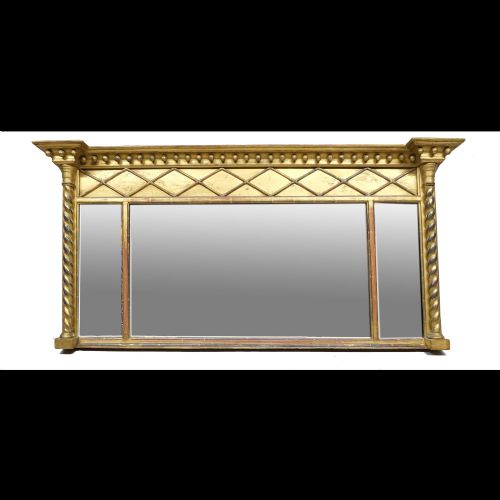


Triple Plate Wall Mirror
A triple plate wall mirror brings architectural width and reflecting depth to a room, spanning the Georgian, Regency, and Victorian eras.
Triple Plate Wall Mirror
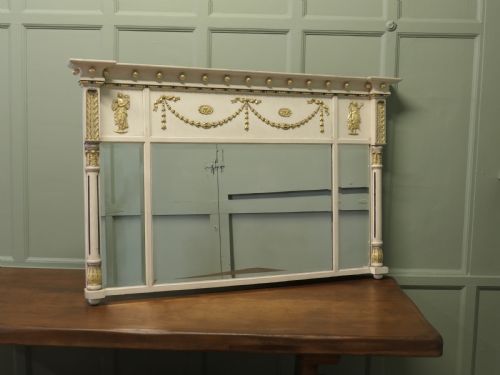
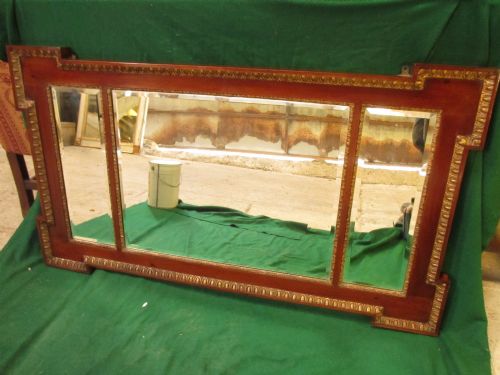
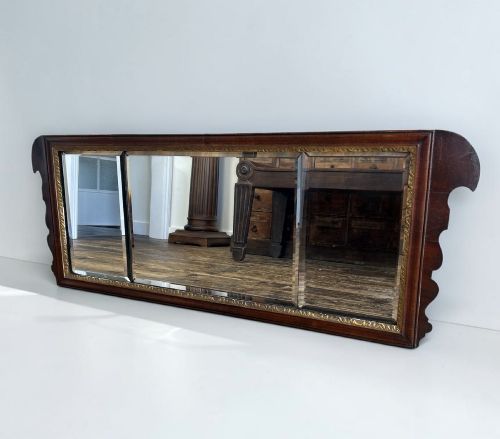
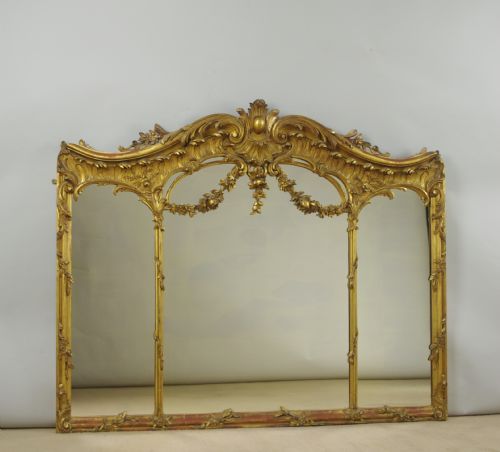
A triple plate wall mirror divides its reflective surface into three distinct sections, often taking the form of a broad landscape or overmantel mirror designed to hang above a fireplace or along a principal wall. These pieces range from early Georgian walnut examples to grand Regency and Victorian giltwood creations.
You are most likely to meet 19th-century giltwood and gesso overmantel mirrors on this page, reflecting the heavy demand for large decorative wall furniture during the Victorian and Regency periods. The evidence also records earlier 18th-century walnut and parcel gilt variants alongside satinwood Sheraton style interpretations.
How they were made
Makers constructed the foundational frames from timber such as mahogany, walnut, and pine, applying layers of gesso to carve intricate surface details like laurel wreaths, friezes, and rococo scrolls. Gilding was then applied using thin metal leaf to achieve a lustrous finish.
The mirror glass itself was divided into three separate plates, held within the frame using traditional joinery and backing boards. Composition ornaments were frequently moulded and attached to the wooden structure to accelerate production in the 19th century.
The site listings show materials spanning giltwood, gesso, composition, walnut, mahogany, and satinwood across the 18th, 19th, and early 20th centuries.
What varies in quality
Quality rests in the crispness of the carved or moulded ornamentation on the frame, where hand-carved wooden details and deeply chased gesso outshine mass-produced composition substitutes. The integration of the three plates and the survival of the original gilding or polish dictate the visual harmony of the piece.
The choice of primary timber, from figured walnut to dense mahogany, marks the standing of the work. Early examples with parcel gilt highlights and well-preserved original mirror glass plates sit firmly at the upper end of the range.
The Triple Plate Wall Mirror Glossary
- Overmantel mirror
- A large mirror specifically proportioned to hang on the wall directly above a fireplace mantelpiece. These often feature horizontal triple plate layouts to span the width of the hearth.
- Giltwood
- Wood that has been coated with gold leaf or a gold-coloured metallic finish. It forms the primary decorative surface for many Regency and Victorian frames.
- Gesso
- A plaster-like mixture applied to wooden frames as a base for carving and gilding. It allows for sharp, intricate surface ornamentation.
- Parcel gilt
- Partially gilded, where specific carved details are highlighted in gold against a contrasting wood background such as walnut or mahogany.
- Triptych
- An artwork or object divided into three hinged or framed sections. In mirror design, this describes the division into three adjacent glass plates.
Triple Plate Wall Mirror: Frequently Asked Questions
Where should I hang a triple plate wall mirror?
These mirrors suit expansive wall spaces, most traditionally positioned above a fireplace mantelpiece where their horizontal format balances the hearth below.
They also function effectively along a primary dining room or hallway wall to amplify natural light and create a sense of extended interior space.
How do I identify a Regency period mirror?
Regency pieces often display classical motifs such as laurel wreaths, griffin friezes, and chariot scenes incorporated into the frame design. The use of giltwood and heavy architectural proportion is typical of this era.
Construction methods and timber choices, when visible from the back, provide further physical evidence of early nineteenth-century manufacture.
What is the difference between an overmantel and a wall mirror?
An overmantel mirror is specifically designed in a wide landscape format to sit above a fireplace, whereas general wall mirrors may take various geometric shapes and sizes.
In practice, many triple plate mirrors serve both functions depending on their dimensions and the room layout.
How should I clean the antique glass plates?
Clean the mirror glass gently with a soft microfibre cloth and a minimal amount of distilled water or mild glass cleaner. Avoid spraying liquid directly onto the glass to prevent moisture seeping behind the antique plates.
Exercise caution around the edges of the plates and the surrounding gilt frame to preserve the original finish.