
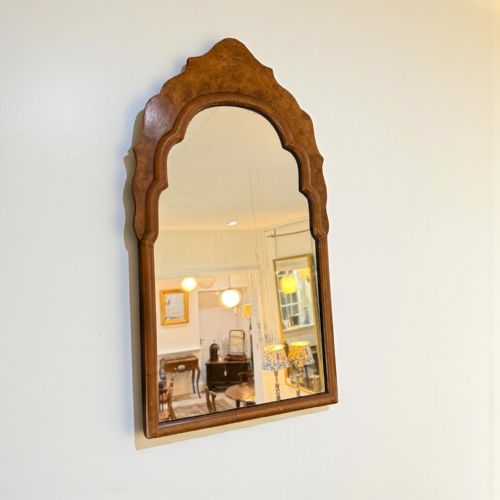
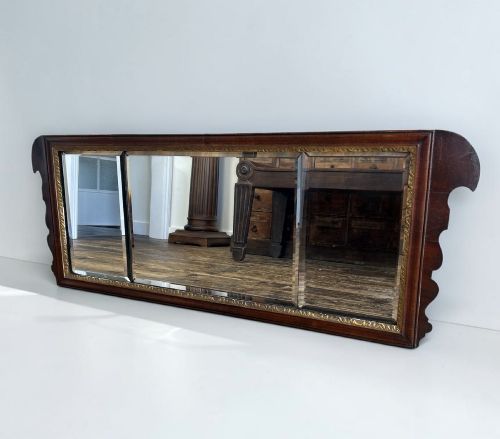


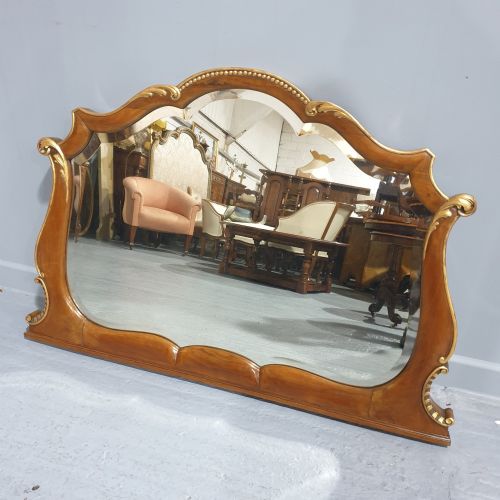


Shaped Walnut Wall Mirror
A shaped walnut wall mirror brings warmth and distinct contour to a room, drawing the eye with rich grain and traditional craftsmanship.
Shaped Walnut Wall Mirror
A shaped walnut wall mirror unites decorative timber frames with reflective glass, spanning wall mirrors, pier mirrors, and overmantel mirrors. You encounter forms referencing the Queen Anne, George I, and George II periods, alongside twentieth-century iterations.
Earlier interpretations display parcel gilt highlights and baroque or renaissance revival details, while later pieces lean towards clean art deco lines. Buyers select these mirrors to anchor a hallway, fireplace, or principal wall space with period character.
How they were made
Frames rely on solid timber and wood veneer, frequently utilising burr walnut to create dramatic, swirling grain patterns across the surface. Artisans shape the wood to follow distinct outlines, from shield contours to architectural pediments.
Giltwood and gold leaf accents are applied selectively to highlight carved details and parcel gilt elements within the frame. Mirror glass and mirrored glass are fitted into the timber housing, sometimes divided across multiple plates.
Some mirrors take the exact form of a heraldic shield, letting you survey your hallway like a medieval knight.
What varies in quality
The sophistication of the timber selection dictates the visual impact, particularly where figured burr walnut creates intricate natural patterns across the frame. Richness increases when parcel gilding is applied with precision to accentuate carved mouldings.
Proportion and silhouette define the design hierarchy, ranging from simple geometric rectangles to elaborate heraldic shields and multi-plate constructions. The harmony between the walnut frame and the glass plate determines the overall success of the piece.
The Shaped Walnut Wall Mirror Glossary
- Burr walnut
- Timber taken from a growth on the walnut tree, prized for its swirling, highly figured grain patterns. It provides a decorative surface on fine furniture and mirror frames.
- Parcel gilt
- A decoration technique where portions of an object are partially covered with gold leaf. This method highlights specific carved details against the dark walnut background.
- Pier mirror
- A tall mirror designed specifically to hang on the wall space between windows. These pieces often feature vertical proportions to reflect light into the room.
- Overmantel mirror
- A wide mirror created to sit directly above a fireplace mantelpiece. They balance the horizontal expanse of the hearth below.
- Triple plate mirror
- A glazing arrangement where three separate glass sections sit within a single frame. This style creates a segmented reflection typical of eighteenth-century design.
Shaped Walnut Wall Mirror: Frequently Asked Questions
Where should I hang a shaped walnut wall mirror?
These mirrors suit principal living spaces, hallways, or above fireplace mantels where their distinct silhouettes can command attention.
Position the piece at eye level to maximise both its decorative impact and the functional reflection of light within the room.
How do I identify a period walnut mirror?
Examine the timber construction, framing techniques, and stylistic cues such as parcel gilt highlights or heraldic shield outlines. Comparing the proportions against documented eighteenth-century and art deco examples clarifies the origin.
Subtle details in the mirror glass and backing materials also offer clues to the age of the piece.
What is burr walnut?
Burr walnut is a specialised timber harvested from tree growths that produce complex, swirling grain patterns. Cabinet makers prized this wood for creating striking decorative surfaces.
Its distinct figuring elevates the visual texture of the mirror frame.
Are these mirrors fragile?
The combination of timber frames and glass requires careful handling during transport and secure mounting on solid walls. Proper wall fixings ensure the weight of the wood and glass is supported safely.
Routine care involves dusting the timber and cleaning the glass with appropriate non-abrasive solutions.