


George I Walnut Mirror
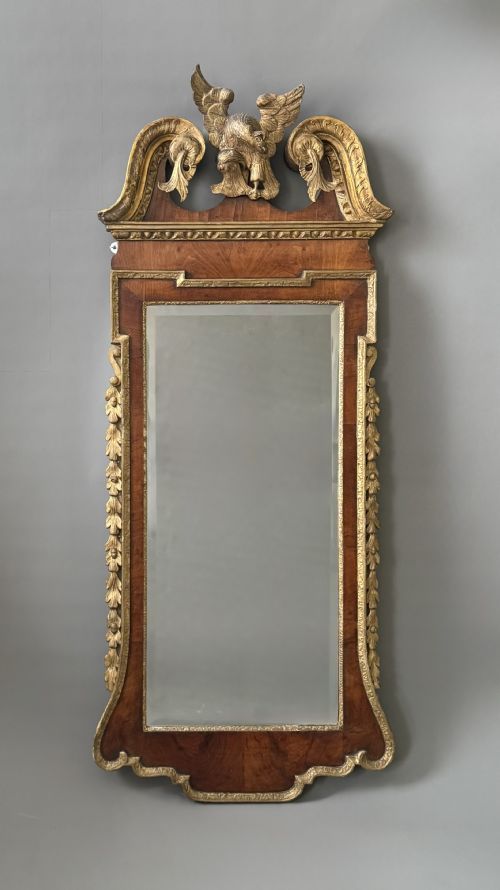
A george i walnut mirror brings rich timber grain, gilded detail and eighteenth-century craftsmanship into domestic spaces.
George I Walnut Mirror
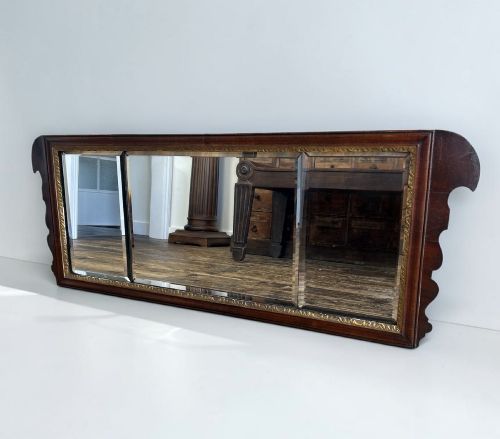
A george i walnut mirror encompasses both wall-hanging pieces and smaller toilet mirrors designed for dressing tables. These objects span periods from the eighteenth century through later revival styles, capturing the architectural lines and proportions of early Georgian design.
The wall-mounted versions serve as focal points above mantelpieces or console tables, while the smaller dressing glasses offer pivoting frames supported by box bases. Walnut, burr walnut and parcel gilt finishes dominate the selection, often accompanied by original mirror glass.
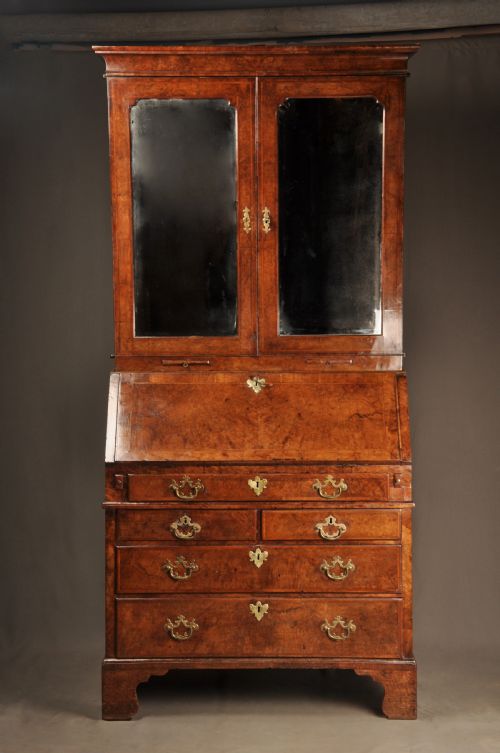
Beyond mirrors, the wider selection includes bureau bookcases and secretaire cabinets sharing the same cabinetmaking traditions and figured timber veneers.
Materials and Construction
Makers utilised solid oak or pine carcasses as foundations for decorative veneers of figured and burr walnut, achieving rich grain patterns across flat surfaces. Parcel gilt details, carved giltwood mouldings and gilded accents frequently highlight the borders and scrollwork.
Mirror plates consist of early bevelled glass or silvered sheets set into rebated frames, sometimes retained by original backing boards. Joinery relies on traditional dovetail techniques, particularly within the drawers of dressing mirrors and larger cabinet furniture.
Listings feature walnut, burr walnut, oak, giltwood and brass across wall mirrors, dressing tables and bureau bookcases.
Judging Quality
Quality rests in the choice of timber veneer, where dense, highly figured burr walnut commands greater appreciation than plain grain. The crispness of carved giltwood details and fretwork outlines separates standard production from finer cabinetmaking.
Survival of original mirror glass and untouched backing construction preserves the integrity of the piece. Proportions dictate visual balance, distinguishing ambitious architectural forms from simpler domestic examples.
The George I Walnut Mirror Glossary
- Parcel Gilt
- Partially gilded woodwork, where gold leaf highlights specific carved details against a walnut background.
- Burr Walnut
- Timber taken from tree growths, featuring swirling, highly decorative grain patterns prized in cabinetmaking.
- Pier Mirror
- A tall wall mirror specifically designed to hang on the wall space between windows.
- Toilet Mirror
- A small adjustable dressing glass mounted on a miniature bureau or drawer base.
- Fretwork
- Openwork patterns cut from thin timber boards, commonly seen on eighteenth-century frame borders.
George I Walnut Mirror: Frequently Asked Questions
Where should I hang a wall mirror?
These pieces suit placement above mantelpieces, fireplaces or console tables where they reflect light across a room. Their architectural proportions demand clear wall space without crowding from surrounding artwork.
Ensure secure fixings into solid masonry or studwork, as eighteenth-century frames carry considerable weight from timber and glass.
How do I care for antique glass?
Clean mirror plates gently using a soft, dry cloth or mild glass cleaner applied to the cloth rather than the glass directly. Avoid letting moisture seep behind the silvered backing or into the timber frame.
Keep pieces away from direct sunlight and radiators to prevent the walnut veneer from drying out or splitting.
What is a dressing glass?
A dressing glass is a portable mirror mounted on pivots between two upright posts, set atop a small base fitted with miniature drawers. They sat on dressing tables or chests for close-up grooming.
Many examples feature shaped drawer fronts and bracket feet matching the larger furniture of the period.
How can I spot later revivals?
Revival pieces from the nineteenth and twentieth centuries often employ machine-sawn backing boards, modern brass fixings and uniform veneer patterns lacking eighteenth-century depth. Construction methods and timber oxidation help reveal the true age of the carcass.
Stylistic cues also provide clues, as Victorian makers frequently combined George I walnut aesthetics with heavier proportions.