


Triple Panel Mirror
A triple panel mirror divides reflection across three plates to widen light in a room and catch angles single glass misses.
Triple Panel Mirror
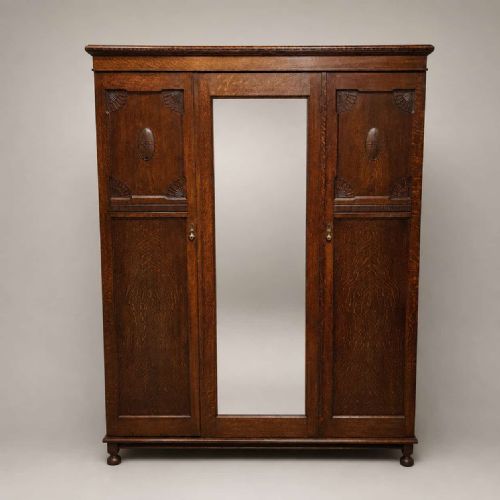
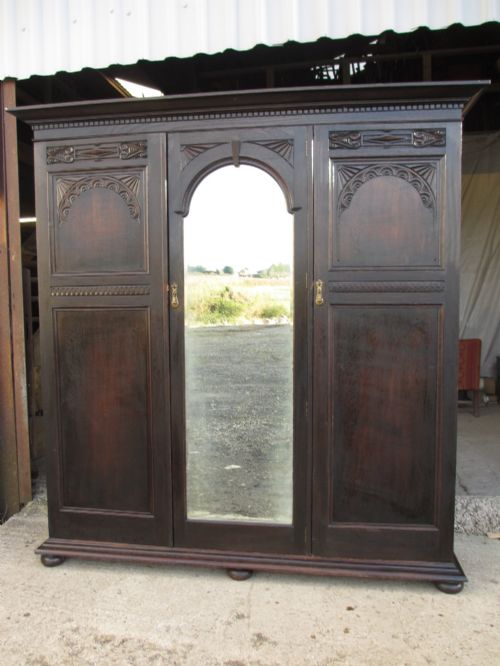
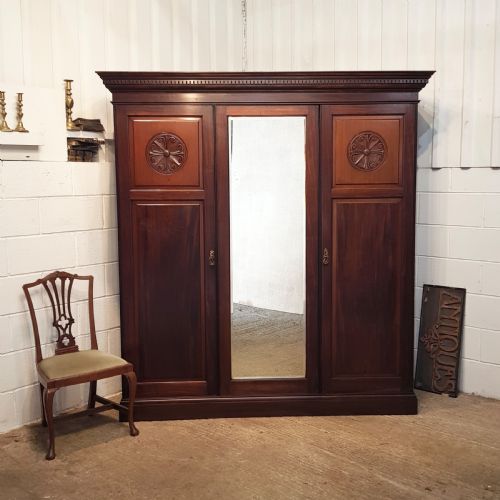
A search for triple panel mirror brings up a distinct group of furnishings dominated by overmantel mirrors and dressing table pieces, alongside large bedroom wardrobes featuring three glass doors. You will find these pieces stretch across Victorian, Edwardian, and Regency periods, spanning the nineteenth and early twentieth centuries.
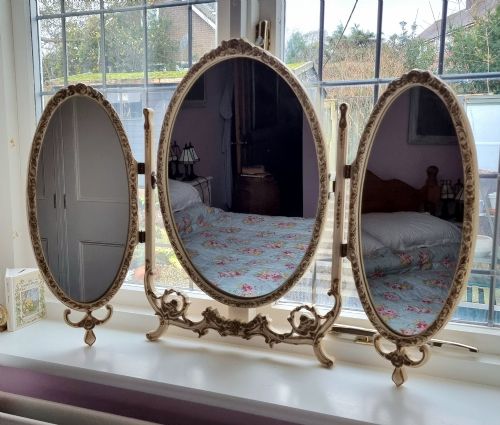
The overmantel versions are most common on this page, designed to sit above a fireplace with three distinct plates set side by side in giltwood, gesso, or painted frames. Dressing table triptychs also appear frequently, offering folding side mirrors supported by wood frames in mahogany, walnut, or oak.
Materials and construction
Makers built the frames of these pieces using solid timbers like oak, mahogany, walnut, and satinwood, often applying giltwood and gesso enrichment for decorative overmantel designs. Glass plates sat within rebated wooden housings, secured at the back with simple wooden boards.
Hinges on dressing table triptychs and folding shop mirrors allowed the outer wings to pivot independently around the central plate. Carved details appeared directly on the solid wood mouldings or took the form of applied gesso ornaments pinned to the frame.
Listings span Victorian, Edwardian, and Regency periods, utilising glass, giltwood, brass, gesso, oak, wood, and mahogany.
Judging the standard
Quality rests upon the crispness of the frame carvings and the integrity of the original mercury or silvered mirror plates. Pieces retaining their original gilding and unblemished glass hold greater visual coherence than those with later surface replacements.
Construction methods also separate standard production from finer workshop output, particularly in how securely the side panels attach to the central frame. Heavier overmantel mirrors rely on robust internal framing to support three distinct glass weights without sagging.
The Triple Panel Mirror Glossary
- Overmantel mirror
- A large mirror designed to hang specifically on the wall above a fireplace mantelpiece. These often feature wide horizontal proportions and multiple side-by-side plates.
- Triptych
- A piece constructed with three panels, where two smaller hinged wings flank a larger fixed central section. This arrangement allows the outer mirrors to angle inward.
- Giltwood
- Timber that has been coated with a thin layer of gold leaf applied over a prepared gesso base. It gives frames a bright reflective surface that catches room light.
- Gesso
- A plaster-like mixture applied to wooden frames as a smooth base for subsequent gilding or paint. Craftsmen could carve or stamp details into it before it dried.
Triple Panel Mirror: Frequently Asked Questions
Where should a triple panel mirror hang?
These mirrors traditionally mount directly above a fireplace mantelpiece where the three plates reflect light across the entire length of a reception room.
Smaller folding versions sit safely atop dressing tables or chests of drawers to provide adjustable side angles for daily use.
How do I date a triple panel mirror?
Dating relies on examining the timber species, frame style, and the method of plate retention at the back of the frame. Regency and Victorian examples show heavier giltwood and gesso mouldings, while later Edwardian and 1920s pieces often utilise plain oak or walnut.
The backing boards and screw types also offer clear clues to the decade of manufacture, distinguishing nineteenth-century joinery from later twentieth-century production.
What maintenance do these mirrors need?
Keep the wooden frames clean with a dry cloth and avoid spraying cleaning liquids directly near the edges of the glass plates. Moisture can seep behind the silvering and cause dark oxidation spots.
Check the wall fixings or hinge screws periodically to ensure the weight of the triple plates remains securely supported.
Can dressing mirrors double as wall pieces?
Most folding dressing table mirrors rely on a base support or folding feet designed for horizontal surfaces rather than wall hanging brackets. Attempting to hang a table triptych requires professional hardware installation to bear the weight safely.
Wall-mounted variants are explicitly built with robust rear hanging rings rather than table stands.