




Triple Medallion Carpet
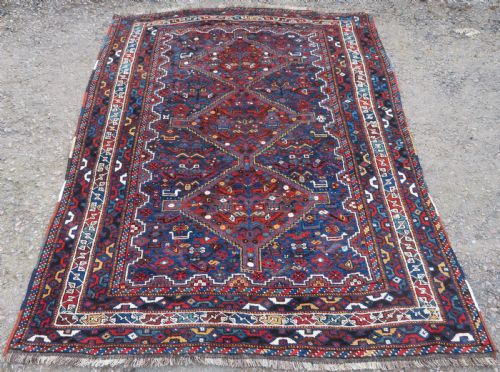
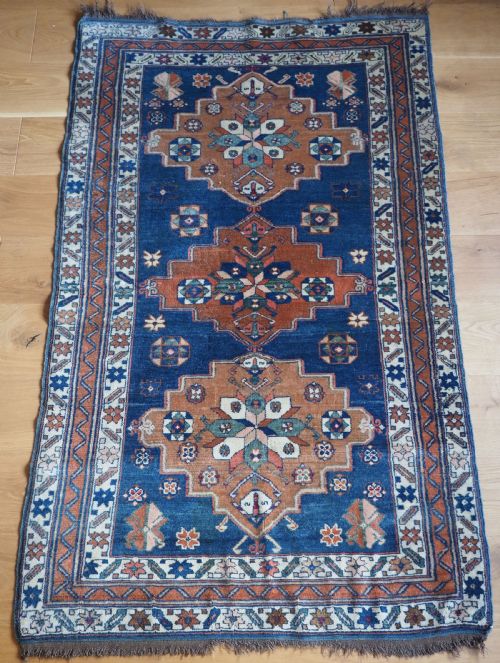
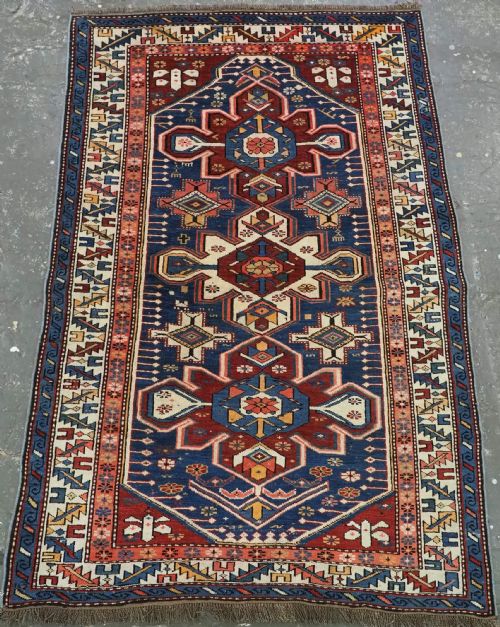
A triple medallion carpet brings geometric tribal artistry into a room through striking central motifs.
Triple Medallion Carpet
When you search for a triple medallion carpet, you encounter woven textiles defined by a sequence of three central motifs arranged along the vertical axis. These pieces originate from Persian and Caucasian regions, spanning production dates from 1880 to 1920. The selection includes area rugs, long rugs, and carpets representing tribal traditions.
The format is most frequently met in Caucasian Kazak, Soumak, and Karabagh weaves, alongside Persian Khamseh, Qashqai, and Shiraz examples. Tribal makers structured these designs with strong geometric framing and repeating field patterns. Each piece functions as a floor covering that anchors a room with distinct regional character.
How they were made
These carpets rely on hand-knotted wool construction, utilising durable wool piles set upon cotton foundations. Weavers tied individual knots by hand to build dense, resilient surfaces designed for daily use. Soumak variants employ a flat-weave technique that wraps the supplementary weft threads over the warp.
Natural materials dictated the palette and longevity of each piece. Wool fibres absorbed organic dyes evenly, developing gentle patinas over decades of wear. The combination of sturdy wool pile and solid foundation threads ensured structural integrity across generations.
Triple Medallion Carpet Retail Price Guide 2026
Typical asking prices for triple medallion carpet among the pieces listed under this phrase on Sellingantiques today, from the lower quarter to the upper quarter. They describe what is for sale here now, not the wider market.
Listings span production dates from 1880 to 1920, covering Persian tribal and Caucasian weaving traditions executed in hand-knotted wool and cotton.
What varies in quality
Quality separates along the precision of the knotting and the crispness of the geometric drawing. Finer examples display sharply delineated medallion outlines and well-balanced border proportions. Weaker pieces show compressed motifs or irregular spacing within the central axis.
The handling of colour shifts the visual weight of the weave. Superior items balance saturated primary hues with harmonious secondary tones that remain clear across the field. Inferior harmony results in muddied contrasts that obscure the structure of the triple medallion design.
The Triple Medallion Carpet Glossary
- Triple medallion
- A design layout featuring three distinct central motifs aligned vertically down the middle of the rug field. This arrangement is characteristic of specific Caucasian and Persian tribal traditions.
- Kazak
- A style of Caucasian rug known for bold geometric designs, primary colour palettes, and heavy wool construction. These pieces were produced by various tribal groups in the Caucasus region.
- Soumak
- A flat-weave technique where coloured weft threads are wrapped over and under warp threads to create a sturdy, non-pile textile. This method yields a textured surface with distinctive backside floats.
- Heratti
- A repeating floral lattice pattern composed of a central rosette enclosed by curved leaves, frequently used in tribal and village fields. It provides a dense secondary texture behind the main medallions.
- Warp
- The vertical foundation strings stretched tightly on the loom that hold the structure of the rug. The pile knots are tied directly around these parallel threads.
Triple Medallion Carpet: Frequently Asked Questions
How do I place a triple medallion carpet?
Position the carpet in an area where foot traffic is moderate to low so the wool pile remains protected. Allow surrounding furniture to frame the central motifs rather than covering them completely.
Keep the piece away from direct, prolonged sunlight to preserve the natural wool tones. Rotate the rug periodically to ensure even exposure and wear across the surface.
What is a Kazak triple medallion rug?
A Kazak rug featuring this design layout comes from the Caucasus and typically exhibits bold, graphic geometry. The three medallions stand out sharply against saturated background fields.
These pieces rely on strong primary colours and tribal motifs like hooked polygons. Their robust wool construction was originally intended for practical use in mountain dwellings.
How do I identify a Qashqai triple medallion piece?
Qashqai carpets originate from southwestern Persian nomadic confederations and often incorporate softer colour palettes. Their triple medallion formats are accompanied by fine wool and intricate subsidiary patterns.
Look for small animal or plant motifs scattered through the field alongside the main medallions. The handle of these rugs tends to be pliable due to the nomadic weaving methods.
How are Soumak carpets different?
Soumak carpets use a flat-weave wrapping technique instead of a cut pile. This construction method produces a thinner, highly durable textile with a textured face.
The reverse side of a Soumak reveals trailing threads where the coloured wefts were carried across the back. This technique allows for crisp, detailed geometric drawing in the medallions.