
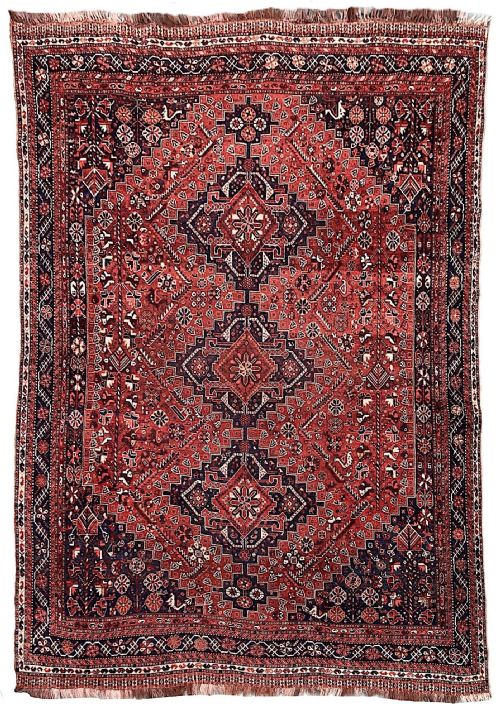


Shiraz Qashqai Rug
Shiraz qashqai rugs are hand-woven tribal textiles originating from southwest Persia, sought after for their rich designs and authentic village character.
Shiraz Qashqai Rug
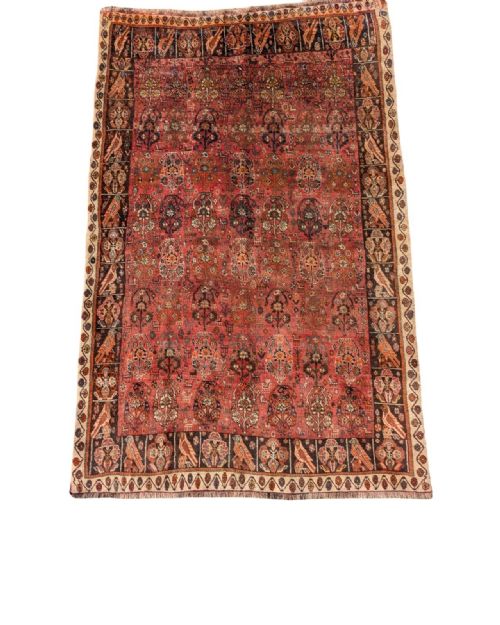
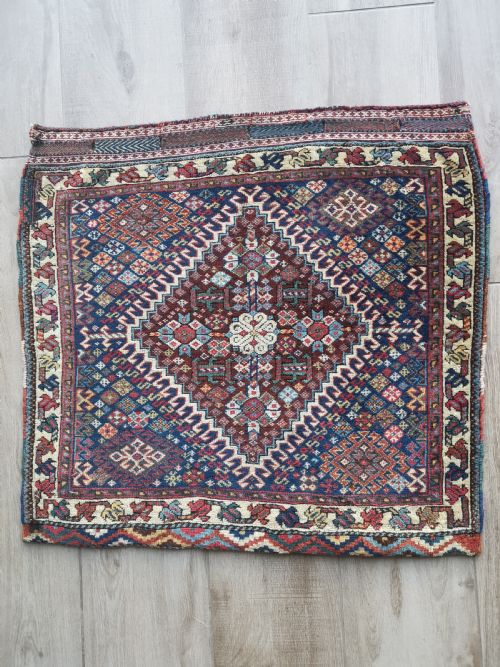
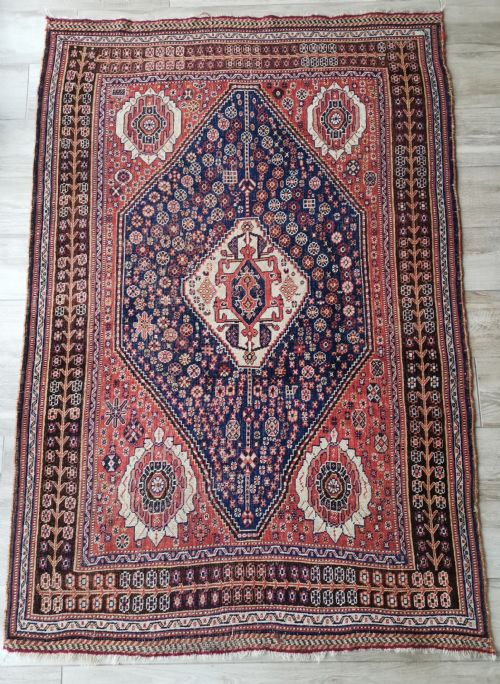
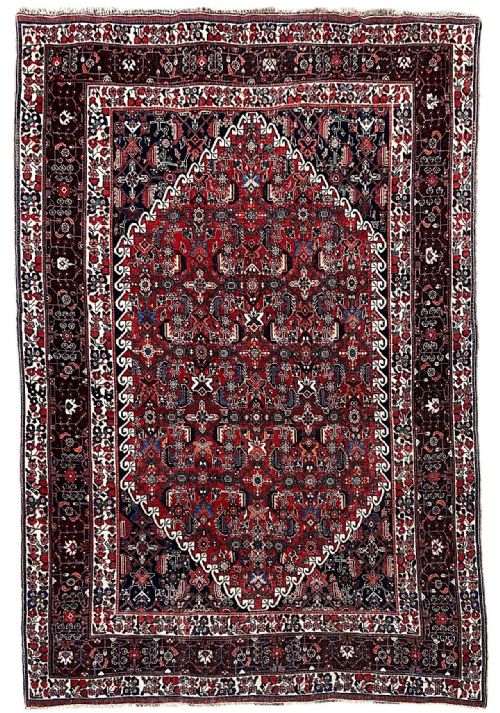
A shiraz qashqai rug represents the weaving traditions of nomadic and village communities in southwest Persia, encompassing formats from small bagfaces to large area carpets. These textiles frequently display distinctive motifs such as geometric medallions, boteh patterns, and stylized birds like peacocks, reflecting the heritage of Qashqai and Khamseh weavers.
The pieces available span from the late nineteenth century through to the early decades of the twentieth century, capturing a period of traditional tribal production before mass-market standardisation. Buyers encounter formats ranging from compact village rugs to substantial main carpets suited for principal living spaces.
How They Were Made
These textiles are constructed using wool for the pile and foundation work, often combined with cotton elements in specific formats. The structural integrity relies on traditional hand-knotting techniques executed on vertical or horizontal tribal looms.
Colour derives from natural dyes applied to hand-spun wool, yielding the varied hues and deep tones characteristic of nineteenth and early twentieth-century Persian tribal weaving.
Listings span the late nineteenth century through to the 1930s, utilising wool, cotton, and natural dyes within Persian tribal traditions.
What Varies in Quality
The standard of a shiraz qashqai rug is determined by the fineness of the knotting and the complexity of the pile preparation, which dictates how sharply the geometric and figurative motifs are rendered. Denser knotting allows intricate details like multi-medallion layouts or pillar depictions to remain crisp and well-defined.
The vitality and depth of the natural dyes significantly influence the visual appeal of each textile, separating standard village pieces from exceptional examples with superior colour saturation and wool quality.
The Shiraz Qashqai Rug Glossary
- Boteh
- A recurring almond-shaped motif with a curved upper end, symbolizing fertility and cypress trees in Persian textiles. It appears frequently in various sizes across field patterns and borders.
- Bagface
- The utilitarian front panel of a storage sack woven by nomadic tribes, repurposed or collected as a small textile format. These smaller pieces often contain concentrated versions of larger carpet designs.
- Medallion
- A central ornamental design element placed in the middle of the rug field, often rendered in geometric or polygonal shapes. Single, double, and triple medallion configurations structure the symmetrical layout.
- Pile
- The cut wool surface of the rug formed by individual knots tied around the warp threads. Full piled examples retain the original depth of the wool surface before age-related wear occurs.
Shiraz Qashqai Rug: Frequently Asked Questions
How do I care for a tribal rug?
Vacuum gently without using a rotating brush roll to prevent snagging the wool pile. Professional cleaning should be undertaken periodically by specialists familiar with natural dyes.
Keep the textile out of direct sunlight to prevent colour fading over time. Using a suitable underlay prevents slipping and cushions the foundation fibres against hard flooring.
Where were these rugs made?
These pieces originate from the southwest region of Persia, produced by nomadic and village tribes such as the Qashqai and Khamseh confederacies. Weavers worked on portable or village looms using locally sourced materials.
The Shiraz region acted as the primary trading hub where these tribal textiles were collected and marketed. Consequently, pieces from this area share stylistic traits rooted in Persian nomadic life.
What do the bird motifs mean?
Stylized birds, such as the peacocks found on specific tribal examples, represent traditional motifs rooted in Persian folklore and tribal symbolism. These figures are integrated into the geometric field alongside medallions and plant forms.
Weavers incorporated these elements freely from memory, meaning no two arrangements of pictorial motifs are identical. They contribute to the narrative quality that distinguishes tribal weaving from court carpets.
How do I date an old rug?
Dating relies on examining structural characteristics, material wear, and the chemical composition of the dyes used in the wool. Pieces attributed to the nineteenth century typically exhibit softer wool patination and specific palette variations compared to later 1930s productions.
Stylistic shifts also provide clues, as twentieth-century pieces often display standardised geometric repetitions. Comparing the knot count and edge finishes helps narrow the production era alongside documented period examples.