



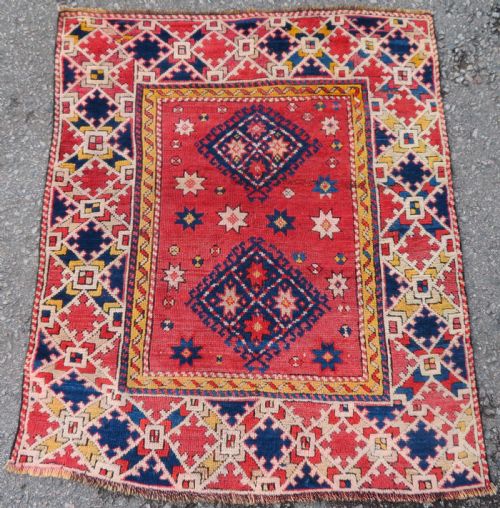
Tribal Woven Rug
These tribal woven rug examples bring the bold geometric patterns and rich history of nomadic weaving into modern interiors.
Tribal Woven Rug
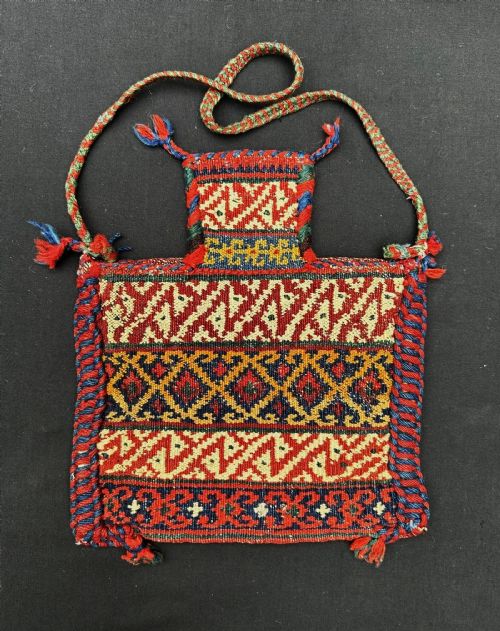
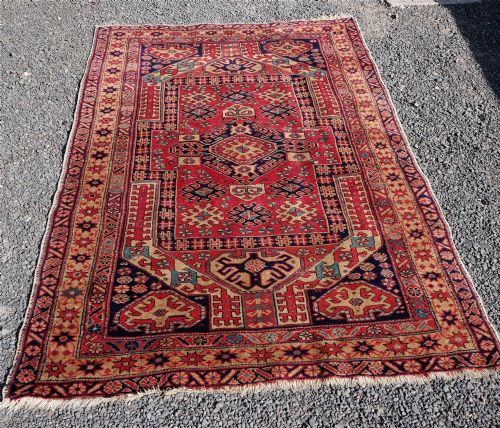
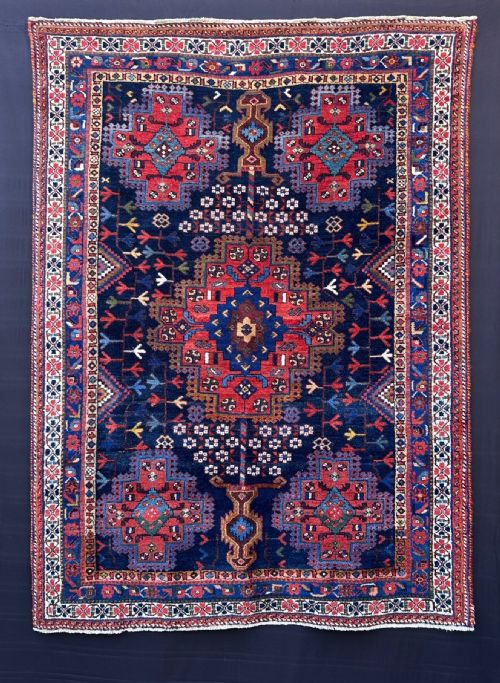
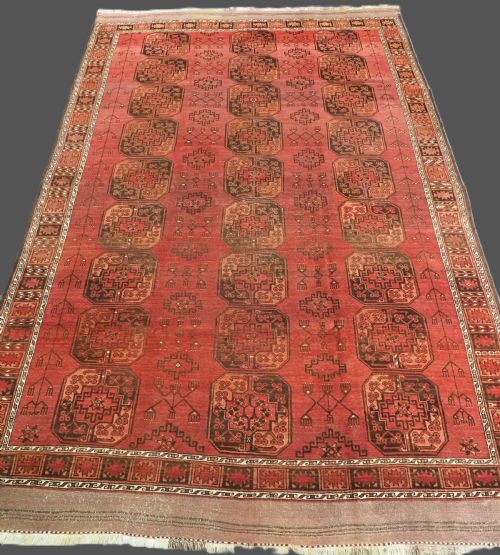
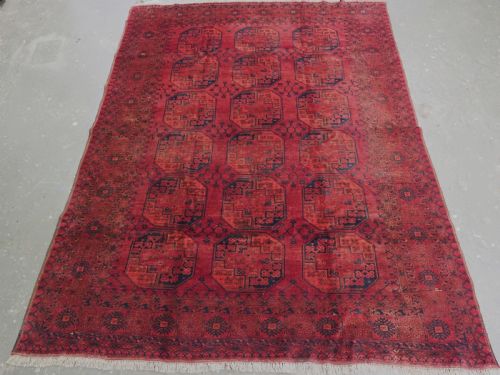
A tribal woven rug represents the textile traditions of nomadic and village groups from Persia, the Caucasus, Anatolia, and Central Asia. When you search for a tribal woven rug, you encounter floor coverings and utilitarian bags created by tribal confederacies like the Qashqai, Khamseh, and Ersari Turkmen.
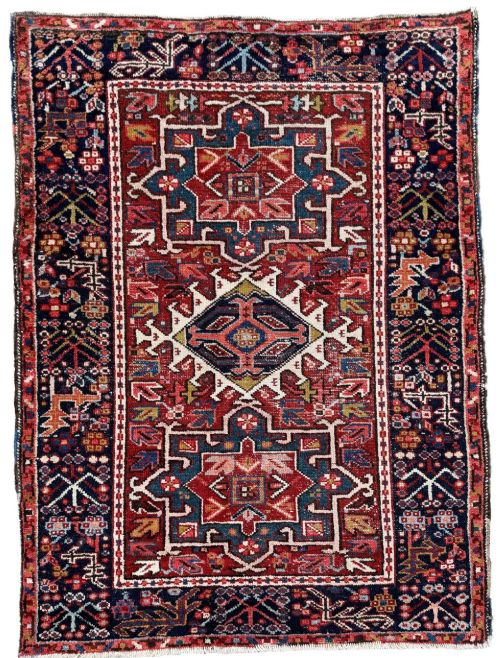
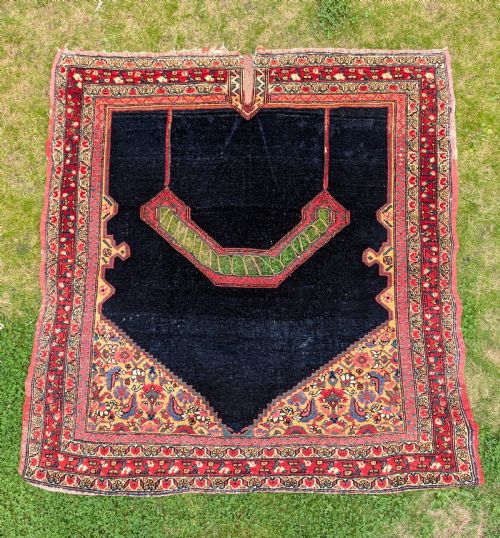
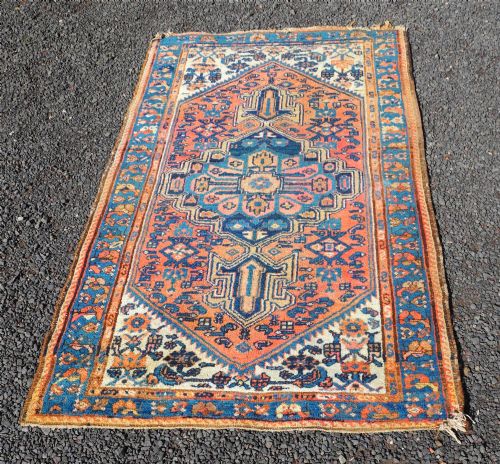
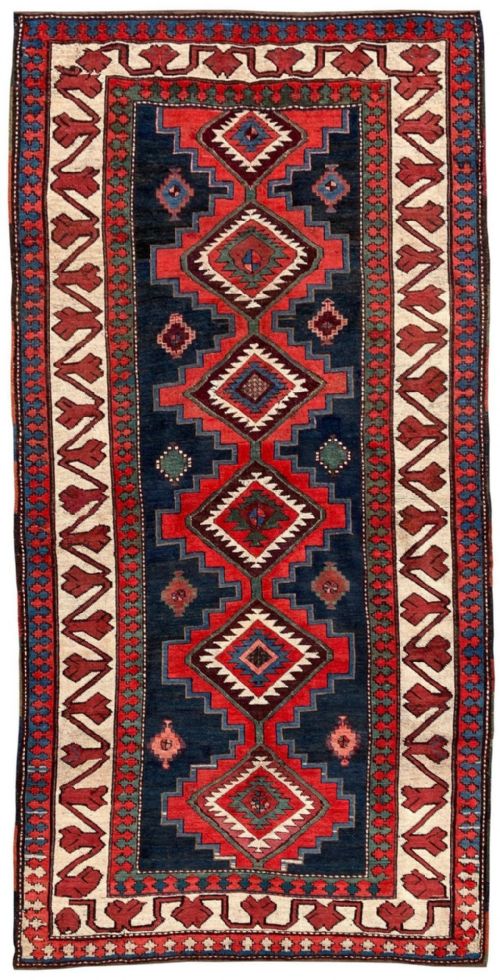
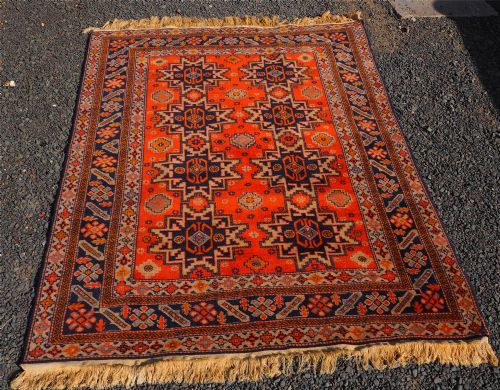
The pieces on this page span from the nineteenth century into the twentieth century, displaying regional motifs that identify their origins. Village rugs from centres such as Hamadan, Karaja, and Bidjar appear alongside nomadic saddle bags, salt bags, and main carpets.
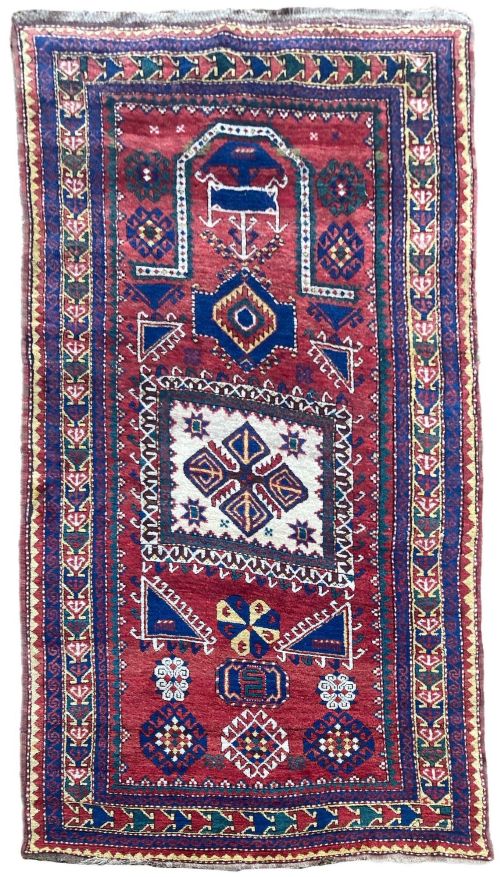
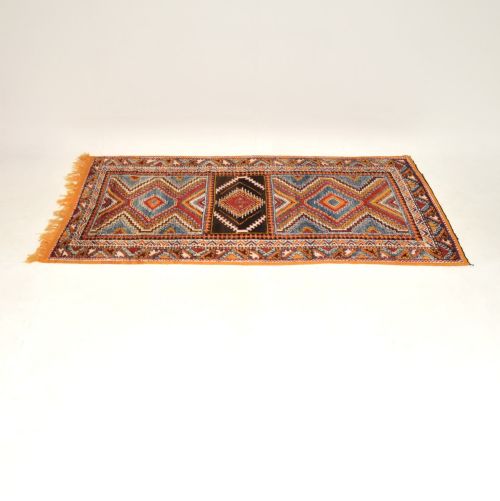
Most examples utilise hand-spun wool and employ traditional wool or cotton foundations. The forms range from small prayer rugs and saddle covers to large room-sized carpets and low-pile flatweaves.
What varies in quality
The calibre of a weaving depends upon the fineness of the knot count, the integrity of the wool, and the clarity of the natural dyes. Superior examples display saturated, harmonious colour palettes that age gracefully and retain structural stability across the foundation.
Design execution and symmetry separate standard village pieces from exceptional tribal commissions. Master weavers achieved precise geometric medallions and balanced borders that elevate the artistic merit of the textile.
Materials recorded across the inventory include wool, cotton, hand-spun wool, natural dyes, glass beads, and cowrie shells.
The Tribal Woven Rug Glossary
- Knot count
- The number of knots per square unit on the reverse of the rug. Higher densities generally indicate finer workmanship and greater detail in the design.
- Warp
- The stationary vertical threads stretched across the loom before weaving begins. The fringe of the rug is typically a continuation of these warp threads.
- Weft
- The horizontal strands passed alternately over and under the warp threads to bind the knots in place. In many tribal pieces, these wefts are dyed in vibrant hues.
- Kilim
- A flatweave textile produced without a pile by tightly interweaving warp and weft strands. These function as floor coverings or decorative hangings.
- Medallion
- A central ornamental motif positioned in the middle of the field. Tribal weavers often rendered these in geometric or stylised floral forms.
Tribal Woven Rug: Frequently Asked Questions
How do I identify a tribal rug?
Tribal rugs typically feature geometric motifs, asymmetrical designs, and bold primary colours derived from natural sources. They often reflect the specific weaving traditions of nomadic groups rather than urban workshops.
Makers incorporated symbols and patterns passed down through generations, making regional attribution possible through specific borders and medallion structures.
Where were these rugs made?
The pieces originate across Persia, the Caucasus, Anatolia, and Central Asia. Nomadic tribes and village communities produced them for daily use in tents and rural homes.
Key regions include the Caucasus for Kazak rugs, South Persia for Afshar and Qashqai works, and Turkmenistan for Ersari and Teke tribal carpets.
What is the difference between a rug and a bagface?
A rug is woven as a floor covering or seating textile designed to lie flat in a tent or dwelling. A bagface is the decorative front panel salvaged from a larger nomadic storage sack used for transport or provisions.
Bagfaces generally measure smaller in scale and display intricate field designs compressed into a compact square or rectangular format.