


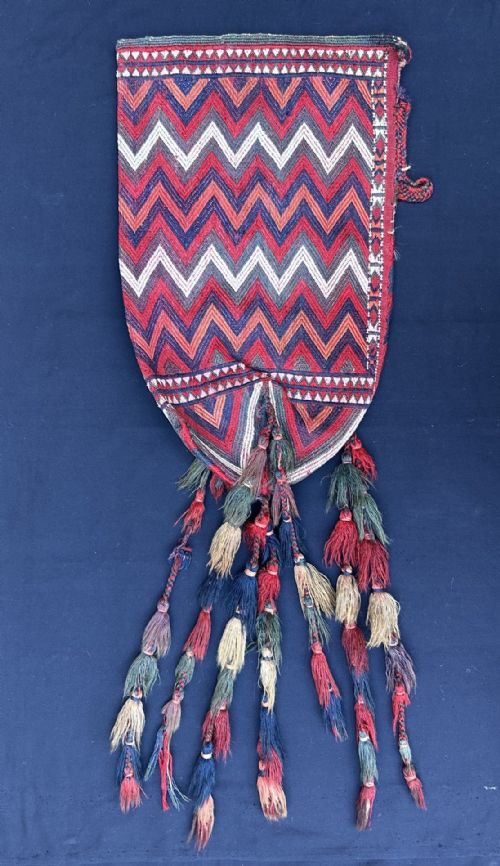
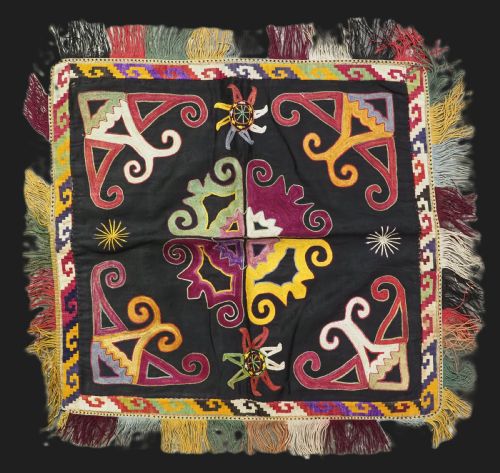
Tribal Textile Art Hanging
Tribal textile art hanging brings together woven dowry embroideries, camel bags and wall panels shaped by Central Asian and Persian nomads.
Tribal Textile Art Hanging
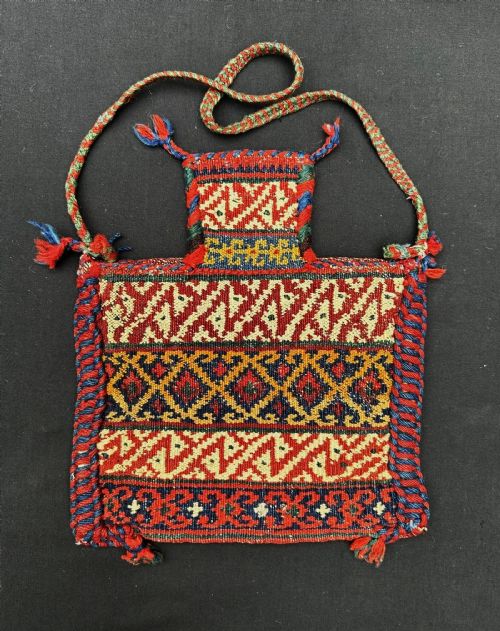
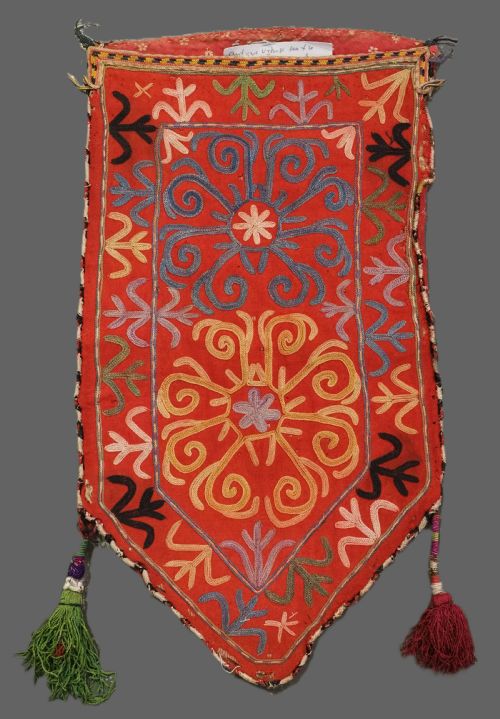
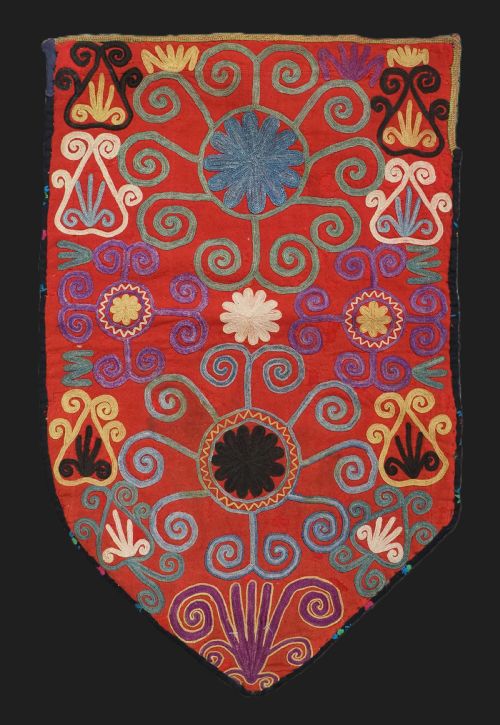
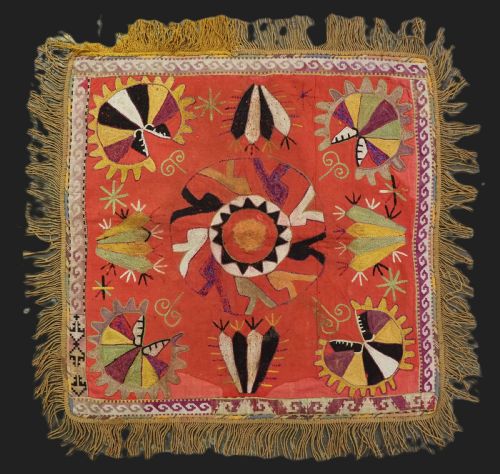
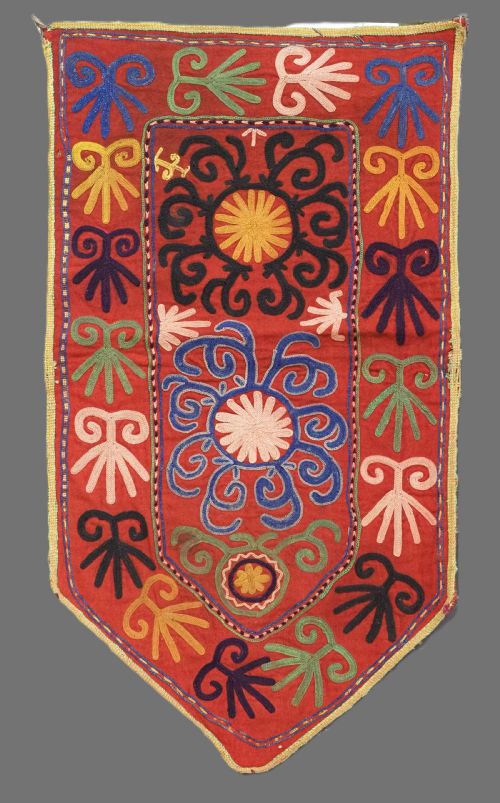
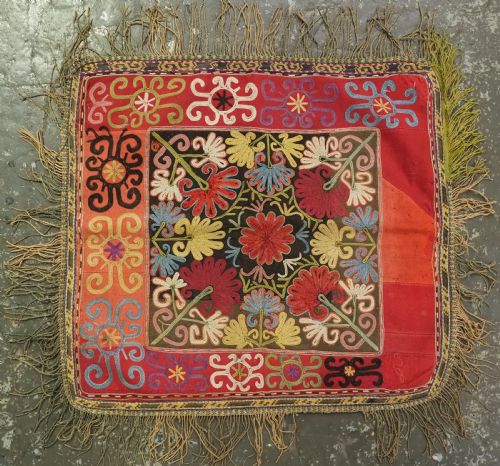
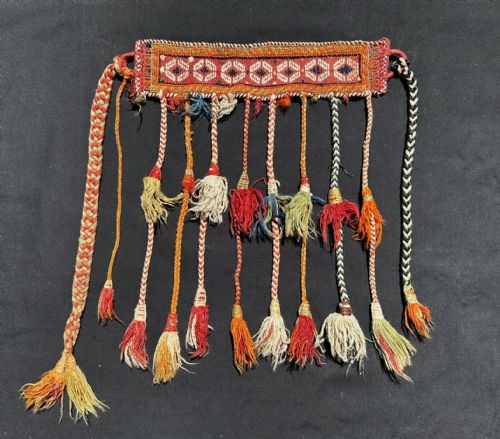
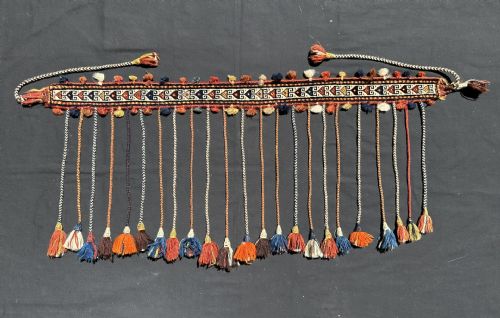
A tribal textile art hanging covers woven items originating from nomadic and village communities across Central Asia and Persia. Collectors seeking this look encounter functional pieces repurposed for display, including dowry embroideries, horse decorations, and small utilitarian bags.
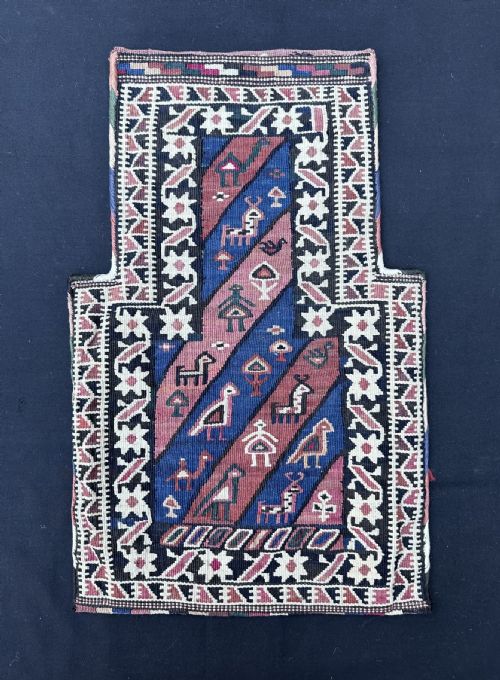
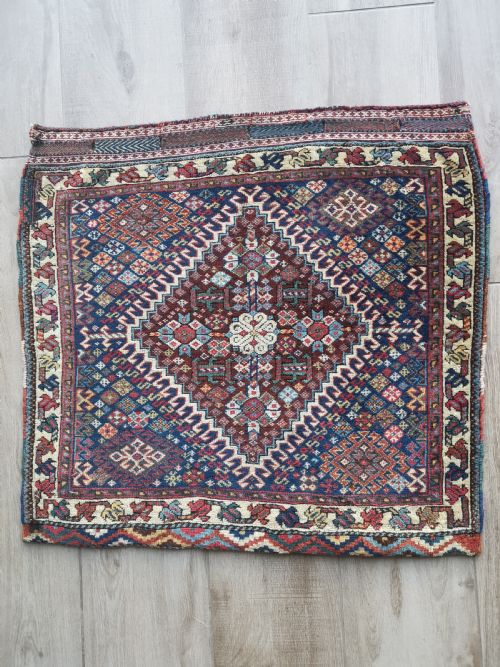
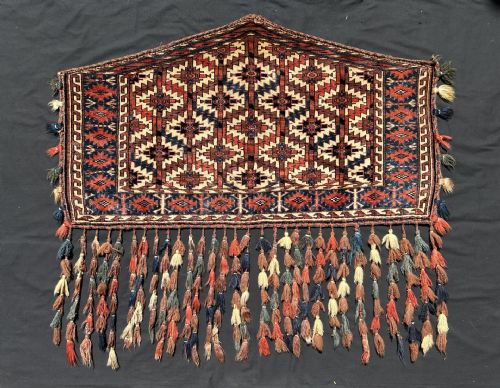
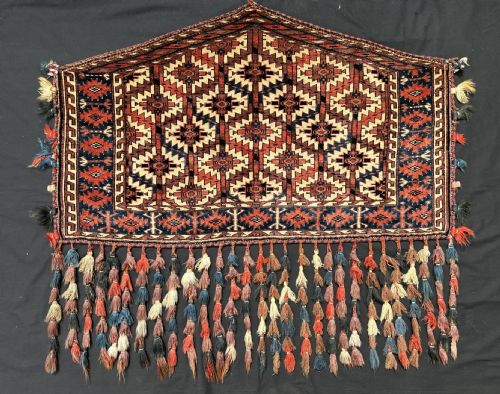
The physical forms span flatweaves, pile-woven saddle bags, and embroidered felt panels. Pieces from Persian groups such as the Qashqai and Afshar sit alongside Turkmen and Uzbek examples spanning the nineteenth and early twentieth centuries.
Materials and construction
Makers utilised hand-spun wool, cotton, and silk, dyed primarily with natural colour sources to build rich palettes across the surfaces. Embroidery threads often catch the light through silk highlights applied over wool or cotton foundations.
Techniques combine loop-stitch embroidery, flatweave tapestry structures, and felted wool panels decorated with applied fabrics. Supporting elements incorporate wooden beads, glass beads, and goat hair for structural reinforcement.
Nomadic weavers constructed these items on portable ground looms or stitched panels by hand within domestic tents. The dense stitches and robust material combinations ensured survival through nomadic migrations.
Listings span nineteenth and early twentieth-century periods, recording materials including natural dyes, hand-spun wool, silk, wood, and glass.
Factors of quality
The distinction between standard examples and superior pieces rests on the precision of the needlework and the depth of the natural dye palette. Tightly packed embroidery and inventive composition elevate an item far above simple utilitarian work.
Completeness of original borders, the presence of silk highlights, and structural integrity dictate desirability. Pieces retaining their full decorative field without extensive modern repairs hold greater visual harmony.
The Tribal Textile Art Hanging Glossary
- Ilgich
- Uzbek dowry embroidery created for wall hanging inside a yurt. These pieces feature energetic geometric motifs and silk threads.
- Asmalyk
- Turkmen pentagonal trapping mounted on a camel's flank during wedding processions. They display rich field patterns executed in pile or embroidery.
- Suzani
- Large embroidered wall hanging from Uzbekistan worked in silk on a cotton or linen foundation. Floral roundels and vines dominate the layout.
- Torba
- Small Turkmen storage bag used within the yurt for household goods. They show precise geometric guls across the face.
Tribal Textile Art Hanging: Frequently Asked Questions
How were tribal textile art hangings used originally?
Nomadic communities utilised these textiles as functional storage containers, tent decorations, and ceremonial horse covers during migrations and weddings.
Items such as salt bags, horse trappings, and dowry embroideries served daily domestic needs before collectors repurposed them as decorative wall art.
How do I hang a textile safely on the wall?
Mounting requires a method that distributes weight evenly across the upper edge without piercing the fabric with nails or glue. Conservation-grade Velcro stitching or a fabric sleeve paired with a concealed wooden batten protects the textile fibres from strain.
Keep mounted pieces away from direct sunlight to prevent natural dyes from fading over time.
What is a dowry embroidery?
Dowry embroideries were created by young women as part of their marriage trousseau to display household skill and tribal identity. These pieces often took the form of hanging panels or bag faces worked in vibrant silk stitches.
Families hung them inside the yurt to decorate the living space during celebrations.