





Tribal Suzani Wall Tapestry
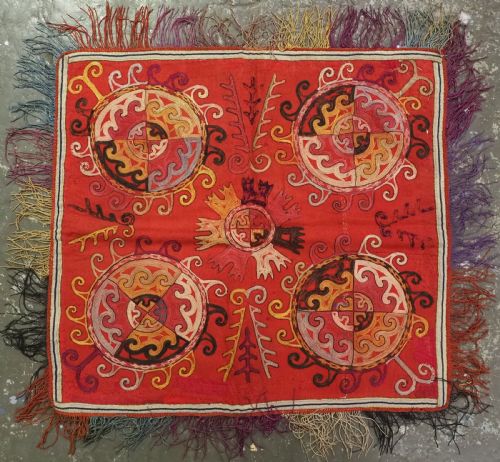
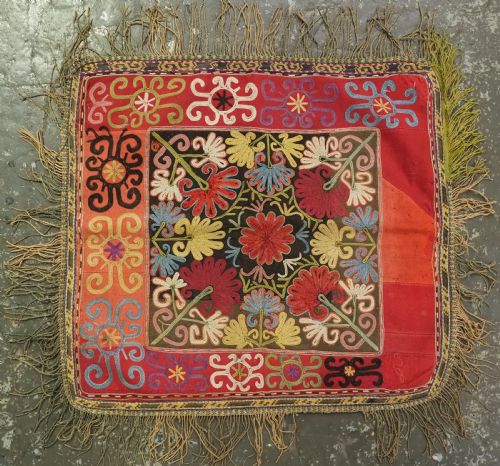
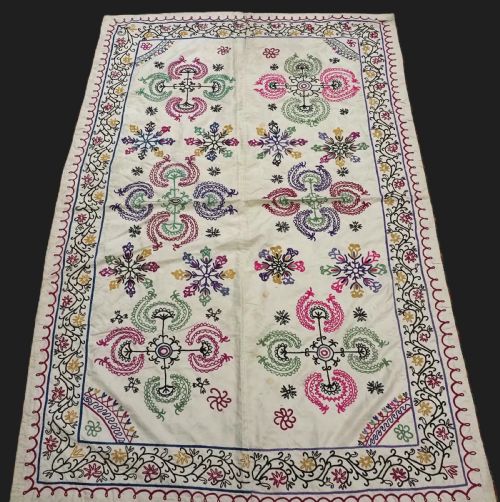
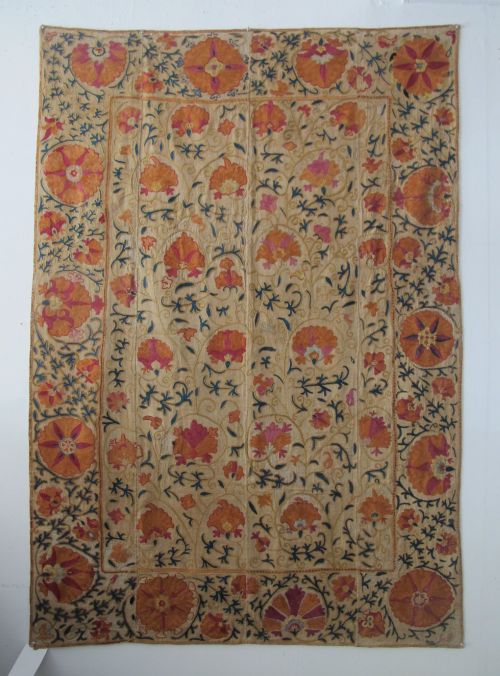
Tribal suzani wall tapestry pieces are Central Asian embroidered textiles created as dowry items, wall hangings, and ceremonial covers.
Tribal Suzani Wall Tapestry
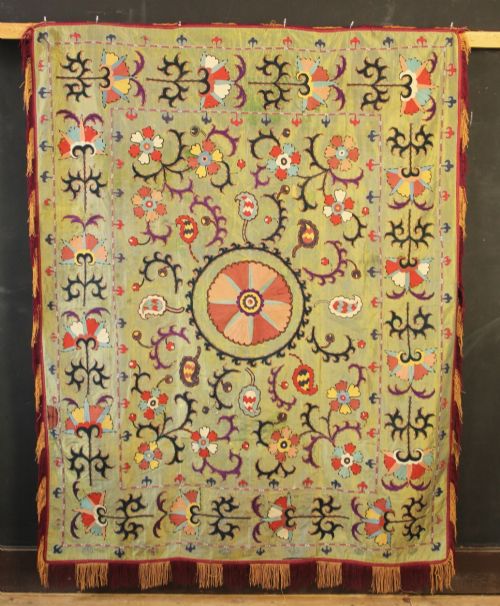
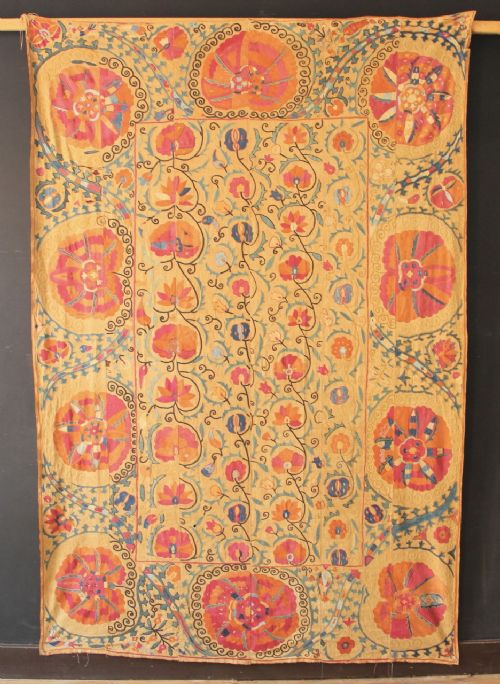
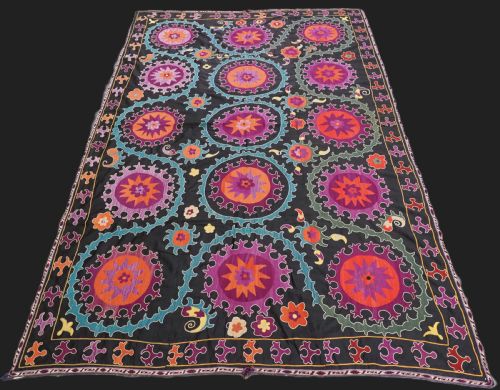
A tribal suzani wall tapestry represents Central Asian needlework traditions originating from regions such as Uzbekistan, Bukhara, Samarkand, and Tashkent. Collectors seek these items for their rich historic designs, which include large medallions, star motifs, and folk art patterns.
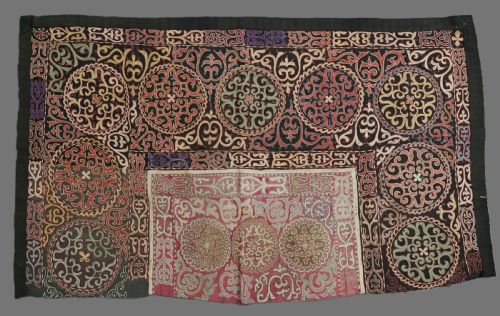
The pieces on this page span from the early nineteenth century through to the early twentieth century, encompassing works by groups such as the Lakai tribe and Tajiks. Common formats include full work suzanis, smaller nim suzanis, ilgich dowry embroideries, and yurt wall hangings known as tush kyiz.
Many examples function primarily as decorative wall art, while others originate as ceremonial horse or saddle covers repurposed for display. Buyers encounter traditional regional layouts that reflect specific nomadic and settled communities across Central Asia.
How They Were Made
Artisans constructed these textiles by stitching silk embroidery threads onto a foundation fabric of cotton, wool, or silk grounds. Ground colours vary from natural tones to black, red, and green cotton bases.
Craftspeople utilised specialised needlework techniques to build dense floral and geometric compositions, frequently covering the entire base cloth in heavy embroidery known as full work.
Listings feature cotton, silk, and wool grounds spanning from the early nineteenth century to the early twentieth century.
What Varies In Quality
The standard of a piece depends on the density of the embroidery and the complexity of the design layout, such as large medallion variants versus simpler formats. Full work examples that cover the ground cloth require significantly more labour and skill than sparse compositions.
The richness of the dye palette and the fineness of the silk threadwork distinguish superior examples. Age and regional provenance also influence the character of the textile, with nineteenth-century pieces showing distinct handling of traditional motifs.
The Tribal Suzani Wall Tapestry Glossary
- Suzani
- An embroidered Central Asian hanging or textile, typically worked in silk on a cotton or silk foundation. The word derives from the Persian term for needle.
- Nim Suzani
- A smaller version of a standard suzani wall hanging. These compact textiles offer versatility for interior display.
- Ilgich
- A specific type of dowry embroidery created by the Lakai tribe. These pieces function as traditional wall hangings.
- Palak
- A fully embroidered suzani featuring a central star or medallion motif. The design often covers the entire ground fabric.
- Tush Kyiz
- A traditional embroidered yurt wall hanging originating from Kyrgyzstan. These large textiles form part of nomadic interior decoration.
Tribal Suzani Wall Tapestry: Frequently Asked Questions
How do I hang a suzani?
Mount the textile carefully by attaching a fabric sleeve to the back and sliding a thin wooden batten or metal rod through it. This method distributes the weight evenly across the entire upper edge without damaging the historic fabric.
Alternatively, a professional restorer can sew cotton tape along the top edge for Velcro mounting against a wall board. Avoid hanging textiles in direct sunlight to protect the natural silk threads from fading.
What is a nim suzani?
A nim suzani is a smaller variant of the standard Central Asian embroidery, translating roughly as half suzani. These pieces were traditionally produced for domestic settings or dowry collections where full-sized hangings were impractical.
Their reduced dimensions make them suitable for modern interior spaces while retaining the same regional motifs and silk-on-cotton techniques found in larger examples.
How do I date an old suzani?
Dating relies on examining the materials, dye colours, and embroidery style against known regional examples from the nineteenth and early twentieth centuries. Natural dyes, hand-spun cotton grounds, and specific tribal patterns associated with groups like the Lakai provide key chronological indicators.
Comparing structural details and stitch density with documented pieces helps narrow the period of creation to specific decades.