

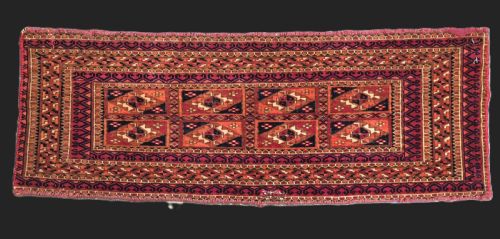
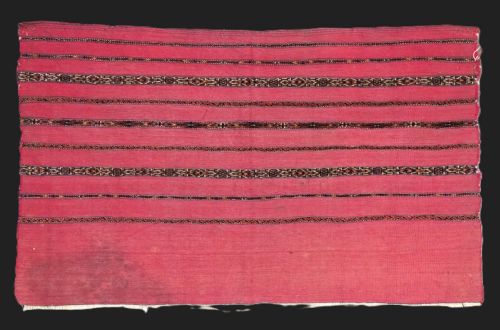


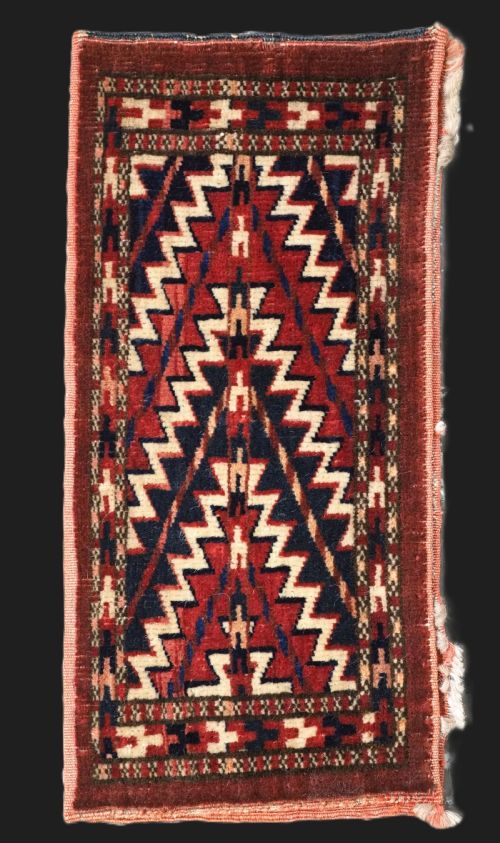


Tribal Storage Bag Face
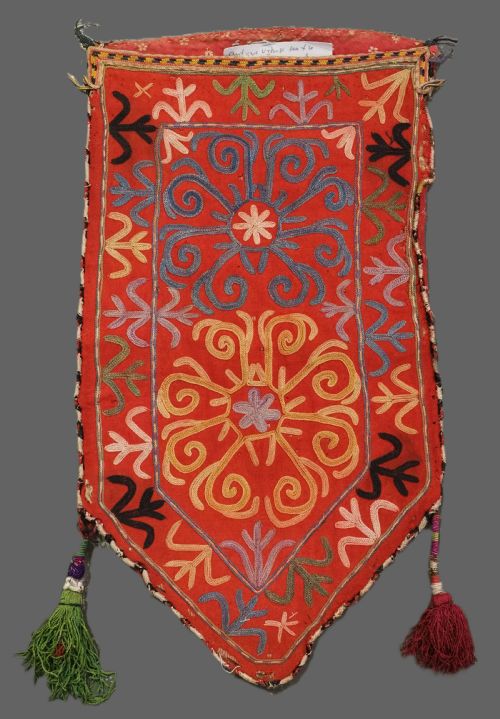
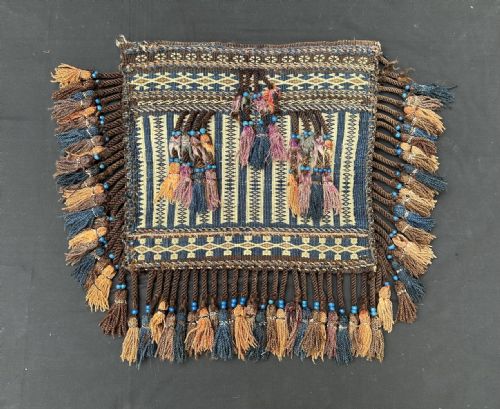
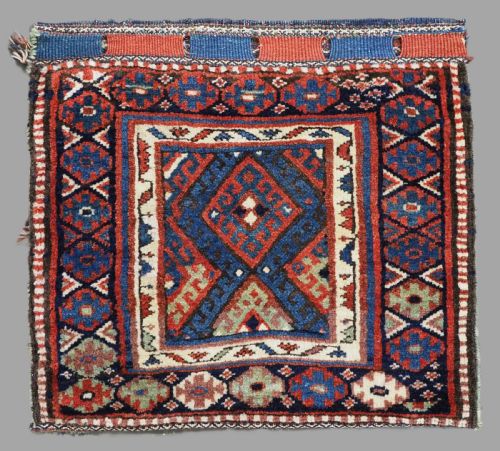
A tribal storage bag face represents the front panel of a nomadic container, sought after for its intricate geometric patterns and rich cultural heritage.
Tribal Storage Bag Face
When you search for a tribal storage bag face, you are looking at the surviving front portion of a utilitarian container used by nomadic and village peoples. These pieces originate primarily from Central Asian and Persian groups, including various Turkmen tribes, Baluch nomads, Kurdish weavers, and Lori-Bakhtiari populations.
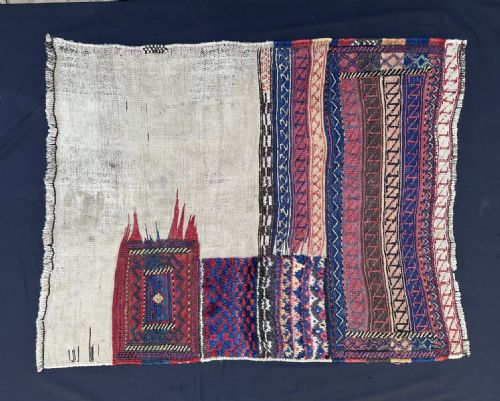
The objects take several specific forms depending on their original function, such as chuvals, torbas, mafrashes, and smaller utility sacks. Many examples on this page survive as isolated bag faces because the plain weave backs wore away through heavy daily use or were removed when repurposed for display.
The tradition spans the nineteenth and early twentieth centuries, capturing a period when tribal weavers produced textiles entirely for domestic use within their own communities. These artefacts functioned as portable storage for bedding, grain, clothing, and personal possessions inside tents and yurts.
Materials and construction methods
Weavers relied principally on hand-spun wool for the pile and foundation, utilising natural dyes derived from plants and minerals to create deep madder reds, indigos, and earth tones. Silk highlights and glass beads occasionally appear on specific pieces, adding texture and contrast to the wool foundation.
The construction typically involves dense knotting for the pictorial faces, paired with flatweave techniques on the reverse or borders. Artisans worked on portable vertical or horizontal looms set up in camps, tying symmetric or asymmetric knots depending on the tribal tradition.
Some storage bag faces retain original hanging loops, proving their historical journey from the dusty floor of a yurt straight onto a collector's wall.
Evaluating quality and execution
Quality in these textiles depends heavily on the density of the weave and the precision of the knotting. Finer knots permit greater clarity in complex guls and geometric motifs, whereas looser structures yield softer, less defined patterns.
The vibrancy and condition of the natural dyes also dictate the visual strength of the piece. Uniform saturation and minimal fading indicate careful preparation and dyeing of the wool before weaving began.
The Tribal Storage Bag Face Glossary
- Chuval
- A large tent-storage bag used by Turkmen tribes for bedding and heavy household goods. These pieces usually feature multiple rows of guls.
- Torba
- A smaller storage bag than the chuval, traditionally hung on the interior lattice walls of a yurt. They often display intricate banded designs or central medallions.
- Gul
- A primary medallion or repeating motif found extensively in Turkmen and Central Asian weaving. Each tribal group utilised distinct gul variations to signify identity and lineage.
- Mafrash
- A rectangular storage chest or bag used in pairs for transporting household possessions during nomadic migrations. The faces often showcase elaborate flatweave or piled patterns.
- Tacheh
- A specific type of storage sack or wheat sack produced by Lori-Bakhtiari and Persian nomadic groups. These incorporate sturdy flatweave backs and robust pile fronts.
Tribal Storage Bag Face: Frequently Asked Questions
What is a tribal storage bag face?
It is the decorative front panel removed from a nomadic utility bag used for household storage. These panels preserve the primary designs created by tribal weavers.
Over time, many bags lost their plain wool backs through wear, leaving the durable pile face as a collectible textile suitable for wall display.
How were these bags originally used?
Nomadic families used them inside tents and yurts to store clothing, bedding, and grain. They served both practical storage functions and decorative roles within the domestic space.
Smaller versions functioned as spindle bags or personal carry sacks, while larger formats organised heavy blankets and winter provisions.
How do I identify different tribal origins?
Attribution relies on specific design structures, repeating motifs, and colour palettes associated with particular groups. Turkmen tribes often utilised distinct guls, while Baluch and Kurdish weavers favoured banded layouts and darker tones.
Examining the knot type and wool preparation also helps experienced collectors narrow down the regional source.
Can I hang these bag faces on the wall?
Yes, many collectors mount them as flat textiles for display purposes. Their compact dimensions make them well-suited for interior wall hanging.
Mounting should distribute the weight evenly across the textile to prevent distortion of the wool foundation over time.