



Tribal Saddlebag Fragment
These tribal saddlebag fragment examples are nomadic woven artefacts prized for rich colour and geometric design, perfect for adding authentic textile history to any interior.
Tribal Saddlebag Fragment
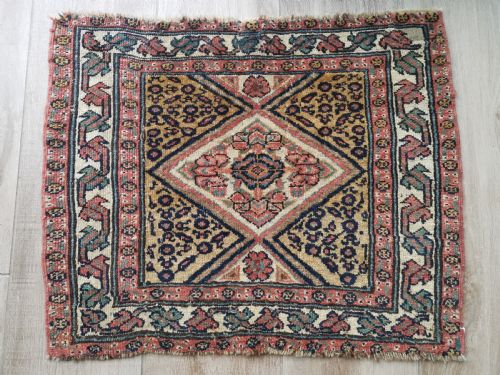
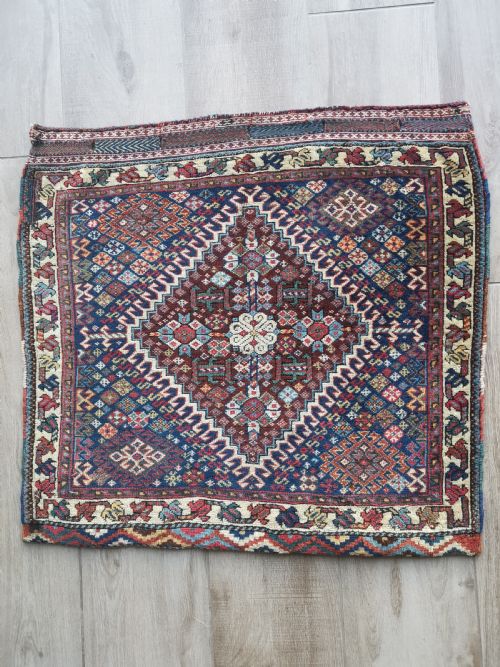
A tribal saddlebag fragment is a surviving portion of a larger nomadic storage pouch, most commonly seen here as bag faces or half-faces originating from Persian tribal weaving traditions. These pieces originate from nineteenth and early twentieth century nomadic groups such as the Qashqai, Afshar, Shahsavan, and Kurdish tribes. Buyers encounter various forms including complete bag faces, half-saddlebags, and vanity bags that served practical transport needs for pastoral communities.
The surviving fragments display distinct regional patterns, from central medallions to boteh motifs and geometric border arrangements. Because these textiles were utilitarian items subjected to heavy use on animal backs, only durable portions survive today. Collectors appreciate them as portable works of tribal art that distil centuries of weaving heritage into manageable wall-hanging or display formats.
How They Were Made
These textiles utilise hand-spun wool for the pile and foundation yarns, yielding a dense, durable handle necessary for nomadic utility. Natural dyes derived from local plants and minerals provide the deep, shifting colour palette visible across the pieces.
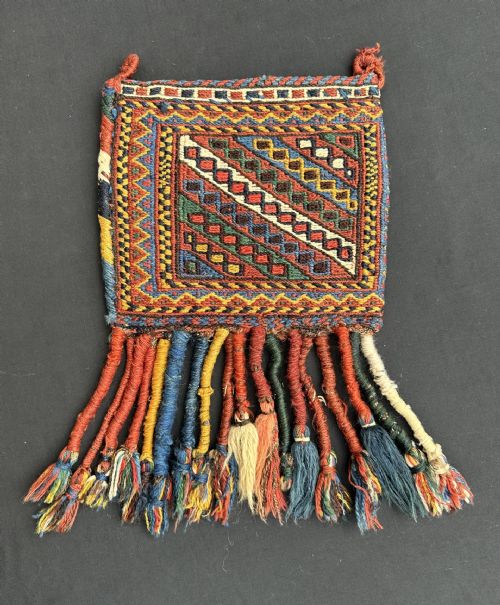
Techniques range from standard hand-knotted pile construction to flatwoven sumac work, depending on the specific tribal group and intended function of the original khorjin. The integration of wool and cotton foundations reflects traditional regional workshops and nomadic encampment methods.
Tribal Saddlebag Fragment Retail Price Guide 2026
Typical asking prices for tribal saddlebag fragment among the pieces listed under this phrase on Sellingantiques today, from the lower quarter to the upper quarter. They describe what is for sale here now, not the wider market.
The listings show pieces originating from nineteenth and early twentieth century Persia, spanning wool materials and natural dyes across multiple tribal groups.
What Varies in Quality
Quality depends upon the purity and lustre of the wool, where tighter knot counts and superior spinning create greater resilience and visual depth. Superior examples retain vibrant natural dye colours that have mellowed evenly without losing saturation.
Design clarity and the precision of geometric motifs distinguish finer tribal pieces from standard utilitarian work. The integrity of the remaining borders and the balance of the central composition determine the visual strength of the fragment.
Qashqai Tribes·Afshar Nomads·Shahsavan Weavers·Bakhtiari Luri Tribes
The Tribal Saddlebag Fragment Glossary
- Khorjin
- The traditional Persian term for a double-sided saddlebag used by nomadic tribes for transport and storage. These bags were split into separate faces when worn or damaged over time.
- Bag face
- The decorative front panel of a storage pouch that survived while the plain back and sides disintegrated through hard use. This surface displays the primary tribal motifs and design elements.
- Sumac
- A flatweaving technique involving coloured supplementary weft threads wrapped around warp threads to produce a durable, textured surface. It appears frequently on Shahsavan tribal weavings.
- Boteh
- An almond-shaped or pine-cone motif of Persian origin representing a floral spray or cypress tree. This symbol is widespread across Afshar and broader tribal textile designs.
- Nomadic
- Pertaining to pastoral groups who moved seasonally across regions such as Fars and Kerman provinces. Their woven works reflect the iconography and materials native to their specific tribal confederations.
Tribal Saddlebag Fragment: Frequently Asked Questions
What is a tribal saddlebag fragment?
A tribal saddlebag fragment is the surviving decorative front panel of a nomadic storage pouch. These textiles were produced by pastoral tribes in nineteenth and early twentieth century Persia for practical daily transport.
Over decades of use, the utilitarian plain backs wore away while the knotted or flatwoven faces survived. Today, collectors preserve these panels as textile art and wall hangings.
How were these bags used originally?
Nomadic groups utilised these double-sided pouches, known as khorjin, slung over pack animals during seasonal migrations. They stored personal belongings, household goods, and provisions inside the compartments.
When the bags sustained damage or wore out along the connecting panels, families cut them apart. The sturdy front sections often found new life as floor coverings, cushions, or storage mats within the camp.
How should I display a fragment?
Mounting a textile fragment safely on linen or framing it behind protective glass preserves the wool structure from dust and physical tension. Wall mounting allows the full geometric design and natural dye variations to remain visible without weight stress.
Keep these wool pieces away from direct sunlight and damp environments to protect the natural dyes and hand-spun fibres. Gentle vacuuming through a mesh screen helps maintain the textile without damaging the pile.
How do I identify different tribal groups?
Tribal attribution relies on distinctive design vocabularies, colour palettes, and structural techniques specific to regions like Fars, Kerman, or Northwest Persia. For instance, Afshar and Qashqai pieces often feature precise geometric medallions and boteh motifs.
Examining the selvages, end finishes, and wool quality provides further clues regarding the specific nomadic confederation. Comparing knotting styles and palette choices against documented examples helps confirm origin.