

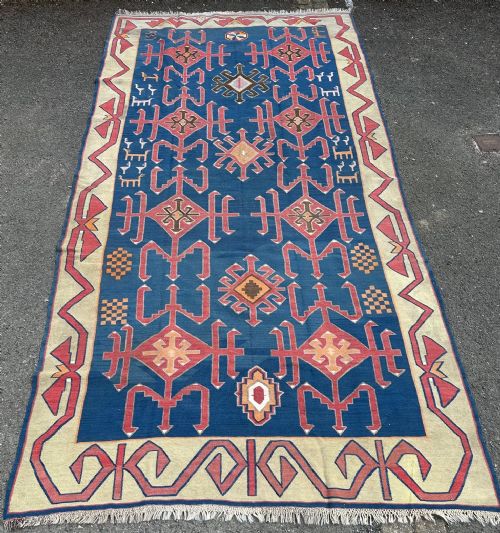


Tribal Flat Woven Carpet
A tribal flat woven carpet brings graphic nomadic patterns and rich textures directly into modern interiors.
Tribal Flat Woven Carpet
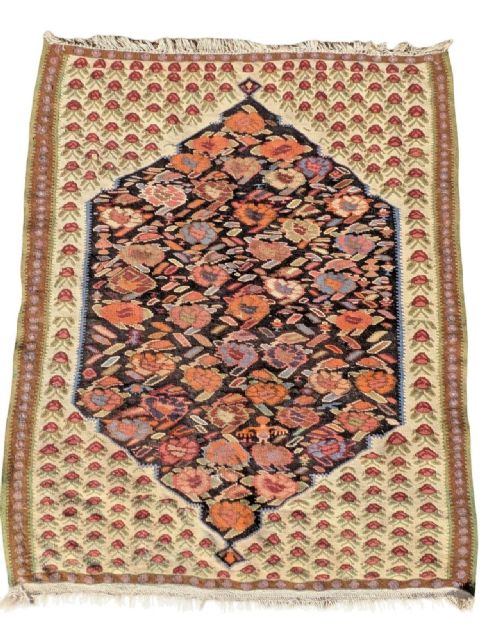
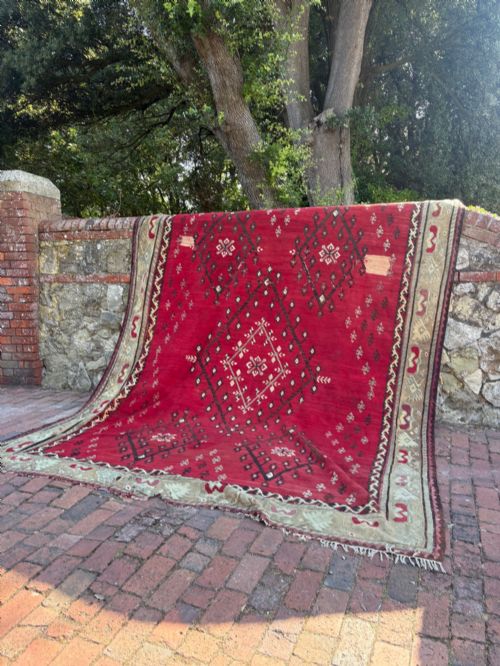
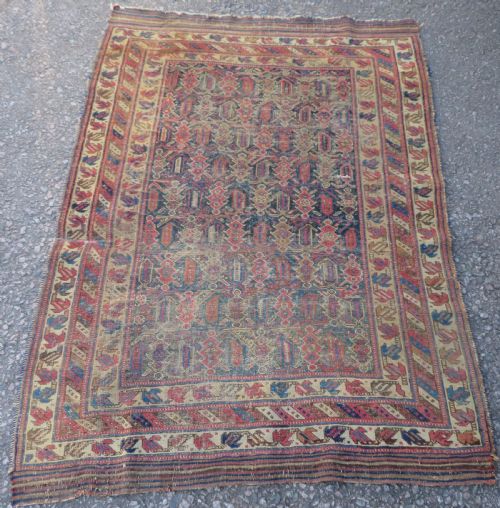
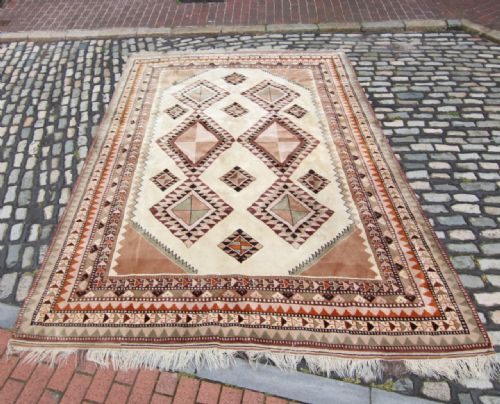
A tribal flat woven carpet encompasses diverse utility textiles, storage bags, and floor coverings produced by nomadic and village weavers across the Caucasus, Anatolia, Persia, and Central Asia. These items span from the late nineteenth century through to the mid-twentieth century, capturing traditional regional patterns and cultural motifs.
The selections available range from large room-sized Pirot or Sharkoy kilims to smaller runner rugs, storage bag faces, and half-saddlebags. Geometric medallions, banded designs, and bold graphic layouts dominate the visual vocabulary of these utilitarian pieces.
Originating from specific tribal groups such as the Yomut, Shahsevan, Afshar, and Qashqai, each textile carries structural characteristics native to its historic weaving community. Buyers frequently encounter examples woven in two distinct parts joined centrally, or finished with long kilim ends.
Assessing the Weave
Quality rests upon the tightness of the weave, the clarity of the graphic design, and the integrity of the structural wool. Finer examples display precise geometric execution and retain the original selvedges and kilim ends.
The palette contributes significantly to desirability, with harmonious natural dyes and soft colour combinations elevating the visual presence of a piece. Condition also plays a role, distinguishing structurally sound examples from those requiring timeworn repairs.
Certain nomadic storage bags retain their original cloth backs, offering a complete historical snapshot of daily desert housekeeping.
The Tribal Flat Woven Carpet Glossary
- Kilim
- A flat-woven carpet or rug produced without a pile by tightly interweaving warp and weft strands. These textiles serve various floor-covering and decorative functions across nomadic regions.
- Soumak
- A flat-weaving technique involving coloured weft threads wrapped over and under warp threads in a herringbone or braid-like pattern. This method adds structural weight and durability to the textile.
- Mafrash
- A large rectangular storage bag or travel chest face produced by nomadic tribes for household storage. They feature striking geometric designs and end panels.
- Warp
- The vertical foundation threads stretched tightly on a loom before weaving begins. Weft threads are passed through these structural lines.
- Weft
- The horizontal threads passed back and forth through the warp to create the fabric and pattern. In flat-weaves, these threads form the visible design.
Tribal Flat Woven Carpet: Frequently Asked Questions
How were tribal flat woven carpets used?
Nomadic and village communities utilised these flat weaves primarily as floor coverings, blankets, and functional containers for domestic storage.
Larger versions served inside tents and dwellings, while smaller bag faces and saddlebags functioned as portable containers for household goods during seasonal migrations.
How should I care for a flat woven carpet?
Regular gentle vacuuming without a rotating brush helps remove embedded dust and maintains the flat woolen surface.
Professional specialist cleaning is recommended for antique wool textiles to preserve natural dye stability and structural integrity.
What is the difference between a kilim and a rug?
A kilim is constructed using a flat-weave technique without any knotted pile, resulting in a smooth, tapestry-like textile on both sides.
Standard rugs typically feature a raised pile created by knotting individual strands of wool or cotton onto a foundation warp.
How can I identify the tribal origin?
Specific geometric motifs, border arrangements, and structural methods point directly to particular groups such as the Qashqai, Yomut, or Shahsevan.
Colour palettes and the use of single or multi-part panel construction also provide clear clues regarding the geographic source.