



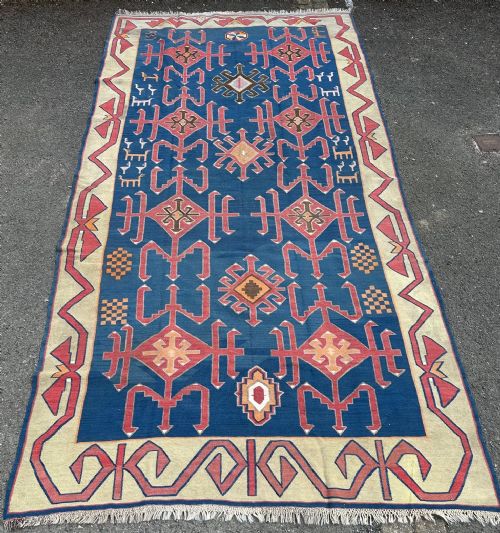


Geometric Wool Flatweave
A geometric wool flatweave brings linear tribal artistry and durable texture into a room, offering authentic nomadic craftsmanship from the nineteenth and early twentieth centuries.
Geometric Wool Flatweave
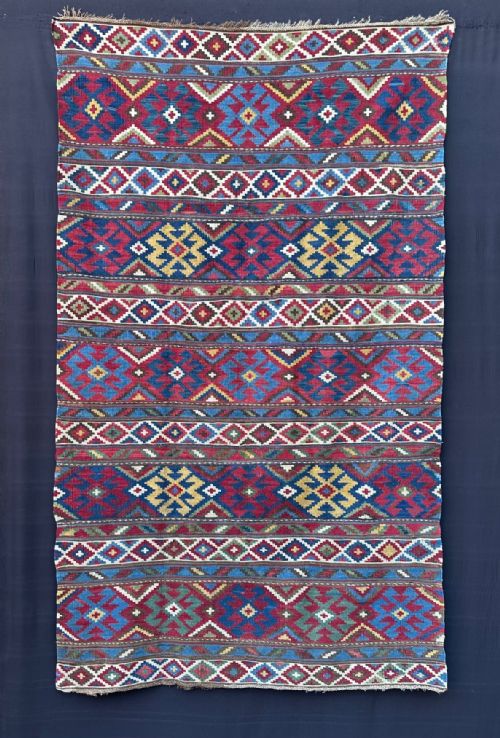
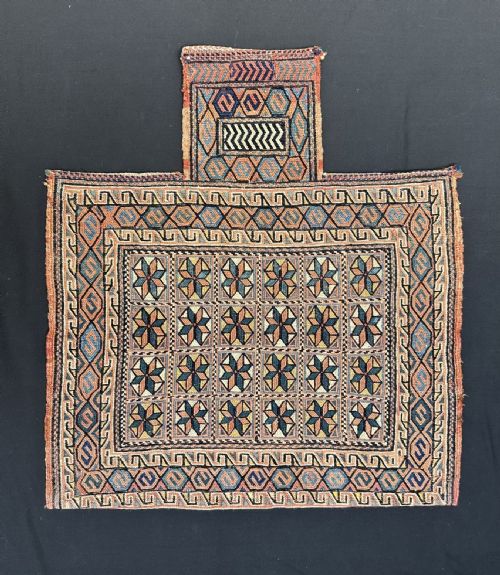
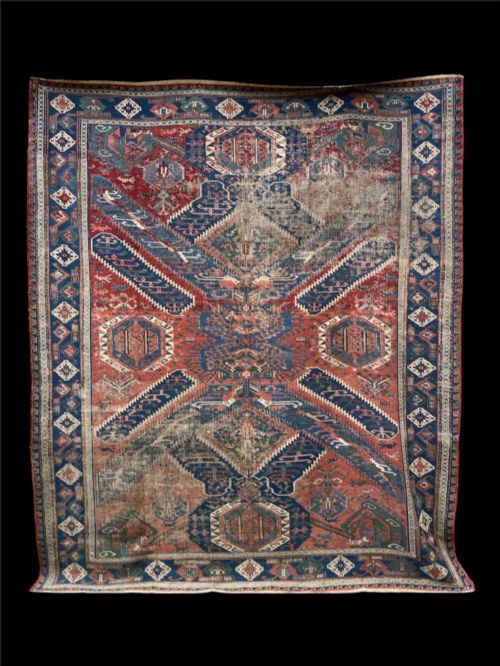
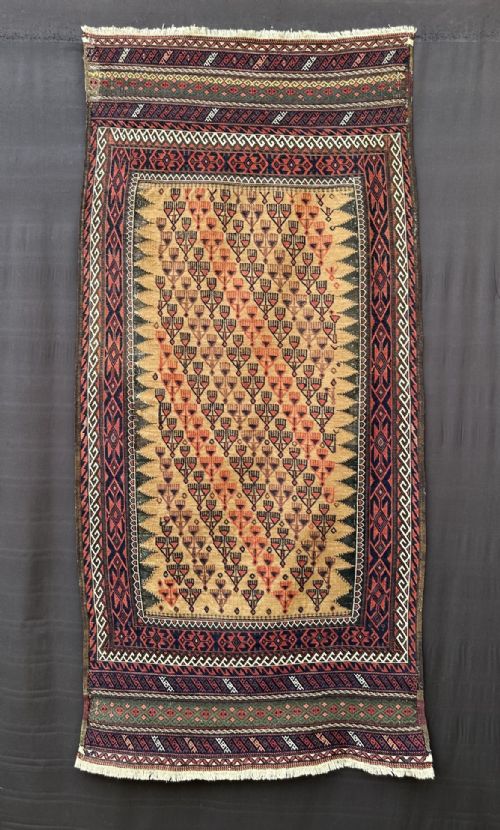
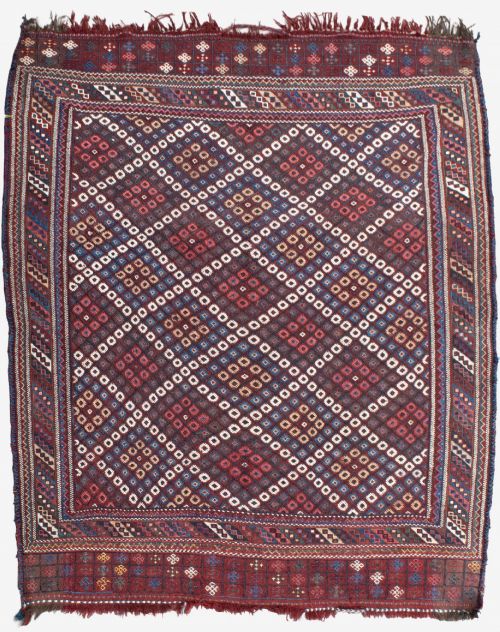
A geometric wool flatweave encompasses tribal textiles such as kilims, sofres, salt-bags, and saddlebags originating from Persian, Anatolian, Caucasian, and Central Asian regions. These pieces display rectilinear patterns, bold medallions, and banded designs worked directly into the weave without a pile.
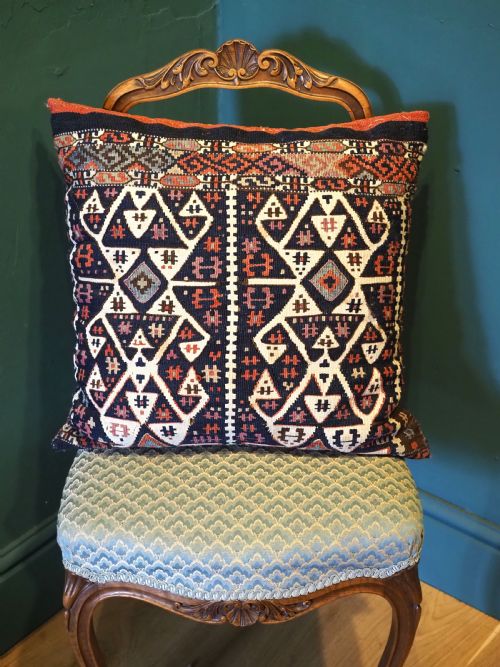
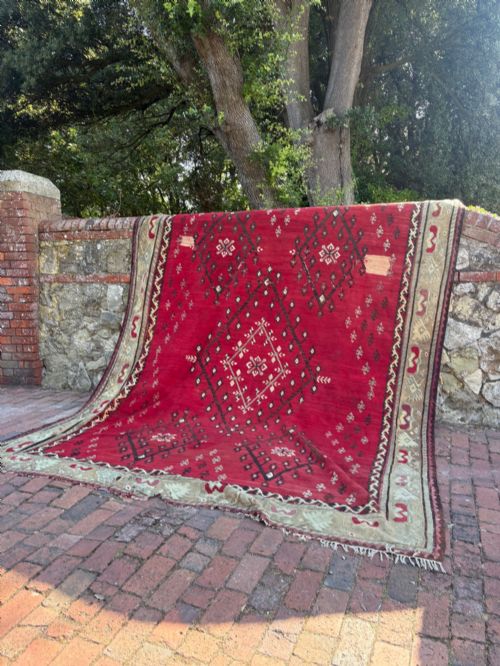
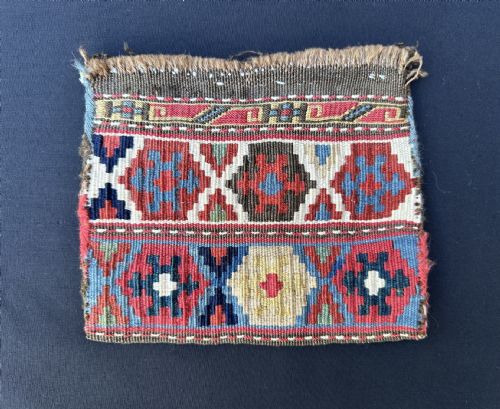
Buyers meet variations ranging from large room-sized carpets down to small cushions, runner rugs, and utilitarian storage fragments. The items date predominantly from the nineteenth century through the early decades of the twentieth century, reflecting traditional nomadic and village production.
The aesthetic relies on graphic motifs, diamond fields, and compartmentalised layouts typical of tribal weavers across regions like Shirvan, Daghestan, Fars, and Malatya. Each textile serves as a durable household furnishing carrying distinct regional iconography.
How They Were Made
The foundation and surface rely on wool and hand-spun wool, often combined with cotton for structural stability. Weavers utilise slit-tapestry and soumak techniques to create crisp linear boundaries and textured geometric patterns.
Natural dyes provide the palette, yielding stable tones that soften gradually over decades of use. The interlacing of warp and weft threads produces a flat, resilient textile designed for daily domestic deployment.
Current listings span the nineteenth and early twentieth centuries, featuring wool, cotton, and natural dyes across Anatolian, Caucasian, and Persian tribal forms.
What Varies in Quality
The finesse of a geometric wool flatweave depends on the tightness of the weave and the precision of the graphic execution. Tighter structures and finely handled yarn preparation produce sharper pattern definition and greater durability.
Design complexity and regional rarity elevate certain weaving groups above standard utility pieces. The harmony of the natural dye palette and the integrity of the original tribal motifs govern the overall visual standing of the textile.
The Geometric Wool Flatweave Glossary
- Kilim
- A flat-woven carpet or rug produced without a pile by tightly interweaving warp and weft strands. This method results in a lightweight, reversible textile suitable for floor placement or hanging.
- Sofreh
- A utilitarian flatweave used traditionally for dining, food preparation, or bread storage among nomadic tribes. These textiles frequently feature strong central medallions and field patterns.
- Soumak
- A brocaded flat-weave technique where coloured weft threads wrap over and under the warp threads in decorative patterns. This method leaves floating threads on the reverse and adds structural heft to the face.
- Mafrash
- A large rectangular storage bag or chest panel used by nomads for bedding and household possessions. They display bold side panels and geometric end designs.
- Warp
- The stationary vertical threads stretched across the loom that carry the structural tension of the textile. The weft threads pass horizontally through them to form the cloth.
Geometric Wool Flatweave: Frequently Asked Questions
How were geometric wool flatweaves originally used?
Nomadic and village communities utilised these flatweaves as floor coverings, animal trappings, dining cloths, and sturdy storage bags for household goods.
Their dense wool construction provided insulation against cold earth floors and protection for stored belongings during seasonal migrations.
How do I care for an antique flatweave rug?
Vacuuming gently with suction only, avoiding the rotating brush roll, helps maintain the wool fibres without pulling the weave.
Professional specialist cleaning is recommended for antique textiles to protect the natural dyes and historical structure.
Can these tribal textiles be placed in high traffic areas?
The sturdy flat-woven wool construction handles moderate foot traffic well when supported by an appropriate rug underlay.
Placing them away from direct, continuous heavy traffic preserves the historic material and prevents premature edge wear.
How do I distinguish regional styles in these rugs?
Caucasian pieces tend to display crisp geometric medallions and sharp contrasting palettes, while Persian tribal examples often incorporate rich field abrasash and earthy tones.
Anatolian and Central Asian variations introduce distinct border arrangements and tribal symbols specific to individual weaving groups.