

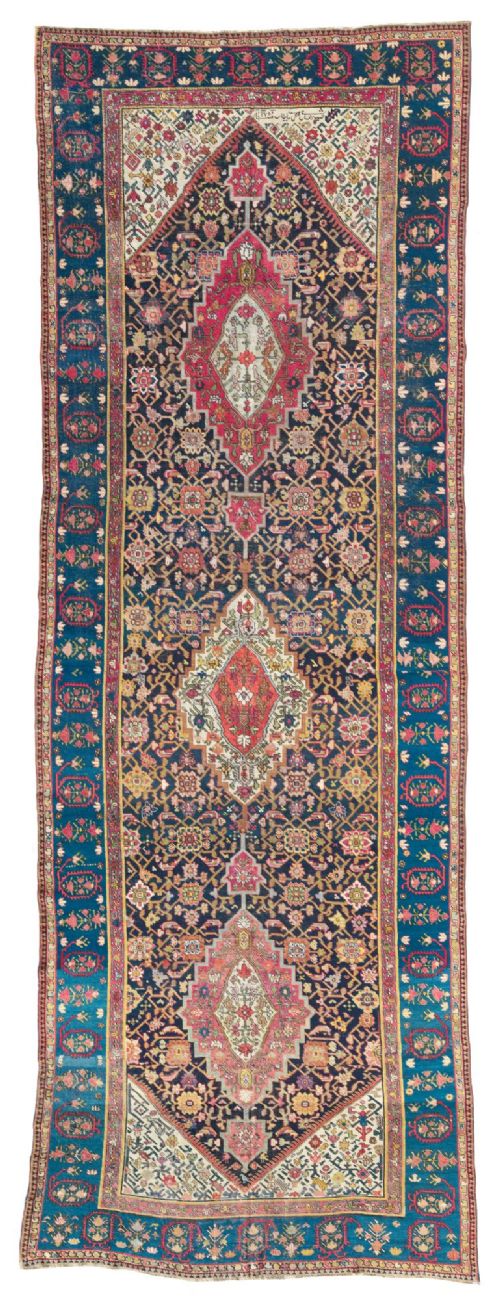
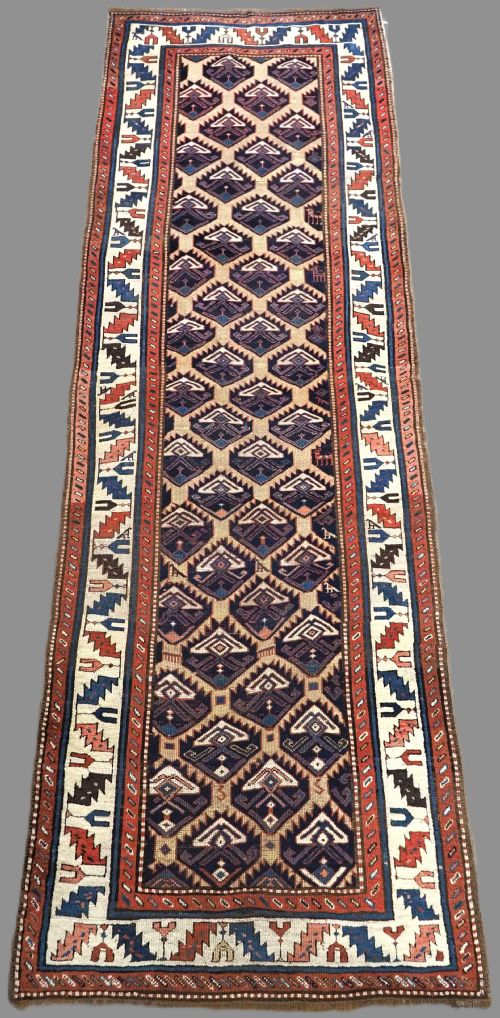
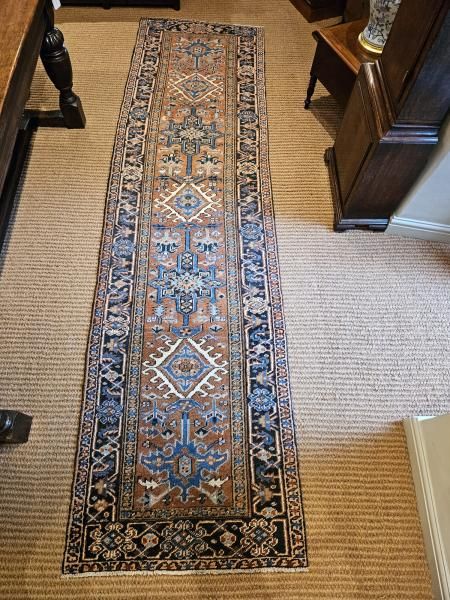
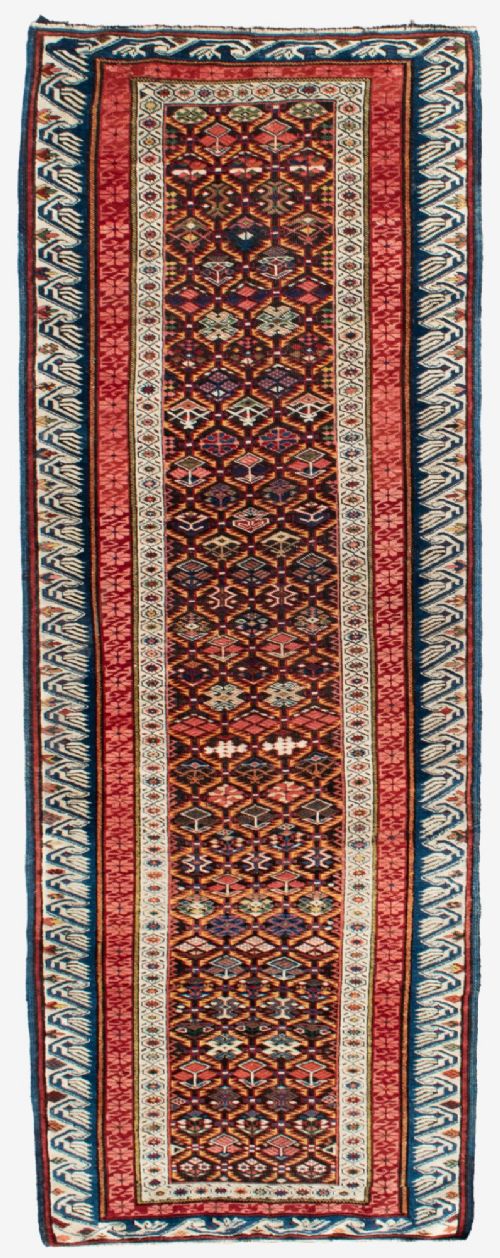


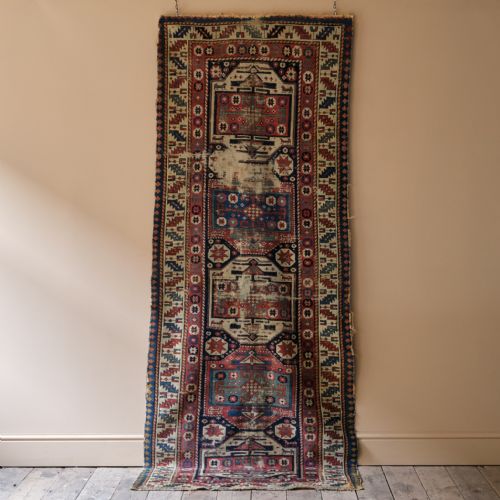


Tribal Caucasian Corridor Rug
These tribal caucasian corridor rug pieces bring geometric wool weave and bold border geometry straight to narrow hallways from the nineteenth and early twentieth centuries.
Tribal Caucasian Corridor Rug
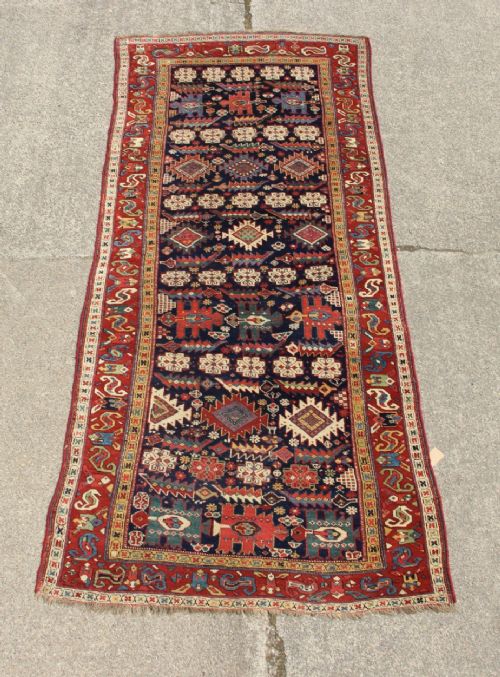
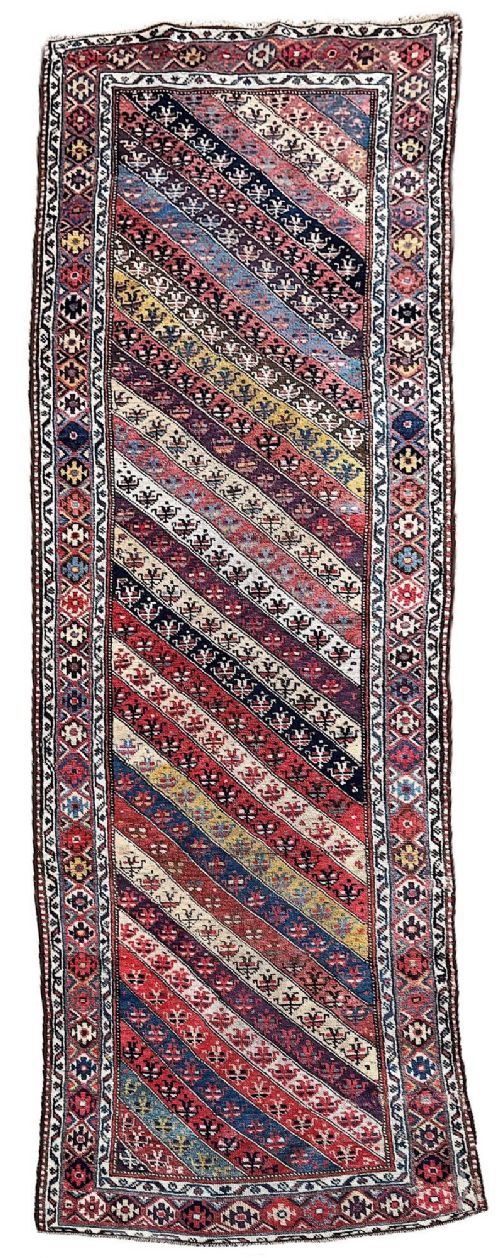
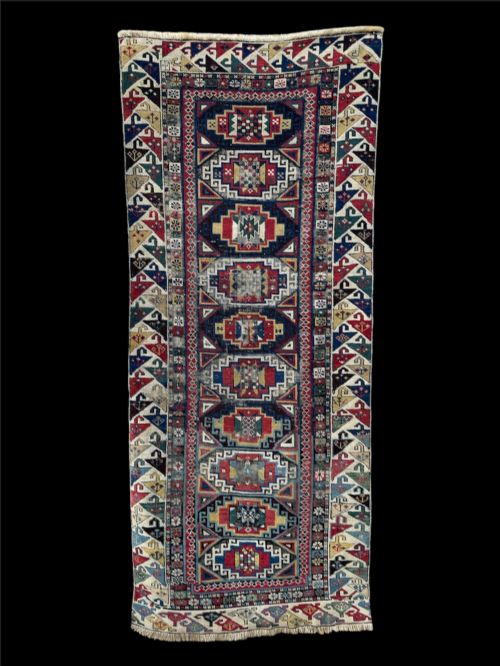
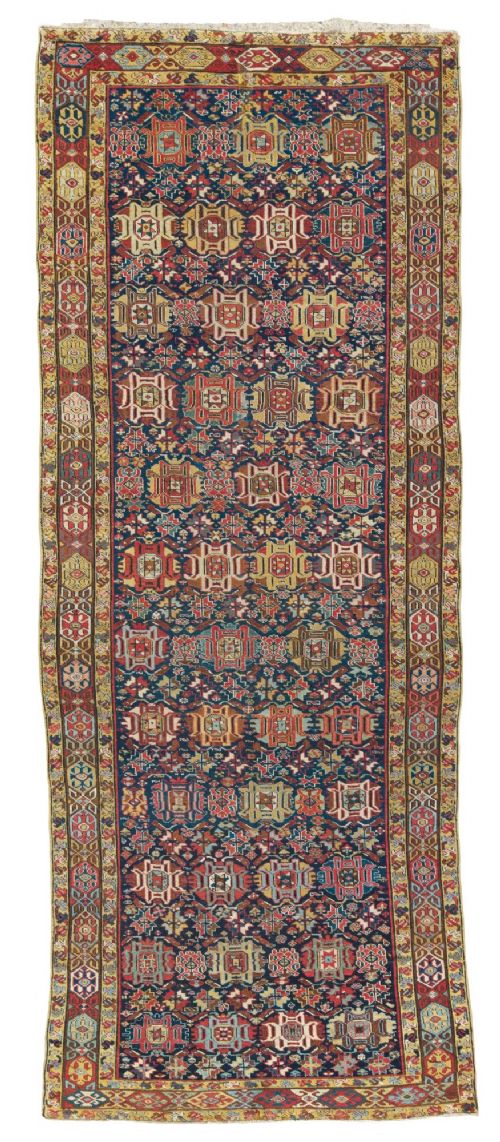
A tribal caucasian corridor rug is a long, narrow textile woven to span hallways and passages with geometric medallions, latch hooks, and repeated motifs. The pieces collected under this search phrase span runner rugs, long rugs, and kellehs originating from Caucasus regions and surrounding tribal territories.
Most examples encountered here date from the nineteenth century up to the 1920s, showing regional weaving traditions such as Kurdish, Gendje, Kazak, Shirvan, and Talish styles. These carpets were made to endure heavy foot traffic in domestic spaces while displaying distinctive village designs.
How they were made
Weavers constructed these long carpets using handspun wool for the pile, foundation warps, and wefts, occasionally incorporating camel hair for natural warm brown tones. Natural dyes provided the deep blue, red, and ivory grounds that define the palette of these village textiles.
The technique relies on symmetrical or asymmetrical knotting tied tightly onto vertical looms, creating a dense pile suited for long corridor use. Edge finishes typically involve overcast selvedges and flatwoven ends to secure the structure.
The inventory spans production dates from 1850 through the 1920s, executed primarily in wool and cotton structures.
What varies in quality
Quality rests on the crispness of the geometric drawing, the saturation and clarity of the natural dyes, and the density of the wool pile. Sharply rendered latch hooks and balanced proportions distinguish finer village work from simpler commercial output.
The integrity of the foundation and the survival of the original borders also determine the standing of each carpet. Pieces that retain their full original length without heavy restoration command greater appreciation among collectors.
The Tribal Caucasian Corridor Rug Glossary
- Kelleh
- A large, extended format carpet, narrower than a standard room size, often utilised in long rooms or hallways.
- Boteh
- A recurring paisley or almond-shaped motif symbolizing life and eternity, frequently rendered in rows across village rugs.
- Memling Gul
- An octagonal geometric gul motif featuring hooked appendages, commonly found in Caucasian and Kurdish weaving.
- Warp
- The vertical foundation threads stretched lengthwise on the loom, onto which the wool knots are tied.
Tribal Caucasian Corridor Rug: Frequently Asked Questions
Where were these long corridor carpets placed?
These narrow textiles were traditionally laid in hallways, long landings, and passageways to protect wooden floors and add warmth to drafty rooms.
Their elongated proportions suited the architectural layouts of nineteenth-century houses and country dwellings.
How do I maintain an old wool runner?
Regular gentle vacuuming without a rotating brush bar keeps dust from settling deep into the wool pile.
Using a quality underlay prevents slipping and cushions the foundation threads against hard stone or timber floors.
What defines a Caucasian village design?
Caucasian village designs rely on bold geometry, including stepped polygons, diagonal stripes, and stylized animal or floral forms.
These motifs reflect the tribal heritage and local iconography of the weavers across different regional valleys.