


Tribal Anatolian Area Rug
When you look for a tribal anatolian area rug, you enter a tradition of village weaving defined by geometric motifs and centuries of regional patterns.
Tribal Anatolian Area Rug
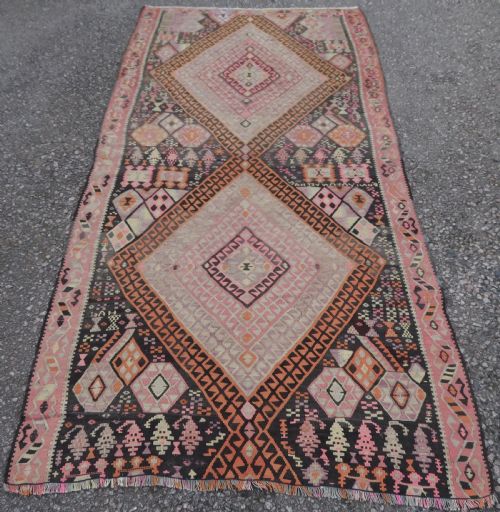
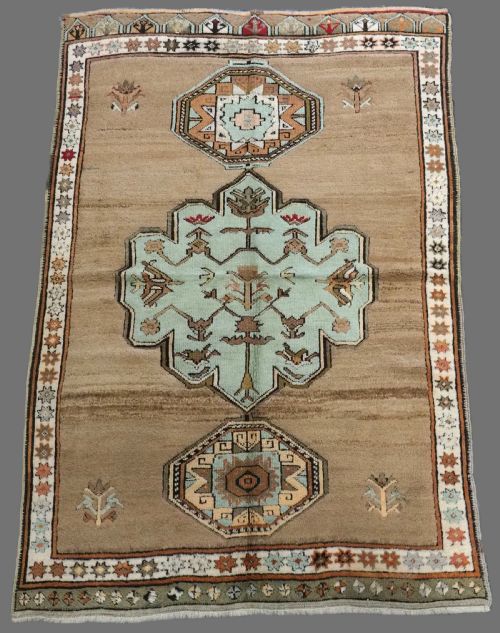
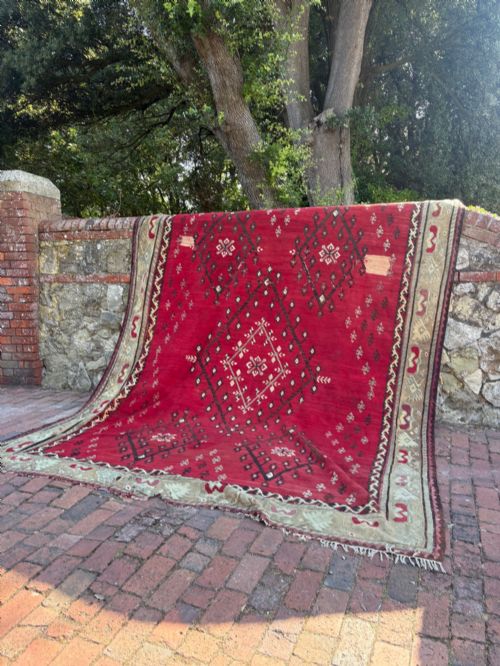
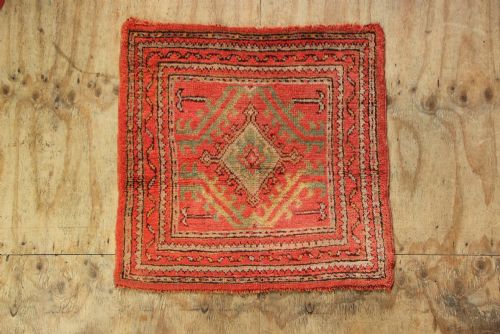
A tribal anatolian area rug represents the domestic artistry of Anatolian village and nomadic weavers working across centuries. These textiles include both pile carpets and flatweave kilims produced in regional centres such as Bergama, Kirsehir, Konya and Ushak.
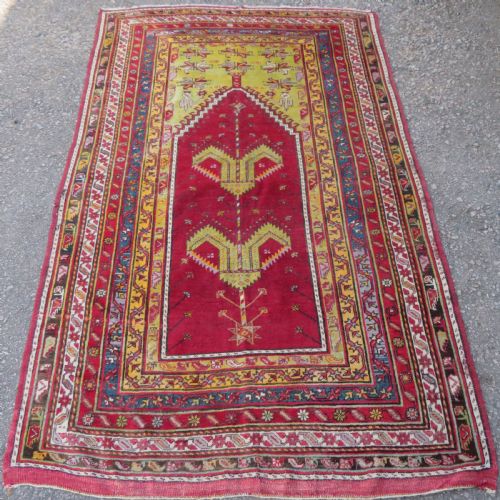
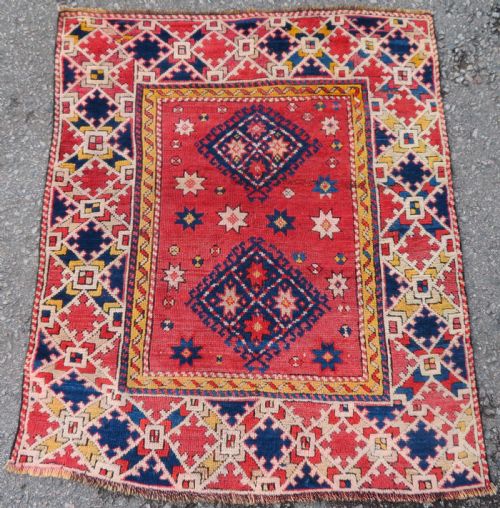
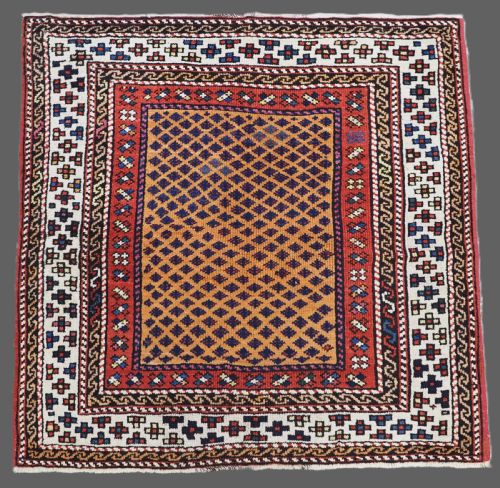
The pieces appearing here span from the eighteenth century into the twentieth century, encompassing smaller village rugs, prayer formats, runner dimensions and larger area formats. Many bear distinct regional signatures including lattice designs, star medallions and prayer niches.
Village and nomadic pieces often display spontaneous variations in geometry and colour composition compared to court workshops. Buyers encounter works attributed to specific tribal groups like the Kurds and Yuruks alongside recognised village markets.
Assessing quality
Quality rests in the integrity of the wool, the clarity of the regional design, and the survival of the original borders. Hand-spun wool retains a depth of texture that alters how light hits the surface of the pile.
The nuance of the natural colour palette and the precision or charming irregularity of geometric motifs distinguish finer village works from standard production. Condition plays a role, though timeworn repairs often accompany genuine age in nomadic textiles.
Some carpets are woven in two separate parts and joined down the middle, preserving an ancient nomadic method of handling narrow looms.
Kirsehir weavers·Bergama workshops·Konya Karapinar·Ushak looms·Kurdish tribal weavers
The Tribal Anatolian Area Rug Glossary
- Kilim
- A flatweave textile produced without a pile by tightly interweaving warp and weft threads. These function as rugs, wall hangings or covers.
- Prayer rug
- A format featuring a mihrab or niche design intended to direct the placement of the head during daily worship. These rugs often display architectural borders.
- Mihrab
- The arched niche design at one end of a prayer rug that mimics the direction of prayer. It remains a central motif in classical Anatolian weaving.
- Warp
- The stationary vertical threads stretched onto a loom that form the structural skeleton of the rug. Wefts are passed horizontally through them.
- Medallion
- A central ornamental design motif placed in the field of the rug. Regional variations range from star medallions to geometric lattice patterns.
Tribal Anatolian Area Rug: Frequently Asked Questions
How do I identify a prayer rug?
Prayer rugs feature a distinct pointed arch or niche design at one end, known as a mihrab. This architectural motif points the user toward Mecca during daily devotions.
Such rugs often employ concentrated symbolic imagery within the niche, distinguishing them from standard medallion or all-over field carpets.
What is the difference between a rug and a kilim?
A rug possesses a dense pile created by individual knots tied to the warp and weft foundation. This gives a plush, textured surface.
A kilim is a flatweave textile made without a pile, relying purely on the interweaving of coloured threads to form geometric patterns.
How should I care for an antique wool rug?
Regular gentle vacuuming without a rotating beater bar prevents dust accumulation in the wool pile. Professional cleaning suited to antique textiles maintains the natural lanolin.
Keep the rug out of direct, harsh sunlight to protect the natural dyes from fading over the years.
Where were these village rugs made?
These textiles originate from various towns, villages and nomadic encampments across Anatolia, which forms modern-day Turkey. Specific regions include Bergama in the west, Kirsehir and Konya in central areas, and Ushak.
Each district developed distinct colour palettes, wool qualities and geometric vocabularies passed down through generations of weavers.