


Tribal Accent Mat
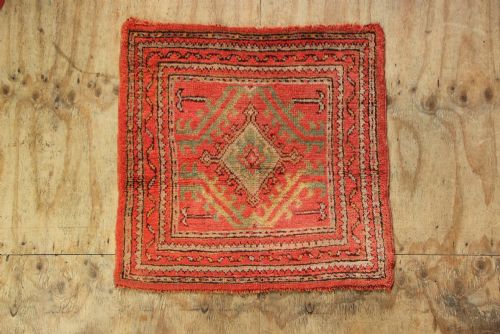
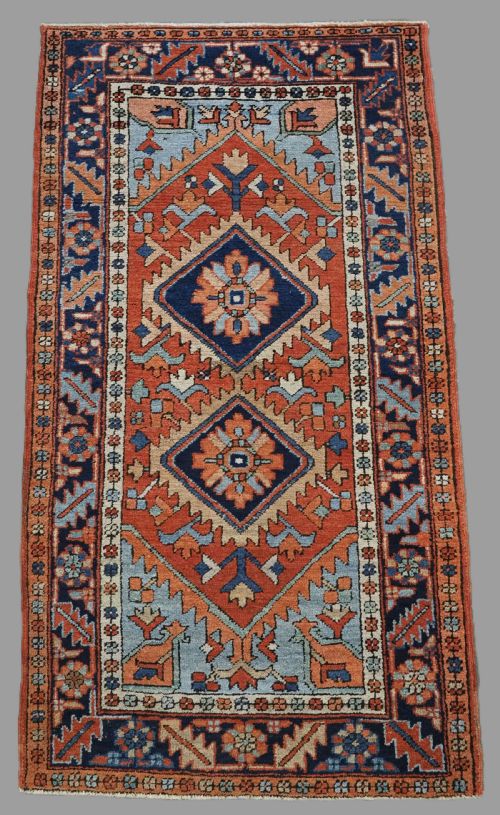
These tribal accent mat pieces are woven floor coverings that bring genuine character and warmth to compact spaces through traditional regional designs.
Tribal Accent Mat
When you search for a tribal accent mat, you find smaller format hand woven rugs originating from village and nomadic traditions across Persia, Anatolia, the Caucasus, and Afghanistan. These pieces include square Oushaks, hearth sized floor coverings, and various regional prayer rugs designed for domestic use.
You are most likely to meet pieces originating from the late nineteenth century through to the 1920s, reflecting established village weaving practices. The formats vary from compact square dimensions to narrow prayer formats utilised for daily rituals.
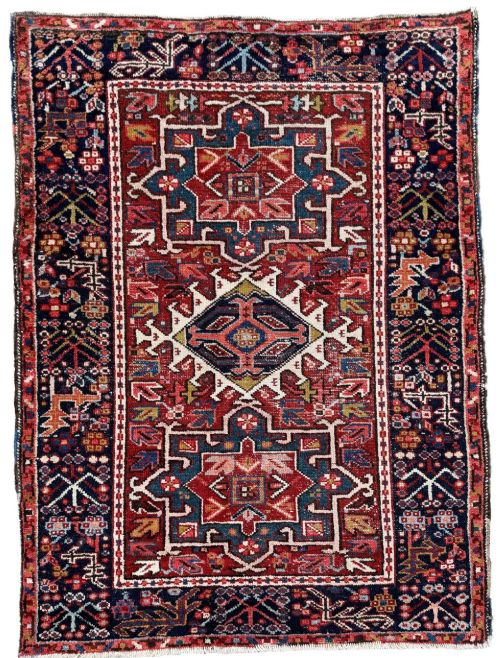
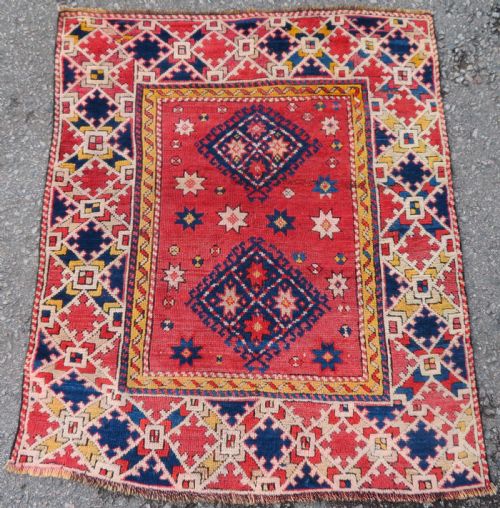
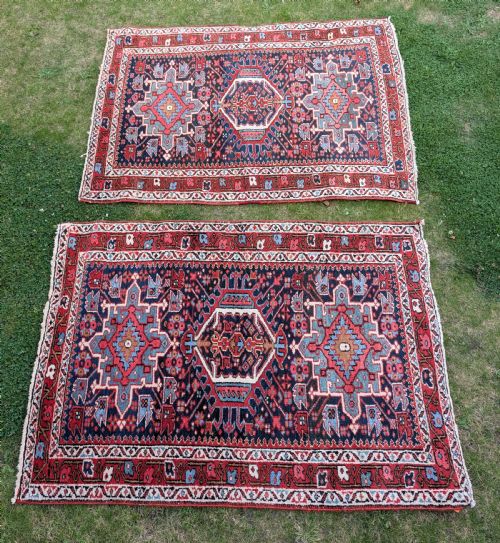
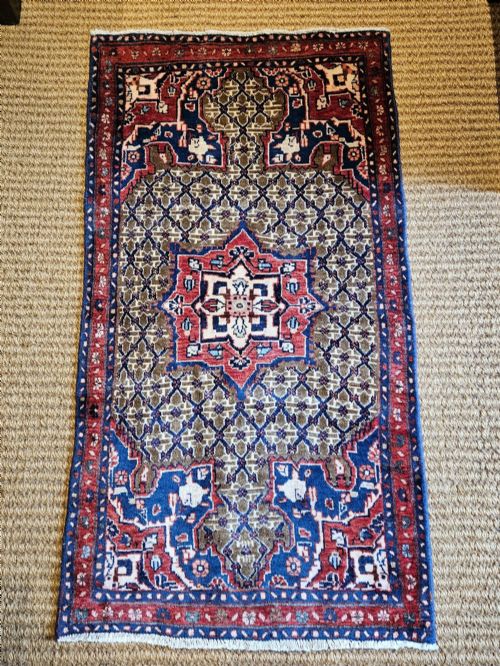
The regional variety spans from Persian Karaja and Heriz productions to Turkish Bergama, Milas, and Konya examples, alongside Caucasian and Afghan tribal outputs. Each grouping brings distinct geometric or floral vocabulary tied to specific weaving communities.
How they were made
These textiles rely on hand knotted wool and cotton foundations, utilising natural dyes derived from regional plants and minerals to achieve lasting colour depth. Artisans hand wove each rug on traditional upright or horizontal looms, integrating camel hair in specific grounding sections for added durability.
The construction involves dense knotting techniques that create firm, resilient piles capable of withstanding generations of daily foot traffic. Weavers tied geometric and pictorial motifs directly from memory and tribal tradition, passing specific pattern books through generations.
The inventory includes Persian, Anatolian, Caucasian, and Afghan tribal styles formed as rugs, carpets, and prayer formats.
What varies in quality
The distinction between tiers rests upon the handled precision of the knotting and the complexity of the natural dye palette. Superior examples demonstrate remarkable crispness in geometric drawing and a harmonious saturation of colour that deepens with age.
The integrity of the original side cords and end finishes dictates the preservation standard, alongside the uniform suppression of pile wear. Tighter knot density and finer wool quality consistently separate standard village output from exceptional collector pieces.
The Tribal Accent Mat Glossary
- Prayer rug
- A small format rug featuring a central mihrab or arch design indicating the direction of prayer. These pieces were traditionally utilised for personal devotion in domestic settings.
- Mihrab
- The arched niche depicted at one end of a prayer rug, symbolising the gateway to paradise. Its precise geometry often identifies the specific weaving region.
- Natural dyes
- Colourants extracted from roots, insects, bark, and minerals prior to the introduction of synthetic alternatives. They yield complex, mellow hues that develop a soft patina over decades.
- Knot density
- The number of individual knots per square unit, determining the sharpness of the pattern and the structural resilience of the pile. Higher counts generally indicate greater labour investment.
- Patina
- The gentle softening of texture and mellowing of colour that occurs naturally through age and exposure. This surface quality marks authentic historical textiles.
Tribal Accent Mat: Frequently Asked Questions
Where were these rugs made?
The pieces originate from village workshops and nomadic camps across regions including Persia, Anatolia, the Caucasus, and Afghanistan. Local tribes developed distinct aesthetic traditions that identify each piece.
Specific weaving centres such as Karaja, Heriz, Milas, and Oushak each contributed unique structural and decorative characteristics to their regional output.
How do I care for a wool rug?
Regular gentle vacuuming without a rotating brush bar helps remove embedded dust from the wool pile. Professional cleaning by specialists in antique textiles ensures the natural dyes remain stable.
Keeping the rug away from direct, harsh sunlight prevents the natural colours from fading prematurely over the years.
What is a mihrab design?
The mihrab is an arched architectural motif depicted on prayer rugs to represent a sacred niche. Weavers incorporated this symbol to frame the spiritual focus of the textile.
Variations in the shape of the arch, from stepped polygons to curved domes, often point towards specific tribal origins.
How old are these woven pieces?
The selections date primarily from the middle of the nineteenth century through to the early decades of the twentieth century. Specific dating relies on structural analysis, dye types, and stylistic evolution.
Certain pieces carry woven dates or historical inscriptions that provide a precise point of origin within the weaving tradition.